
Reviewed · SHANNON TOURS
Craggaunowen Admission Ticket
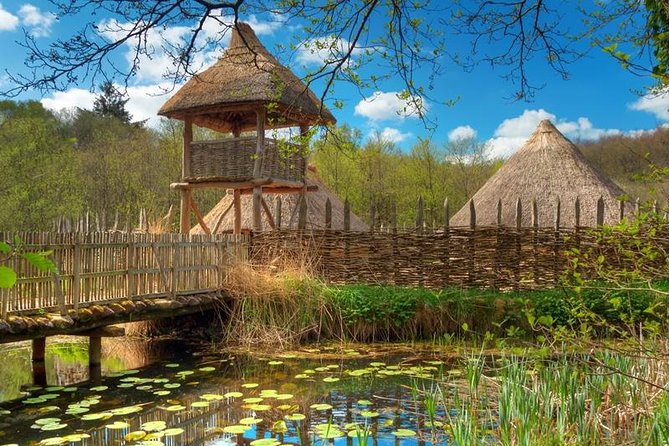
Craggaunowen lets you move through Ireland’s early past without being boxed into a glass case. You can cross toward a Bronze Age crannog, inspect a Celtic ring fort, squeeze into a souterrain, then climb toward a 16th-century castle overlooking a lake.
I like the freedom of the self-guided format, which lets you spend more time at the parts that catch your eye. I also like the living details: open-fire cooking, hand-powered querns, old craftwork, traditional animals, and the Brendan Boat built for a real Atlantic experiment.
The main consideration is the weather. Much of the visit is outdoors, and the site takes about one to two hours on foot. If rain is sweeping across County Clare, the experience will be less comfortable, so wear sensible shoes and check the forecast.
Key points to know before you go
- Walk through a Bronze Age crannog: See an artificial island home protected by a concealed water route.
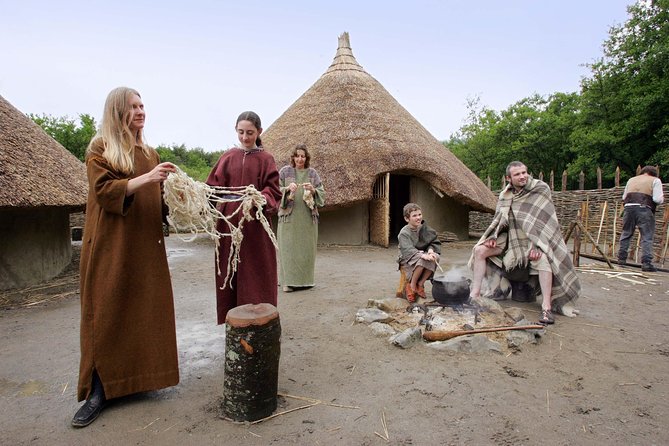
- Try to picture Celtic daily life: Ring-fort displays show cooking, grain grinding, pottery, woodwork, and food storage.
- See the Brendan Boat: Tim Severin built this leather-hulled boat for his Atlantic re-creation of St. Brendan’s voyage.
- Climb to Craggaunowen Castle: The restored 1550 castle gives you views across the lake and surrounding countryside.
- Explore the souterrain and togher: These old passages and roads reveal the practical side of early settlement life.
- Plan for a relaxed two-hour visit: The admission covers the site and displays, but food and drinks cost extra.
Why Craggaunowen works better than a standard museum
I like historical sites that ask you to picture ordinary life, not just memorize dates. Craggaunowen does this by showing where people lived, how they cooked, how they stored food, and how they moved through the countryside.
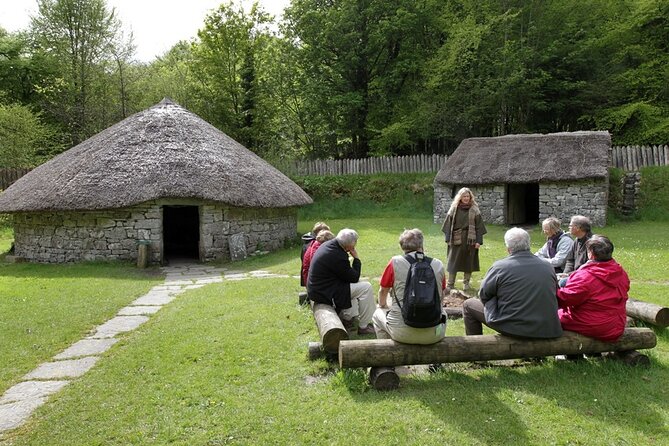
The displays are spread across a rural setting near Kilmurry in County Clare. You walk between reconstructed buildings, archaeological features, animal enclosures, and the castle. That physical movement matters. A ring fort feels different when you can stand inside it, and a souterrain makes more sense when you can see how a narrow underground space might have helped protect food or provide an escape route.
This is not a fast attraction built around one grand building. It is a collection of connected pieces. Some sections will interest you more than others, but the variety keeps the visit moving.
You also set your own pace. I would allow around two hours, though someone who reads every display and stops for photographs could spend longer. If you are driving between Shannon and Dublin, it makes a useful stop rather than an all-day commitment.
A few more Ireland half-days to weigh up
- Shannon Airport to Galway City, Private Chauffeur Service
★ 5.0 · 21 reviews - Celtic Dance Party
★ 5.0 · 15 reviews - Shannon Airport to Cork, Private Chauffeur Service
★ 5.0 · 9 reviews
The crannog gives the visit its strongest opening
The crannog is one of the most memorable parts of the site. It is an artificial island dwelling, reached by a hidden pathway through the water. That design immediately shows how settlement, defense, and daily life could overlap.
As you look at the structure, you can think about the practical problem its builders faced. The water helped protect the home, but the residents still needed a way in and out. The concealed route makes the settlement feel less like a simple reconstruction and more like a place designed around security.
The setting also helps. You are not only reading about early settlement patterns. You are looking across the water and seeing why an island home could be useful. I find this kind of physical clue more memorable than a long panel of text.
Take your time here before moving on. The crannog is easy to pass quickly, but it provides the basic question for the rest of the visit: how did people use the materials and places around them to stay safe and fed?
The ring fort shows the work behind daily life
The ring fort takes you closer to the routines of Celtic life. Here, the focus is not on a single dramatic event. It is on food, tools, shelter, and craft.
You can see how people cooked over open fires or in pits. The display also explains a striking hunting method that used a large pit, a length of rope, and fresh meat to feed groups of hunters working in the forest. It is a reminder that feeding a large party required planning and technique.
The querns are another useful detail. These hand-powered stones were used to grind corn for bread or porridge. When you see the equipment, the effort behind a basic meal becomes clear. Bread and porridge were not items pulled from a shop or cupboard. Grain had to be processed by hand before anyone could eat it.
The ring fort also includes examples of pottery and wooden goods, including bowls, goblets, and platters. These objects help you picture a settlement with many small jobs happening at once. Food preparation, storage, cooking, and making tools were all part of the day.
If you are visiting with children, this section may hold their attention better than a conventional historic house. There is something easy to understand about fire, food, animals, and handmade tools. Still, some of the structures are reconstructions, so you should treat the visit as an interpretation of early life rather than a completely untouched settlement.
The Brendan Boat adds a bold Atlantic story
The Brendan Boat gives Craggaunowen a different kind of historical interest. It is a leather-hulled boat built by Tim Severin for his attempt to recreate the reported voyage of St. Brendan and the early Christian monks across the mid-Atlantic.
The story connects Irish tradition with practical seamanship. The boat is not presented as proof that Brendan discovered America, but it gives you a way to consider the possibility of early Atlantic travel and the limits of medieval boatbuilding.
I find this stop valuable because it moves the site beyond land-based settlement. After seeing forts, cooking areas, and storage spaces, you encounter a vessel built for a long and uncertain journey. Its leather hull also makes the idea of ocean travel feel more demanding than the familiar image of a large wooden ship.
Give the boat a proper look instead of treating it as a quick photo stop. Its construction is the point. The exhibit invites you to think about materials, balance, endurance, and the courage needed to put such a craft into open water.
A different sort of day from the same base:
- Dublin to Cliffs of Moher, including Wild Atlantic Way and Galway
★ 5.0 · 23,331 reviews - From Dublin: Cliffs of Moher, Burren & Galway City Day Tour
★ 4.8 · 18,888 reviews - Dublin: Guinness Storehouse Entry Ticket
★ 4.6 · 16,863 reviews - Dublin to Cliffs of Moher, Burren, Wild Atlantic Way, Galway Tour
★ 5.0 · 12,924 reviews
Craggaunowen Castle changes the mood
Craggaunowen Castle dates from 1550 and has been restored on a rocky rise overlooking the lake. The castle adds a later chapter to the site, shifting you from prehistoric and early medieval life into Ireland’s 16th-century past.
The position is part of the appeal. From the castle, you get views across the surrounding countryside and lake. After the close quarters of the souterrain and the enclosed feel of the ring fort, the higher viewpoint gives you room to pause.
Do not expect a vast castle complex. This is a restored tower-house style site rather than a sprawling palace. Its value comes from the contrast with the earlier displays and its setting above the water.
I would visit the castle after the crannog and ring fort, as the sequence makes the changing forms of defense easier to appreciate. The crannog uses water and concealment. The ring fort uses an enclosed settlement. The castle rises above the ground and commands a wider view.
The togher and souterrain reveal practical engineering
Craggaunowen includes a togher, an early roadway dating to 148 BC. That date gives the feature real weight, but its importance is also practical. Roads tell you how people moved through wet or difficult ground, carried goods, and connected settlements.
The souterrain is more enclosed and atmospheric. It was designed for food storage, but it could also serve as an escape route during an attack. The narrow passage makes the defensive purpose easy to understand.
This is one of the spots where you should slow down and watch your footing. The enclosed space may be fun for children, but adults should keep an eye on younger visitors. It is a short feature, not a long underground tour, yet it adds a useful sense of how storage and security could share the same structure.
Together, the togher and souterrain show that early life depended on more than houses and weapons. Roads, food stores, drainage, and escape routes were just as important. That practical focus is one of the site’s strengths.
Animals and open air make the history feel close
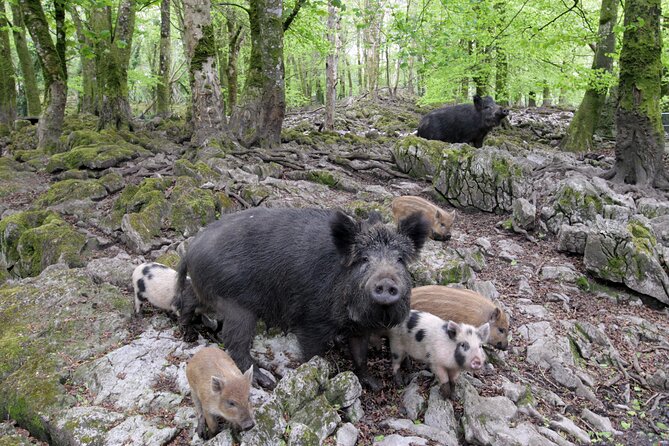
The grounds include old animal breeds such as wild boar and Soay sheep, along with donkeys and ponies in the fields near the entrance. The animals are not merely decoration. They help connect the displays with farming, hunting, food, and the working life of earlier communities.
The Soay sheep are especially relevant to the site’s focus on old breeds. Their presence gives you a chance to consider how livestock shaped settlement life, clothing, food, and labor.
The outdoor setting is pleasant, with lake walks and open countryside around the historic structures. I would not treat the site as a demanding hike. It is a walking attraction, but the supplied details do not give a route length or accessibility grade, so anyone with mobility concerns should confirm conditions before booking.
The rural setting can also make the visit feel less rushed. You are not being pushed from one timed room to another. You can pause by the lake, look across the fields, and let the different parts of the site settle into place.
Allow two hours, then consider the farmhouse tea-room
The advertised visit takes about one to two hours. That is a fair estimate for a steady walk through the main displays, castle, reconstructed settlement, boat, roadway, souterrain, and animal areas.
I would allow closer to two hours if you want to read the displays, take photographs, and enjoy the outdoor setting. If you are stopping during a longer drive, the compact length is a real advantage. One person who stopped between Shannon and Dublin found the extra time worthwhile, and the site is well suited to that kind of break.
There is a farmhouse tea-room for homemade food, but food and drinks are not included in admission. Treat it as an optional finish rather than part of the ticket price. If you are watching your budget, you can simply visit the site and handle refreshments separately.
The daily opening hours are listed as 10 a.m. to 5 p.m., Monday through Sunday, for the supplied operating period. The date range shown with the hours is unusual, so I would confirm the current dates before setting out, especially outside the main season.
Is the $15.38 ticket good value?
At $15.38 per person, the ticket is reasonably priced for a two-hour visit with access to the full site. You are paying for more than one exhibit: the admission includes the crannog, ring fort, castle, Brendan Boat, togher, souterrain, animal areas, and other displays.
The value is strongest if you enjoy history that you can walk through. Someone looking only for a grand medieval castle may find the admission less compelling, since the castle is one part of a broader heritage site. Someone interested in archaeology, early Irish life, traditional crafts, or outdoor attractions will get more from the same price.
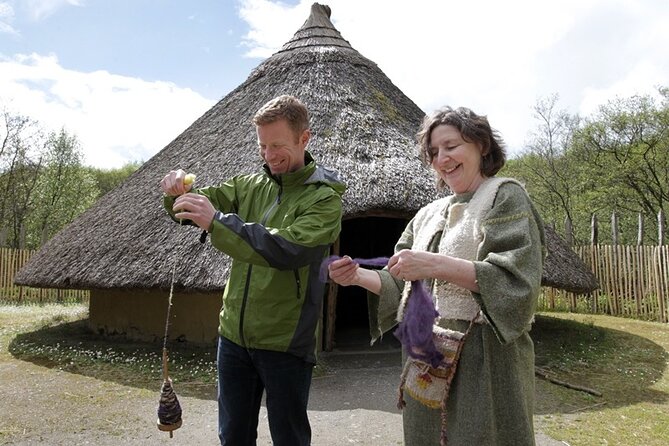
The self-guided setup also helps. You are not paying for a long scheduled tour, and you can spend your time according to your interests. The trade-off is that you need to read the signs and create your own rhythm. Staff at the entrance can offer tips, and the historical interpreters working in the village have been friendly and clear in their explanations.
One particularly memorable touch is the live traditional music connection. A staff performer played the ilhan pipes for one visitor, adding a human element that a static display cannot provide. Names for the staff and performers are not supplied, so I cannot identify that musician, but you may encounter demonstrations or conversations that bring the reconstructed village to life.
Who should make the stop?
I would recommend Craggaunowen to you if you enjoy:
- Irish archaeology and early settlement life
- Small historic sites with several different features
- Self-guided visits rather than fixed group tours
- Outdoor walking mixed with buildings and displays
- Family outings where animals and hands-on subjects help hold attention
- A worthwhile stop between larger destinations in Ireland
It is also a good choice if you want a quieter County Clare experience. The site gives you a change from busy town centers and major headline attractions.
I would be more cautious if you want a fully guided, tightly narrated tour. The experience is self-guided, and the amount of detail you get depends partly on how much time you spend with the displays and staff. I would also reconsider on a very wet day unless you have proper outdoor clothing, since much of the visit takes place outside.
The site is near public transportation, service animals are allowed, and most people can participate. Children must be accompanied by an adult. The booking information lists a maximum of one traveler, which appears to describe the booking setup rather than a normal group tour, so confirm that detail if you are booking for more than one person.
Should you book Craggaunowen?
Book it if you want history you can see at ground level: a hidden water approach, a hand-powered quern, a food-storage passage, a leather boat, old animal breeds, and a castle above a lake. I especially like it as a two-hour road stop because it offers real variety without taking over the whole day.
Skip it if your priority is a large castle interior, a long guided program, or an entirely indoor museum. For most people interested in Ireland’s early past, though, the combination of reconstructed life, open air, and practical detail makes the $15.38 admission a sound buy.
Free cancellation is available if you cancel at least 24 hours before the start time. Late cancellations and changes are not refunded, and the cut-off follows local Irish time.
FAQ
Where is Craggaunowen located?
Craggaunowen Castle & Crannóg is at Craggaunowen, Kilmurry, County Clare, V95 AD7E, Ireland, near Shannon.
How long does the visit take?
The visit takes about one to two hours. Allow closer to two hours if you want to explore at a relaxed pace.
Is the admission ticket self-guided?
Yes. The experience is designed for independent visitors exploring at their own pace.
What is included in the ticket?
Admission to Craggaunowen, along with access to the displays and exhibits, is included. Taxes, fees, and handling charges are also included.
Are food and drinks included?
No. Food and drinks are not included, though there is a farmhouse tea-room on site.
What are the opening hours?
The listed hours are 10 a.m. to 5 p.m., Monday through Sunday, during the supplied operating period.
Can children visit Craggaunowen?
Yes, but children must be accompanied by an adult.
Are service animals allowed?
Yes. Service animals are allowed.
Can I cancel for a full refund?
Yes, if you cancel at least 24 hours before the experience starts. Cancellations made less than 24 hours before the start time are not refunded.
Recently added around Ireland
- Killarney: Gap of Dunloe Day Tour★ 4.7 · 3 reviews
- Sean’s Bar, Athlone Castle and Clonmacnoise Monastery★ 4.5 · 3 reviews
- Dublin: Pub Tour. Pour The Perfect Guinness, Whiskey & Music★ 5.0 · 3 reviews
- Ferry ticket – Day return ticket to Inishbofin Island from Cleggan. Self Guided.★ 5.0 · 3 reviews
- Connemara/Galway: Inis Meáin Return Ferry Transfer★ 4.7 · 3 reviews
- Cork Private Walking Tour★ 5.0 · 3 reviews
- Waterford Crystal and Kilkenny Full-Day Rail Tour from Dublin★ 5.0 · 3 reviews
- (Christmas Morning) Glendalough Half Day Tour from Dublin★ 3.7 · 3 reviews
Shannon Tours, compared.


Award-Winning Goat Cheese Tasting and Farm Tour in Ennistymon
Read our review →
Shannon Airport to Shandon Hotel Co. Donegal Private Car Service.
Read our review →Browse the lists this tour appears in