
Reviewed · GALWAY TOURS
Galway: Medieval Galway Tour
Galway’s medieval story includes a father who hanged his own son from a window. That grim tale, tied to the Lynch family, gives this walk a sharper edge than a simple parade of old buildings. You move through the modern city while the guide points out what survives beneath banks, shops, pubs, and shopping centers.
I like the way this tour connects small physical remains to larger stories about Galway’s powerful Tribes families. I also like the personal touch Marteen Lane brings to the legends and tales, a detail that helps the past feel like more than a list of dates.
The main consideration is pace. In 90 minutes, you cover many stops, so you will hear the key story at each place rather than spend long periods inside them. St. Nicholas’ Church also charges a separate entrance fee of €5 for adults and €4 for concessions.
Key points to know before you book
- The Lynch family story is the dramatic centerpiece: Hear why James Lynch Fitzstephen supposedly hanged his son Walter.
- Medieval remains appear in modern places: See old city walls inside Eyre Square Shopping Centre and Lynch’s Castle, now an AIB bank.
- The walk covers Galway’s main medieval core: Stops include St. Nicholas’ Church, the Hall of the Red Earl, Kirwan’s Lane, Blake’s Castle, and the Spanish Arch.
- The guide brings formal heritage training: Marteen Lane is a Fáilte Ireland Regional Guide with more than 11 years of guiding experience and a BA (Hons) in Heritage Studies.
- The tour ends by the River Corrib: Finish at the Spanish Arch with stories of the Claddagh and the tsunami that destroyed two arches.
- Come ready for Irish weather: The walk runs in all weather except during a severe weather warning, so comfortable shoes and rain gear matter.
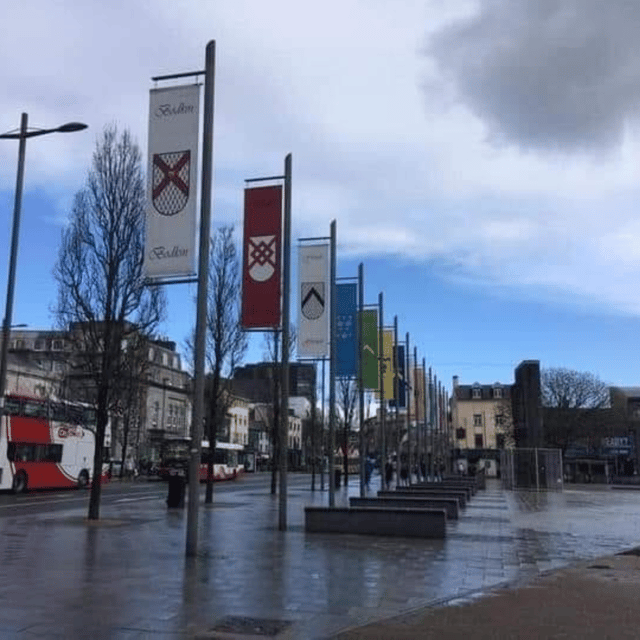
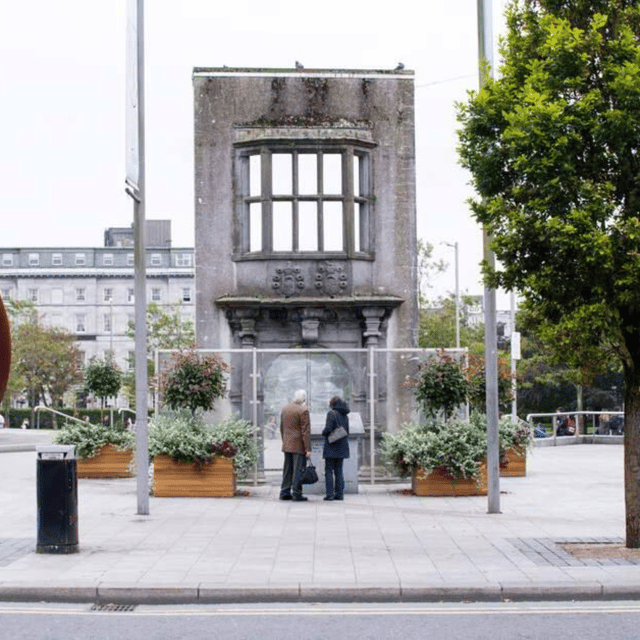
Start at the Browne Doorway in Eyre Square
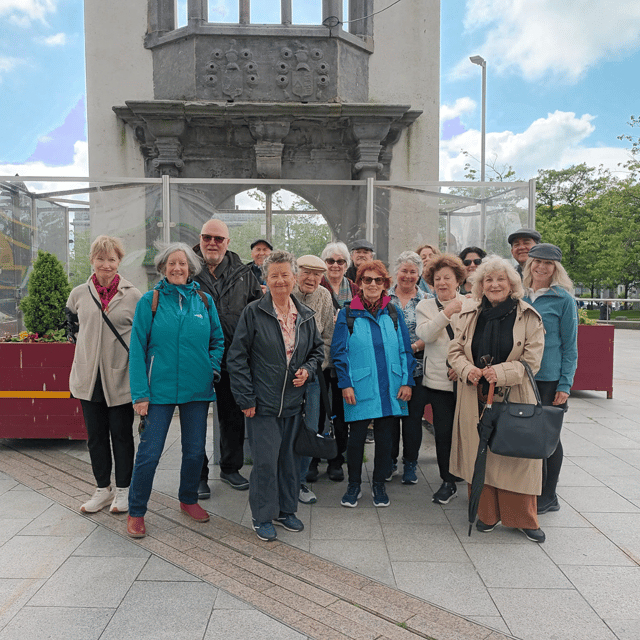
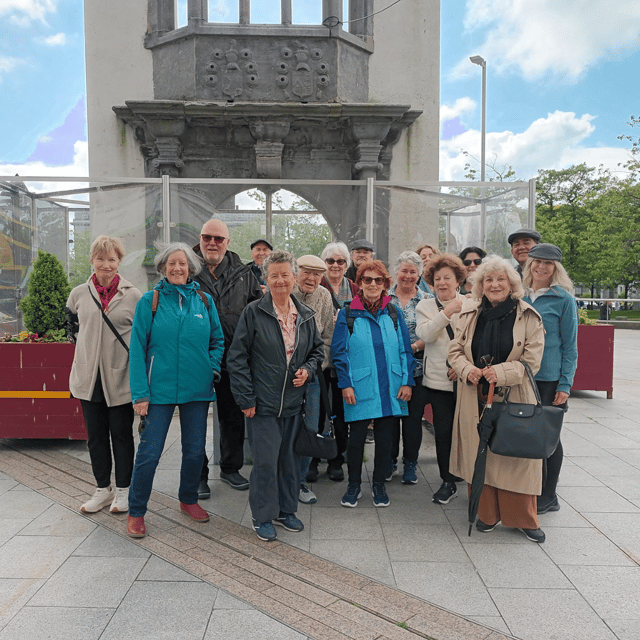
You meet at the Browne Doorway on the north side of Eyre Square. Look for the free-standing stone doorway surrounded by perspex glass. It is an easy landmark once you know what you are seeking, but do not arrive at the last second. You should be there 15 minutes before departure so the group can leave on time.
The location works well for a city walk because Galway’s medieval center begins almost immediately around you. You will not spend time boarding transport or traveling between districts. The tour is on foot from start to finish and returns to the same meeting point after the Spanish Arch portion.
Marteen Lane leads the walk in English. As a Fáilte Ireland Regional Guide and a member of the Approved Tourist Guides of Ireland, Marteen brings formal heritage training along with more than 11 years of guiding experience. That background matters here because Galway’s surviving medieval features are often partial, altered, or tucked inside newer buildings.
A few more Galway half-days to weigh up
- Galway to Cliffs of Moher, Aillwee Cave & Dunguaire Castle Tour
★ 5.0 · 3,058 reviews - From Galway: Full-Day Cliffs of Moher & Burren Guided Tour
★ 4.8 · 2,815 reviews - Galway to Inisheer Aran Islands, Cliffs of Moher and Boat Trip
★ 5.0 · 2,517 reviews
Find Galway’s walls inside a shopping center
One of the tour’s cleverest stops is inside Eyre Square Shopping Centre. There, you see remains of Galway’s medieval city walls in a thoroughly modern setting.
This is a useful reminder that medieval Galway is not preserved as a single open-air monument. Its old defenses were absorbed into the growing city. The walls mattered to the people who lived inside them, protecting the town and marking its limits. Today, you might walk past them without realizing what you are seeing.
I like this early stop because it sets the tone for the whole walk. You are not simply looking at one grand castle after another. You are learning to spot fragments of old Galway in places used for banking, shopping, worship, and dining.
Lynch’s Castle and the city’s powerful Tribes
From the walls, the walk continues to Lynch’s Castle. The building now houses an AIB bank, but it is described as the oldest commercial building in Ireland. That change of use gives the stop a practical Galway feel: the medieval structure is not isolated from daily life but still part of the working city.
The Lynch family was one of Galway’s 14 Tribes, a group of prominent families who shaped the city’s government, trade, and social order. At Lynch’s Castle, you hear about the family’s influence and the kind of power that came with wealth and position.
The name is not just a footnote. It leads directly to the tour’s most memorable story at Lynch’s Memorial Window. James Lynch Fitzstephen is said to have hanged his own son Walter in 1493 after the young man was accused of murder.
The tale is dark, but it helps explain the world behind the stonework. Medieval justice, family honor, public authority, and personal grief could collide in ways that seem extreme today. You should listen for the legend’s details, but also remember that this is presented as a story connected to Galway’s past, not as a modern court record.
St. Nicholas’ Church and seven centuries of change
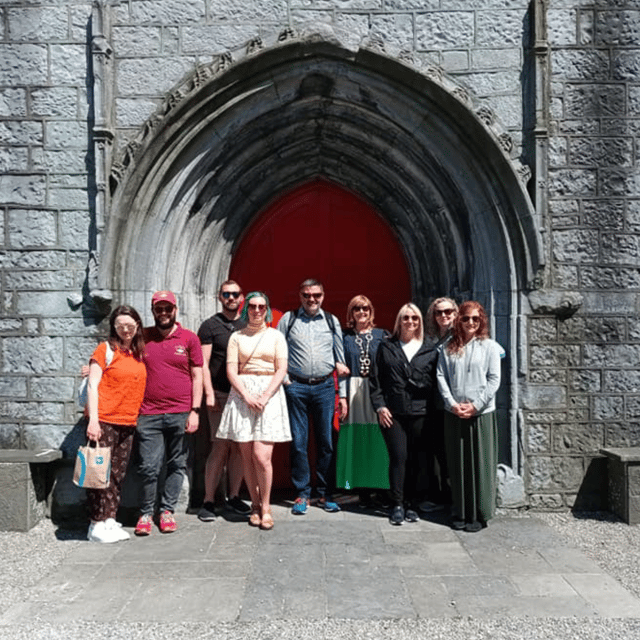
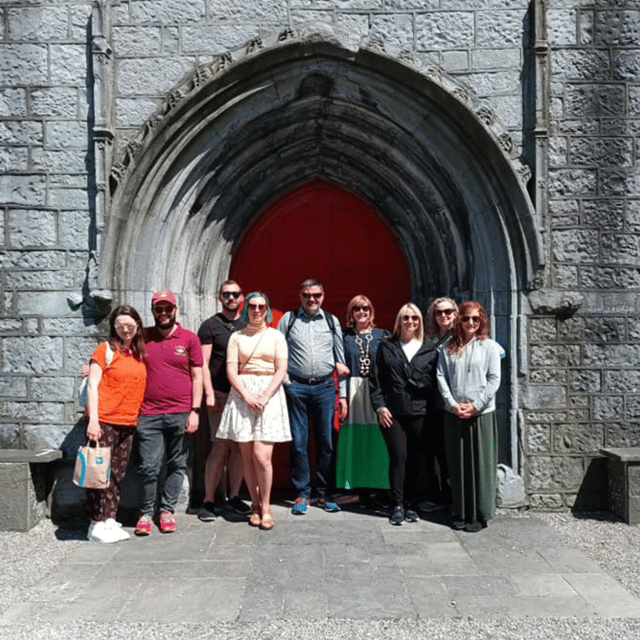
St. Nicholas’ Collegiate Church has been at the center of Galway for more than 700 years. The church is one of the walk’s most important stops, but entrance is not included. Adults pay €5, while concessions pay €4.
Inside and around the church, the guide discusses Jane Eyre and James Kearney, as well as the period when Cromwell’s soldiers used the building as a stable. These details show how a major religious building could change meaning over time. A place built for worship could also become a military holding space during conflict.
The separate entrance fee is worth considering if you enjoy church interiors and layered stories. If you are trying to keep the tour strictly within the $23 price, you can still hear about the church from the outside, but you will miss the chance to inspect the interior more closely.
Because the tour includes several stops in a short period, this is not designed as an extended architectural study. You get context, stories, and a chance to see the building as part of Galway’s long civic life.
A different sort of day from the same base:
- From Galway: Aran Islands and Cliffs of Moher Tour & Cruise
★ 4.8 · 2,283 reviews - Cliffs of Moher & the Burren Tour from Galway
★ 5.0 · 1,913 reviews - From Galway: Cliffs of Moher and The Burren Guided Day Trip
★ 4.7 · 1,770 reviews - From Galway: Connemara and Cong Full-Day Tour
★ 4.7 · 1,737 reviews
The King’s Head and a story of royal execution
The walk then points out the building now occupied by the King’s Head Pub. Its connection is to the beheading of King Charles I of England.
This stop is a good example of how the tour uses ordinary Galway streets to explain events far beyond the city. The pub is not presented simply as a place for a drink. Its building is tied to a major political rupture in English history.
You will probably appreciate the contrast between the building’s present-day use and the serious story attached to it. At the same time, this is a quick street stop, not a visit to a museum or a preserved execution site. The value comes from the guide’s explanation and the setting, not from a large collection of objects.
The Claddagh ring at Thomas Dillon’s Jewellers
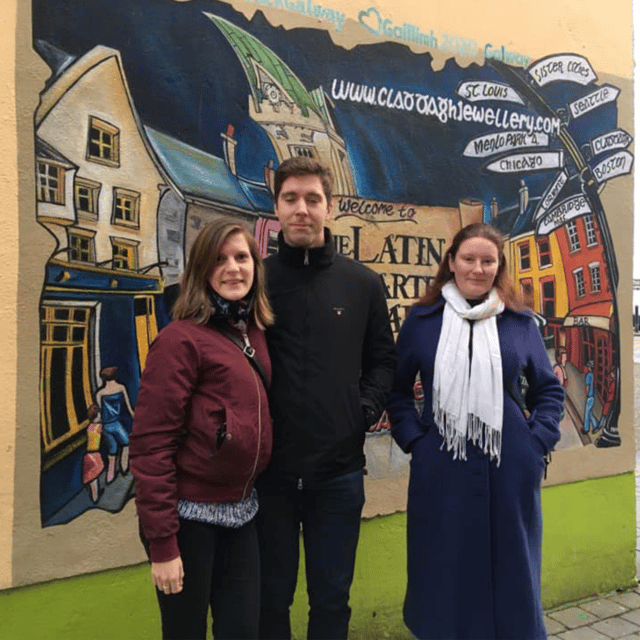
On Quay Street, you stop at Thomas Dillon’s Jewellers, the original makers of the famous Claddagh ring since 1750. The ring is now recognized around the world, but the tour places it back in Galway’s local story.
You hear the tale connected with the ring and learn why this piece of jewelry became such a strong symbol. This stop adds a different kind of history to the walk. The walls and castles show civic power, while the Claddagh ring connects Galway to family, affection, and personal identity.
You do not need to be shopping for jewelry to enjoy the stop. It gives you a practical detail to notice later in Galway, especially if you see Claddagh designs in shops or on local displays. If you want to buy something, remember that the walking tour itself does not include any purchase.
Go below street level at the Hall of the Red Earl
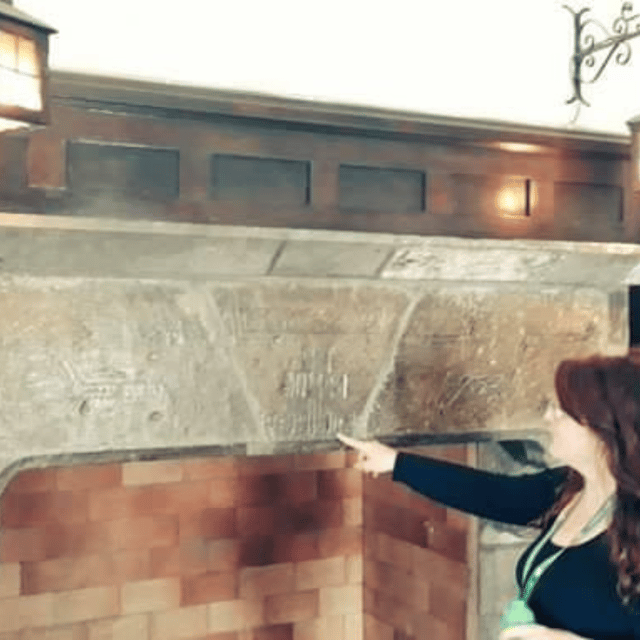
The Hall of the Red Earl is one of the strongest archaeological stops on the route. Galway Civic Trust runs the site, where you can see remains of walls, columns, and buttresses.
The walk takes you down into the site for a closer look. That change in level helps you understand how much of medieval Galway lies below the present street. You are not only hearing that the city was older than it appears. You are looking directly at pieces of its earlier structures.
This is a particularly useful stop for anyone who likes archaeology but does not want to spend an entire afternoon in a museum. The site is compact, so the guide’s explanation does much of the work. Pay attention to how the remains relate to the city around them, rather than expecting a fully reconstructed medieval building.
Kirwan’s Lane and Galway’s surviving medieval lanes
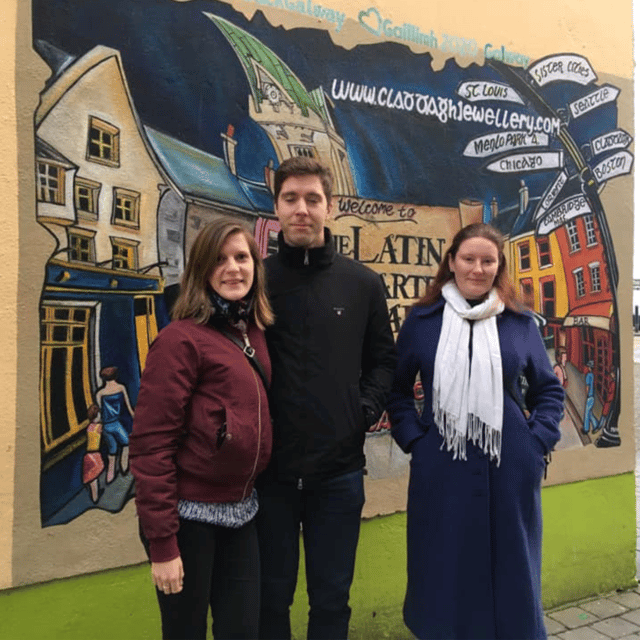
Next comes Kirwan’s Lane, one of only five lanes still in existence in Galway. It takes its name from the Kirwan family, another of the 14 Tribes.
The lane preserves remnants of medieval Galway in its buildings and layout. It is the kind of place where the city’s age becomes easier to sense because the route narrows and the buildings sit close to the path.
I like this part of the walk because it gives you a break from major landmarks. Galway’s past is not limited to named castles and churches. It also survives in smaller lanes, family names, and the shape of the streets.
Do not expect an untouched medieval quarter. The experience is about surviving fragments and connections. You will see how old and new Galway share the same space, sometimes with very little warning between them.
Blake’s Castle and the harsh side of medieval justice
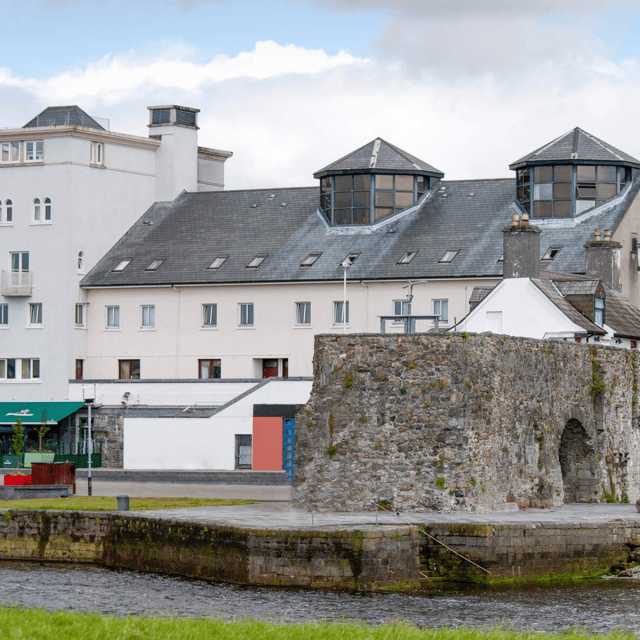
At the end of Quay Street, you reach Blake’s Castle. The building belonged to the Blake family, one of Galway’s 14 Tribes, and the guide explains what life was like for criminals held in its jail.
The castle later fell into ruin and was restored around the 1980s. That history gives the stop two distinct chapters. First comes the medieval building and its association with family power and imprisonment. Then comes the modern effort to preserve a structure that had nearly disappeared.
This is not a grand fortress spread across a wide site. Its importance comes from its place in the medieval town and from the stories attached to it. You will learn about the people who were confined there, not just the family who owned it.
The stop also balances the more polished stories of merchants and civic leaders. Galway’s past included trade and status, but it also included crime, punishment, and hard conditions for people without power.
Finish at the Spanish Arch and the Claddagh
The tour ends at the Spanish Arch, one of Galway’s best-known sights. The arch once formed part of the city’s defenses and riverfront access, linking the medieval town with the area across the River Corrib.
Here, you hear about the Claddagh, the fishing community across the river, and a tsunami that destroyed two of the arches. That final story gives the tour a strong sense of place. Galway’s buildings were shaped not only by families and politics but also by water, weather, and sudden destruction.
The Spanish Arch is a fitting endpoint because it connects several themes from the walk: defensive walls, commerce, the river, and life beyond the formal city. You finish close to the waterfront rather than at another enclosed interior site.
The activity then returns to the original meeting point. Since the walk takes 1.5 hours, you can plan another Galway activity afterward without giving up a full morning or afternoon.
Is $23 a fair price for 90 minutes?
At $23 per person, I consider this a solid value if you want a guided introduction to Galway’s medieval center. The tour covers many locations, and the guide supplies the links between them. Without that context, several stops would be easy to pass without noticing.
The price is less attractive if you prefer long visits at individual monuments. You will see and discuss a wide range of sites, but the schedule leaves limited time for lingering. Add the separate St. Nicholas’ Church entrance fee if you want to go inside.
The value is strongest for a first visit, when you want to understand how Galway’s old families, churches, lanes, walls, and riverfront fit together. It also suits you if you enjoy legends alongside documented places, especially the Lynch family story and the tale connected with the King’s Head.
The tour includes free cancellation up to 24 hours before the start and allows you to reserve now and pay later. Those terms are useful in Galway, where weather can change quickly.
Practical advice for the Galway weather and streets
Wear comfortable shoes. This is a walking tour, and the route includes city streets, lanes, and the Hall of the Red Earl’s lower archaeological area.
Bring an umbrella, water, and a camera. The tour runs in all weather unless a severe weather warning makes it unsafe, so dress for rain and changing conditions. You should also carry a card, some cash, and a student card if you may use the concession at St. Nicholas’ Church.
Smoking, alcohol, drugs, and audio recording are not allowed. Bachelor and bachelorette party groups are also not accepted, which keeps the walk focused on its historical purpose.
The experience is listed as wheelchair accessible. If you have specific mobility concerns, you may still want to confirm the current route when booking, since historic streets and archaeological sites can involve different surfaces and levels.
Who should book this medieval Galway walk?
I would choose this tour if you want local stories, visible remains, and a compact introduction to the city. It suits first-time visitors, history fans, and anyone who prefers learning a place by walking through it rather than reading about it afterward.
Families with older children may enjoy the dramatic stories, though the material includes execution, imprisonment, and political violence. People who want a gentle stroll with no difficult subject matter may find the tales heavier than expected.
You should also book it if you like seeing old buildings used in modern ways. Lynch’s Castle is now a bank, the city walls appear inside a shopping center, and the King’s Head occupies a building linked to a royal execution. Those contrasts are the heart of the experience.
I would skip it if your main goal is a long church visit, a museum-style presentation, or an unhurried photography walk. The 90-minute format is designed to cover ground and make connections.
Should you book the Medieval Galway Tour?
Book it if you want Galway’s medieval past explained by a trained local guide rather than pieced together from plaques. The route has excellent variety: city walls, a church, archaeological remains, family castles, a famous jewelry tradition, a surviving lane, and the Spanish Arch.
The best reason to go is the way ordinary city spaces reveal older Galway. Add the Lynch family legend, the Claddagh story, and the account of the tsunami, and you get a walk with real narrative range.
For $23, the tour offers good value, provided you are comfortable with a quick pace and the possibility of Irish rain. Pay the extra church fee only if seeing the interior matters to you. For most visitors seeking a practical first look at Galway’s medieval center, this is a worthwhile booking.
FAQ
How long does the Medieval Galway Tour last?
The tour lasts 1.5 hours. Check availability for the current starting times.
Where does the tour begin?
Meet at the Browne Doorway in Eyre Square. It is a free-standing stone doorway surrounded by perspex glass on the north side of the square.
Where does the tour finish?
The activity ends back at the original meeting point.
Is St. Nicholas’ Church entrance included?
No. Entrance costs €5 for adults and €4 for concessions.
Who guides the tour?
Marteen Lane leads the experience. Marteen is a Fáilte Ireland Regional Guide with more than 11 years of guiding experience and a BA (Hons) in Heritage Studies.
What language is the tour conducted in?
The live guided tour is conducted in English.
Does the tour run in bad weather?
Yes. The tour runs in all weather, so you should bring weather-appropriate clothing and an umbrella. If a severe weather warning makes the tour unsafe, it will be canceled and you will receive an alternative date or a full refund.
Recently added around Galway
- Sean’s Bar, Athlone Castle and Clonmacnoise Monastery★ 4.5 · 3 reviews
- Ferry ticket – Day return ticket to Inishbofin Island from Cleggan. Self Guided.★ 5.0 · 3 reviews
- Connemara/Galway: Inis Meáin Return Ferry Transfer★ 4.7 · 3 reviews
- Galway: HerGalway Walking Tour★ 5.0 · 3 reviews
- From Galway: Cliffs of Moher and The Burren Tour★ 5.0 · 3 reviews
- Galway’s Historical Gems: A Walk Through Time★ 5.0 · 3 reviews
- Galway Tasting and Walking Tour★ 5.0 · 3 reviews
- 2.5 Hour Guided Sea Kayaking in Roundstone Bay★ 5.0 · 3 reviews
Galway Tours, compared.
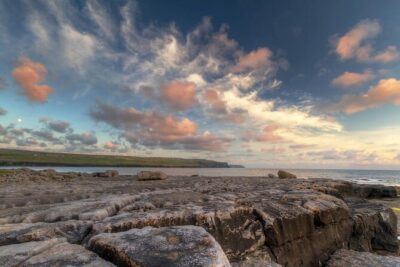
Galway to Cliffs of Moher, Aillwee Cave & Dunguaire Castle Tour
Read our review →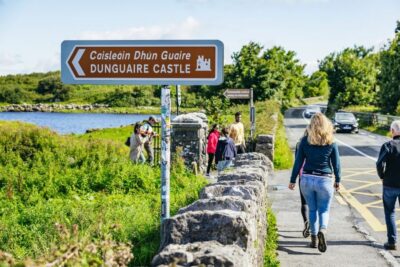
Full-Day Cliffs of Moher & Burren Guided Tour
Read our review →
Galway to Inisheer Aran Islands, Cliffs of Moher and Boat Trip
Read our review →
Aran Islands and Cliffs of Moher Tour & Cruise
Read our review →
Cliffs of Moher & the Burren Tour from Galway
Read our review →
Cliffs of Moher and The Burren Guided Day Trip
Read our review →
Galway to Aran Islands Inisheer, Doolin, Cliffs of Moher Day Tour
Read our review →Browse the lists this tour appears in