
Reviewed · ENNIS TOURS
Private Ennis Essential History Tour with Dr Jane O’Brien
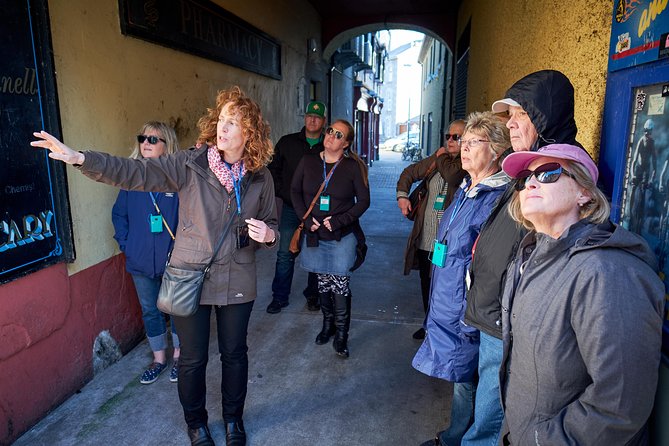
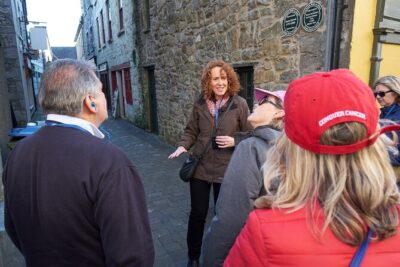
Ennis reveals itself best on foot, one lane and old doorway at a time. Dr Jane O’Brien uses historical sources, real people, and local stories to connect the medieval market town with Catholic emancipation, the Great Famine, the 1916 uprising, and everyday life in County Clare. The private format lets your group of up to six keep the pace comfortable and ask questions.
I like the way this tour reaches beyond the obvious church-and-castle story. The old bow-ways, McParland House, Gallows Green, and the former orphanage site give you a feel for ordinary lives, not only grand events. I also like the short, focused route, which makes it a useful first look at Ennis rather than a half-day commitment.
The main consideration is pace. With about 11 stops in roughly 70 minutes, you will get a lively introduction rather than long visits inside each place. The tour is mostly outdoors, and admission is not included for any attraction you may choose to visit afterward.
Key points to know before you book
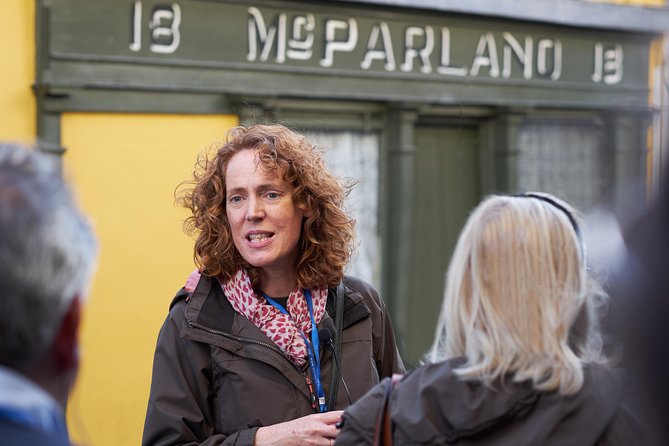
- Dr Jane O’Brien leads the walk: Her storytelling links Ennis landmarks with documented events and personal experiences from the town’s past.
- A private group keeps the tour personal: The price covers up to six people, making it easier to ask questions or adjust the pace.
- The route covers more than famous monuments: Expect lanes, market spaces, a former industrial school site, famine-era streets, and a rare timber-framed house.
- The walk is short but full: Plan on about one hour and ten minutes, with roughly five minutes at each listed stop.
- An amplification device is available: Ask for it if hearing clearly in outdoor settings is important to you.
- The usual finish is near the cathedral: You can visit the Cathedral of Saints Peter and Paul or return toward the starting point along O’Connell Street.
Why this short Ennis walk works
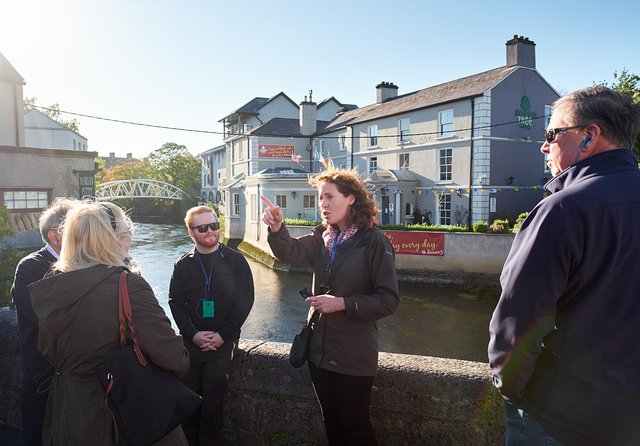
Ennis began as a medieval market town in the 13th century, and that commercial past still shapes the town center. This walk gives you a quick way to read the streets: which lanes once led to poorer housing, where markets drew people together, and how religious and political events changed daily life.
The experience is not built around a single grand sight. Instead, Dr O’Brien uses small clues in the town fabric. A half-door, a narrow lane, an old house front, or a memorial beside the river can open up a larger story.
That approach suits you if you enjoy walking tours that explain why a place looks the way it does. It also helps if you have limited time in Ennis and want more than a quick look at the shopping streets.
The private setup is especially useful for families and small groups. The price is $270.32 per group of up to six, not per person. At the full six-person capacity, that works out to about $45 per person. For two people, it is a much higher per-person cost, so the value depends on how much you care about a private guide and a tailored conversation.
More Historical Tours in Ennis:
- Self Guided Electric Bike Tour of Historical Sites in the Burren Co Clare
★ 5.0 · 18 reviews - Private Ennis Dark History Tour with Dr Jane O’Brien (1-6 people)
★ 5.0 · 13 reviews - Dublin Historical Centre Food Tour with 8 Food Tastings & Drinks
★ 5.0 · 1,718 reviews
Starting beside Clare Museum
The walk begins at the Ennis Tourist Information Centre on Arthur’s Row, close to Clare Museum. The opening stop is beside the former convent building used by the Sisters of Mercy.
Here Dr O’Brien introduces Ennis as a medieval market town, setting up the themes that follow. You will hear how the town developed and why trade, religion, and local power mattered so much to its growth.
This first stop is brief, about five minutes, so do not expect a museum visit as part of the tour. Clare Museum is a useful place to return to if you want more regional context, but the walking experience itself begins outside and keeps moving.
Daniel O’Connell and Catholic emancipation
The Daniel O’Connell Monument takes you into one of the most important political stories connected with Ennis. The central monument marks the site of major public events, including the milestone of Catholic Emancipation.
Dr O’Brien uses this point to show how national Irish politics played out in a local town. That is one of the tour’s strengths: instead of treating emancipation as a distant item from a textbook, you connect it with a real civic space in Ennis.
You will spend only about five minutes here. If political history interests you, this is a place where a follow-up question can add a lot, especially in a private group.
The bow-ways of Abbey Street
Abbey Street includes one of Ennis’s atmospheric bow-ways, narrow lanes that once connected the main streets with poorer tenement areas. This is a small feature, but it gives the walk a useful change of scale.
Monuments tell you about public power. A cramped lane tells you more about how people moved through town and where less prosperous residents lived. The stop helps balance the story, bringing attention to housing and class rather than only churches, leaders, and markets.
The lane is also a reminder that Ennis is best understood at walking speed. You can notice the shape of the town more clearly than you would from a vehicle.
A few more Ennis half-days to weigh up
- Dublin: Cliffs of Moher, Doolin, Burren, and Galway Day Trip
★ 4.5 · 2,851 reviews - From Doolin: Cliffs of Moher Boat Tour
★ 4.4 · 279 reviews - Public Ennis Walking Tour with Local Expert Dr Jane O’Brien
★ 5.0 · 262 reviews - Galway: Cliffs Cruise, Aran Islands & Connemara Day Tour
★ 4.7 · 111 reviews
Ennis Friary and the River Fergus
At Ennis Friary, the story turns to the Franciscan Friars and their part in the development of the town. The old abbey dates to around the 1280s, giving you one of the clearest links to medieval Ennis.
The setting also brings a pleasant view of the River Fergus. Nearby memorials recall the 1916 uprising against British rule, so this stop ties together medieval religion, the town’s physical setting, and modern Irish nationalism.
The tour does not include a separate admission ticket for the listed stops. If you want a longer look at the friary or other interiors, you may need to return independently, since the route allows only a short explanation at each location.
Francis Street and the O’Brien connection
Francis Street is described as the oldest street in Ennis. It leads toward the site associated with the O’Brien Kings, the family linked with the town’s founding.
This is a good moment to connect the town’s name and early development with local power. The route also includes a visit to the friary originally built in the 1850s, where you can see stained glass and enjoy a quieter atmosphere.
The pairing of old street and later religious building shows how Ennis changed over time. You are not only looking at one period. You are moving through layers of medieval origins, later Catholic life, and the continued use of historic town spaces.
Arthur’s Row and difficult local stories
At Arthur’s Row, the walk returns to the old convent building. The focus here is on children connected with the orphanage and industrial school that once occupied the site.
This is one of the more serious sections of the route. Dr O’Brien draws on archived experiences, bringing attention to institutional life and the children who lived there. The subject may feel heavier than the picturesque lanes or river views, but it is an important part of understanding Ennis.
The stop also shows why a source-based guide can add value. A building that might otherwise appear ordinary becomes a place with personal stories attached to it.
McParland House on Parnell Street
Parnell Street brings one of the tour’s most distinctive sights: McParland House, dating to around 1620. It is described as the only known surviving timber-framed house in Ireland and the oldest house in Ennis to remain in continuous use without major structural changes.
The quaint shopfront and half-door help you picture the town as a working market center. This is not simply an old facade to photograph. Its value comes from the way it connects architecture with daily trade and long-term use.
You will probably appreciate this stop most if you enjoy small, easily missed details. It is the kind of place that a guidebook may mention briefly, while a local historian can explain why it matters.
Chapel Lane and the Great Famine
At Chapel Lane, you stop beside the building now associated with the Chapel Lane market. The structure was once a church built in 1735 during the penal times.
The lane also opens the subject of the Great Famine and the overcrowding that affected areas like this one. Dr O’Brien connects a physical setting with the devastation experienced by the town, rather than presenting the famine only as a national statistic.
This part of the walk may be especially useful if you want to understand how major Irish events affected ordinary urban spaces. The narrow lane makes the discussion concrete, although the brief stop means you should ask questions if you want more detail.
Market Place and the social life of trade
Ennis served as County Clare’s main market town for hundreds of years. At Market Place, the tour covers livestock, produce, trading, social meetings, matchmaking, and faction fighting.
That mix gives you a fuller picture of market day. Markets were places to buy and sell, but also to meet family, arrange relationships, exchange news, and sometimes settle disputes in violent ways.
A market-day sculpture now marks the site, giving you a modern object through which to consider older customs. This is one of the most enjoyable stops for understanding how a town functioned before modern shopping streets and online commerce.
Barrack Street and Gallows Green
Barrack Street was once known as Gallows Green. Here, Dr O’Brien draws from the 1660 corporation manuscript of Ennis to explain crimes and punishments recorded in the town.
The subject can be unsettling. Punishments that appear ordinary in an old municipal record may seem harsh or shocking today. That contrast gives the stop its force, showing how local government dealt with crime and public order in the 17th century.
Like the industrial school story, this is not a polished postcard version of Ennis. It adds difficult material, but it also makes the town’s past more honest and human.
Cathedral of Saints Peter and Paul
The usual route finishes at the Cathedral of Saints Peter and Paul, the principal Catholic church of the region. Construction took place between 1830 and 1870, placing the building in the period after Catholic Emancipation and during major changes in Irish religious and civic life.
The cathedral sits opposite the Old Ground Hotel, once the site of the town jail. The area also includes a haunted tower house dating to the 1500s, adding another turn in the local story.
This is a practical ending point. You can choose to visit the cathedral afterward, or make your way back toward the beginning along O’Connell Street, the main pedestrianized shopping street. The supplied end point says the activity returns to the meeting point, while the route description says the tour usually ends at the cathedral, so confirm the exact finishing arrangement when you book.
What the 70-minute format means
The tour lasts about one hour and ten minutes. Each of the 11 listed stops is planned for roughly five minutes, with the remaining time used for walking between places and linking the stories.
That format keeps the experience energetic and manageable. You can see a broad cross-section of Ennis without giving up half a day, and you will get your step count up along the way.
The trade-off is depth. You will not have time for a long interior visit, a leisurely coffee break, or an extended stop at every monument. Think of this as a guided orientation with historical detail, then use the information to decide where you want to return.
An amplification device is available if hearing a guide outdoors is difficult for you. Most people can take part, the meeting point is near public transportation, and service animals are allowed.
Food, group size, and the right kind of booking
The essential history walk described here does not list food tastings as included. A Gourmet History Tour is also mentioned, with snacks and local food tastings, but you should not assume those are part of this booking unless the option you select specifically says so.
The private group limit is six people. For a family or group of friends, the flat price can make sense, particularly if you value being able to ask Dr O’Brien about a family connection or a specific period in Irish history.
One past participant used the walk to explore a family connection to the name Ennis. That is a useful clue about the tour’s appeal: it can work as a general introduction, but it may also help you connect a surname or personal interest with a real place.
The experience is offered in English. It is booked, on average, 48 days ahead, so popular dates may require planning.
Should you book Dr Jane O’Brien’s Ennis tour?
Book it if you want a compact, private introduction to Ennis that mixes famous events with overlooked corners. Dr Jane O’Brien’s strength is the range of material: medieval beginnings, Franciscan life, Catholic politics, famine, institutional history, market customs, crime, and the 1916 uprising all appear within a short walk.
I would particularly choose it for a first visit, a small family group, or anyone who prefers local stories to a simple list of sights. The tour also suits you if you want a guide who can explain real people and archived experiences rather than reciting dates.
Think twice if you want long visits inside buildings or a slow architectural tour. The pace is brisk, the route is mostly outdoors, and the price is easier to justify with four to six people than with only one or two.
For a private history walk that helps you see Ennis as a lived-in town, not just a stop between larger County Clare sights, this is a strong choice. Allow extra time afterward for the cathedral, Clare Museum, or your own return walk along O’Connell Street.
FAQ
How long does the Private Ennis Essential History Tour last?
The tour lasts approximately one hour and ten minutes.
How many people can join the private tour?
The price covers one private group of up to six people.
What language is the tour offered in?
The experience is offered in English.
Where does the tour begin?
It begins at the Ennis Tourist Information Centre on Arthur’s Row, O’Connell Street, Clonroad Beg, Ennis, County Clare, V95 RX78, Ireland.
Where does the tour end?
The activity information gives the meeting point as the end point. The route description says the walk usually finishes at the Cathedral of Saints Peter and Paul, where you can visit the cathedral or return toward the starting point along O’Connell Street. Confirm the exact arrangement when booking.
Is an amplification device available?
Yes. The guide can use an amplification device to make listening easier.
Are entrance tickets included?
The listed stops have no admission ticket included. The tour is primarily a guided outdoor walk, and the information provided does not include admission to attractions you may visit afterward.
Is food included on this tour?
The Essential History Tour does not list food as included. Snacks and local food tastings are associated with the Gourmet History Tour option.
Is the tour suitable for most participants?
Most people can participate. The experience involves walking between several town-center stops, and it is near public transportation. Service animals are allowed.
Can I cancel for a full refund?
Yes, if you cancel at least 24 hours before the experience start time. Cancellations or changes made less than 24 hours before the start time are not accepted for a refund.
Recently added around Ennis
- Private Cliffs of Moher Tour Small Group from Ennis, Ireland★ 5.0 · 6 reviews
- Cliffs of Moher & Bunratty Castle Day Tour★ 5.0 · 9 reviews
- Ballyvaughan: Aillwee Burren Experience Entry Ticket★ 4.9 · 11 reviews
- Burren Guided Electric Bike tour with Poulnabrone Portal Tomb★ 5.0 · 12 reviews
- Cliffs of Moher and The Burren day trip★ 5.0 · 12 reviews
- Private Ennis Dark History Tour with Dr Jane O’Brien (1-6 people)★ 5.0 · 13 reviews
- Self Guided Electric Bike Tour of Historical Sites in the Burren Co Clare★ 5.0 · 18 reviews
- From Doolin: Cliffs of Moher Guided Coastal Walk★ 5.0 · 35 reviews
Ennis Tours, compared.
Cliffs of Moher, Doolin, Burren, and Galway Day Trip
Read our review →
Public Ennis Walking Tour with Local Expert Dr Jane O’Brien
Read our review →
Cliffs Cruise, Aran Islands & Connemara Day Tour
Read our review →
Doolin Cave Tour: Experience Europe’s Largest Stalactite
Read our review →

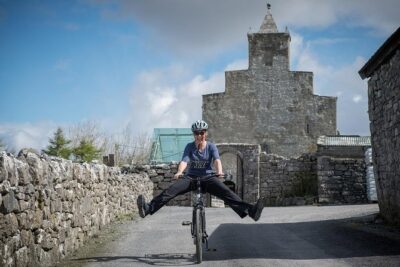
Self Guided Electric Bike Tour of Historical Sites in the Burren Co Clare
Read our review →Browse the lists this tour appears in