
Reviewed · DUBLIN TOURS
The Dublin True Crime Tour
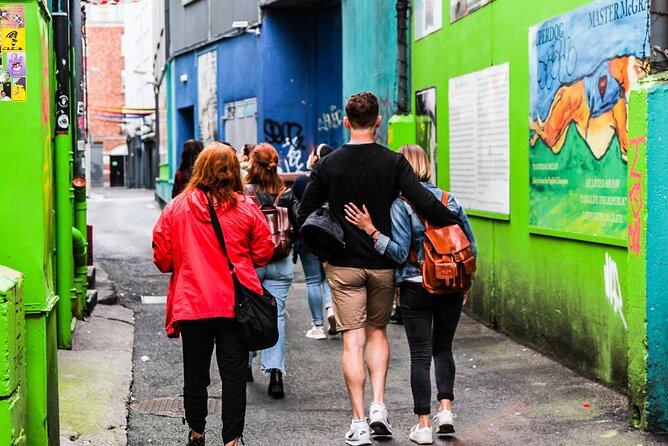
Dublin’s dark side comes into view on this two-hour walk through the city center. You’ll hear about bank heists, old murders, grave robbers, courtesans, executions, and the strange afterlife of a saint’s heart, all while moving between familiar landmarks.
I like the small group limit of 19, which gives the guide room to answer questions. I also like the route itself: it links major sights such as Trinity College and Dublin Castle with stories you would likely miss on a standard city tour.
The main thing to consider is the subject matter. The tour includes modern crime as well as older tales, so it may not match your plans if you expect only Victorian-era murders, poisonings, and gothic mysteries.
Key points to know before booking
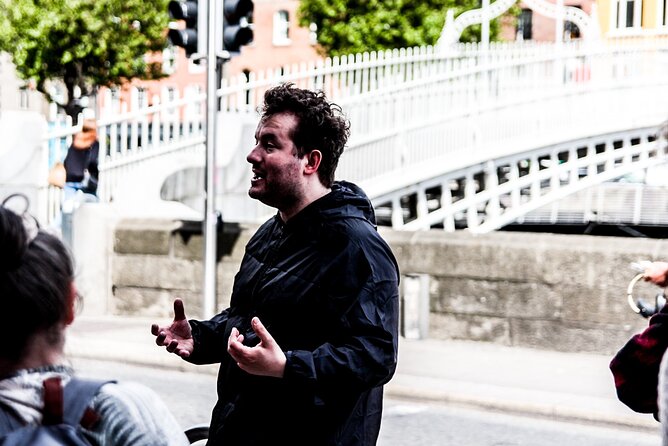
- Six central Dublin stops: The route runs from Bank of Ireland and Trinity College to Dublin Castle, Christ Church Cathedral, and St Audoen’s Church.
- A mix of old and modern crime: Expect stories from 18th-century Dublin, historic punishments, a famous jewel theft, and the murder of journalist Veronica Guerin.
- About two hours on foot: The tour is designed to help you see several landmarks while listening to one connected theme.
- Small-group format: A maximum of 19 people makes it easier to hear the guide and ask questions.
- No attraction admissions are listed: The storytelling takes place outdoors at public landmarks, with no entrance fees for the stops.
- A late-afternoon start: The tour begins at 4 p.m., useful for fitting around a morning museum visit or an earlier city walk.
Dublin’s criminal past begins at College Green
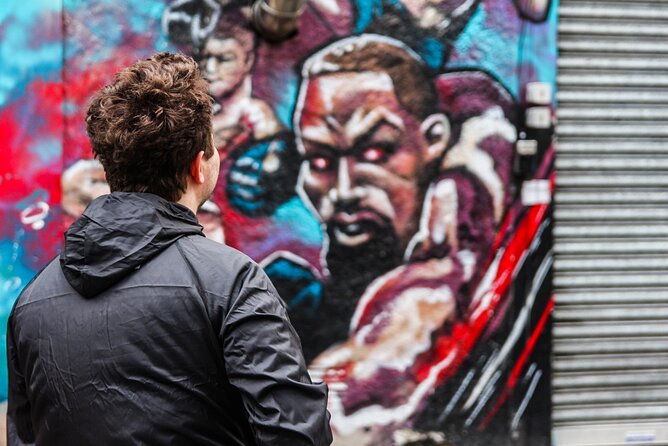
Meet at 1 College Green, beside the Bank of Ireland in the Temple Bar area, for a 4 p.m. start. This is a convenient point in central Dublin, near public transport and within easy reach of the city’s main sights.
The first story concerns Ireland’s biggest heist and the tiger kidnapping connected with it. The stop is brief, around five minutes, but it sets the tone: this is not a general history walk with one crime added for flavor. Crime is the main subject from the opening minutes.
Because the group remains outside, you do not need to budget time for an interior visit at the Bank of Ireland. That keeps the route moving, though it also means the value depends heavily on the guide’s storytelling rather than on access to special rooms or exhibits.
The walk is best understood as a series of short story sessions. You pause at a site, hear how it connects to a crime, then continue through the city. That format helps you cover ground without spending the whole afternoon in one place.
A few more Dublin half-days to weigh up
- Dublin to Cliffs of Moher, including Wild Atlantic Way and Galway
★ 5.0 · 23,331 reviews - From Dublin: Cliffs of Moher, Burren & Galway City Day Tour
★ 4.8 · 18,888 reviews - Dublin: Guinness Storehouse Entry Ticket
★ 4.6 · 16,863 reviews
Trinity College and the punishment of murderers
The next stop is Trinity College Dublin, one of the city’s most recognizable landmarks. Here, the guide tells stories of old murders at the college and explains how those responsible were punished.
The appeal is the contrast between the college’s familiar public image and the darker episodes tied to its past. You are not simply looking at a famous campus. You are being asked to consider how murder, justice, and punishment were handled in earlier periods.
This part lasts about five minutes, so do not expect a long account of every crime connected with Trinity. Instead, it works as a sharp historical pause on the route. The subject of punishment also prepares you for later stories about the penalties imposed from Dublin Castle.
If you want to enter Trinity College or see the Book of Kells, you will need to arrange that separately. This tour uses the college as an outdoor storytelling stop and does not include an admission ticket.
Molly Malone, grave robbers, and 18th-century Dublin
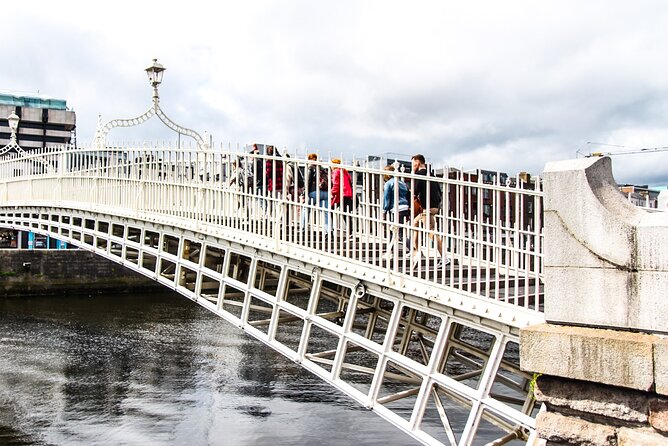
At the Molly Malone statue, the mood shifts from institutional crime to the rougher side of 18th-century Dublin. The guide covers grave robbers and courtesans, giving you a glimpse of a city where death, poverty, sex, and commerce often met in uncomfortable ways.
This is one of the longer pauses, at about 15 minutes. That extra time matters because the topic has more social background than a single theft or murder. The story can help you picture the pressures and opportunities that shaped life in old Dublin, without turning the stop into a standard sightseeing lecture.
The statue itself is a busy meeting point in the city center. You may find people gathering around it for photographs, so staying close to the guide is sensible. A small group helps here, particularly if the surrounding street is noisy.
This is also a good example of the tour’s broad definition of true crime. The program is not limited to police cases and murder scenes. It includes the social conditions, characters, and customs that made Dublin’s darker stories possible.
Dublin Castle and the Irish Crown Jewels Heist
Dublin Castle brings one of the route’s headline subjects: the Irish Crown Jewels Heist. The guide also explains the kinds of punishment that could be handed out from this powerful location.
The castle gives the discussion a strong setting. It was a center of authority, and the story connects theft with the machinery of law and punishment. You get both sides of the crime story: the act itself and the official response that followed.
Allow around 10 minutes here. The stop does not include entry to the castle, so you will hear the story from outside rather than examining the interiors associated with government and administration. If you plan to tour Dublin Castle separately, this walk can give that visit an extra layer of context.
I like this portion because it links a famous object-based crime, the stolen jewels, with the less glamorous realities of punishment. It also breaks up the route with a major landmark that many people already want to see.
A different sort of day from the same base:
- Dublin to Cliffs of Moher, Burren, Wild Atlantic Way, Galway Tour
★ 5.0 · 12,924 reviews - Dublin to Belfast Black Cab, Dunluce Castle and Giant’s Causeway
★ 5.0 · 7,954 reviews - Kilkenny, Wicklow Mountains & Glendalough Day Tour from Dublin
★ 5.0 · 7,897 reviews - From Dublin: Wicklow Mountains, Glendalough & Kilkenny Tour
★ 4.8 · 6,235 reviews
Dubh Linn Gardens and the story of Veronica Guerin
At Dubh Linn Gardens, the tour turns to the memorial for Veronica Guerin. Guerin was an Irish journalist whose murder became one of the country’s best-known modern crimes.
This is the point to keep in mind if you expect only old tales. The tour reaches beyond 18th- and 19th-century crime and includes contemporary Irish history. That wider time span gives the experience more range, but it may disappoint you if your main interest is Victorian murder cases.
The guide also tells the story of a deceptive curator connected with the Chester Beatty. The pairing is intriguing because the two subjects show different forms of wrongdoing: one tied to organized criminal violence, the other to concealment and betrayal within a cultural setting.
The stop lasts about 10 minutes. Dubh Linn Gardens is a calmer place for a serious story, though the outdoor format means weather and nearby activity can affect how clearly you hear. Bring a coat or rain layer, especially since the experience depends on suitable weather.
Christ Church Cathedral and the Heart of St. Lawrence
Christ Church Cathedral provides the final major story stop. Here, you hear about the Heart of St. Lawrence and its postmortem adventures.
It is an unusual subject, and it gives the walk a macabre closing note without relying only on murder. The story connects the cathedral to relics, death, and what happened to a human heart after its owner died. That unusual premise is part of the tour’s appeal for people who enjoy strange historical details as much as conventional crime cases.
The planned stop is about 10 minutes. As with the other locations, the tour does not list cathedral admission, so you should not assume you will go inside as part of the experience.
Christ Church also helps shift the tone back from modern crime to older religious and cultural history. The route has moved through banks, colleges, government buildings, gardens, and a cathedral, which gives the walk a pleasing variety.
Ending near St Audoen’s Church
The tour ends at St Audoen’s Catholic Church on High Street, in the Merchants Quay area. This is not the same place as the starting point, so plan for a one-way walk rather than a return to College Green.
That finish is useful if you are continuing toward the Liberties or nearby historic streets. If you have a dinner booking near Temple Bar, allow time to walk back or arrange transport. The route is central, but the end point is not beside the starting location.
The itinerary lists roughly 55 minutes of fixed storytelling time across six stops. The remaining time is spent walking between them, getting settled, and moving at a city pace. That is a reasonable structure for a two-hour tour, though the exact timing will depend on the guide, group, questions, and street conditions.
What the small group changes
The maximum group size is 19 people. That is not a private tour, but it is small enough to feel more personal than a large city walk.
A strong guide can use this format well. You can ask about a detail, pause for clarification, and stay involved rather than simply following a flag through the streets. The most positive feedback about the experience centers on friendly interaction, clear storytelling, questions, and a well-paced route.
There is also a practical downside. A small group does not guarantee the same guide or the same delivery every time. One account describes a guide who seemed unwell, distracted, and difficult to hear. That is worth taking seriously because the stories are the entire product. If the delivery falters, there are no museum objects or interior visits to carry the experience.
Try to stand close to the guide, especially at Molly Malone, Dublin Castle, and other public spaces where passing crowds can make hearing harder. Staying near the front is a simple way to get more from the tour.
Is $16.90 good value?
At $16.90 per person, this is a reasonably priced way to spend two hours in central Dublin. You are paying for a guided route through six notable locations, not for admissions, transport, food, or a private experience.
I see the best value if you want structure. You could walk past the Bank of Ireland, Trinity College, Dublin Castle, and Christ Church on your own, but you would not automatically connect them through crime stories. The guide saves you research time and gives the walk a clear theme.
The price is less compelling if you mainly want detailed access to each attraction. No entry tickets are included, and most stops are short. You should book this for the stories and route, then add separate visits to Trinity College, Dublin Castle, or Christ Church if their interiors are priorities.
The high overall rating and 96 percent recommendation figure suggest strong appeal, but the feedback also points to guide performance as the key variable. That is not unusual for a storytelling tour. You are buying an interpretation of Dublin, so the quality of the voice, pacing, and preparation matters more than a long list of included features.
Who will enjoy this Dublin walk?
I would recommend it to true crime fans, history enthusiasts, and repeat visitors who want a different way to look at central Dublin. It also suits anyone who likes unusual tales, historic punishments, and stories that sit just outside the usual sightseeing route.
The experience works well for adults and older children who can manage two hours on foot and are comfortable with serious subjects. Most people can take part, and service animals are allowed. The route is near public transportation, which helps before the start and after the finish.
You may want to skip it if you dislike crime stories, want a purely architectural tour, or expect every case to come from the Victorian era. The inclusion of Veronica Guerin’s story makes the time period broader than some people may expect.
The tour also requires good weather. Since the storytelling happens outside, rain can affect comfort and audibility. If poor weather causes cancellation, you are offered another date or a full refund.
Booking, timing, and cancellation details
Your booking confirmation arrives at the time of purchase, and the ticket is mobile, so you can keep it on your phone. The tour is offered in English and starts at 4 p.m.
You can cancel up to 24 hours before the local start time for a full refund. Changes or cancellations made inside that 24-hour window are not accepted for a refund.
The experience also requires a minimum number of participants. If that minimum is not reached, you will be offered another date or experience, or receive a full refund. Those conditions make it sensible to avoid booking the tour as the only fixed activity on the final evening of a short Dublin stay.
Should you book the Dublin True Crime Tour?
Book it if you want a compact, story-led walk that shows Dublin through heists, murders, punishments, grave robbing, relics, and modern crime. The route is central, the price is fair, and the small group size gives the guide a chance to make the experience personal.
Go in knowing that the tour is not limited to Victorian cases, and that guide delivery matters a great deal. Stay near the guide, wear comfortable shoes, check the forecast, and keep your expectations focused on outdoor storytelling rather than attraction entry.
For the right audience, this is a memorable way to see familiar Dublin landmarks with their darker details brought to the surface.
FAQ
How long is the Dublin True Crime Tour?
The tour lasts approximately two hours, including walking between the six listed stops.
Where does the tour start?
It starts at 1 College Green, Temple Bar, Dublin, D02 YT92, Ireland, near the Bank of Ireland.
Where does the tour end?
The tour ends at St Audoen’s Catholic Church on High Street, in the Merchants Quay area of Dublin.
What time does the tour begin?
The scheduled start time is 4 p.m.
Is the tour offered in English?
Yes. The experience is offered in English.
What is the cancellation policy?
You can cancel at least 24 hours before the start time for a full refund. Cancellations or changes made less than 24 hours before the start are not refunded. If poor weather or an insufficient number of participants causes cancellation, you are offered another date or experience, or a full refund.
Recently added around Dublin
- Dublin: Pub Tour. Pour The Perfect Guinness, Whiskey & Music★ 5.0 · 3 reviews
- Waterford Crystal and Kilkenny Full-Day Rail Tour from Dublin★ 5.0 · 3 reviews
- Cliffs of Moher and The Burren Private Tour from Dublin★ 5.0 · 3 reviews
- Private Chauffeur Service From Dublin Airport to Killarney★ 5.0 · 3 reviews
- Beautiful Southwest Tour 2022★ 5.0 · 3 reviews
- A Self Guided Walking Tour of Dublin’s Docklands★ 4.5 · 3 reviews
- Dublin One Day Tour with a Local: 100% Personalized & Private★ 4.5 · 3 reviews
- Ireland: 3-Day West Coast Explorer Tour★ 5.0 · 3 reviews
Dublin Tours, compared.

Dublin to Cliffs of Moher, including Wild Atlantic Way and Galway
Read our review →
Cliffs of Moher, Burren & Galway City Day Tour
Read our review →

Dublin to Belfast Black Cab, Dunluce Castle and Giant’s Causeway
Read our review →
Kilkenny, Wicklow Mountains & Glendalough Day Tour from Dublin
Read our review →
Wicklow Mountains, Glendalough & Kilkenny Tour
Read our review →
