Reviewed · DUBLIN TOURS
Dublin Mythology and Folklore Tour with Irish Stories and Legends
Irish mythology here is not locked away in a book. It turns up in Dublin’s streets, monuments, political stories, and even the roots of modern pop culture. This two-hour walk connects fairies, heroes, invasions, prisons, rebellion, and national identity as you cross central Dublin from Temple Bar to Parnell Square.
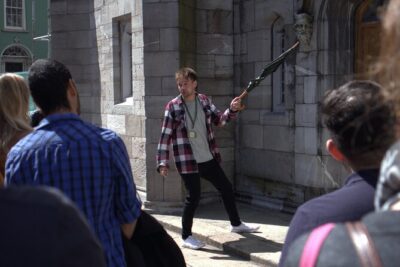
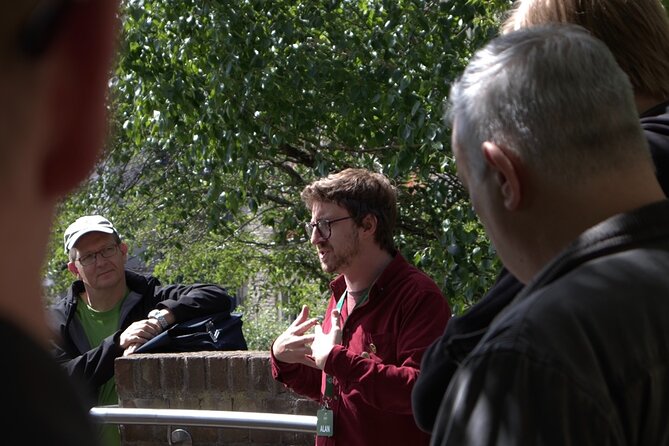
I like the route’s mix of north and south Dublin, especially the crossing of the River Liffey rather than staying in the usual Temple Bar loop. I also like the guides’ storytelling style. Helena, Emily, Ross, Dave, Lee, Deidre, and Alan are among the guides named by past participants, and the strongest feedback centers on humor, enthusiasm, and patient answers.
The catch is simple: this is an outdoor walking tour with plenty of standing. One person found the group hard to hear, while another felt the two hours were tiring. The tour is wheelchair and stroller accessible, but you should still be comfortable spending much of the time outside.
Key points to know before you book

- Irish folklore meets modern Ireland: Stories about fairies, heroes, and legendary figures are tied to Dublin’s buildings and national story.
- A cross-city route: You begin at 3 Crown Alley in Temple Bar and finish at the Garden of Remembrance in Parnell Square.
- A real walking tour: Allow about two hours, with stops for stories and explanation rather than a continuous march.
- Small enough for conversation: The maximum group size is 25, though larger groups may make hearing more difficult.
- Guides make the difference: Helena, Emily, Ross, Dave, Lee, Deidre, and Alan have all led tours, with humor and storytelling praised most often.
- Good value for a Dublin orientation: At $29.02 per person, you get a city walk, folklore lesson, and an introduction to Irish history in one outing.
Why Irish mythology works so well on a Dublin street
Many city tours give you dates, names, and façades. This one asks you to look at Dublin as a place shaped by stories. Irish myth is not treated as a collection of quaint fairy tales. It is presented as part of the way Ireland has explained power, invasion, resistance, belonging, and the character of the Irish people.
That gives the walk more substance than a string of spooky anecdotes. You may hear about fairies and leprechauns, but you also hear how older tales connect with later political movements and modern Irish culture. One especially memorable idea from the tour is the link between Irish mythology and the roots of The Hulk, a surprising pop-culture turn that shows how far these old stories can travel.
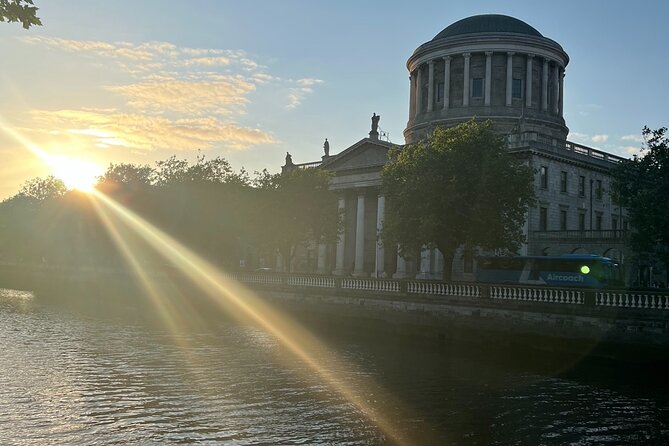
The guides appear to use the city itself as their stage. A bridge lamp, an old church, a courthouse, or a statue becomes a prompt for a story. I like this approach because it helps you notice details you might otherwise pass without a glance.
You will not spend the whole tour inside a museum or historic building. The value comes from the guide’s interpretation, the route, and the connections between places. If you prefer a formal lecture with seats and slides, this may feel too active. If you like stories told where they belong, the format makes sense.
A few more Dublin half-days to weigh up
- Dublin to Cliffs of Moher, including Wild Atlantic Way and Galway
★ 5.0 · 23,331 reviews - From Dublin: Cliffs of Moher, Burren & Galway City Day Tour
★ 4.8 · 18,888 reviews - Dublin: Guinness Storehouse Entry Ticket
★ 4.6 · 16,863 reviews
Starting in Temple Bar at 3 Crown Alley
The meeting point is at 3 Crown Alley, in the middle of Temple Bar. This is a useful place to begin because it puts you right inside one of Dublin’s most recognizable areas, but the tour does not simply become another short walk through its pubs and colorful lanes.
You pass through much of Temple Bar on the way toward Grattan Bridge. The area is easy to reach by public transportation, and the central location makes it a practical first or last activity during a Dublin stay. If you are newly arrived, the opening section can help you get your bearings before the stories widen into Irish culture and national history.
Temple Bar can be crowded and noisy. That matters because outdoor storytelling depends on being able to hear the guide. Stay close to the group, and do not assume that standing at the back will work well. A group of up to 25 is manageable, but the experience is easier when everyone gathers tightly around the speaker.
The first ten minutes are listed for Temple Bar, though the route between stops adds to the walking time. Think of this as a gentle city walk with repeated pauses, not six isolated ten-minute appointments.
Crossing the Liffey and reading Dublin from both sides
The River Liffey is more than a scenic break in the route. It divides Dublin physically, and the tour uses both the north and south sides to broaden the picture of the city.
The Liffey section takes about ten minutes. You will explore sites along both banks before reaching Grattan Bridge. This crossing is one of the route’s most useful features. Many short Dublin walks remain south of the river and focus heavily on Temple Bar, Trinity College, and nearby landmarks. Here, the north side becomes part of the story.
The change of setting also helps the tour feel like a journey rather than a stationary talk. You are moving through different parts of central Dublin while hearing how myths and political memories remain tied to the city. I would schedule this experience early in your visit if you want a story-based orientation, or later if you already know the main sights and want another way to interpret them.
Grattan Bridge and the details above your head
Grattan Bridge is one of Dublin’s best visual pauses. It links Parliament Street with Capel Street and crosses the Liffey with ornate lamps decorated with seahorses.
The bridge stop takes about ten minutes. Look up. The lamps are easy to miss if you are focused on traffic, directions, or the river. This is exactly the kind of small detail that becomes more memorable when a guide explains its place in Dublin’s visual character.
The bridge also marks the route’s shift toward darker and more complicated stories. From here, the walk heads toward St. Michan’s Church, the former Newgate Prison site, and Green Street Courthouse. The tour is not simply collecting attractive city views. It is using ordinary urban spaces to discuss power, crime, religion, punishment, and national memory.
A different sort of day from the same base:
- Dublin to Cliffs of Moher, Burren, Wild Atlantic Way, Galway Tour
★ 5.0 · 12,924 reviews - Dublin to Belfast Black Cab, Dunluce Castle and Giant’s Causeway
★ 5.0 · 7,954 reviews - Kilkenny, Wicklow Mountains & Glendalough Day Tour from Dublin
★ 5.0 · 7,897 reviews - From Dublin: Wicklow Mountains, Glendalough & Kilkenny Tour
★ 4.8 · 6,235 reviews
St. Michan’s Church and Dublin’s unsettling side
At St. Michan’s Church, the group stops outside and hears about the church’s role in Dublin’s secret tales. The church is also associated with bodies held in its crypt, which gives this part of the walk a distinctly eerie tone.
The emphasis is on storytelling outside the building. Do not book this tour expecting a guaranteed interior visit or a crypt admission. The supplied details identify this as an exterior stop, so the guide’s account is the main attraction here.
Nearby, the route explores the grounds of the old Newgate Prison and Green Street Courthouse. This is one of the most historically serious parts of the walk. These places open a door onto Ireland’s difficult past, including crime, punishment, law, and events that are often passed over in a quick city tour.
I appreciate the way this section broadens the meaning of folklore. Old stories do not float free from real life. They sit beside prisons, churches, courthouses, and political buildings. The result is a darker, more grounded look at Dublin than a tour focused only on charming legends.
You will be on your feet and listening outdoors here. If you have mobility limits, the tour is marked wheelchair and stroller accessible, and most people can participate. Still, accessibility does not remove the need for standing or moving between stops, so consider your own comfort across two hours.
The GPO and the link between myth and modern Ireland
The General Post Office is one of Dublin’s most imposing façades and one of the country’s most important political buildings. The tour stops outside the GPO to explain how Irish mythology helped shape modern Irish history.
This is where the experience’s main idea comes into focus. Myths can provide symbols, heroes, and ancient models for a modern nation. At the GPO, those old stories meet the political events that helped define Ireland.
You are not simply being told that the building is important. You are being shown how a country’s ideas about itself can draw on tales that are centuries old. That link between folklore and national identity is one of the tour’s strongest features, especially if you want more than a basic list of Dublin landmarks.
Again, the stop is outside. The tour price does not include admission to the GPO Museum, and the route is not designed as an indoor museum visit. If you want to explore the museum separately, this walk can give you useful context before or after that visit, but it does not replace the museum experience.
Finishing with Oisin Kelly’s Children of Lir statue
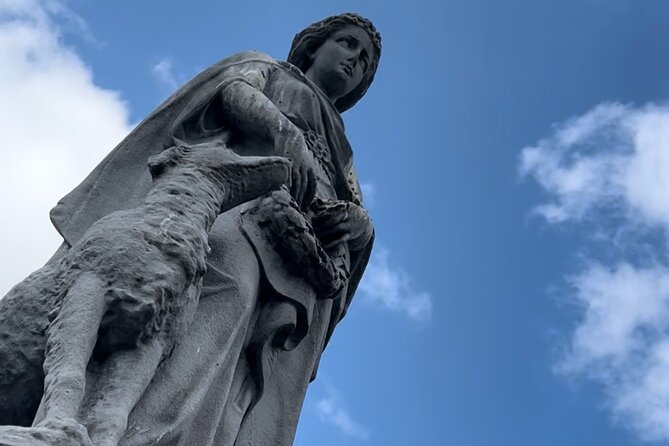
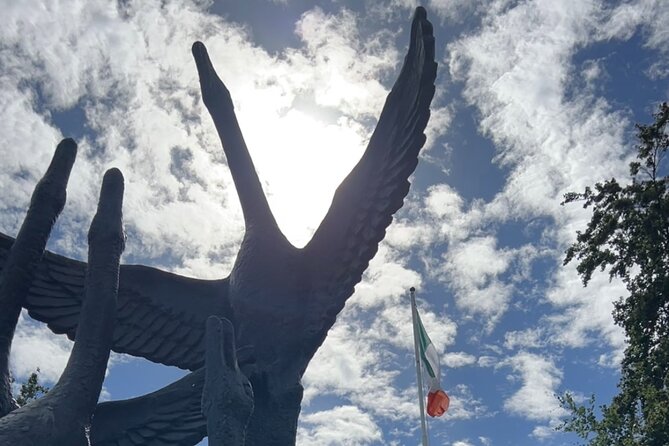
The walk finishes at the Garden of Remembrance in Parnell Square, at the foot of Oisin Kelly’s famous Children of Lir statue. The endpoint is a fitting one because the statue draws directly on Irish legend while also carrying modern public meaning.
After stories about heroes, fairies, invasions, prisons, and national identity, the statue gives the tour a clear closing image. You finish on the north side of the city rather than circling back to Temple Bar. That can be convenient if your next stop is in the northern city center, though you should plan your onward route from Parnell Square rather than assume you will end where you began.
The final ten-minute stop is not just a photo opportunity. It brings the folklore theme back into public art and present-day Dublin. You can leave with a better sense of how Irish legends continue to appear in the city’s monuments and civic spaces.
What the guiding is really like
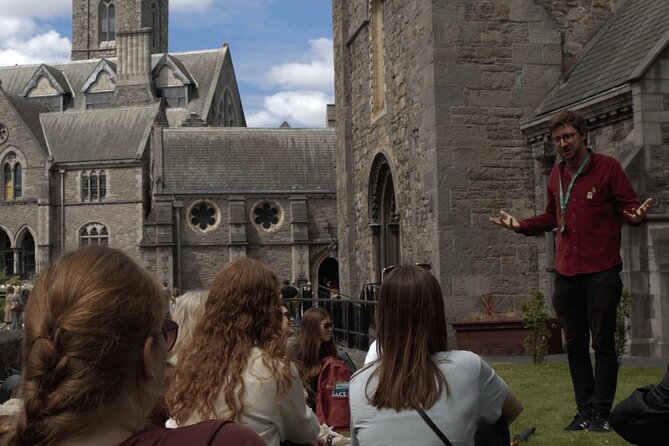
The guide is the heart of this experience. The named guides include Deidre, Helena, Emily, Ross, Dave, Lee, and Alan. You may not receive a particular guide, but the individual style can shape the outing.
Helena is described as funny, welcoming, and very good at answering questions. Emily’s strengths are humor, patience, and the ability to keep a group engaged despite poor weather. Ross is noted for his gift for storytelling, though he may set a brisk pace. Dave is praised for handling questions and offering useful suggestions for the rest of a Dublin visit. Lee is associated with a lively, mischievous delivery, while Deidre brings strong enthusiasm for both folklore and Irish history.
Those details suggest a tour that depends less on fixed visual displays and more on delivery. A strong storyteller can make a rainy street corner work. A weaker voice, or a guide standing too far from the group, can make the same stop frustrating.
You should treat this as an interactive storytelling walk. Questions are welcome, and the guides have been able to handle questions about the stories, Irish history, and the surrounding city. Keep your expectations realistic, though. A maximum of 25 people is not the same as a private tour.
Walking pace, weather, and hearing the guide
The route takes about two hours and includes walking between six main areas. The listed stops each last about ten minutes, but the total outing includes movement, gathering the group, and explanations along the way.
Most people should find the walking manageable, especially because the guide pauses at the stops. Still, you will spend a lot of time standing. If you have just completed another walking tour, fatigue may catch up with you by the final section. One person found the guide’s pace fast, so stay near the front if you prefer a slower rhythm or need to hear every detail.
Dublin weather can change the feel of the experience. The walk operates outdoors, and rain has affected some outings. The storytelling can carry the tour through wet conditions, but bring suitable clothing and shoes. There is no indoor replacement mentioned, so this is not the right choice if you want a weather-proof activity.
Hearing is the main practical concern. A group of 25 can spread out, and city noise may make a soft voice difficult to follow. Arrive ready to stay close to the guide. If you know that standing outside for two hours or listening in street settings is difficult, an indoor activity may suit you better.
Is $29.02 a fair price?
At $29.02 per person, this is reasonably priced for a two-hour guided walk in central Dublin. You are paying for a guide’s interpretation rather than entry tickets, since the listed stops are free and the tour visits the exteriors of the church, courthouse area, GPO, bridge, and statue.
The value is strongest if you enjoy folklore, storytelling, and cultural context. You get a route through several central areas, a crossing of the Liffey, and an explanation of how legends connect with modern Ireland. That is more useful than simply taking photographs of the same landmarks without context.
The value is weaker if you want interior access, a slow scenic stroll, or a tightly focused architecture tour. The experience is also less suitable if you dislike standing or find outdoor group narration hard to hear.
A 4.9 rating from 1,003 ratings and a 99 percent recommendation figure indicate very strong satisfaction, but the practical cautions still matter. The price is good when the format matches your interests. It is not a bargain if you want museum admission or a seated performance.
Who should book this Dublin walk?
I would choose this tour for a first or second day in Dublin, particularly if you want an easy way to connect the city’s sights with Irish culture. It suits adults, families with strollers, and anyone who likes legends but also wants political and social context.
It is a strong pick for people who enjoy asking questions. The guides have been praised for handling questions and for giving suggestions about the wider city after the walk. It can also work well as an evening activity, since later departure times may leave the daytime free for museums.
I would think twice if you are booking back-to-back walking tours. The route is not described as strenuous, but two hours on foot, with lots of standing, can feel tiring after a full day. I would also avoid it if you need a guaranteed indoor setting or a very small group.
The mobile ticket, public-transport access, wheelchair and stroller accessibility, and central start point make it easy to fit into a Dublin schedule. You can cancel for a full refund up to 24 hours before the start time. Changes or cancellations made less than 24 hours ahead are not accepted for a refund.
Should you book the mythology and folklore tour?
Book it if you want Dublin to make more sense as a place where old legends still shape public art, political identity, and everyday storytelling. The route is well chosen, the price is fair, and the best guides turn a simple walk into a lively lesson about Ireland.
Skip it if you want a seated talk, guaranteed access to historic interiors, or a quiet private experience. For everyone else, especially fans of myths, fairies, folklore, and Irish history, this is a smart two-hour introduction to the stories beneath Dublin’s streets.
FAQ
How long does the Dublin Mythology and Folklore Tour last?
The tour lasts approximately two hours.
Where does the tour begin?
It begins at 3 Crown Alley in Temple Bar, Dublin, D02 CX67, Ireland.
Where does the tour finish?
The tour finishes at the Garden of Remembrance, Parnell Square E, Rotunda, Dublin 1, D01 A0F8, at the foot of Oisin Kelly’s Children of Lir statue.
How much does the tour cost?
The listed price is $29.02 per person.
Is the tour offered in English?
Yes. The tour is offered in English.
How large is the group?
The tour can have a maximum of 25 participants.
Is the tour wheelchair and stroller accessible?
Yes. The tour is listed as wheelchair and stroller accessible, and service animals are allowed. You should still expect outdoor walking and standing during the two-hour experience.
Recently added around Dublin
- Dublin: Pub Tour. Pour The Perfect Guinness, Whiskey & Music★ 5.0 · 3 reviews
- Waterford Crystal and Kilkenny Full-Day Rail Tour from Dublin★ 5.0 · 3 reviews
- Cliffs of Moher and The Burren Private Tour from Dublin★ 5.0 · 3 reviews
- Private Chauffeur Service From Dublin Airport to Killarney★ 5.0 · 3 reviews
- A Self Guided Walking Tour of Dublin’s Docklands★ 4.5 · 3 reviews
- Beautiful Southwest Tour 2022★ 5.0 · 3 reviews
- Dublin One Day Tour with a Local: 100% Personalized & Private★ 4.5 · 3 reviews
- Ireland: 3-Day West Coast Explorer Tour★ 5.0 · 3 reviews
Dublin Tours, compared.

Dublin to Cliffs of Moher, including Wild Atlantic Way and Galway
Read our review →
Cliffs of Moher, Burren & Galway City Day Tour
Read our review →
Dublin to Belfast Black Cab, Dunluce Castle and Giant’s Causeway
Read our review →
Kilkenny, Wicklow Mountains & Glendalough Day Tour from Dublin
Read our review →
Wicklow Mountains, Glendalough & Kilkenny Tour
Read our review →