
Reviewed · DUBLIN TOURS
St Patrick’s Cathedral, Book of Kells and Dublin Castle Tour
Dublin’s best-known historic sights come together in one brisk walk, from St Patrick’s Cathedral and its literary connections to the glowing pages of the Book of Kells. The route also adds Dublin Castle, Molly Malone, and Trinity College, giving you a useful first look at the city’s past and present.
I like the easy meeting point at St Patrick’s Park and the skip-the-line cathedral entry. I also like the guides’ strong storytelling. Fergus, Miriam, Richard, John, Alan, and others are repeatedly praised for making dates, writers, politics, and old buildings easy to follow. The main drawback is that Dublin Castle is visited from outside only, and the walk includes cobblestones, stairs, hills, and a fair amount of ground between stops.
Key points to know before booking
- Four major Dublin sights in three and a half hours: St Patrick’s Cathedral, Dublin Castle, Molly Malone, and the Book of Kells.
- Skip the line at St Patrick’s Cathedral: The first stop includes interior access and time in the cathedral gardens.
- Dublin Castle is an exterior visit: You see the medieval towers, yards, and gardens, but the castle rooms are not included.
- The guides are a major strength: Guides including Fergus, Miriam, Richard, John, Alan, and Paul are praised for humor, clear explanations, and personal attention.
- Expect a real walking tour: Uneven surfaces, cobbles, inclines, declines, stairs, and substantial walking make good shoes essential.
A smart first look at Dublin’s historic center
At $143.91 per person, this is not a bargain-priced city stroll. You are paying for admission to St Patrick’s Cathedral, the Book of Kells experience, a timed entry at Trinity College, and a guide who organizes the history into one connected morning or afternoon.
The value depends on how you like to see a city. If you want to visit each sight independently, you can build your own route and avoid a guide fee. But you would need to arrange the cathedral and Trinity College visits yourself, manage timing, and supply the historical context. This tour does that work for you and adds a clear route through central Dublin.
The format is especially useful at the start of an Ireland trip. You get your bearings, see several famous places, and learn enough about Dublin’s religious, political, literary, and Viking-era past to make later sightseeing more meaningful.
The experience lasts about three hours and 30 minutes, with a maximum of 30 participants. Some groups are smaller, which can make a real difference when the guide is explaining details in a crowded courtyard or answering questions while walking.
The meeting point is at St Patrick’s Park on Bull Alley Street. The tour finishes at Trinity College after the Book of Kells visit. If you choose the longer upgrade, the full-day option lasts about six hours and ends at the Guinness Storehouse, where admission and a pint of Guinness are included. That upgraded option adds another major Dublin sight, but it also requires a single public transportation ticket for the Luas.
More Book of Kells and Trinity visits:
- Dublin Book of Kells, Castle and Molly Malone Statue Guided Tour
★ 4.5 · 3,825 reviews - Dublin: Fast-Track Book of Kells Ticket & Dublin Castle Tour
★ 4.5 · 1,661 reviews - Dublin: Trinity College Campus Guided Walking Tour
★ 4.2 · 392 reviews
St Patrick’s Cathedral and Dublin’s literary past
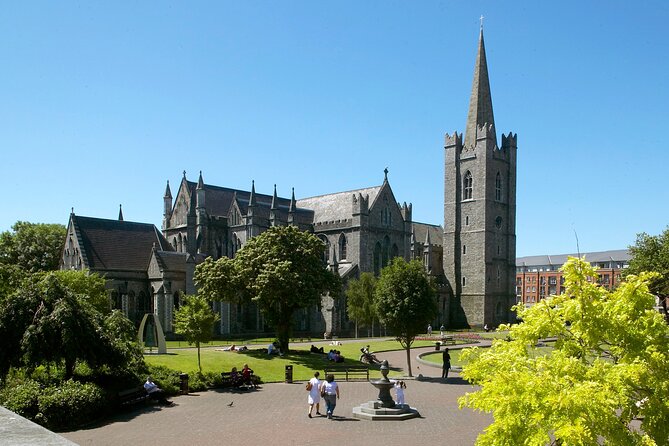
The tour begins with about an hour at Saint Patrick’s Cathedral. Skip-the-line access matters here, especially when Dublin is busy. Rather than spending the opening part of your day waiting at the entrance, you go directly into one of Ireland’s most important churches.
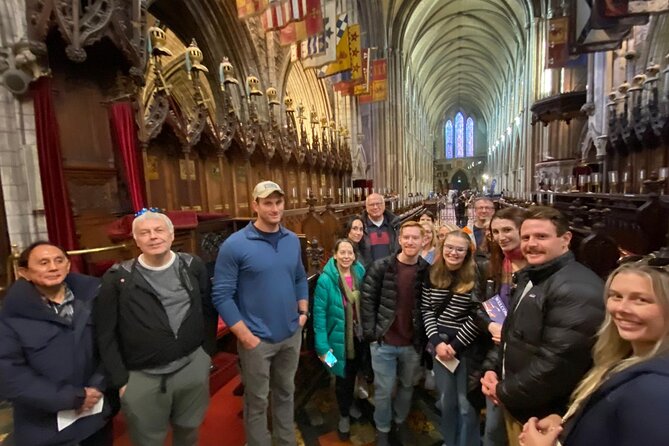
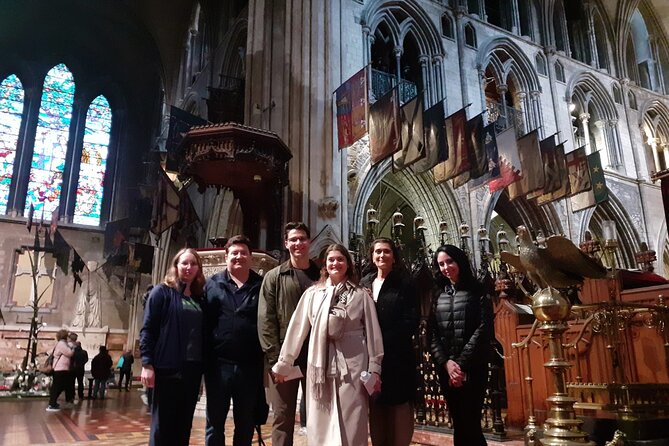
The cathedral visit covers the building and gardens, with attention to Jonathan Swift, who served as dean, and Bram Stoker, the author of Dracula and a former Trinity College student. These connections give the visit a distinctly Dublin flavor. You are not only looking at stained glass, stonework, memorials, and old religious spaces. You are also hearing how the cathedral connects to the city’s literary life.
The cathedral can be a moving stop, but it is not a quiet private visit. You are part of a guided group, and the schedule keeps you moving. I would arrive ready to listen, then use any free moments for your own look at the details.
The grounds add breathing room after the interior. Gardens are included, and the setting helps you see the cathedral as part of Dublin rather than as an isolated monument. If religious buildings and literature interest you, this is likely to be the strongest opening section of the tour.
Dublin Castle from the medieval towers to the State Yards
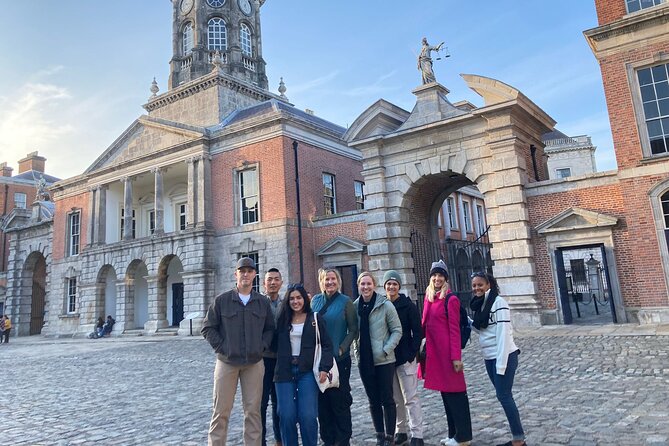
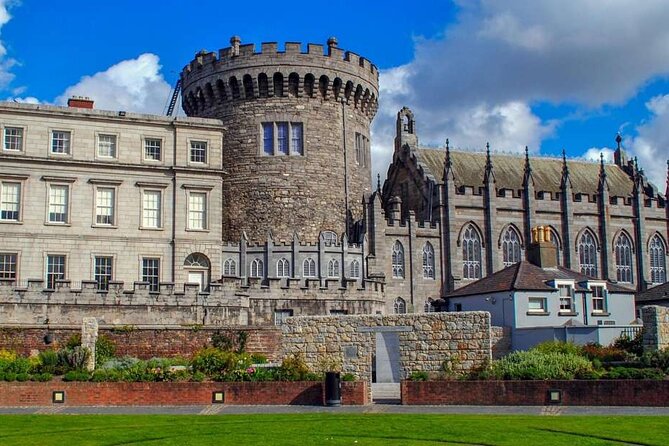
The next stop lasts about 40 minutes and focuses on Dublin Castle. The site began in the 13th century on ground previously settled by Vikings. Over the centuries, it served as a military fortress, prison, treasury, law court, and center of English administration in Ireland.
That long list is what gives the castle its weight. It was not simply a royal residence. For about 700 years, it was tied to the machinery of English rule in Ireland, making it an important place for understanding the country’s political past.
Your guide leads an exterior tour. You see the original Record Tower and Octagonal Tower, along with the Upper and Lower State Yards and their architectural details. The castle was rebuilt during the 17th, 18th, 19th, and 20th centuries, so the complex presents several periods rather than one tidy medieval design.
You also visit the Castle Gardens. The tour description identifies this area as the location where Vikings first landed in Dublin in 795 AD. Today it is a carefully laid-out lawn with Celtic-inspired design. That contrast is part of the appeal: a place linked to an early settlement now feels calm and formal.
Here is the catch: the castle interior is not included. If you want the state apartments and indoor rooms, this experience will leave you wanting more. The exterior visit works well for a quick historical overview, but it is not a full Dublin Castle tour.
A guide can make this section much better than a quick photo stop. The stories of intrigue and mystery help explain why the site mattered. Still, 40 minutes is short, so expect an introduction rather than a full study of the castle.
Molly Malone and a quick Dublin photo stop
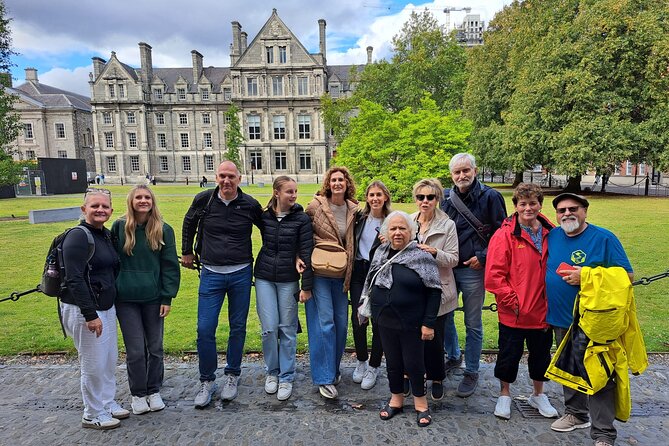
The Molly Malone statue receives about 15 minutes. This is a brief stop, but it breaks up the larger historical visits and gives you a familiar Dublin symbol to photograph.
Your guide introduces Molly and the song Cockles and Mussels, whose tragic fish-seller has become an unofficial mascot of the capital. The stop is not designed as a major museum visit. It is a short explanation of local popular culture, followed by time to look and take pictures.
This is also one place where a good guide can add value. Fergus is specifically praised for adding Molly Malone as an extra stop during the walk, and other guides are described as adding useful details along the route. Do not expect a long presentation here. Think of it as a small Dublin character moment between the castle and Trinity College.
A few more Dublin half-days to weigh up
- Dublin to Cliffs of Moher, including Wild Atlantic Way and Galway
★ 5.0 · 23,331 reviews - From Dublin: Cliffs of Moher, Burren & Galway City Day Tour
★ 4.8 · 18,888 reviews - Dublin: Guinness Storehouse Entry Ticket
★ 4.6 · 16,863 reviews - Dublin to Cliffs of Moher, Burren, Wild Atlantic Way, Galway Tour
★ 5.0 · 12,924 reviews
The Book of Kells and the Long Room
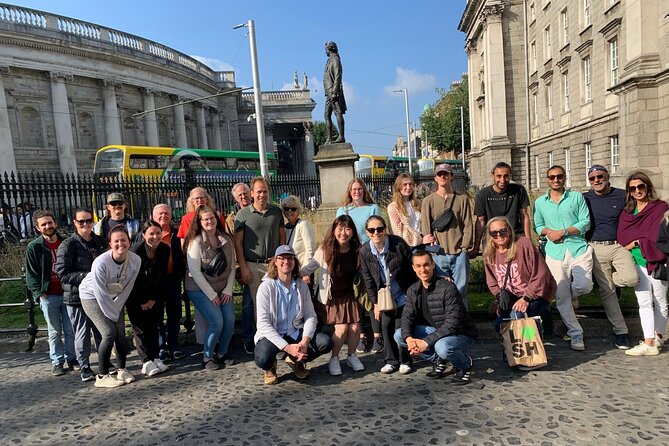
The final major visit is the Book of Kells experience at Trinity College, lasting about one hour and five minutes. Timed access helps keep this part of the tour organized. The experience includes the Book of Kells 360 presentation and the reimagined Long Room experience.
The Book of Kells is a 9th-century illuminated manuscript. Its age, intricate decoration, and symbolism make it one of Ireland’s most important cultural objects. The presentation begins with its ornamentation and the meaning packed into the pages, then places the manuscript in its wider artistic and historical setting.
You should expect this to be a focused visit rather than a quick glance at a single page. The 360 element adds context before or around the manuscript viewing, helping you understand why this small, old book attracts so much attention.
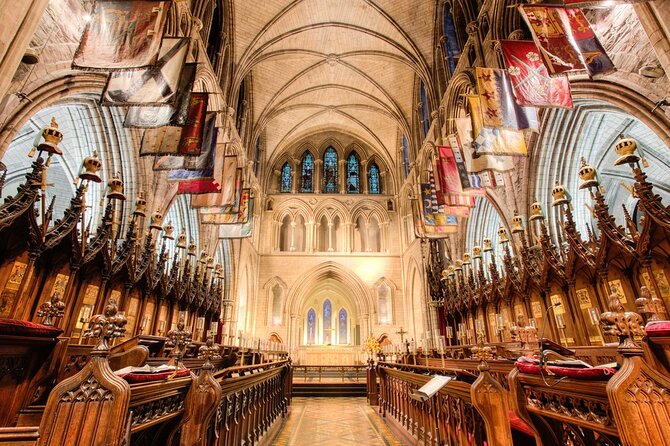
The Long Room is likely to be the visual high point for many people. Its vaulted library setting gives the visit a sense of scale after the close-up detail of the manuscript. Several guides are praised for allowing enough time to appreciate the Long Room while keeping the group moving at a sensible pace.
At the end, you have about 10 minutes in the Trinity College souvenir shop. That is enough for a quick browse, but not a leisurely shopping session. The formal tour ends inside Trinity College, so plan your onward route from there.
The guides shape the whole experience
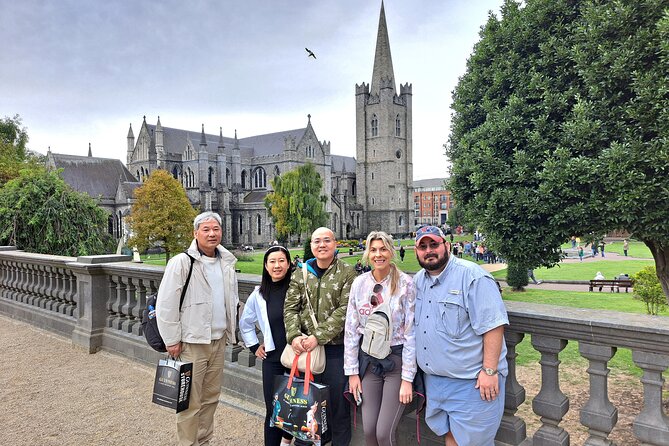
The tour company uses different English-speaking guides, and the individual guide can affect the tone of your day. Names that appear repeatedly in the tour feedback include Fergus, Miriam, Richard, John, Alan, Paul, Declan Roche, Dermot, Sean, Jimmy, Martin, Neill, Malena, and Emmett.
The strongest pattern is clear: guides are valued for storytelling, humor, and historical context. Richard is praised for balancing education with entertainment and keeping a good pace. Miriam is noted for extra information about Dublin and for speaking in a personable way. Fergus receives repeated praise for adding small bonus stops, looking after the group, and making people feel included.
John is described as both entertaining and well informed, while Alan is praised for helping people feel comfortable early in an Ireland holiday. Paul is noted for friendly explanations and stories about Ireland. These details matter because the tour includes several short outdoor sections where a dry lecture would quickly become tiring.
One useful point is that guides may offer more than the strict schedule when time allows. Fergus reportedly added interesting places along the route and even offered to show some Christmas lights after the formal tour. That should not be treated as a guaranteed part of the booking, but it shows how the experience can feel more personal with the right guide and a small group.
There is one less positive account describing a rough start, confusion about the meeting point, and an unsatisfactory guide interaction. The overwhelming pattern is much stronger, but you should still double-check the starting location before setting out. Bull Alley Street and St Patrick’s Park are the key details.
The walking demands are real
This is a walking tour, not a series of bus transfers. You move between St Patrick’s Cathedral, Dublin Castle, Molly Malone, and Trinity College, then walk through the sites themselves.
The route includes uneven surfaces, cobblestones, hills, inclines, declines, stairs, and indoor walking. The tour information does not recommend it for people with limited mobility, and participants should be in good health. Wear shoes with reliable support, not the pair you packed only for dinner.
Rain can also affect the day. The experience requires good weather, and poor conditions can lead to a different date or a full refund. Dublin weather changes quickly, so a waterproof layer is sensible even when the forecast looks friendly.
The maximum group size is 30, though some departures may be smaller. A small group makes it easier to hear the guide, ask questions, and keep sight of the group at street crossings. If you prefer complete freedom to linger, though, a guided walk may feel a little brisk.
One participant described the tour as too long for the material, while other feedback calls it an efficient way to see a lot in a short period. Both views make sense. The tour is long enough to cover the main sights but short enough that each stop has a firm time limit. Your enjoyment will depend on whether you want structure or more unplanned time.
What is included, and what is not
The $143.91 price includes entry to St Patrick’s Cathedral, the Book of Kells and Long Room experience, skip-the-line cathedral access, timed access at Trinity College, and the guided exterior visit to Dublin Castle.
It does not include transportation, food, drinks, hotel pickup, hotel drop-off, or gratuity. Dublin Castle’s interior is also excluded. That last point is the most important inclusion issue, since the castle can sound like a full castle visit when you first read the name.
The optional full-day upgrade adds the Guinness Storehouse. For that version, skip-the-line Guinness entry and a pint of Guinness are included, and the tour ends there. Full-day participants need one public transportation ticket for the Luas.
The shorter tour is probably the better fit if you already have Guinness plans or want a free afternoon. The six-hour choice makes more sense if you want a larger, more structured sightseeing day and would otherwise have to arrange the Guinness Storehouse separately.
Who should book this Dublin walk?
I would recommend this tour to first-time Dublin visitors who want a strong historical introduction without planning every admission and route themselves. It suits people who enjoy churches, manuscripts, libraries, political history, and literary connections.
It is also a good choice for a short Dublin stay. In three and a half hours, you cover several headline sights and finish near Trinity College, with the rest of the day still available.
Families with older children may like the variety. The cathedral, castle, statue, manuscript, and library offer different kinds of interest, although anyone under 18 must be accompanied by someone at least 18 years old.
I would hesitate if your priority is Dublin Castle’s interior, extensive free time, or a low-cost walking tour. You may get better value by choosing individual admissions and spending longer at fewer places. I would also avoid it if hills, stairs, or uneven ground are difficult for you.
The tour has a 4.7 rating from 882 reviews and is recommended by 94 percent of participants. Those figures fit the practical picture: the route is well chosen, the admission planning is useful, and the guides are often the best part of the experience. The tradeoff is a fairly high price and a set pace.
Should you book it?
Book it if you want Dublin’s essential historic sights in one organized walk, especially if this is your first visit and you value a lively guide. The strongest moments are St Patrick’s Cathedral and Trinity College, with the Book of Kells and Long Room providing the grand finish.
Before paying, be clear that Dublin Castle is exterior-only. Bring good shoes, confirm the Bull Alley Street meeting point, and leave room in your schedule for a brisk route rather than a relaxed wander.
If you want the Guinness Storehouse too, compare the six-hour upgrade with the cost and effort of arranging it yourself. Otherwise, the shorter tour gives you a useful half-day introduction and leaves you free to explore Dublin on your own.
FAQ
How long does the St Patrick’s Cathedral, Book of Kells and Dublin Castle tour last?
The standard experience lasts approximately three hours and 30 minutes.
Where does the tour start?
The tour starts at St Patrick’s Park on Bull Alley Street in Dublin, Ireland.
Where does the standard tour finish?
The standard tour finishes inside Trinity College at the Book of Kells experience.
Is entry to St Patrick’s Cathedral included?
Yes. The tour includes skip-the-line entry to St Patrick’s Cathedral, including the cathedral and gardens.
Can I go inside Dublin Castle?
No. The Dublin Castle portion is an exterior tour. It includes the medieval towers, Upper and Lower State Yards, architectural details, and Castle Gardens, but not the castle interior.
Is the Book of Kells included?
Yes. The tour includes timed access to the Book of Kells experience, the 360 presentation, and the Long Room experience at Trinity College.
Is the Guinness Storehouse included?
Guinness Storehouse admission and a pint are included only with the full-day upgrade. That option lasts about six hours and ends at the Guinness Storehouse.
Is the tour suitable for people with limited mobility?
The tour is not recommended for people with limited mobility. It involves substantial walking, uneven surfaces, cobblestones, hills, inclines, declines, stairs, and indoor walking.
What is the cancellation policy?
You can cancel at least 24 hours before the local start time for a full refund. Cancellations and changes made less than 24 hours before the start are not refunded or accepted. If poor weather or an insufficient minimum number of participants cancels the experience, you are offered another date or a full refund.
Recently added around Dublin
- Dublin: Pub Tour. Pour The Perfect Guinness, Whiskey & Music★ 5.0 · 3 reviews
- Waterford Crystal and Kilkenny Full-Day Rail Tour from Dublin★ 5.0 · 3 reviews
- Cliffs of Moher and The Burren Private Tour from Dublin★ 5.0 · 3 reviews
- Private Chauffeur Service From Dublin Airport to Killarney★ 5.0 · 3 reviews
- Beautiful Southwest Tour 2022★ 5.0 · 3 reviews
- A Self Guided Walking Tour of Dublin’s Docklands★ 4.5 · 3 reviews
- Dublin One Day Tour with a Local: 100% Personalized & Private★ 4.5 · 3 reviews
- Ireland: 3-Day West Coast Explorer Tour★ 5.0 · 3 reviews
Dublin Tours, compared.
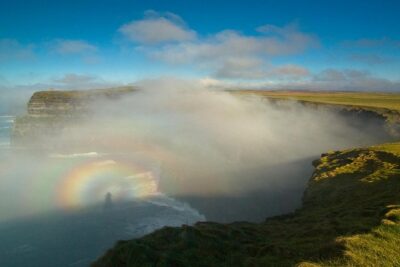
Dublin to Cliffs of Moher, including Wild Atlantic Way and Galway
Read our review →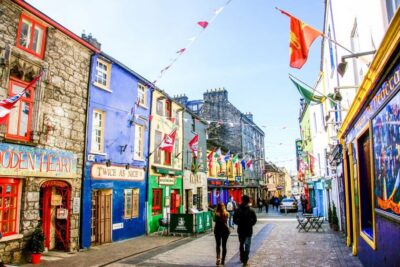
Cliffs of Moher, Burren & Galway City Day Tour
Read our review →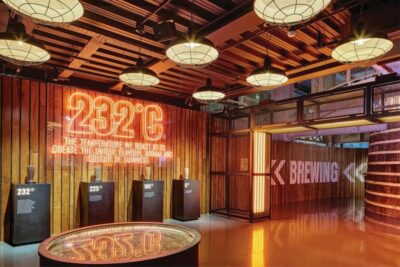
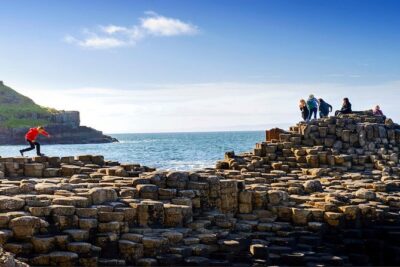
Dublin to Belfast Black Cab, Dunluce Castle and Giant’s Causeway
Read our review →
Kilkenny, Wicklow Mountains & Glendalough Day Tour from Dublin
Read our review →
Wicklow Mountains, Glendalough & Kilkenny Tour
Read our review →
Dublin Highlights and Hidden Gems Guided Walking Tour
Read our review →Browse the lists this tour appears in