
Reviewed · DUBLIN TOURS
Christ Church Cathedral Entrance Ticket & Self-Guided Tour
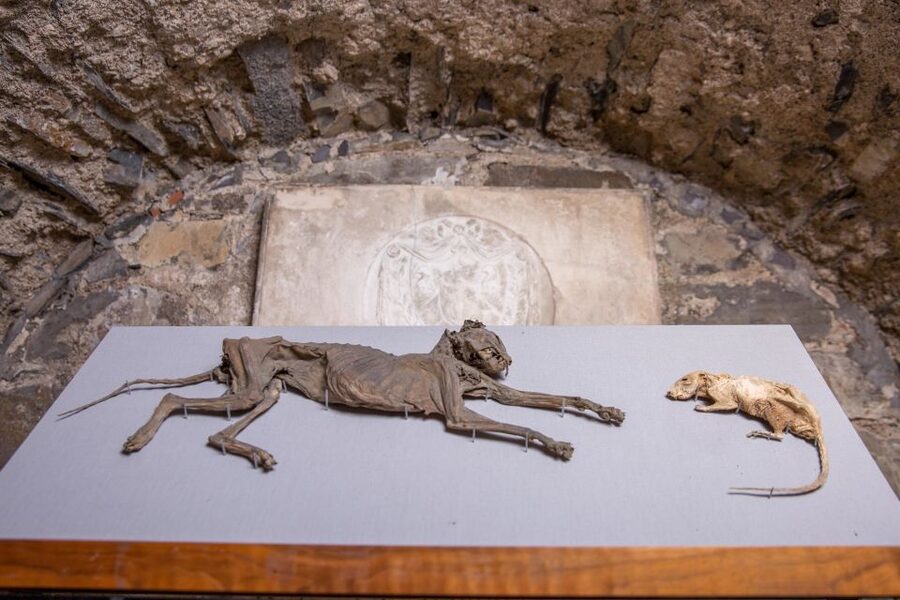
Christ Church Cathedral’s best surprise is below ground: the early 12th-century crypt, where a mummified cat and rat sit in an organ pipe case. I like the contrast between that bit of Dublin humor and the solemn nave above, with its medieval floor tiles, stained glass, and nearly 1,000 years of worship. The main drawback is that this is self-guided, so you get less storytelling and banter than on a live tour.
I also like the freedom to look at your own pace and the chance to see the Magna Carta in the cathedral treasury. Bring comfortable shoes, and if you plan to use the audio guide, arrive ready with headphones or earbuds. One visitor missed much of the commentary because the phone audio was hard to hear without the right listening setup.
Key points to know
- The crypt contains Tom and Jerry: See the mummified cat and rat that became a famous Dublin curiosity after getting stuck in an organ pipe.
- The nave is the visual centerpiece: Look down at the striking medieval floor tiles and up at the stained glass.
- You can trace medieval pilgrimage: The cathedral’s relics and sacred setting connect you with pilgrims who came here centuries ago.
- The Magna Carta is part of the visit: The treasury adds an important historical object to the architectural tour.
- The visit is self-guided: An audio guide is available in English, French, Spanish, German, Italian, Portuguese, and Polish, subject to availability.
- Allow time around services: Opening hours vary on Tuesdays, Thursdays, and Sundays, and final admission is 45 minutes before closing.
Entering Dublin’s medieval center
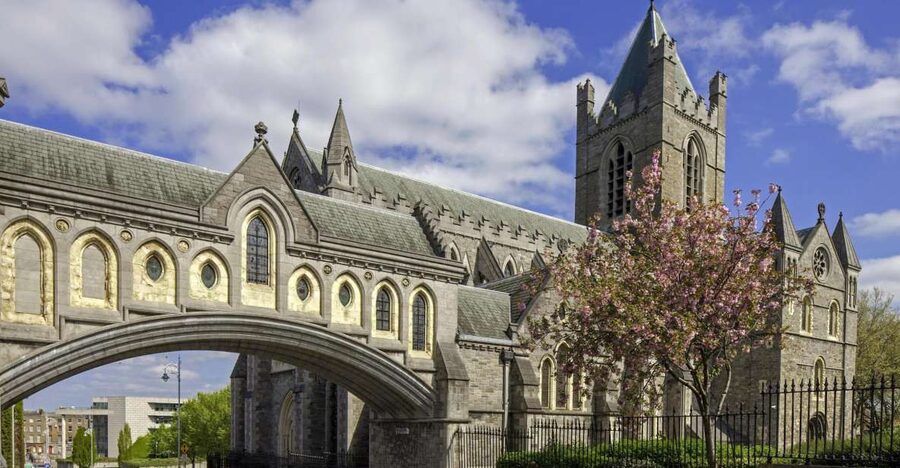
Christ Church Cathedral sits in Dublin 8, right in the city’s medieval core. You begin at the Welcome Desk, where you receive entry for the nave and crypt before exploring independently. The activity ends back at the cathedral, so there is no separate transport or complicated meeting arrangement to manage.
The setting matters. This is not a modern museum placed beside old ruins. It is a working place of worship, first built around 1028 and still used today. As you walk through the cathedral, you are seeing a building shaped by prayer, pilgrimage, memorials, repairs, and daily religious life across many centuries.
That gives the visit a different feel from a quick church photo stop. You can study the architecture, but you also need to respect the building’s purpose. Services affect opening times, particularly on Tuesdays, Thursdays, and Sundays, so check the cathedral’s current schedule before setting out.
More self-guided routes in Dublin:
- Dublin Ghost Hunt Exploration Game and Tour
★ 4.0 · 34 reviews - Private Dublin Treasure Hunt Self Guided Tour
★ 4.5 · 14 reviews - Dublin Self-Guided Murder Mystery Tour by Temple Bar
★ 3.5 · 12 reviews
The nave, tiles, and stained glass
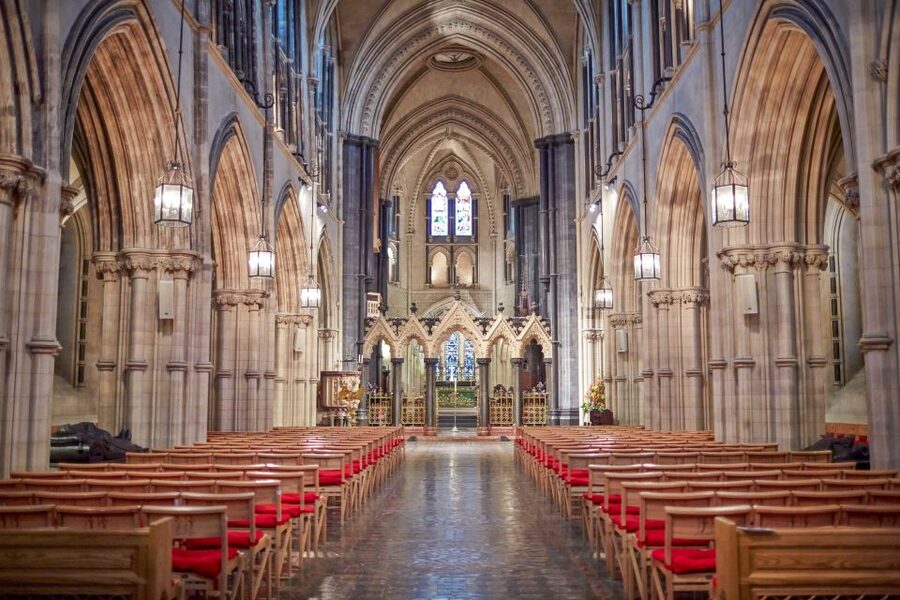
The nave gives you the grandest first impression. Its height and length make the cathedral feel much larger inside than it may appear from the surrounding streets. Take a moment before heading straight to the crypt. The best details are easy to miss if you treat the nave as a passageway.
Look closely at the medieval floor tiles. Their patterns add color and texture under the stone architecture, and they are one of the features most likely to hold your attention after the initial view of the ceiling and arches. The stained glass windows add another layer of color, especially when daylight catches the glass.
The self-guided format works well here because you can stop when something interests you. You are not being hurried from one explanation to the next. If you care about church design, the nave gives you room to study the details. If you are less interested in religious buildings, the floor tiles and windows provide clear visual rewards even without a long architectural lecture.
The tradeoff is simple: a phone or audio guide cannot respond to your questions. If you want lively stories, detailed explanations of the building’s changes, or Irish humor from a local guide, you may prefer to add a separate guided option if one is available during your visit. A live guide named Tom is praised in the supplied information for mixing historical facts with humor, but that guided experience is not part of this entrance ticket.
The crypt and Dublin’s strangest display
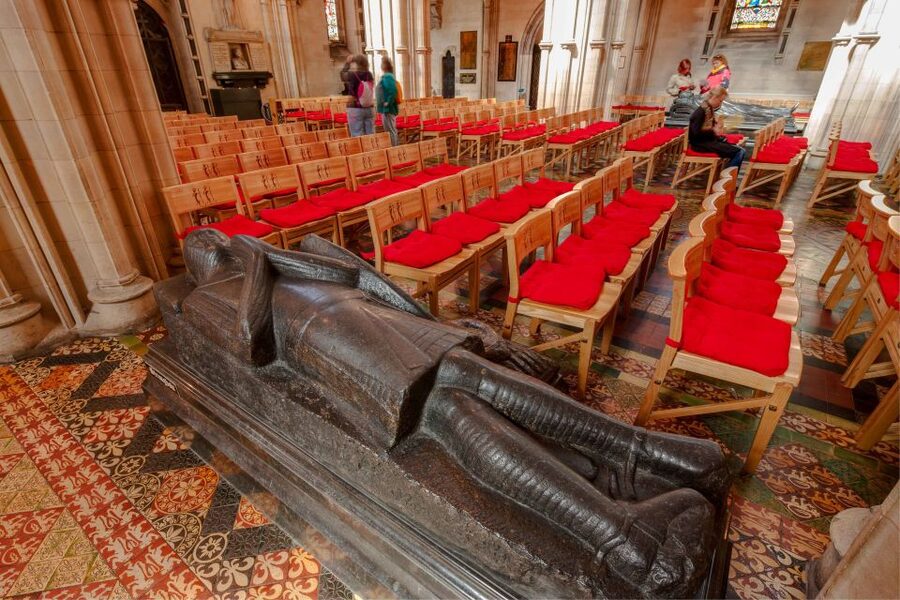
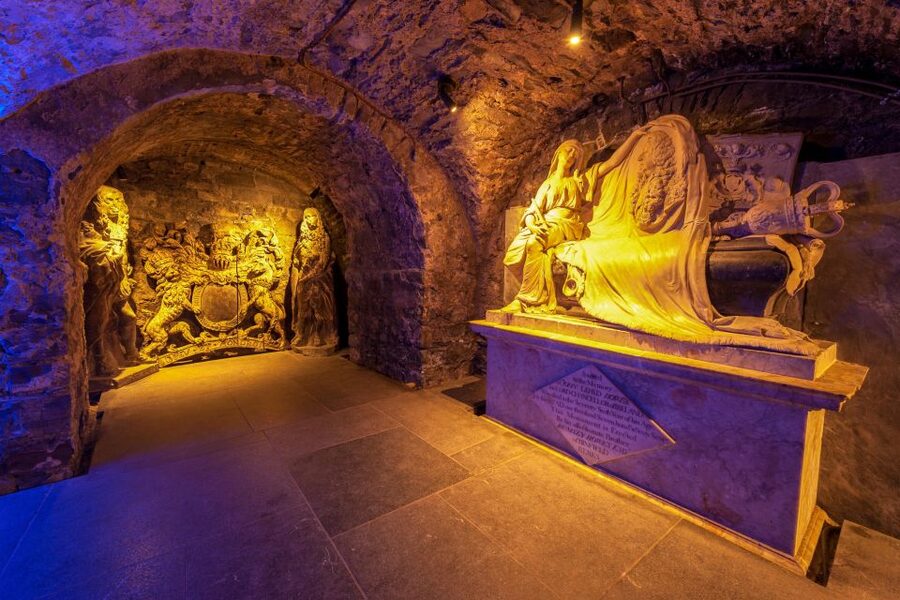
The crypt is the heart of this visit. Built in the early 12th century, it is described as the largest in Ireland and is the oldest structure still in use in Dublin. Its low, sturdy spaces feel very different from the open nave above.
Here you can see memorials, treasures, and curiosities. The most famous are the mummified cat and rat, known locally as Tom and Jerry. Cathedral lore says the cat chased the rat into an organ pipe, where both became stuck. The pair were later preserved, and James Joyce gave them a place in Finnegans Wake.
It is an odd, slightly macabre story, but that is part of the appeal. The crypt keeps the cathedral from feeling too solemn or predictable. You move from sacred relics and memorials to a tale involving an unfortunate chase and an organ pipe. It is exactly the sort of small, peculiar detail that helps you remember a place.
The crypt also gives you a better sense of the building’s age. Stonework and enclosed spaces make the cathedral’s early centuries feel more tangible than a date on a wall panel. Wear comfortable shoes, since you will want to take your time moving through the lower level.
The Magna Carta and the cathedral treasury
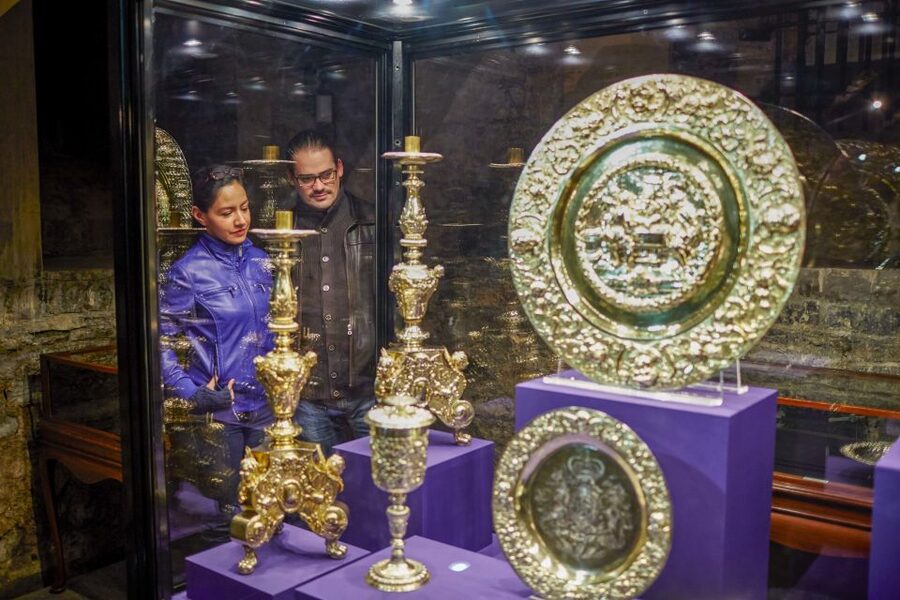
The treasury includes the Magna Carta, giving the visit a clear historical focus beyond religious architecture. It is worth pausing here rather than treating the display as something to pass on your way to the exit.
The document connects the cathedral to wider medieval political and legal history. You do not need to be an expert to appreciate its importance. Its presence helps show how churches were tied to civic power, authority, records, and public life, not only worship.
The ticket includes access to the nave and crypt, along with the cathedral’s displays. The exact arrangement of objects may vary, but the Magna Carta and treasury are central reasons to pay attention to the collection. If you enjoy compact historic displays, this part of the visit adds weight to the more visual experience of the nave and the more unusual experience of the crypt.
A few more Dublin half-days to weigh up
- Dublin to Cliffs of Moher, including Wild Atlantic Way and Galway
★ 5.0 · 23,331 reviews - From Dublin: Cliffs of Moher, Burren & Galway City Day Tour
★ 4.8 · 18,888 reviews - Dublin: Guinness Storehouse Entry Ticket
★ 4.6 · 16,863 reviews - Dublin to Cliffs of Moher, Burren, Wild Atlantic Way, Galway Tour
★ 5.0 · 12,924 reviews
Following the path of medieval pilgrims
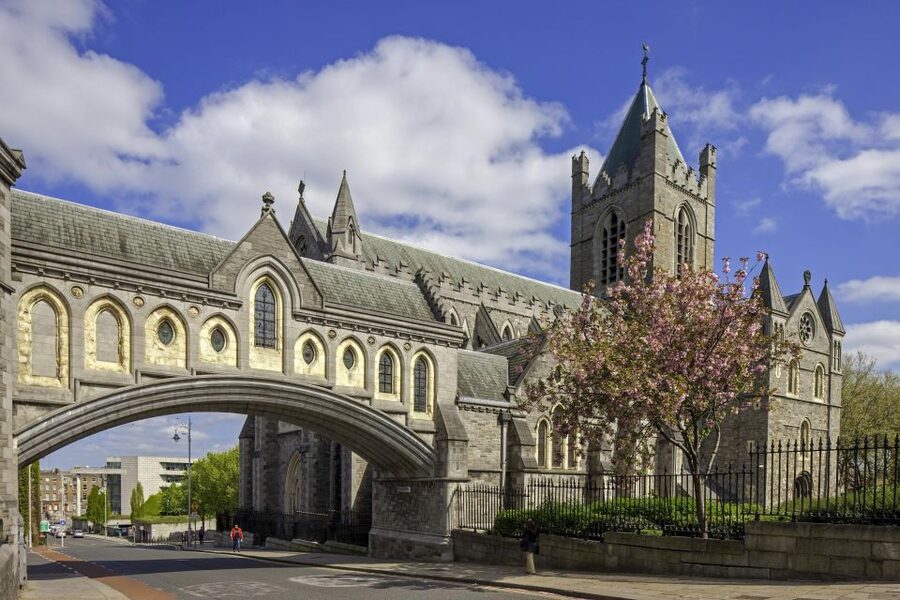
Christ Church was a destination for pilgrims during the Middle Ages. As you walk through the cathedral, you can think of the building not simply as a monument but as a place people traveled to for worship and relics.
The cathedral has an important collection of relics, and these help explain its appeal to pilgrims. The self-guided visit lets you connect the objects with the building around them. The stone nave, sacred displays, and crypt are not separate attractions. They form parts of a place that has drawn people for religious reasons for centuries.
You will get the most from this section if you slow down. Read the information available, listen to the audio guide, and consider how different the building would have felt to a medieval pilgrim. The experience does not recreate that journey, but it gives you enough context to picture the cathedral as a destination rather than just another Dublin landmark.
Making the self-guided format work
The ticket is valid for one day, with entry based on the available starting times. This gives you useful flexibility, especially if you are fitting the cathedral around other sights in central Dublin. You do not need to commit to a long guided schedule, and you can spend more time in the crypt if it catches your interest.
The audio guide is available in English, French, Spanish, German, Italian, Portuguese, and Polish, subject to availability. That makes the visit easier for many international visitors, but plan the practical side in advance. Bring headphones or earbuds that work well with your phone. The audio may be difficult to follow in the cathedral if you rely only on the phone’s small speaker.
The host or greeter speaks English. The included experience is not a guided tour, and the belfry experience is not included. That distinction matters when comparing prices. You are paying for admission and independent interpretation, not for a staff member to lead you through every room.
At $14 per person, the ticket is good value if you want a major historic interior, the crypt, the treasury, and the freedom to set your own pace. It is less appealing if you only want a fast look at the nave or if you expect a full live tour. In that case, paying extra for a guided experience may make more sense.
Christ Church compared with St. Patrick’s Cathedral
Dublin has two major cathedral visits, and many people consider seeing both. Christ Church and St. Patrick’s can feel similar if you are mainly interested in large medieval church interiors. If your time or budget is tight, choosing one may be sensible.
Christ Church has a strong advantage for visitors who like unusual details. The crypt, Magna Carta, and Tom and Jerry display give it a distinctive character. The floor tiles and the connection with medieval pilgrims also make it feel more layered than a simple church viewing.
The best choice depends on what you want from the stop. Pick Christ Church if the crypt and its oddities appeal to you, or if you want a historic building in the medieval center with a self-guided format. If you plan to visit both, avoid rushing them one after another. Give yourself enough time to notice how each cathedral handles architecture, memorials, and sacred space.
The Viking museum next door can also make the area a useful historical stop. The supplied information specifically notes the combination of Christ Church with the nearby Viking museum, particularly because the cathedral’s basement is so distinctive. You can build a wider medieval Dublin visit around the cathedral without needing a separate cross-city journey.
Who will enjoy this cathedral visit
I would recommend this ticket to several kinds of visitors:
- First-time Dublin visitors who want a central historic sight with a clear route through the building.
- Architecture lovers drawn to stained glass, medieval tiles, stonework, and the contrast between nave and crypt.
- Families with curious children, especially if you use the cathedral’s children’s scavenger hunt, which can give younger visitors something active to do.
- History fans interested in relics, pilgrims, the Magna Carta, and Dublin’s oldest working structures.
- Rainy-day planners looking for an indoor activity with substance rather than a short weather escape.
- Independent sightseers who prefer to pause, take photographs without flash, and move at their own speed.
It may not be the best fit if you want a lively group tour included in the ticket. It also may feel repetitive if you have already visited St. Patrick’s Cathedral and are not especially interested in crypts or medieval church interiors.
Timing, rules, and small practical details
Wear comfortable shoes. The cathedral includes a substantial crypt, and you will enjoy it more if you are not distracted by uncomfortable footwear.
Smoking and flash photography are not allowed. Keep your camera ready for ordinary photography, but respect the rules and any worship taking place.
Final admission is 45 minutes before closing. Do not arrive near the end of the day and assume you can squeeze in a full visit. The nave and crypt deserve enough time for you to read displays, use the audio guide, and look carefully at the floor and windows.
Opening times change around services. Check the cathedral’s worship and music information before you go, especially if your Dublin schedule is built around a Tuesday, Thursday, or Sunday visit.
You can cancel up to 24 hours in advance for a full refund, and the reserve-now, pay-later option keeps your plans flexible. Those terms are useful when you are still arranging a Dublin itinerary, though the cathedral’s service schedule remains the more important timing issue.
Is the $14 ticket worth booking?
Yes, for most people interested in Dublin’s medieval past. The price covers a substantial historic building, a major crypt, treasury displays including the Magna Carta, and a multilingual audio guide when available. The mummified cat and rat alone provide a memorable story, while the nave offers the beauty and quiet many people expect from a cathedral visit.
Book it if you value freedom and want to explore independently. Consider a separate guided experience if you want more jokes, personal stories, and detailed explanations. Tom’s 45-minute style, described as informative and humorous, is the kind of addition that can bring the building to life, but it is not included here.
My practical advice is to schedule Christ Church when you are already in central Dublin, check service times, and bring earbuds. Give the crypt proper attention instead of treating it as a quick basement stop. If you do that, this $14 ticket offers a compact but memorable look at Dublin’s worship, politics, pilgrimage, and wonderfully strange sense of humor.
FAQ
Where does the Christ Church Cathedral visit begin?
You begin at the Welcome Desk at Christ Church Cathedral in Dublin 8. The activity also ends back at the cathedral.
What does the ticket include?
The ticket includes entrance to Christ Church Cathedral Dublin and a self-guided visit to the nave and crypt. An audio guide is available in several languages, subject to availability.
Is a live guided tour included?
No. A guided tour is not included with this ticket. The experience is self-guided, with an audio guide available.
Is the belfry experience included?
No. The belfry experience is not included in this activity.
Which languages are available for the audio guide?
The audio guide is available in English, French, Spanish, German, Italian, Portuguese, and Polish, subject to availability.
What are the opening-time restrictions?
The cathedral’s opening hours vary around services on Tuesdays, Thursdays, and Sundays. Final admission is 45 minutes before closing, so check the cathedral’s worship and music information before visiting.
Can I cancel the booking?
Yes. You can cancel up to 24 hours in advance for a full refund. A reserve-now, pay-later option is also available.
Recently added around Dublin
- Dublin: Pub Tour. Pour The Perfect Guinness, Whiskey & Music★ 5.0 · 3 reviews
- Waterford Crystal and Kilkenny Full-Day Rail Tour from Dublin★ 5.0 · 3 reviews
- Cliffs of Moher and The Burren Private Tour from Dublin★ 5.0 · 3 reviews
- Private Chauffeur Service From Dublin Airport to Killarney★ 5.0 · 3 reviews
- Beautiful Southwest Tour 2022★ 5.0 · 3 reviews
- A Self Guided Walking Tour of Dublin’s Docklands★ 4.5 · 3 reviews
- Dublin One Day Tour with a Local: 100% Personalized & Private★ 4.5 · 3 reviews
- Ireland: 3-Day West Coast Explorer Tour★ 5.0 · 3 reviews
Dublin Tours, compared.

Dublin to Cliffs of Moher, including Wild Atlantic Way and Galway
Read our review →
Cliffs of Moher, Burren & Galway City Day Tour
Read our review →

Dublin to Belfast Black Cab, Dunluce Castle and Giant’s Causeway
Read our review →
Kilkenny, Wicklow Mountains & Glendalough Day Tour from Dublin
Read our review →
Wicklow Mountains, Glendalough & Kilkenny Tour
Read our review →
Dublin Highlights and Hidden Gems Guided Walking Tour
Read our review →Browse the lists this tour appears in