
Reviewed · DUBLIN TOURS
Dublin: Forge a Silver Ring Workshop on Drury Street
Making a silver ring from a plain strip of metal is the real appeal here. In two hours, you measure, saw, hammer, file, texture, and polish a piece you can wear home. It is a useful change of pace from Dublin’s museums and pubs, and the finished ring carries more meaning than a shop-bought souvenir.
I especially like the hands-on work and the freedom to choose your ring’s shape, texture, and finish. I also like the small-group feel and the patient help from instructors such as Audrey, Sinead, Jill, Owen, Claire, and Kat, who have been praised for making first-time metalwork feel manageable. The main consideration is practical: both studios have steep stairs and are not suitable for wheelchair users.
Key points to know before booking
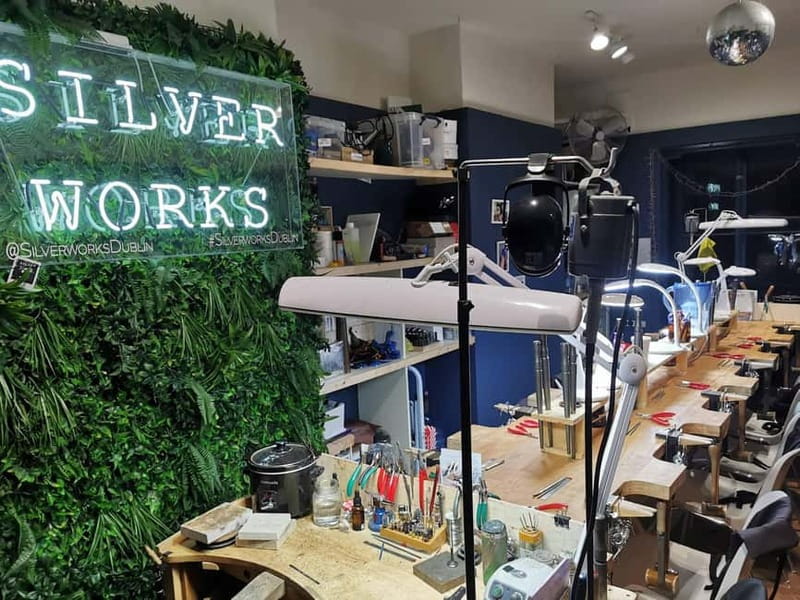
- You make the ring yourself: Measure, cut, shape, file, texture, and polish a sterling silver ring with guidance at each stage.
- The final design is personal: Choose among three textures, decide how curved or flat the ring should be, and select a shiny or matte finish.
- The class lasts two hours: That is enough time for a real process without taking over your whole Dublin day.
- The setting is central: Drury Street is in Dublin 2, close to shopping, cafés, restaurants, and the second studio on South Great George’s Street.
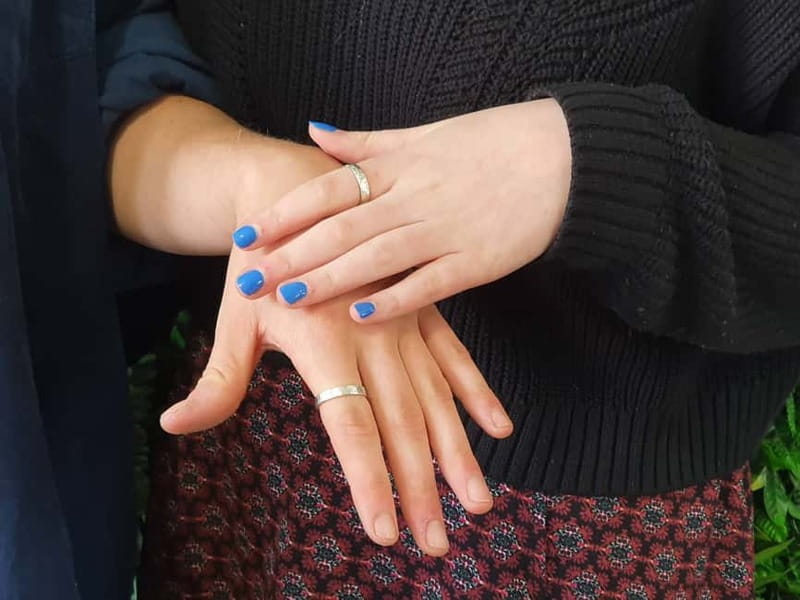
- It suits beginners and couples: You need no prior jewelry-making experience, and matching rings make a memorable anniversary or honeymoon project.
- Plan your arrival carefully: Arrive 10 minutes early. Late arrivals are not accepted more than 10 minutes after the class begins.
Why making a ring beats buying one
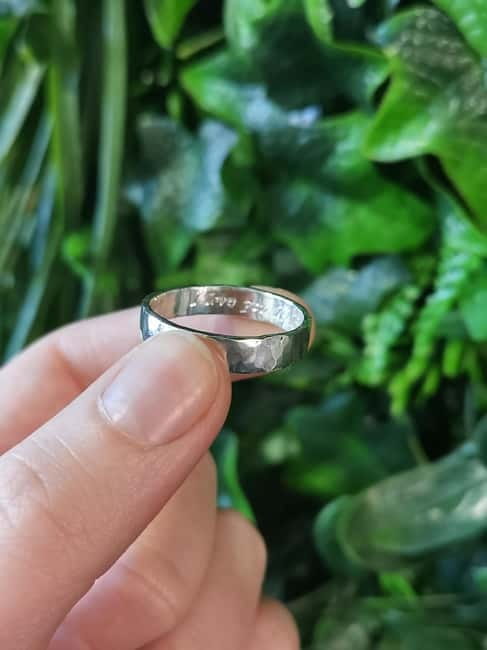
Dublin has no shortage of souvenirs. You can buy woolens, whiskey, pottery, Celtic-inspired jewelry, and plenty of green merchandise. This workshop offers something different: you leave with an object that shows the marks of your own decisions and effort.
The ring begins as raw sterling silver. You decide which finger will wear it, and the tutor helps you mark the correct length. From there, the process is active rather than demonstrative. You use tools, feel the metal change shape, and make choices that affect the final look.
That matters if you enjoy doing rather than simply seeing. The work is structured enough for a beginner, but it still feels like an accomplishment. You are not just watching a craftsperson make something beautiful while you stand nearby. You make the main piece yourself, with expert help for the trickier parts.
The finished ring is also easy to pack. It will not take up room in your suitcase, and you can wear it during the rest of your Irish trip. Several people have found themselves wearing the ring every day afterward, which tells you more about its value than a standard souvenir description can.
A few more Dublin half-days to weigh up
- Dublin: Irish Music and Dance Show with Dance Lesson
★ 4.7 · 567 reviews - Dublin: Jameson Distillery Whiskey Blending Class
★ 4.8 · 113 reviews - Irish Craic & Cuisine: Cooking Class & Dinner in Central Dublin
★ 5.0 · 80 reviews
What happens during the two-hour workshop
The class follows a clear sequence. Your instructor explains each stage, demonstrates the technique, and then gives you time to work. That rhythm keeps the session friendly for beginners while leaving room for individual choices.
1. Measure and cut the sterling silver
First, you choose the finger for your ring. The silver is marked to the length required, and you use a handsaw to cut it to size.
This is a small but important step. Ring sizing is not guesswork, and your choice of finger affects the amount of silver needed. Pay attention here, especially if you plan to make a ring for someone else. If you are making matching rings with a partner, take care over the measurements before moving on.
Using a saw can feel unfamiliar at first, but the point is not speed. The instructor guides you through the process, and the workshop is designed to help people with no jewelry or metalworking background.
2. Shape the strip around a ring mandrel
Next, you form the silver into a ring shape with a mallet and ring mandrel. The mandrel gives the metal a guide, while the mallet helps you curve it gradually.
This is where the flat strip begins to look like jewelry. It is also the stage where a little patience pays off. You are building the curve rather than forcing the silver into shape in one dramatic blow.
The final curve makes a noticeable difference to the ring. You can aim for a more rounded profile or a flatter shape, depending on the look you want. That choice gives the finished piece some character, even before you select the surface texture.
A different sort of day from the same base:
- Dublin to Cliffs of Moher, including Wild Atlantic Way and Galway
★ 5.0 · 23,331 reviews - From Dublin: Cliffs of Moher, Burren & Galway City Day Tour
★ 4.8 · 18,888 reviews - Dublin: Guinness Storehouse Entry Ticket
★ 4.6 · 16,863 reviews - Dublin to Cliffs of Moher, Burren, Wild Atlantic Way, Galway Tour
★ 5.0 · 12,924 reviews
3. Watch the soldering, then refine the join
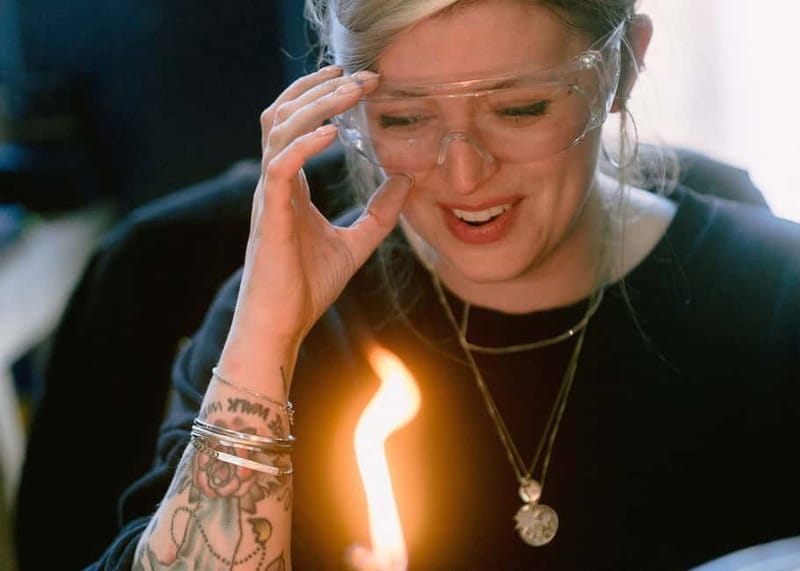
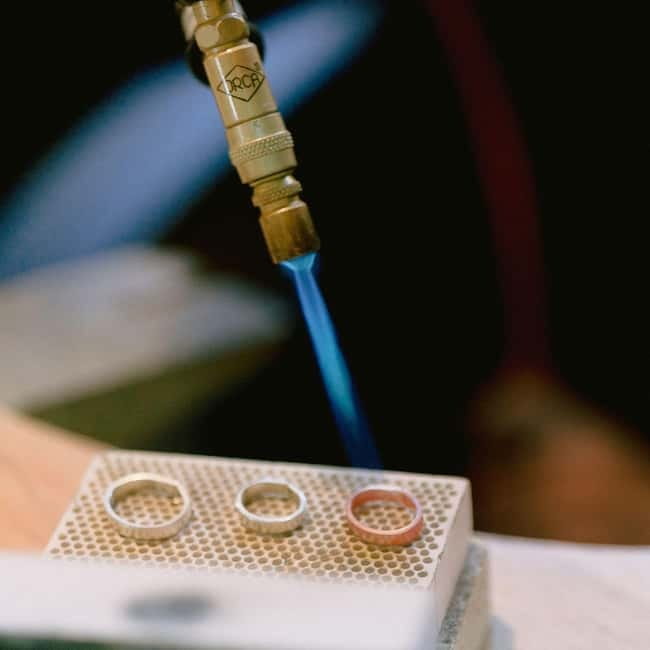
Once the ring has been shaped, an expert tutor handles the soldering. This is a sensible division of labor. Soldering requires heat and precision, while the rest of the process gives you plenty of direct work.
After the join is made, you use different hand files to smooth and refine the ring. Filing may sound less exciting than hammering, but it is one of the steps that helps turn a rough object into something comfortable to wear.
This is also a good point to look closely at the shape. If the curve is not quite what you hoped for, the instructor can guide you as you adjust it. The people running these classes are often praised for being encouraging rather than hovering, which is the right balance for a workshop.
4. Add one of three textures
The next decision is the most artistic part. You choose from three different textures and use a planishing hammer to create the surface you want.
The hammer marks are not just decoration. They change how the silver catches the light and make each ring look less like a factory product. A textured finish can also hide small irregularities, which is welcome if this is your first attempt at metalwork.
Take a moment before you start striking. The texture will become part of the ring’s identity, and you cannot simply erase every mark once it is made. Your instructor can show you how the technique works, but the final pattern comes from your hand.
5. Choose the polish and take it home
The last stage is polishing. You select the finish, with options that include shiny or matte results. A bright polish gives the ring a cleaner, more reflective appearance, while a matte finish has a quieter look.
This final choice helps make two rings from the same class feel distinct. One person might prefer a flat, shiny band. Another might choose visible hammer texture with a softer finish. That flexibility is especially nice for couples making rings together.
At the end, you take your individual sterling silver ring with you. The activity finishes back at the meeting point, so you can continue with your Dublin plans immediately afterward.
The instructors make the difference
A craft workshop can go wrong if the teacher rushes, gives vague directions, or takes over the work. This class seems to understand that beginners need clear steps and room to try.
The strongest praise is aimed at the instructors’ patience, warmth, and practical help. Names that come up include Audrey, Sinead, Jill, Owen, Claire, Emily, Kat, and others, though your own tutor may be different. The important point is the teaching style: instructions are broken into manageable stages, and help is available when you need it.
Small groups are another advantage. One class participant particularly valued having two instructors, since assistance was easy to get without stopping the whole session. That is useful when everyone reaches a fiddly stage at a slightly different time.
The tone also seems relaxed. Tea, coffee, water, and snacks are provided, and the studio atmosphere can include the sounds of music and activity from Drury Street outside. You are learning a craft, but this is not a formal exam. A little imperfection is part of the charm.
English is the workshop language, and you need a good level of English to follow the instructions. That is worth taking seriously because the class involves tools, measurements, and a sequence of techniques.
A central Dublin setting on Drury Street
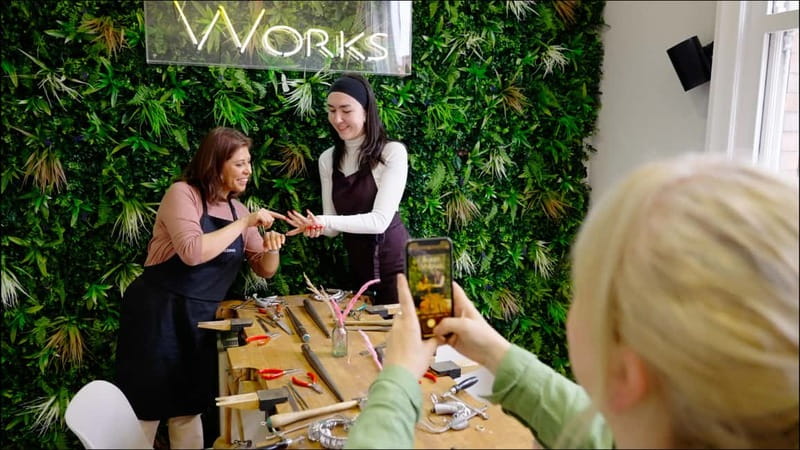
The workshop is in Dublin 2, at a convenient central location on Drury Street. This makes it easy to combine with a day of shopping, cafés, restaurants, or sightseeing in the city center.
The location is helpful, but do not assume every class will take place at the advertised Drury Street studio. The business also uses a second location at 4 South Great George’s Street, Dublin 2, postal code D02NR59. It is about a two-minute walk away.
You receive a message the day before the workshop confirming if your class has moved. Check your messages, and do not rely on simply walking to the first address without looking. The two locations are close, so the change should not disrupt your day, but it can cause needless stress if you do not notice it.
Both studios have steep stairs. The activity is not suitable for wheelchair users or people with impaired mobility. If stairs are difficult for you, contact the provider before booking rather than waiting until the day of the class.
Is $98 a fair price?
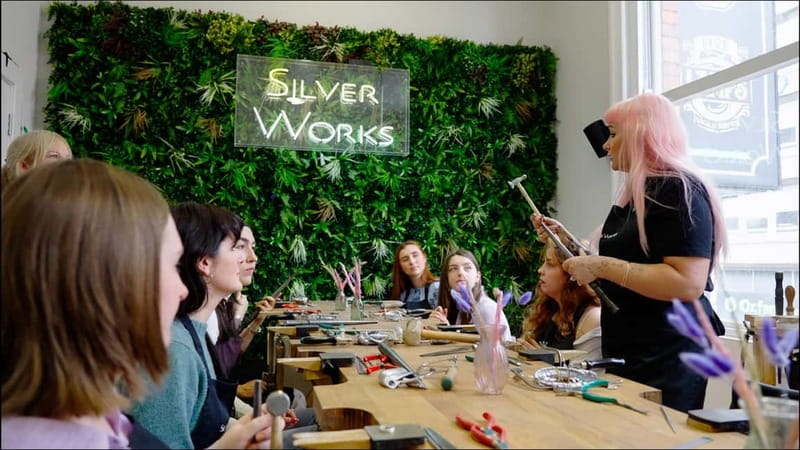
At $98 per person, this is not a cheap way to fill two hours. You are paying for a guided class, the sterling silver, studio time, tools, instruction, and a finished ring.
The value improves if you already planned to buy a piece of jewelry in Dublin. Instead of paying for a ready-made ring with no personal connection, you spend the same sort of souvenir budget on an item you helped create. The workshop also gives you an experience, not only a product.
It is particularly good value for couples, parents and older children, or friends who want a shared activity. Matching anniversary or honeymoon rings add a strong personal reason to book. One participant even planned to engrave the ring later as a reminder of a birthday connected with St. Patrick’s Day.
The price may feel high if you are mainly looking for a quick craft activity or a low-cost rainy-day option. You should also remember that hotel pickup and drop-off are not included. The central location means you arrange your own way there, but most people staying in central Dublin can plan around that without much trouble.
Who will enjoy it most
I would choose this workshop if you like making things with your hands, want a personal reminder of Ireland, or prefer an activity with a clear finished result. You do not need previous experience, and the instruction is built around beginners.
It works well for:
- Couples making matching rings for an anniversary, honeymoon, or simple shared keepsake
- Parents and children aged over 10
- Friends looking for something more distinctive than a standard city tour
- Solo visitors who enjoy crafts and want a useful souvenir
- People with a free morning or afternoon who want a two-hour activity in central Dublin
Children must be over 10, and anyone under 16 must be accompanied by a paying guardian. The age rule makes sense because you are working with saws, hammers, files, and heated soldering, even though the tutor handles the soldering itself.
This may not suit you if you dislike detailed handwork, have limited English, or need step-free access. It is also not ideal if your Dublin schedule is so tight that a delayed start would cause problems.
Timing and arrival advice
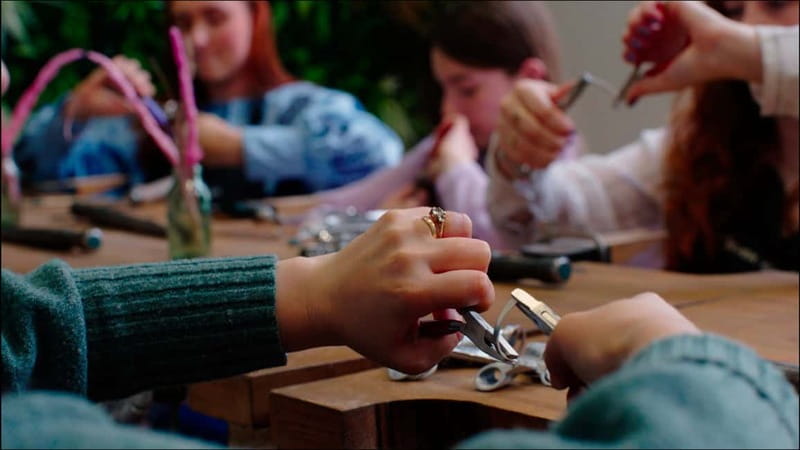
The workshop lasts two hours, with starting times based on availability. Plan to arrive at least 10 minutes before the class begins.
Late arrival is a real issue here. Attendees more than 10 minutes late cannot be accepted, so leave extra time for city traffic, finding the studio, and checking the address. If you are coming directly from Dublin Airport, allow a generous margin. A delayed flight or slow transfer is not something the studio can fix.
I would not book this immediately before a flight, especially if you are arriving that same day. The class is relaxed once it starts, but the arrival rule is firm.
The activity ends where it begins. That makes it easy to continue sightseeing, find a nearby drink, or browse the surrounding streets after you collect your ring.
Cancellation, booking, and practical limits
You can cancel up to 24 hours before the workshop for a full refund. A reserve-now-and-pay-later option is also available, which helps if your Dublin plans are still shifting.
The workshop is conducted in English. It is not suitable for children under 10 or wheelchair users, and the steep stairs at both studios are an important access limitation.
Tea, coffee, and snacks are included. Hotel pickup and drop-off are not, so you must make your own way to Drury Street or the nearby South Great George’s Street studio.
The experience has a 4.9 rating from 1,065 reviews, a strong sign that the teaching and finished product are consistently landing well. Still, a high score does not remove the need to check the age, language, stair, and arrival requirements before paying.
Should you book the silver ring workshop?
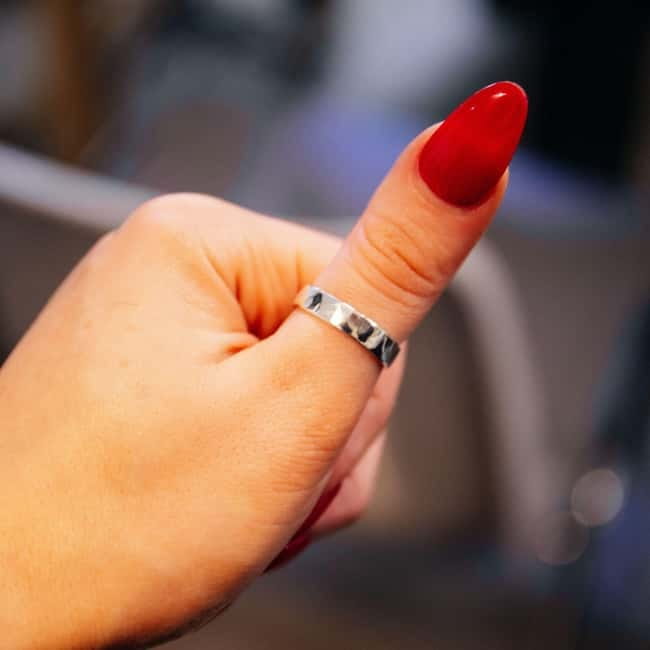
Book it if you want a souvenir with a story and enjoy being involved in the making. The best part is not just taking home a sterling silver ring. It is knowing that you chose the curve, texture, and finish, then did the cutting, shaping, filing, and polishing yourself.
I would make this a priority for couples, craft-minded visitors, and anyone who has already seen the main Dublin sights. It is also a smart rainy-day plan because the result does not depend on the weather.
Skip it if $98 feels too steep for a two-hour activity, if stairs are a problem, or if your schedule leaves no room for an early arrival. For the right person, though, this is one of the more personal souvenirs you can bring home from Dublin: small, wearable, and made by your own hands.
FAQ
Where does the silver ring workshop take place?
This booking is for the Drury Street location in Dublin 2. Some classes are moved to the second studio at 4 South Great George’s Street, D02NR59, about a two-minute walk away. You receive a message the day before if your class location changes.
How long does the workshop last?
The workshop lasts two hours. Starting times vary, so check availability when choosing your booking.
What will I do during the class?
You choose the finger for your ring, mark and cut the silver, shape it around a ring mandrel with a mallet, file it, add one of three textures with a planishing hammer, and select a polish. An expert tutor handles the soldering and guides you throughout.
Is the workshop suitable for children?
Children must be over 10 years old. Anyone under 16 must attend with a paying guardian.
Is the studio accessible for wheelchair users?
No. Both studios have steep stairs and are not suitable for wheelchair users or people with impaired mobility.
What is included, and can I cancel?
The price includes the forging workshop, an expert tutor, your individual sterling silver ring, tea or coffee, and snacks. Hotel pickup and drop-off are not included. You can cancel up to 24 hours in advance for a full refund, and a reserve-now-and-pay-later option is available.
Recently added around Dublin
- Dublin: Pub Tour. Pour The Perfect Guinness, Whiskey & Music★ 5.0 · 3 reviews
- Waterford Crystal and Kilkenny Full-Day Rail Tour from Dublin★ 5.0 · 3 reviews
- Cliffs of Moher and The Burren Private Tour from Dublin★ 5.0 · 3 reviews
- Private Chauffeur Service From Dublin Airport to Killarney★ 5.0 · 3 reviews
- Beautiful Southwest Tour 2022★ 5.0 · 3 reviews
- A Self Guided Walking Tour of Dublin’s Docklands★ 4.5 · 3 reviews
- Dublin One Day Tour with a Local: 100% Personalized & Private★ 4.5 · 3 reviews
- Ireland: 3-Day West Coast Explorer Tour★ 5.0 · 3 reviews
Dublin Tours, compared.

Dublin to Cliffs of Moher, including Wild Atlantic Way and Galway
Read our review →
Cliffs of Moher, Burren & Galway City Day Tour
Read our review →

Dublin to Belfast Black Cab, Dunluce Castle and Giant’s Causeway
Read our review →
Kilkenny, Wicklow Mountains & Glendalough Day Tour from Dublin
Read our review →
Wicklow Mountains, Glendalough & Kilkenny Tour
Read our review →

Dublin Highlights and Hidden Gems Guided Walking Tour
Read our review →Browse the lists this tour appears in