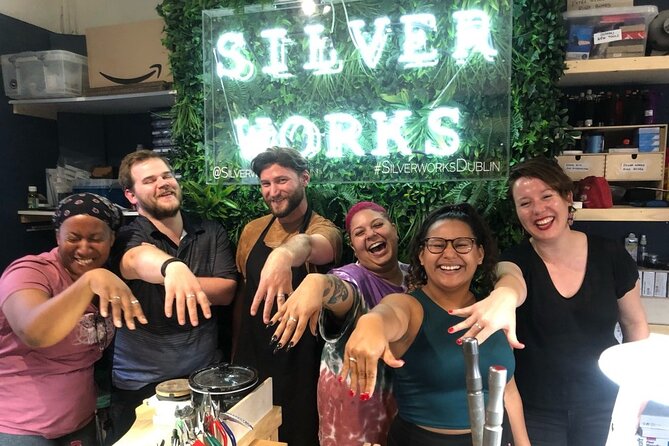
Reviewed · DUBLIN TOURS
Dublin Jewellery Forge a Hammered Silver Ring: Drury Street
The best part of this Dublin workshop is that you do not just buy a souvenir, you make one. At Silver Works on Drury Street, you saw, shape, texture, and polish a sterling silver ring with help at every stage. I like the hands-on work and the fact that your finished ring is useful, not just decorative. I also like the relaxed extras, including tea, coffee, water, and chocolate.
The main drawback is practical: the studio is in two old buildings with stairs and no lift. You also need to arrive on time, since entry is refused after 10 minutes and there is no refund or rescheduling for lateness. The advertised group size also needs checking, as the details describe both a maximum of six and a maximum of 12 people.
Key points before you book
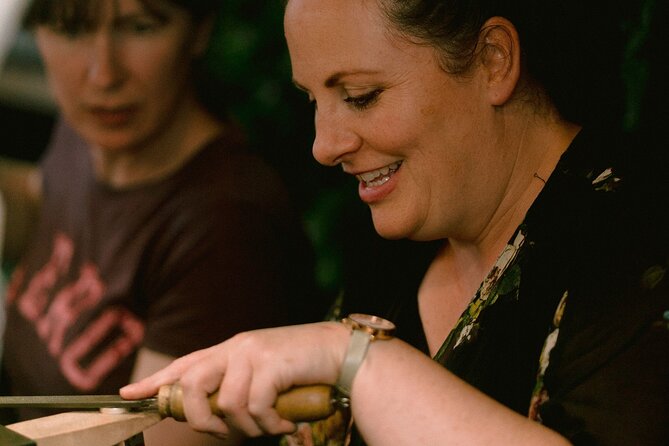
- Make a real sterling silver ring: You cut the metal, form it, file it, hammer it, and choose the finish.
- Choose your own look: Three textures and two polishing options let you create a ring that is not identical to anyone else’s.
- Expect close instruction: The class is designed around step-by-step guidance, with tutors helping you use each tool safely.
- Plan for about two hours: Some groups finish in roughly 90 minutes, but you should keep the full two-hour window free.
- Bring home a personal souvenir: Your ring is made during the session and becomes a wearable reminder of Dublin.
- Mind the stairs and strict arrival rule: The Drury Street buildings are not wheelchair accessible, and arriving more than 10 minutes late means missing the class.
Making a Dublin souvenir instead of buying one
Dublin is full of easy souvenirs: woolens, whiskey, pottery, and jewelry already sitting behind a shop window. This class gives you something better suited to a meaningful trip. You leave with a ring you made yourself, complete with small choices and marks that no factory could reproduce.
The project is approachable even if you have never handled jewelry tools. You are not expected to arrive with drawing skills or workshop experience. The tutor demonstrates each task, explains what is happening, and stays available while you work.
That balance matters. You get the satisfaction of making decisions, but you are not left alone with a saw, a soldering torch, or a metal file. Past class instructors named in feedback include Lucy, Luke, Kate, Holly, and Trish, though your tutor will depend on the date and schedule.
The activity is also a good break from sightseeing. It gives you two hours indoors, seated at a workbench, with enough practical work to keep your hands busy and enough instruction to make the process feel calm rather than rushed.
A few more Dublin half-days to weigh up
- Dublin to Cliffs of Moher, including Wild Atlantic Way and Galway
★ 5.0 · 23,331 reviews - From Dublin: Cliffs of Moher, Burren & Galway City Day Tour
★ 4.8 · 18,888 reviews - Dublin: Guinness Storehouse Entry Ticket
★ 4.6 · 16,863 reviews
Starting with silver at Silver Works on Drury Street
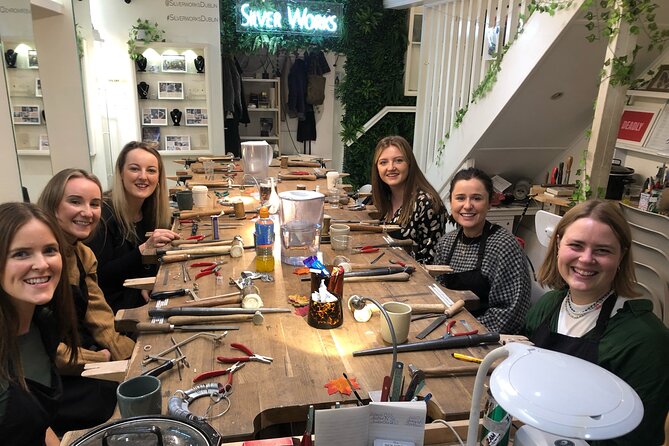
The workshop begins at Silver Works, 24 Drury Street, Dublin, D02 V658. Drury Street is a central Dublin address, and the meeting point is intended to be easy to find. You return to the same location at the end, so there is no second drop-off point to navigate.
The building itself is part of the experience. Silver Works operates from two old period buildings, and that character comes with a tradeoff: there are plenty of stairs and no lift. Service animals are allowed, and the studio is near public transportation, but the space is not wheelchair accessible.
Once you arrive, you choose which finger will wear your ring. That decision comes first because the tutor needs to measure the silver to the correct length. Think about the ring before the class begins, especially if you are making it as a gift. Finger size can change, and a ring made for someone else needs a reasonably accurate measurement.
The class supplies the sterling silver. Tea or coffee, water, and chocolate are also available. These are small details, but they help make the workshop feel welcoming, especially when you are concentrating on tools and measurements.
Cutting the silver with a handsaw
Your first major task is marking the silver strip to the length you need. Then you use a handsaw to cut it. This is the point where the project changes from a demonstration into your own work.
You may find the sawing slower than expected. That is normal for a first attempt, and the tutor guides you through the process. The purpose is not to race through the cut. It is to make a clean enough edge for the next stages.
This part gives you a useful sense of what handmade jewelry involves. A store-bought ring hides the work behind its smooth finish. Here, each small action affects the final shape. Your cut, filing, hammer marks, and polishing choices all contribute to the result.
The intimate teaching setup is valuable here. The tour summary describes a maximum of six, while the additional booking information lists a maximum of 12. Since those figures differ, I would confirm the expected group size when booking if personal attention is important to you.
Shaping the ring around the mandrel
After cutting, you form the silver into a ring. A mallet helps you bend and shape the metal around a ring mandrel, the tapered tool used to create a round form and check the size.
This is one of the most satisfying stages because the flat strip begins to look like jewelry. You will work gradually, shaping the silver rather than forcing it into place. The tutor can show you how to keep the curve even and how to check that the ends meet properly.
The result does not have to be perfectly uniform to feel successful. Small variations are part of the handmade character. Still, this is a stage where careful instruction makes a difference, and the class is structured so that you can ask for help as you go.
If you are making matching rings with a partner, each of you still gets room to make individual choices later. The basic form may be similar, but the texture, curve, and finish can create noticeably different results.
A different sort of day from the same base:
- Dublin to Cliffs of Moher, Burren, Wild Atlantic Way, Galway Tour
★ 5.0 · 12,924 reviews - Dublin to Belfast Black Cab, Dunluce Castle and Giant’s Causeway
★ 5.0 · 7,954 reviews - Kilkenny, Wicklow Mountains & Glendalough Day Tour from Dublin
★ 5.0 · 7,897 reviews - From Dublin: Wicklow Mountains, Glendalough & Kilkenny Tour
★ 4.8 · 6,235 reviews
Watching the soldering, then learning to file
Once the silver is shaped, an expert tutor solders the ring in front of you. The tutor explains what is happening as the joint is made, so you are not simply handing over the most technical step without context.
This is a sensible arrangement for a short workshop. Soldering requires heat and precision, and having the expert handle it keeps the class moving while still showing you how the ring is joined. You get to see the craft at close range without the session becoming a full professional jewelry course.
Next comes filing. You use different hand files to smooth the ring and decide how its curves will look. This stage takes patience, but it gives you one of the clearest chances to change the character of your piece.
A ring with a softer curve will look different from one with sharper edges. You can make it sleek, rounded, or slightly rustic. The tutor explains the options, but the final decision belongs to you.
I like this part because it gives the class more depth than a simple paint-your-own souvenir activity. You are not just adding a surface decoration. You are shaping the object itself.
Three textures made with a planishing hammer
The planishing hammer is the tool that makes the ring unmistakably yours. You choose from three different textures, then use the hammer to create the surface effect you want.
Hammering silver sounds dramatic, but the process is controlled. The tutor shows you how to strike the metal and how the marks build across the surface. You can create a pattern with a regular rhythm, or allow a more irregular effect for a rougher handmade appearance.
This is the moment when you need to accept that perfection is not the goal. Each hammer mark remains part of the ring’s story. An uneven pattern can be attractive, especially when it reflects your own hand rather than a machine.
The texture options give you meaningful choice without overwhelming you. You are not faced with a large catalog of designs or a long technical lesson. You select one of three distinct effects and learn how to apply it.
For couples, parents and children, or friends, this makes the class feel shared but not repetitive. Everyone works through the same process, yet each ring can come out with its own surface.
Choosing between a rustic and polished finish
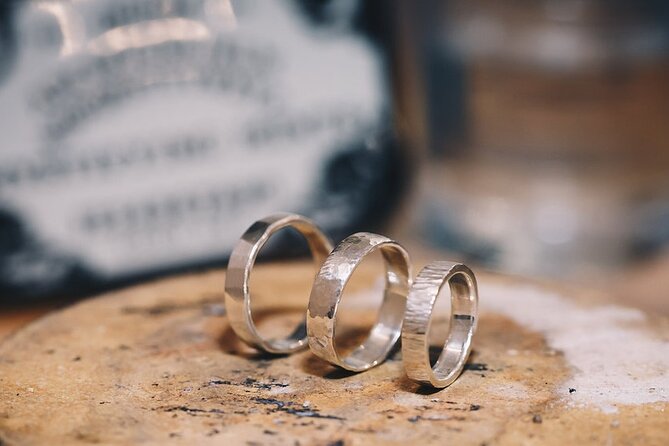
The final decision is the polish. You can polish only the inside of the ring, leaving the outside with an artistic, rustic look, or choose a fully polished finish for more shine.
This choice changes the mood of the finished piece. A partial polish keeps attention on the hammered marks and handmade surface. A full polish gives the ring a brighter, more traditional jewelry look.
You should think about how you plan to wear it. If you want the marks and texture to remain the main feature, the rustic option makes sense. If you prefer sparkle and a cleaner finish, full polishing is the safer choice.
The class ends with the most rewarding step: you keep the ring. It is not shipped later or exchanged for a finished sample. You take home the object you worked on during the workshop.
Several people have made rings for anniversaries, partners, daughters, or family members. That personal purpose adds value, especially if you are marking a birthday, Christmas, wedding anniversary, or first visit to Ireland.
How much value do you get for $104.05?

At $104.05 per person, this is not a budget activity, but it is a fair price if you value both the lesson and the material. Sterling silver is included, and you also receive instruction, use of the tools, drinks, chocolate, and a finished ring.
The comparison is not simply between this and a jewelry purchase. A ready-made silver ring may cost less or more depending on its design, but it will not include two hours of making it yourself. On the other hand, you should not book this expecting a full jewelry apprenticeship or a highly elaborate custom piece.
The strongest value is emotional and practical. You come away with something wearable that recalls your time in Dublin, rather than an item that could have been bought anywhere. One class participant reported wearing the ring every day without it breaking or tarnishing, though individual care and wear can vary.
The price also works well for a shared occasion. Two people can make rings together for a date, anniversary, family outing, or holiday gift. The class creates a common memory without requiring you to spend the day on a major attraction.
Timing, group size, and the strict late-arrival rule
The activity lasts about two hours. Some sessions may finish sooner. One relaxed class ended after roughly 90 minutes, but you should not plan another appointment immediately afterward. Allow the full advertised time, plus a little breathing room.
Arrive early. If you are more than 10 minutes late, you will not be admitted, and the payment will not be refunded or moved to another session. That rule is unusually strict, but it is understandable in a small workshop where the tutor must begin with measurements and tool instructions.
The experience is generally suitable for most people aged 10 and older. Anyone under 16 must be accompanied by a paying adult. Children under 10 cannot take part.
The studio does not offer luggage storage, so arrive without large bags. This is especially important if you are checking out of accommodation or heading to the airport. Plan to leave your luggage elsewhere before you come.
You receive confirmation when you book, and the ticket is mobile. The experience is offered in English. If you are comfortable following practical instructions in English, the format is straightforward.
Who will enjoy this ring-making class?
I would recommend it most strongly to:
- Couples looking for a hands-on date in Dublin
- Families with children aged 10 and older
- Friends who want matching or contrasting souvenirs
- Visitors who prefer making something to browsing shops
- Anyone interested in basic jewelry craft without committing to a long course
- People marking an anniversary or special trip
It is less suitable if you need step-free access, want to store luggage at the venue, or have only a very narrow schedule. It may also disappoint you if you expect to design a complex ring from many custom parts. The format focuses on one hammered silver band with choices in shape, texture, and finish.
The class has earned a 4.9 rating from 410 reviews, with 99 percent of participants recommending it. Those numbers point to a very dependable experience, and the praise focuses on the same things I would consider important: patient instruction, friendly tutors, a clear process, and a souvenir people actually want to wear.
My advice for booking
Book this if you want a personal Dublin memory and enjoy working with your hands. The ring is simple enough for a beginner, but the process has real craft in it. You get to make decisions without being asked to master every part of silversmithing.
Before paying, check the ring style carefully. One piece of feedback raised confusion about the exact design, so do not assume you are choosing from a large range of ring shapes. The class centers on the hammered silver ring described here.
Also confirm the current group-size arrangement. The information gives both six and 12 as the maximum, and that difference could affect how much one-to-one help you receive.
Free cancellation is available if you cancel at least 24 hours before the start time. Changes or cancellations made inside that window are not refunded. Once booked, treat the start time seriously and arrive early.
Should you book Silver Works on Drury Street?
Yes, if you want a souvenir with a story attached to it. For $104.05, you receive sterling silver, a guided two-hour activity, access to jewelry tools, and a ring that reflects your own choices.
The workshop is not fully accessible, does not store luggage, and has a firm late-arrival policy. Those points matter. For visitors who can manage stairs and plan their day carefully, the class offers a warm, creative pause from ordinary sightseeing and a keepsake you can wear long after Dublin is behind you.
FAQ
Where does the ring-making workshop take place?
The workshop begins and ends at Silver Works, 24 Drury Street, Dublin, D02 V658, Ireland.
How long does the experience last?
The activity lasts approximately two hours, although some sessions may finish in about 90 minutes.
What will I make during the class?
You will make a sterling silver ring from scratch. The process includes cutting, shaping, soldering, filing, hammering, and polishing.
Is sterling silver included in the price?
Yes. Sterling silver for your ring is included.
Can I choose the ring’s texture and finish?
Yes. You can choose from three textures and select either an inside-only polish for a rustic appearance or a fully polished finish.
What is the group size?
The published details give two different maximum sizes, six people in the tour highlights and 12 people in the additional information. Confirm the current group size when booking.
Can children take part?
Children under 10 cannot take part. Anyone under 16 must be accompanied by a paying adult.
Is the studio wheelchair accessible?
No. The workshop is located in two old period buildings with stairs and no lift.
What happens if I arrive late?
If you arrive more than 10 minutes after the start time, you will not be admitted and will not receive a refund or rescheduling.
Can I cancel for a full refund?
Yes, if you cancel at least 24 hours before the experience start time. Cancellations or changes made less than 24 hours before the start time are not refunded.
Recently added around Dublin
- Dublin: Pub Tour. Pour The Perfect Guinness, Whiskey & Music★ 5.0 · 3 reviews
- Waterford Crystal and Kilkenny Full-Day Rail Tour from Dublin★ 5.0 · 3 reviews
- Cliffs of Moher and The Burren Private Tour from Dublin★ 5.0 · 3 reviews
- Private Chauffeur Service From Dublin Airport to Killarney★ 5.0 · 3 reviews
- A Self Guided Walking Tour of Dublin’s Docklands★ 4.5 · 3 reviews
- Beautiful Southwest Tour 2022★ 5.0 · 3 reviews
- Dublin One Day Tour with a Local: 100% Personalized & Private★ 4.5 · 3 reviews
- Ireland: 3-Day West Coast Explorer Tour★ 5.0 · 3 reviews
Dublin Tours, compared.

Dublin to Cliffs of Moher, including Wild Atlantic Way and Galway
Read our review →
Cliffs of Moher, Burren & Galway City Day Tour
Read our review →

Dublin to Belfast Black Cab, Dunluce Castle and Giant’s Causeway
Read our review →
Kilkenny, Wicklow Mountains & Glendalough Day Tour from Dublin
Read our review →
Wicklow Mountains, Glendalough & Kilkenny Tour
Read our review →