
Reviewed · DUBLIN TOURS
Eco Bike Tour of Dublin City Top Attractions and Nature
Dublin makes sense from a bicycle seat. You can link the medieval core, Georgian streets, the River Liffey, and the Docklands without spending half your day waiting at crossings or retracing your steps. The private guide and adjustable pace are the real draw, especially if you want context at each stop rather than a quick list of names.
I like the way the route joins major sights such as Trinity College, Dublin Castle, St. Patrick’s Cathedral, and Temple Bar with quieter green spaces. I also like the choice of three lengths, from a brisk two-hour introduction to a demanding six-hour ride that reaches Kilmainham Gaol and the Irish National War Memorial Gardens. The main consideration is stamina: the six-hour option covers a lot of ground and requires you to bring plenty of energy.
Key points at a glance
- Three tour lengths: Choose two hours for central Dublin, four hours for the Docklands and more major sights, or six hours for Kilmainham Gaol and the War Memorial Gardens.
- A genuinely private outing: Your guide can adjust the route and pace to your group, with one guide assigned to groups of up to 25 people.
- Adult city bike included: The rental includes a bike and lock, while helmets, child seats, children’s bikes, and other equipment must be requested.
- Strong guide focus: Robert is described as level headed and attentive to cycling ability, while William is also named as a well-regarded guide.
- No admission tickets included: You see the outside of the attractions unless you arrange and pay for entry separately.
- Central meeting point: Meet in front of the Boar’s Head at 149 Capel Street, then return there at the end.
Why Dublin works well on two wheels

Dublin’s best-known sights are spread across a compact central area, but walking between all of them takes time. A bike gives you a practical way to connect the former Viking settlement at Wood Quay, the cathedral quarter, Georgian Dublin, Trinity College, Temple Bar, and the Liffey.
You are not simply pedaling from photo stop to photo stop. The guide provides commentary about the people and events that shaped Irish culture, so the city’s monuments have a story attached to them. The route is also adjusted to your pace and interests, which matters if your group includes both confident urban cyclists and people who prefer a slower ride.
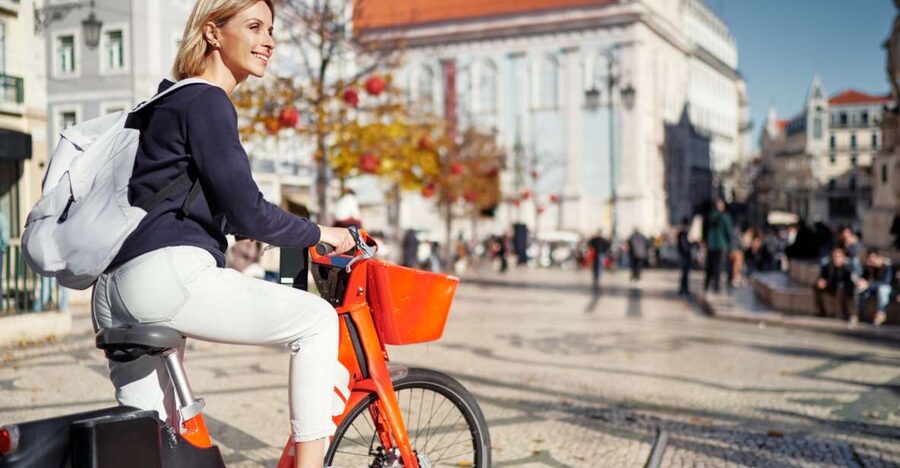
The tour uses adult city bikes with locks. You should arrive about 10 minutes early, since you need time to collect and set up the bikes. Helmets are not included by default, but they are available on request, as are children’s bikes and child seats.
More Bike Tours in Dublin
- Cycle Dublin – Bike & ebike Tours
★ 5.0 · 748 reviews - Dublin Panoramic e-Bike Tour with Howth Adventures
★ 5.0 · 544 reviews - Dublin: Bike & E-Bike Tour with a Local Guide
★ 4.6 · 477 reviews
The two-hour route: Dublin’s essential sights
The two-hour option is the sensible choice if you have a short stop in Dublin or want a first look before exploring on your own. It focuses on the city center, with a route designed to cover more ground than a standard walking tour.
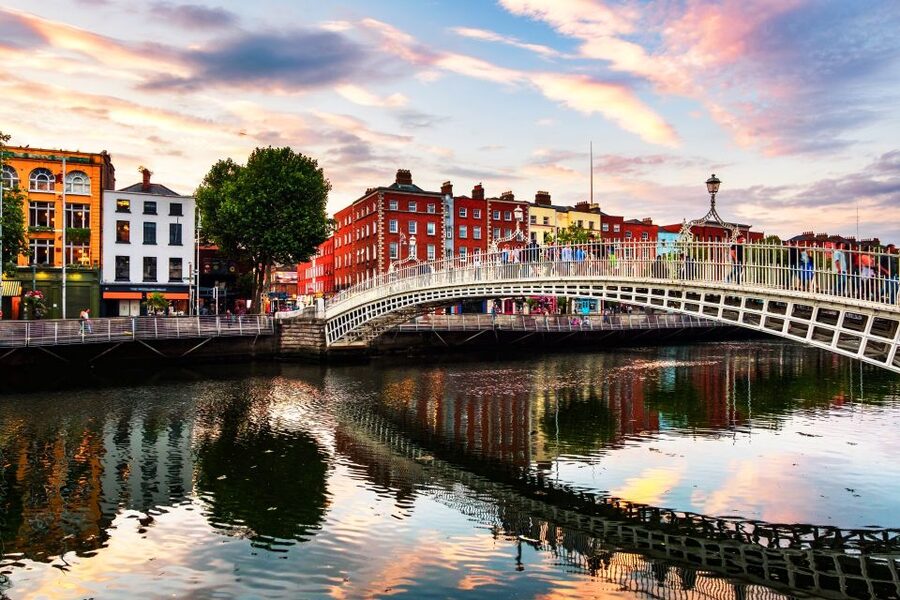
The ride begins at the rental shop after you meet your guide. From there, you head through Wood Quay, the area associated with Dublin’s former Viking settlement. It is a useful opening because it places modern Dublin beside its earliest urban roots.
The route then reaches the historic center and its Georgian architecture. Dublin Castle and City Hall are among the key stops. The castle complex is one of the city’s main political and ceremonial landmarks, while City Hall adds a strong Georgian note to the route. Your guide’s commentary helps turn these facades into part of a larger story about Ireland’s government and changing identity.
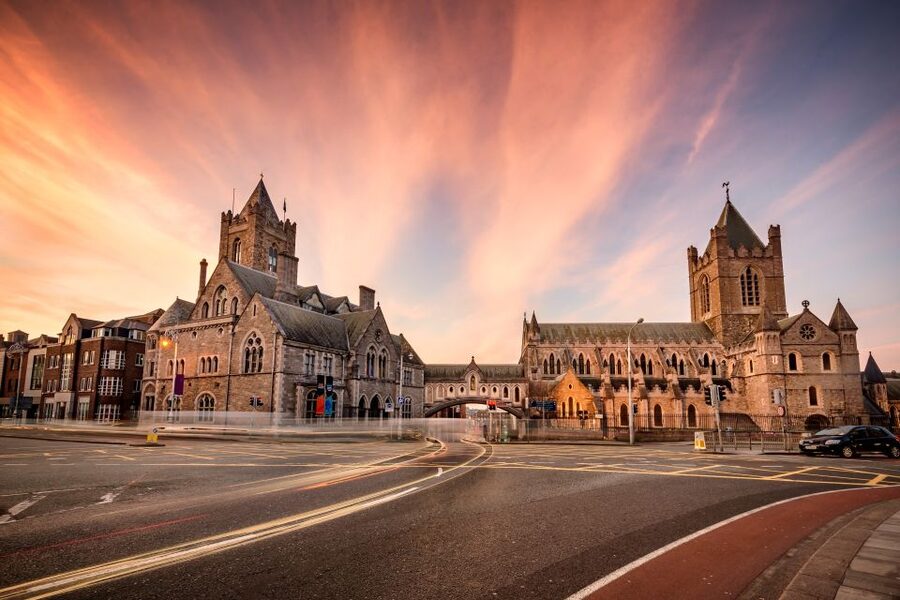
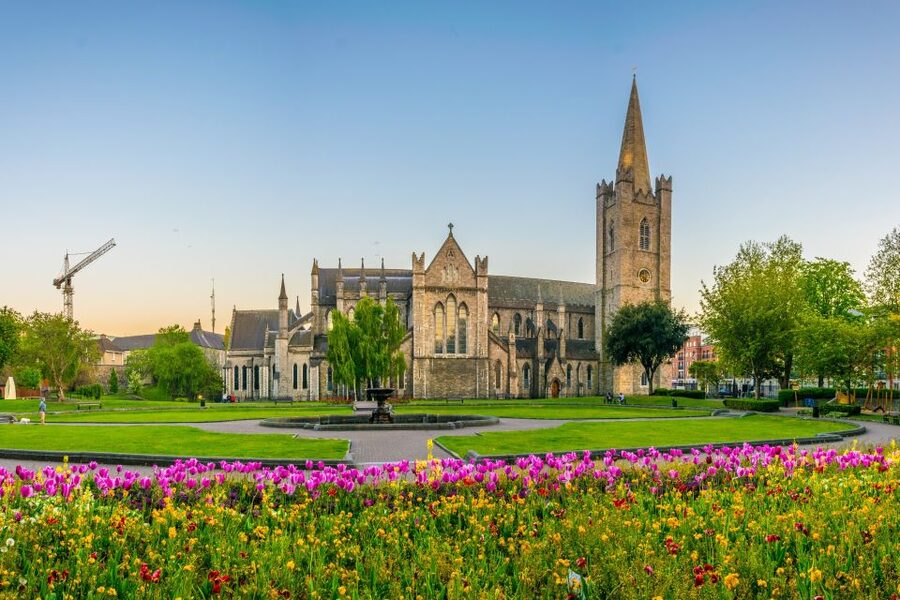
The cathedral section is particularly useful for first-time visitors. You will hear why Dublin has two cathedrals, Christ Church Cathedral and St. Patrick’s Cathedral. You should not expect an interior visit on this outing, since admission tickets are not included, but seeing both buildings from the outside helps you understand their separate roles in the city.
St. Patrick’s Cathedral is paired with St. Stephen’s Green, a peaceful open space near the center. The green includes an ornamental lake and sculptures, and the nearby Stephen’s Green Shopping Centre adds another architectural point of interest. This is one of the tour’s better contrasts: you move from church stone and busy streets to lawns, water, and trees within minutes.
Trinity College follows, along with the Molly Malone Statue. Trinity’s historic campus is one of Dublin’s most recognizable settings, while Molly Malone is an easy, lighthearted stop amid the more serious monuments. You get a broad first taste of Dublin here: religious history, civic buildings, literary associations, public parks, and local folklore.
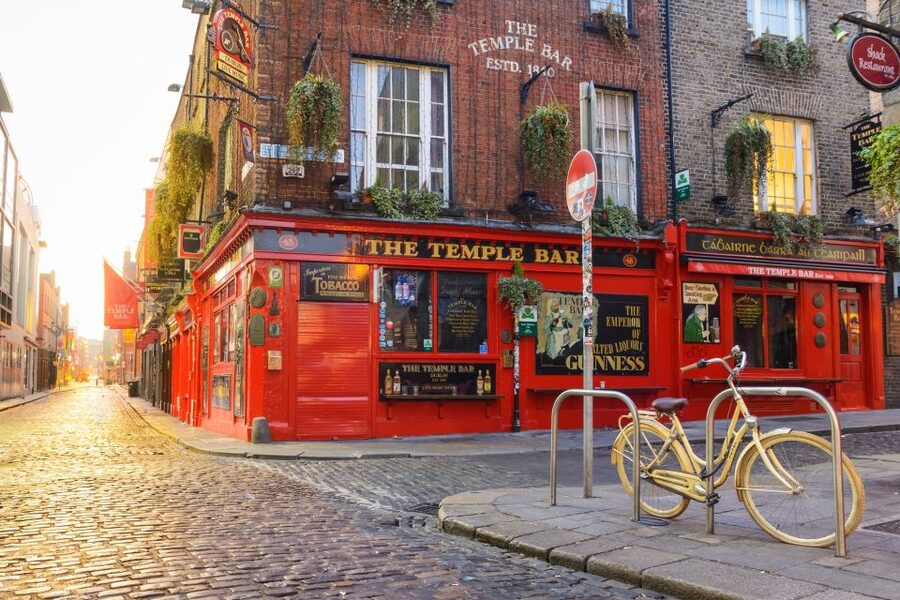
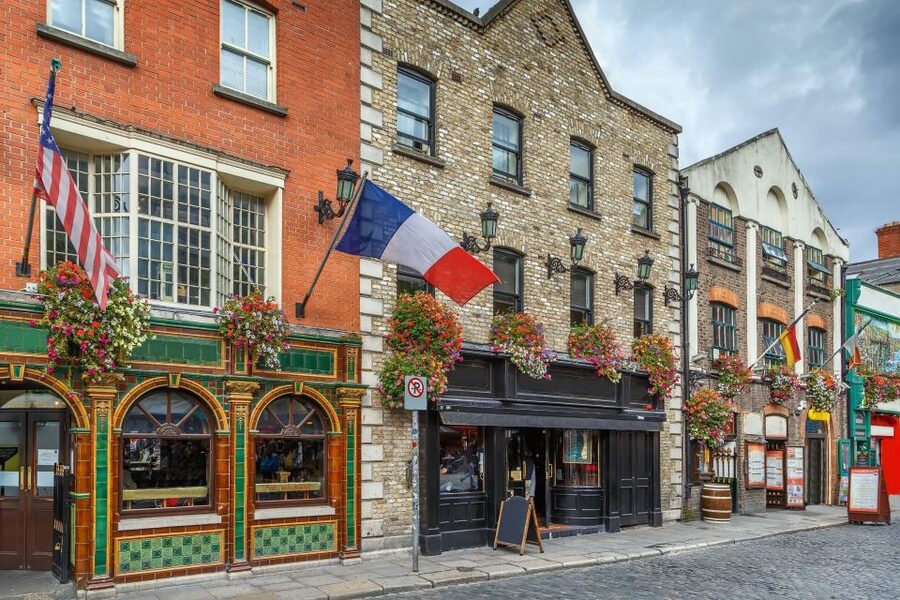
On the return, the route passes through Temple Bar and along the Liffey. Temple Bar is known for its pubs, narrow streets, and nightlife, but it can also be crowded and noisy. A bicycle lets you see the area without committing to a long stay. The Liffey provides a natural thread back toward the starting point.
This two-hour ride is not designed for long interior visits. I would choose it if you want orientation, photographs, and a guide’s explanation of the city’s main landmarks. If you want to enter Dublin Castle, St. Patrick’s Cathedral, or another attraction, you will need to make separate plans.
The four-hour ride: adding the Docklands and Guinness
The four-hour option gives Dublin more room to breathe. You still cover the central sights, but you also cycle toward the Docklands and see several places that are easy to miss on a short city-center route.
The Docklands brings a different side of Dublin into view. The area includes the Jeanie Johnston ship, a full-size replica associated with the Irish Famine period, as well as the Great Famine Memorial. These stops add historical weight to the ride and move the focus beyond castles, churches, and Georgian buildings.
You will also see the Custom House, one of the Docklands’ major architectural landmarks. The James Connolly Memorial is included as well. It commemorates one of the leaders of the Irish Republican Army and adds political context to the city’s public spaces.
The four-hour option also includes the world-renowned Guinness Storehouse. The tour does not include entrance tickets, so the visit is an exterior stop unless you purchase admission separately. That distinction is important. You are paying for guided sightseeing by bike, not a guided tasting or brewery visit.
St. Stephen’s Green receives more attention on the longer route. You can take in the ornamental lake, sculptures, and formal plantings at a less hurried pace. The four-hour duration gives the guide more time to explain what you are seeing and to adapt the ride to your group.
I see this as the best all-around choice for many visitors. Two hours can feel brief if you want both central Dublin and the Docklands. Six hours is a serious cycling commitment. Four hours gives you a fuller look without turning the day into an endurance test.
The six-hour route: Kilmainham Gaol and the War Memorial Gardens
The six-hour option is the most ambitious version and should be chosen with care. It covers the central sights and the Docklands, then continues to Kilmainham Gaol and the Irish National War Memorial Gardens beside Phoenix Park.
Kilmainham Gaol is one of Dublin’s most important political sites. The prison held members of the IRA, and some were executed there. Even without an interior visit, the stop gives the guide a chance to explain the prison’s place in Irish political history.
Again, admission is not included. If entering Kilmainham Gaol is a priority, check the separate ticket situation before booking this cycling tour. The bike route gives you the setting and the story, but it is not a substitute for an indoor prison tour.
The Irish National War Memorial Gardens offer a marked change of mood. Located beside the vast Phoenix Park, the gardens provide a quieter natural setting after the dense streets of central Dublin. The route’s combination of city monuments, political history, and open green space is the strongest reason to choose six hours.
You also receive free time for a local snack during this longer outing, but food and drinks are at your own expense. Plan for that cost, and remember that the description calls this an intensive ride requiring a lot of energy. A six-hour bicycle tour is not simply a longer sightseeing loop. It asks you to remain comfortable on a bike for most of the day.
More City Tours in Dublin
- From Dublin: Cliffs of Moher, Burren & Galway City Day Tour
★ 4.8 · 18,888 reviews - Dublin: Cliffs of Moher, Atlantic Edge & Galway City
★ 4.7 · 4,293 reviews - Dublin to Rock of Cashel, Cork City & Blarney Castle Guided Tour
★ 4.5 · 2,536 reviews - City Sightseeing Dublin Hop-On Hop-Off Bus Tour
★ 4.0 · 2,416 reviews
What the private format adds

A private group can make a noticeable difference in Dublin. You do not have to match the speed of an unknown group, and the guide can adjust the route to your interests. If you care more about political history than shopping, or parks than pub streets, say so early.
The guide also checks your urban cycling ability. Robert, one of the named guides, is described as level headed and careful about assessing each group’s two-wheeled skills. That is a useful quality in a city ride. You should still be honest about your comfort level when the tour begins.
The maximum is 25 people per guide. Larger groups require additional guides, and the price rises. For a small private group, the format feels personal. For a group approaching 25, the experience may feel less intimate even though it remains private from other bookings.
Language support is available in English, French, Italian, Spanish, and German. William is another named guide associated with the experience. Since guide assignments can vary, book the language you need and confirm the details before setting out.
Is $210 per person good value?
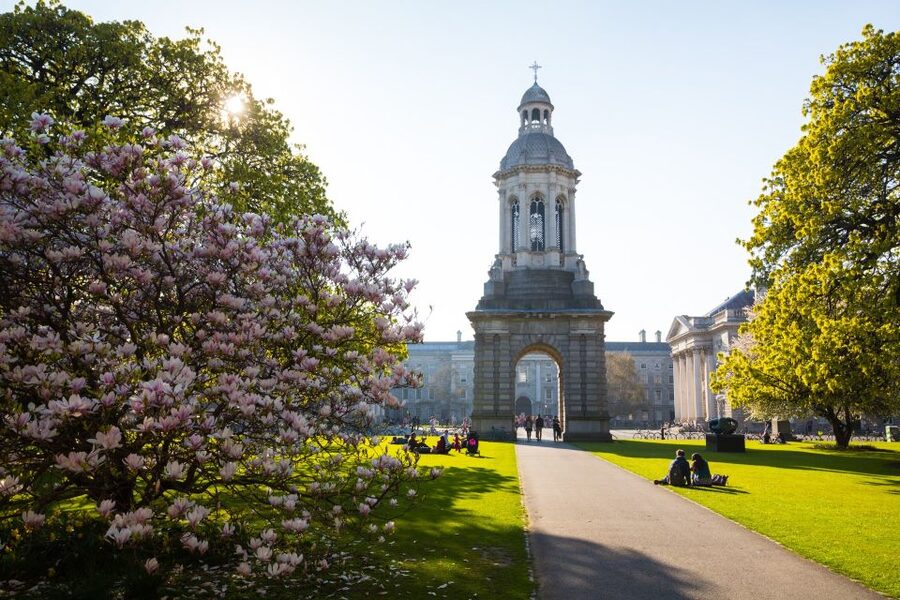
At $210 per person, this is not a cheap way to rent a bicycle. You are paying for a private licensed guide, the rental bike, a lock, and a planned route that links many parts of Dublin.
The value improves if you are traveling with a small group and want a tailored introduction. A guide can help you understand what you are seeing, adjust the pace, and cover far more ground than you could comfortably manage on foot in two or four hours.
The price is harder to justify if you mainly want transportation. You can rent a bicycle independently for less, then visit the city at your own speed. You also need to budget separately for attraction tickets, snacks, drinks, helmets if requested, and other equipment.
For most first-time visitors, I would compare the options this way:
- Choose two hours if your time is tight and you want central highlights.
- Choose four hours if you want the strongest balance of sightseeing and effort.
- Choose six hours if Kilmainham Gaol, the War Memorial Gardens, and a full-day cycling challenge are central to your plans.
Free cancellation up to 24 hours before the tour and a reserve-now, pay-later option reduce the financial risk of booking ahead. Still, check your email the day before, since important meeting and tour information may be sent then.
Meeting at Capel Street
The meeting point is in front of the Boar’s Head at 149 Capel Street, North City, Dublin, D01 T927. Do not enter the building. The staff there are not informed about the tour, so treat the address as an outdoor meeting point only.
Arrive 10 minutes early. You need that time to collect the adult city bikes and get ready. The tour ends back at the same meeting point, which makes it easier to plan dinner, another walking route, or a return to your accommodation.
The instructions say to request children’s bikes, child seats, helmets, and other equipment when booking. Include the children’s ages and the number of children in your group. Do not assume those items will be waiting unless you have asked for them.
Who should book this Dublin bike tour?
I would recommend it to visitors who want a guided overview and are comfortable cycling in an urban setting. It works especially well for couples, families with older children, and private groups that want to set their own pace.
The two-hour route suits a first day in Dublin. It helps you understand how the center fits together, making later walks easier. The four-hour route is the strongest choice for people who want more context and the Docklands without spending all day on a bicycle.
The six-hour option suits active visitors with a clear interest in Kilmainham Gaol and Irish political history. It is less suitable if you prefer slow museum visits, frequent cafe breaks, or long time inside each attraction.
You should also be comfortable with the limits of the format. The tour shows many important places, but it does not include admission to them. If your main goal is to tour Trinity College, enter Dublin Castle, or visit the Guinness Storehouse, use the bike ride as an outside orientation and schedule separate entry times.
Should you book it?
Book this experience if you want a private, efficient introduction to Dublin and like the idea of combining monuments with parks and the Docklands. The guide’s attention to cycling ability is a useful feature, and the choice of three durations lets you match the ride to your schedule.
I would pick the four-hour tour for the best overall balance. Choose two hours for a quick city survey, or six hours only if you genuinely want a full day on a bike. At $210 per person, the tour makes the most sense when you value personal guiding and route planning, not simply bicycle rental.
FAQ
Where does the Dublin bike tour begin?
Meet your guide in front of the Boar’s Head at 149 Capel St, North City, Dublin, D01 T927, Ireland.
Should I enter the Boar’s Head?
No. The Boar’s Head is only the meeting point, and the staff inside are not informed about the tour.
Where does the tour end?
The activity ends back at the same meeting point.
How long is the tour?
You can choose a two-hour, four-hour, or six-hour private bike tour. Starting times depend on availability.
What languages can the guide speak?
Live guides are available in English, French, Italian, Spanish, and German.
Is the tour private?
Yes. It is offered as a private group activity. Groups of up to 25 people can use one guide, while larger groups require additional guides.
Is a bicycle included?
Yes. An adult city bike and lock are included.
Are helmets included?
Helmets and other bike equipment are not included by default, but they are available on request.
Are attraction entrance tickets included?
No. Entrance tickets to places such as Kilmainham Gaol, Dublin Castle, or the Guinness Storehouse are not included.
Can children join the tour?
Children’s bikes and child seats are available on request. When booking, provide the number and ages of children in your group and request any equipment you need.
Recently added around Dublin
- Dublin: Pub Tour. Pour The Perfect Guinness, Whiskey & Music★ 5.0 · 3 reviews
- Waterford Crystal and Kilkenny Full-Day Rail Tour from Dublin★ 5.0 · 3 reviews
- Cliffs of Moher and The Burren Private Tour from Dublin★ 5.0 · 3 reviews
- Private Chauffeur Service From Dublin Airport to Killarney★ 5.0 · 3 reviews
- Beautiful Southwest Tour 2022★ 5.0 · 3 reviews
- A Self Guided Walking Tour of Dublin’s Docklands★ 4.5 · 3 reviews
- Dublin One Day Tour with a Local: 100% Personalized & Private★ 4.5 · 3 reviews
- Ireland: 3-Day West Coast Explorer Tour★ 5.0 · 3 reviews
Dublin Tours, compared.

Dublin to Cliffs of Moher, including Wild Atlantic Way and Galway
Read our review →
Cliffs of Moher, Burren & Galway City Day Tour
Read our review →

Dublin to Belfast Black Cab, Dunluce Castle and Giant’s Causeway
Read our review →
Kilkenny, Wicklow Mountains & Glendalough Day Tour from Dublin
Read our review →
Wicklow Mountains, Glendalough & Kilkenny Tour
Read our review →

Dublin Highlights and Hidden Gems Guided Walking Tour
Read our review →Browse the lists this tour appears in