
Reviewed · GALWAY TOURS
Galway History Walking tour with Local expert – Private Group
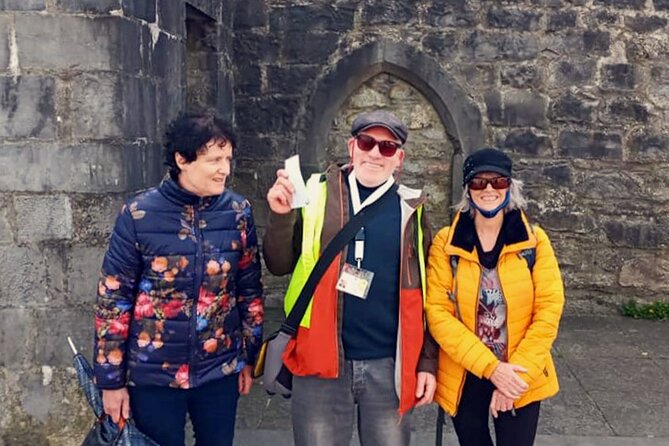
Galway’s past is packed into a compact city center, and this private walk connects the pieces well: medieval lanes, Norman power, merchant families, Irish theater, and the legends behind Lynch’s Castle and St. Nicholas Church. Guide Ger Considine is known for taking time with questions and adjusting the route to suit family interests, food, Irish language, or local connections.
I like the private format, which lets you walk at your own pace instead of trying to hear a guide over a large crowd. I also like the church visit and the small details, such as Nora Barnacle’s Galway connection to James Joyce and the story behind the Claddagh ring shops. The main consideration is weather: this is nearly two hours outdoors, and one past tour became harder to hear in wind and rain.
Key points
- Private group of up to 13: Your party gets the guide to itself, with room for questions and route changes.
- St. Nicholas Church included at selected times: The voucher applies to the 10am and 1pm tours.
- A strong introduction to Galway: The route covers Eyre Square, the Latin Quarter, Spanish Parade, and several quieter lanes.
- Ger Considine may guide your walk: He is especially good at linking Galway’s buildings with family history, food, music, and Irish culture.
- History comes with local stories: Hear about Mayor Lynch, Christopher Columbus, Nora Barnacle, Oliver Cromwell, and the Tribes of Galway.
- Plan for close to two hours on foot: Wear comfortable shoes and check the forecast before you go.
Why this Galway walk works as an introduction
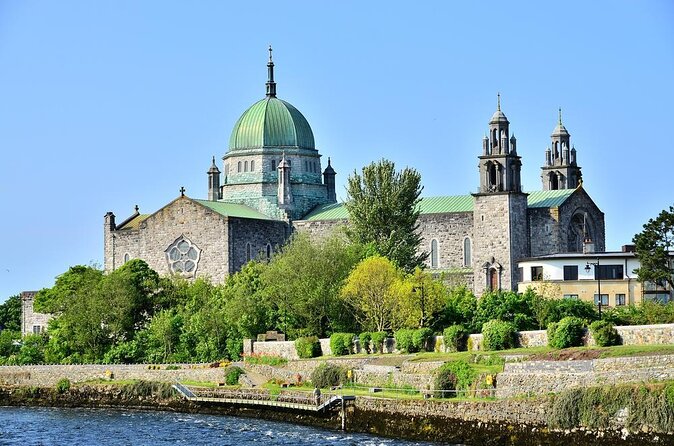
I like this tour best on your first day in Galway. It gives you the city’s basic shape, then adds enough stories to make those streets meaningful when you walk them again on your own.
You begin outside the front entrance of The Hardiman Hotel, beside Eyre Square. From there, the route loops through the historic center and returns to the same meeting point. That makes the walk easy to fit into a day of sightseeing, though you should allow a little extra time if you want to stop for photographs or ask many questions.
The tour lasts about 1 hour and 55 minutes. Much of the value comes from the guide’s explanation rather than from formal admissions. You are not simply moving from one ticketed sight to another. You are learning how Galway’s old streets, churches, merchant houses, theaters, and public spaces fit together.
The private setup is useful for families and mixed-age groups. You can ask about an ancestor, pause for photos, or spend more time on architecture without worrying about holding up strangers. The route can also be shortened for people with mobility concerns, according to the supplier’s information.
More Historical Tours in Galway
- Galway: Dark History Guided City Walking Tour
★ 4.8 · 236 reviews - The Dark History Tour of Galway City
★ 5.0 · 146 reviews - Galway City on Foot with Seán: Stories, History, Local Tips, Chat and More..
★ 5.0 · 64 reviews
Eyre Square and Galway’s Tribes
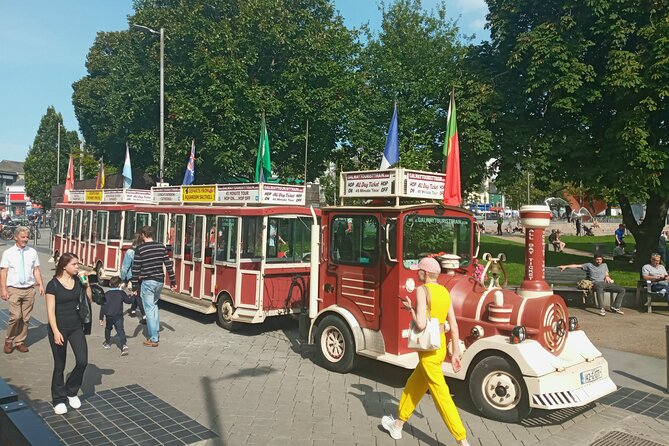
Eyre Square provides a sensible starting point because it introduces both the city and its civic symbols. The guide points out the old Browne Doorway, the banners of the Tribes of Galway, the John F. Kennedy memorial, the Quincentenary Fountain, and the O’Connuaire statue.
The Tribes were the leading merchant families who shaped Galway’s medieval and early modern life. You will hear how their influence appears in the city’s names, buildings, and symbols. The Browne Doorway gives you a physical reminder of that merchant era, while the Kennedy memorial connects Galway with the city’s more recent links to the United States.
This opening section takes about 13 minutes. It is not a long lecture, but it gives you useful bearings. If you have just arrived in Galway, that matters. You start to understand which parts of the city belong to its medieval core and which are later additions.
Williamsgate Street and Galway’s Claddagh tradition
The walk continues along Williamsgate Street, where the guide points out landmark buildings including the elegant Browne Thomas building. You also pass jewelry shops associated with Galway’s famous Claddagh ring.
The Claddagh ring, with its hands, heart, and crown, is one of Galway’s best-known symbols. The design carries familiar meanings of friendship, love, and loyalty, but the street context makes the tradition more useful than a quick souvenir-shop explanation. You can see where the city’s jewelry trade meets its local identity.
If time permits, the guide may also stop at the Oscar Wilde statue. Estonia gave the statue to Ireland in 2004. This is a small detail, but it reflects the city’s habit of placing literary and cultural stories alongside older political and religious ones.
Franciscan traces and Courthouse Square
A short detour down Eglinton Street brings you past the Franciscan Friary church. Behind it is a small graveyard that was an important burial place during the mid-17th and early 18th centuries.
This is one of the quieter parts of the walk. You may find it more atmospheric than the better-known streets because the history is easy to miss unless someone points it out. The route does not promise an extended stop here, so ask your guide if this part interests you.
Next comes Courthouse Square. Galway once had two major courthouses, one for the county and one for the city. One remains, with the Town Hall Theatre opposite it. The stop lasts only about five minutes, but it helps explain how the city’s legal and civic functions were arranged.
More Walking Tours in Galway
- The Welcome to Galway Walking Tour
★ 5.0 · 427 reviews - Galway: Welcome to Galway Walking Tour
★ 4.8 · 338 reviews - Walking and Tasting Tour of Galway City
★ 5.0 · 283 reviews - The Legendary Walking Tour of Galway
★ 5.0 · 230 reviews
Galway Cathedral from the River Corrib
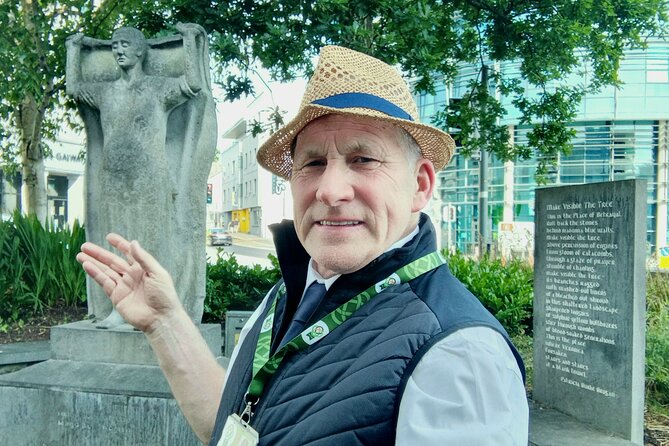
From a newly built pedestrian bridge over the River Corrib, you pause to view Galway Cathedral and the Franciscan Chapel. The cathedral is described as Europe’s newest stone cathedral, an unusual distinction for a building that looks far older at first glance.
This is mainly a viewing stop rather than a full interior visit. The river gives you a useful angle on the building and a break from the narrow streets. It also shows how Galway’s religious landmarks sit within the modern city rather than in a separate historic quarter.
The stop lasts about eight minutes. Keep your camera ready, but also listen for the contrast between the cathedral’s modern construction and the much older church you will see later.
Lynch’s Castle and the city’s darker legends
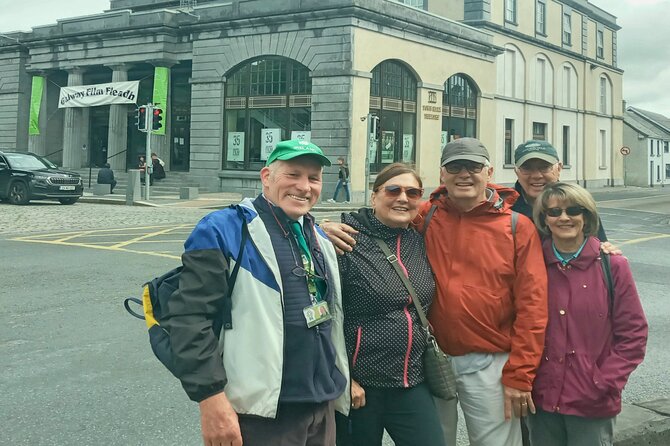
The route returns along the River Walk before reaching Lynch’s Castle at a busy two-street intersection. This is considered Ireland’s finest surviving town-castle, and the building once belonged to the powerful Lynch family.
Your guide explains the crests and roundels on the facade. Those details are easy to pass without noticing, but they reveal how Galway’s wealthy families marked their status on the buildings around them.
The most memorable story comes at the Lynch Memorial window. Local legend says that Mayor Lynch hanged his own son at this location. The tale is grim, but it shows how Galway’s political history has been preserved through dramatic local storytelling.
Allow about 15 minutes for Lynch’s Castle and eight minutes for the memorial. This is one of the stronger sections for anyone who likes legends tied to real streets and buildings. Keep in mind that the story is presented as legend, not as a simple, fully documented fact.
Dead Man’s Lane, St. Nicholas Church, and Columbus
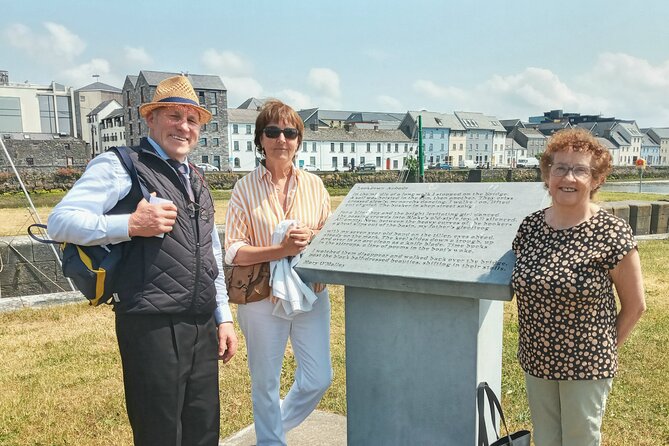
The route turns into Church Lane, once known as Dead Man’s Lane because funerals passed through it on the way to an old graveyard. From there, you continue through the churchyard and Market Street toward St. Nicholas’ Collegiate Church.
St. Nicholas is the oldest major church experience on the walk and the only listed stop with an included admission arrangement. It is the largest medieval church in Ireland still in continuous use. Built originally as a Catholic church, it now functions as a Protestant church, giving you a clear view of the religious changes that shaped Ireland.
A long-standing tradition says Christopher Columbus worshipped here in 1477 before his voyage of discovery. The guide explains the church’s history, while the building itself gives you details that are difficult to grasp from the street alone.
The voucher toward a church visit applies to the 10am and 1pm versions of the walk. The supplied details also note discounted tickets for the church’s own guided tours, generally offered on weekdays at 11am and 2pm, with extra Wednesday times at noon and 3pm. Confirm the timing when you book, since the church visit is an important part of the value.
One practical caution: church access can occasionally change. A past tour found St. Nicholas closed, so do not treat the indoor visit as completely guaranteed without checking the day’s arrangements.
Nora Barnacle, Joyce, and Galway’s literary side
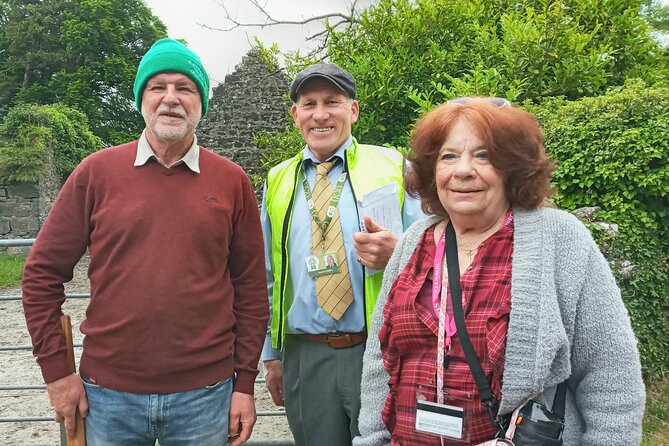
Near Bowling Green, the guide points out the former family home of Nora Barnacle. She was born in Galway and later became closely associated with James Joyce. Their first date took place on June 16, 1904, the date later celebrated as Bloomsday.
This stop adds a personal story to Galway’s literary connections. Instead of dealing only with famous writers and public buildings, you get a glimpse of the person behind one of Ireland’s major literary relationships.
The stop may be brief, but it is a good example of the tour’s approach. Galway’s history appears in lanes, houses, windows, and ordinary corners. You do not need to be a Joyce expert to enjoy the connection.
The Latin Quarter and Spanish Parade
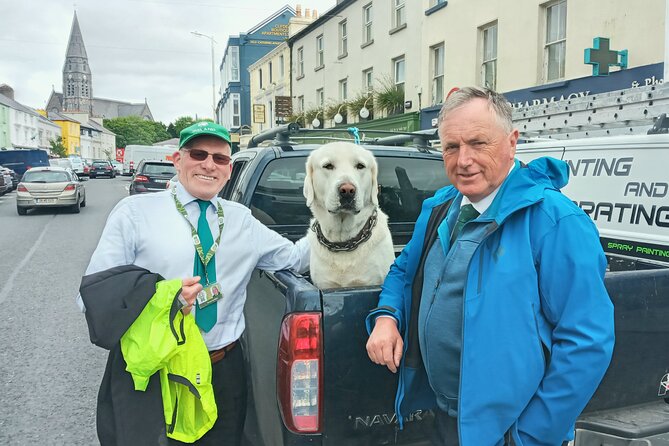
The walk continues through High Street in Galway’s Latin Quarter. Here you pass the King’s Head Pub, linked by legend to Oliver Cromwell. One story says Cromwell gave the site to the executioner of King Charles I as payment.
You also pass Naughton House, once owned by Richard Martin, known as Humanity Dick, an Irish member of the British Parliament. As with the Lynch story, the interest lies in the way political history survives in the buildings and names around you.
The Spanish Parade then opens the route toward the waterfront. Before 1840, this area formed part of Galway’s old port. Galleys arrived from Spain carrying wine and spices for Galway’s merchant families, and the guide explains how the nearby Spanish Arch relates to that trade.
This is one of the best places to connect Galway with the wider Atlantic world. The city was not simply a small Irish settlement. Its merchants dealt with Spain and built their fortunes through overseas trade. The stop takes about ten minutes, giving you time to look around the open space and understand the port’s former position.
The Hall of the Red Earl and Galway’s medieval center
The tour loops back toward the Hall of the Red Earl, the former castle residence of Richard de Burgo, a powerful Norman figure. The building mattered until the late 16th century, then its ruins disappeared from view for centuries.
Archaeologists found the site in the late 1990s. That rediscovery gives you a useful reminder that Galway’s old center still contains layers beneath later streets and buildings. The stop lasts about seven minutes, so the guide’s explanation is the main event.
I particularly like this part for its sense of time. You can look at a site that was once politically important, vanished from public memory, and returned through archaeological work. It makes Galway’s past feel less like a fixed museum display and more like something still being pieced together.
Druid Theatre and An Taibhdhearc
Galway’s story does not end in the Middle Ages. The walk passes the Druid Theatre, founded by university graduates in 1975. The company developed lasting links with writers such as Tom Murphy and Martin McDonagh, and many Irish actors and directors have worked with it.
This stop helps explain Galway’s modern cultural identity. The city is not only about stone walls and old churches. Theater remains part of its public life, and the guide connects the local company with the wider Irish stage.
The route then heads up Middle Street past An Taibhdhearc, Ireland’s only Irish-language theater. It began as a large cultural project in the early 1920s after Ireland became a Free State. Micheál Mac Liammóir served as its first director and manager from 1928.
You may not spend long at either theater, but the stops broaden the tour. They show that Galway’s Irish-language and artistic traditions are active parts of its identity, not just historical footnotes.
Augustinians and the former cathedral
In the final section, the guide explains that the Augustinian Order arrived in Galway in 1500 and established an abbey in Forthill. Cromwell’s English army banished the order for a time, but the Augustinians returned in 1760 and established the building connected with this part of the route.
The final stop is the former cathedral building at the junction of Middle Street and Abbeygate Street Lower. Its Gothic and Tudor Revival design gives you another contrast with the medieval remains seen earlier.
The building served for many years, but Bishop Dr. Michael Browne judged it inadequate in 1957. That decision helps explain why Galway contains several layers of religious architecture, with older buildings continuing to serve new purposes as the city changed.
The tour ends back at the meeting point near The Hardiman. That return is convenient if you want to continue exploring Eyre Square, shop for a Claddagh ring, or find one of the food and pub recommendations your guide may mention along the way.
Price, pace, and group value
The price is $150.60 per group of up to 13 people. For a full group, that works out to about $11.58 per person. For two people, it is a much higher individual cost, but you are paying for a private guide rather than a seat on a fixed public walk.
That price makes the most sense for families, friends, or a small group that wants control over the pace. It is also useful if someone in your party has a specific interest in Galway ancestry, Irish theater, churches, architecture, or food.
The walk is not a bargain if you only want quick photographs of the main sights. Several stops are short, and most admissions are not part of the price. Its value comes from the explanations, local stories, questions, and ability to adjust the route.
The tour is offered in English and uses a mobile ticket. Transportation, meals, drinks, accommodation, gratuities, and personal expenses are not included. You need to make your own way to Eyre Square, and the walk finishes there.
Who should book this Galway history walk
I would choose this experience if you want a first look at Galway with enough context to explore alone afterward. It suits families particularly well because the guide can adapt explanations and let children ask questions without the pressure of a large group.
It also works for anyone tracing Irish family roots. One past guest used the walk to discuss family connections, and Ger has shown interest in linking Galway’s history with visitors’ personal backgrounds.
You should be comfortable walking for nearly two hours. The route includes city streets, lanes, a churchyard, a river crossing, and outdoor viewing points. A shorter version can be arranged for people with mobility issues, but ask about this before booking.
Good weather matters. Galway rain is not a minor detail on a walking tour, and wind can make it difficult to hear. Bring a rain jacket and shoes you can walk in. If the supplier cancels because of poor weather, you can choose another date or receive a full refund.
Free cancellation is available up to 24 hours before the start time. Cancellations or changes made inside that window are not accepted for a refund.
Should you book it?
Book this walk if you want Galway explained by a local guide rather than simply photographed. The strongest parts are the private pace, Ger Considine’s personal approach, the included St. Nicholas Church arrangement at the 10am and 1pm times, and the mix of major sights with less obvious places such as Dead Man’s Lane, the Hall of the Red Earl, and Nora Barnacle’s former home.
Skip it if you prefer a fast sightseeing circuit, dislike walking in uncertain weather, or mainly want paid interior attractions. For most first-time Galway visitors, though, this is a useful way to get your bearings and understand why the city’s old center feels so layered.
FAQ
Where does the Galway history walking tour begin?
The tour begins at the front entrance of The Hardiman Hotel in Eyre Square, Galway.
Where does the walking tour finish?
The activity ends back at the meeting point near The Hardiman in Eyre Square.
How long does the tour last?
The walk lasts approximately 1 hour and 55 minutes.
How many people can join the private tour?
The price covers a private group of up to 13 people. Only your group participates in the activity.
Is St. Nicholas Church included?
A voucher toward a visit to St. Nicholas Church is included for the 10am and 1pm tours. The church also offers its own guided tours at listed weekday times, with discounts noted for participants.
What happens if the weather is too poor for the tour?
If the supplier cancels because of poor weather, you can choose a different date or receive a full refund. A shortened route can also be offered for people with mobility issues.
Recently added around Galway
- Sean’s Bar, Athlone Castle and Clonmacnoise Monastery★ 4.5 · 3 reviews
- Ferry ticket – Day return ticket to Inishbofin Island from Cleggan. Self Guided.★ 5.0 · 3 reviews
- Connemara/Galway: Inis Meáin Return Ferry Transfer★ 4.7 · 3 reviews
- Galway: Medieval Galway Tour★ 4.7 · 3 reviews
- Galway: HerGalway Walking Tour★ 5.0 · 3 reviews
- From Galway: Cliffs of Moher and The Burren Tour★ 5.0 · 3 reviews
- Galway’s Historical Gems: A Walk Through Time★ 5.0 · 3 reviews
- Galway Tasting and Walking Tour★ 5.0 · 3 reviews
Galway Tours, compared.
Galway to Cliffs of Moher, Aillwee Cave & Dunguaire Castle Tour
Read our review →
Full-Day Cliffs of Moher & Burren Guided Tour
Read our review →
Galway to Inisheer Aran Islands, Cliffs of Moher and Boat Trip
Read our review →
Aran Islands and Cliffs of Moher Tour & Cruise
Read our review →
Cliffs of Moher & the Burren Tour from Galway
Read our review →
Cliffs of Moher and The Burren Guided Day Trip
Read our review →
Galway to Aran Islands Inisheer, Doolin, Cliffs of Moher Day Tour
Read our review →Browse the lists this tour appears in