

Reviewed · LIMERICK TOURS
Skip the Line: Hunt Museum Ticket
The Hunt Museum is a cabinet of curiosities in Limerick’s handsome Custom House. In a single visit, you can move from Neolithic tools and Bronze Age objects to Greek and Roman pieces, medieval religious art, Picasso, Renoir, and Irish ceramics. I like the astonishing range and the fact that this is an indoor stop that works well when County Limerick’s weather turns wet.
I also like the prepaid admission, which saves a little time at the entrance, and the chance to see objects gathered by John and Gertrude Hunt, whose personal interests shaped the collection. The main caution is that the museum may not always have a temporary art exhibition on display, and younger children or teenagers may find the more historical sections slow going.
Key points to know before you book

- The collection spans thousands of years: See material from the Neolithic Period through the 20th century, with objects from Ireland, Greece, Rome, Egypt, and the Olmec civilisation.
- The Custom House gives the visit character: The museum occupies one of Limerick’s notable historic buildings rather than a plain modern gallery.
- Irish pieces share the rooms with major European art: Look for the 9th century Antrim Cross, Bronze Age objects, medieval sculpture, and works by Picasso, Renoir, Jack B. Yeats, and Henry Moore.
- Plan on 1 to 2 hours: That is enough time for a considered visit without making the museum take over your day.
- It is a strong rainy-day choice: You get an indoor cultural stop with no transport included, so plan your own route to the Custom House.
- The $15 ticket is best for museum lovers: The skip-the-line feature is useful, but the collection itself is the real reason to pay admission.
A cabinet of curiosities inside Limerick’s Custom House
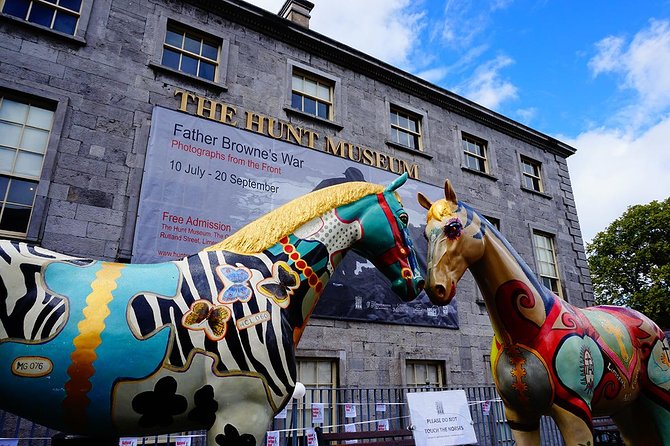
The first thing to understand about the Hunt Museum is its unusual mix. This is not a museum devoted only to Irish history, fine art, or archaeology. It combines all three, then adds decorative arts, religious objects, ceramics, glass, jewellery, and pieces from several ancient cultures.
That mixture reflects the people who formed it. John and Gertrude Hunt worked as dealers and advisers to museums and collectors, yet they also kept objects that caught their own attention. Their interests were broad, and the museum feels broad too. You are not following one narrow story from room to room. You are following curiosity.
The building matters. The Custom House is one of Limerick’s iconic buildings, and the collection gains some of its character from being housed there. The setting gives the visit a sense of place. You are not simply checking a box on a museum list, then moving on to the next attraction.
Allow about one to two hours. You can see the major highlights in less time, but a quick march through the galleries would miss much of the pleasure. The displays reward stopping for a second look, especially if ancient objects, church art, or decorative arts appeal to you.
More Museums in Limerick:
- General Entry Tickets to Foynes Flying Boat and Maritime Museum
★ 5.0 · 33 reviews - Irish Rock ‘N’ Roll Museum Experience Dublin
★ 5.0 · 6,112 reviews - The Little Museum of Dublin Famous Guided Tour
★ 5.0 · 2,948 reviews
From the Neolithic Period to the Iron Age
The earliest material gives the museum a useful Irish foundation. Objects from the Neolithic Period and later prehistoric eras help you see how far back the collection reaches. Irish archaeological material continues through the Mesolithic period and into the Iron Age.
Two Bronze Age pieces deserve special attention: an impressive shield and a cauldron. These are the kind of objects that make a museum visit feel connected to real people rather than only to dates and labels. Their age is striking, but their practical purpose is also important. They were made for use, not simply for display.
The early Christian material adds another layer. A set of heavy monastic bells recalls Ireland’s religious communities, while the 9th century Antrim Cross gives the collection one of its most recognizable Irish objects. These pieces help connect archaeology with the country’s later artistic and spiritual traditions.
If you have limited time, do not rush past the Irish prehistoric and early Christian sections. They give you a better sense of the collection’s local importance before the museum takes you farther afield.
Greek, Roman, Egyptian, and Olmec objects
One surprise for many visitors is how much of the collection comes from outside Ireland. You will find objects connected with Greece, Rome, Egypt, and the Olmec civilisation. That international reach is one of the museum’s pleasures, especially if you expect a small city museum to focus only on local material.
The Mediterranean objects also reveal the range of the Hunts’ collecting interests. Their collection was not built around one period or one country. Instead, it brings Irish material into the same conversation as the ancient civilisations that shaped European art and culture.
The museum does not need to compete with the giant archaeological museums of London, Paris, or Rome. Its strength is the variety packed into a manageable visit. You can compare the look and purpose of objects from different places without spending an entire day crossing huge galleries.
If ancient art is your main interest, the Hunt Museum should fit nicely into a Limerick itinerary. If you prefer only modern painting, you may find the ancient sections less compelling, but later galleries offer a change of pace.
Medieval sculpture, painted panels, and religious art
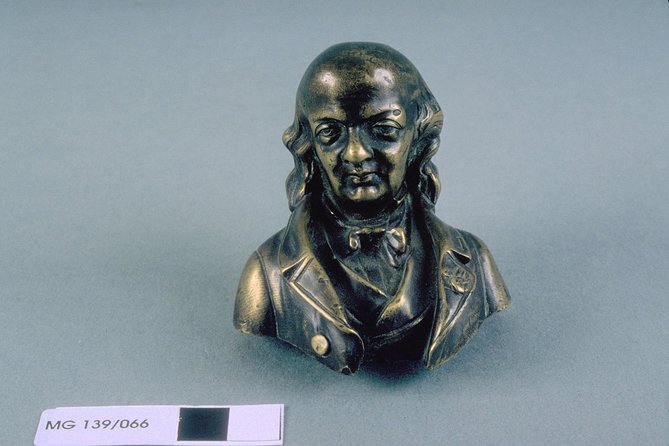
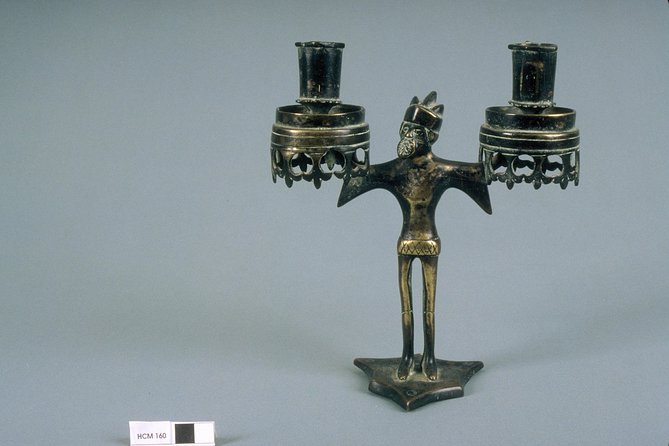
The medieval collection is one of the museum’s stronger areas. It includes stone and wooden statues, painted panels, jewellery, enamels, ivories, ceramics, crystal, and crucifixes.
This variety matters because medieval art was not limited to large paintings on a wall. Small devotional objects, worked metal, carved wood, and decorated ceramics all played a part in medieval life. The collection lets you see how art and belief often met in everyday objects.
The crucifixes and religious pieces may appeal most to visitors interested in church history or European art. Even if medieval religious art is not normally your first choice, the different materials help keep the displays varied. One case may hold carved wood, another delicate metalwork, and another a small object whose detail only becomes clear when you pause.
The museum is described as having an expert tour of its collections included with admission, but no guide’s name or fixed tour schedule is provided. You should check the details when booking or arriving if a guided introduction is important to you. A volunteer guide may also be available at the museum, but you should not plan your visit around that unless confirmed.
A few more Limerick half-days to weigh up
- Skip the Line: Bunratty Castle and Folk Park Admission Ticket
★ 4.5 · 200 reviews - Dublin: Skip-the-Line Guinness and Jameson Whiskey Tour
★ 4.7 · 771 reviews - Skip the Line: Hook Lighthouse Entrance Ticket and Guided Tour
★ 5.0 · 470 reviews - Skip the Line: The National Wax Museum Admission Ticket
★ 4.0 · 216 reviews
Silver, glass, ceramics, and 19th-century design

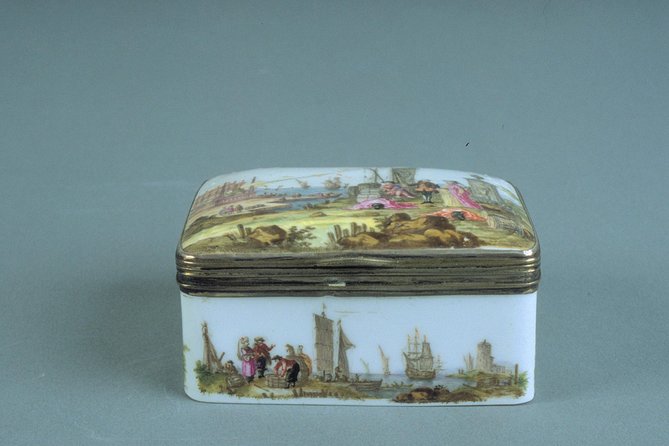
The 18th and 19th century decorative arts provide a welcome shift from archaeology and church objects. Fine examples of silver, glass, and ceramics show how design can reveal social taste, craftsmanship, and daily life.
This section is especially useful for visitors who like objects rather than only paintings. A glass vessel or piece of silver can tell you about technology and fashion just as a painting can tell you about an artist. The collection gives these practical and decorative pieces room beside the more obviously important works.
The displays also make the museum a good choice for mixed-interest groups. One person can focus on ancient artefacts, while another spends more time with ceramics or European art. That flexibility is valuable when your companions do not share exactly the same museum priorities.
You may find the visit more satisfying if you allow yourself to follow your own interests. There is no need to give every object equal time. The Hunt Museum is best approached as a collection of discoveries, not as a test you must complete from beginning to end.
Picasso, Renoir, Jack B. Yeats, and Henry Moore

The modern and 20th-century works add familiar names to an otherwise wide-ranging collection. Artists represented include Pablo Picasso, Pierre Auguste Renoir, Roderic O’Conor, Jack B. Yeats, Robert Fagan, and Henry Moore.
These works help prevent the museum from feeling like an archaeology-only stop. After ancient sculpture, Irish religious objects, and decorative arts, a modern painting or sculpture can reset your attention. The contrast is part of the experience.
Jack B. Yeats and Roderic O’Conor are particularly useful names for visitors building a wider understanding of Irish art. Picasso, Renoir, and Henry Moore also give the collection international reach. The museum does not present art in a single national lane.
You should keep your expectations measured. The Hunt Museum is not a large national gallery, and the number of works by any one famous artist may be limited. Its appeal comes from the range of the collection and the unexpected connections between objects, not from a huge display devoted to one painter.
Irish contemporary ceramics and temporary exhibitions
The museum also has a notable collection of Irish contemporary ceramics, including work by Frances Lambe, Henry Pim, and Christy Keeney. This is a useful section for anyone who wants to see how Irish artistic traditions continue into the present.
Ceramics can be easy to overlook in a museum full of ancient objects and famous painters. Give this area time. The shapes, surfaces, and methods offer a different kind of visual experience, and the work helps show that the museum is not frozen in the past.
Temporary exhibitions can add another reason to visit. One example is Lavery and Osborne: Observing Life, focused on two Irish 19th-century artists influenced by plein air and naturalist movements. The exhibition includes portraits of prominent figures, including Hazel Lavery and Queen Victoria, along with genre scenes.
Temporary displays are not guaranteed as part of every visit. The included admission covers the Hunt Museum, while temporary exhibitions may carry an additional charge. Check what is showing and what it costs before you go, especially if the temporary gallery is a major reason for your visit.
Is the $15 ticket good value?
At $15 per person, this is a reasonable paid museum stop if you enjoy collections that mix art and history. You are paying for access to a broad range of objects in a central Limerick attraction, not for a long guided excursion or a full-day activity.
The skip-the-line feature has practical value, but do not overrate it. One review specifically questioned whether there is usually much of a line. That is a fair point. On a quiet day, prepaid admission may save only a little time.
Still, advance admission removes one small decision from your day. You know the museum is paid for, and confirmation arrives at booking. Group discounts may improve the value for larger parties, though the exact saving is not provided, so check the available rate before paying.
The best value comes when you are already planning time in Limerick and want a thoughtful indoor attraction. It is less compelling if you are paying mainly to avoid a queue that may not exist.
Timing, access, and planning your visit
The listed opening hours are Tuesday through Saturday, 10:00 a.m. to 5:00 p.m., for both 2025 and 2026. Since no Sunday or Monday hours are given, plan this as a midweek or Saturday visit rather than assuming the museum opens every day.
The experience does not include transportation. You need to make your own way to the Custom House, and the museum is near public transportation. That makes it fairly easy to add to a day in Limerick, but the ticket is not a transport package.
A mobile ticket is available, which is useful if you are keeping your plans on your phone. Confirmation is supplied at the time of booking. Service animals are allowed, and most people can take part.
The activity has a maximum group size of nine travelers. Since this is primarily a museum admission experience rather than a large coach excursion, that limit should help keep the booking small, though no detailed group-tour format is provided.
The museum has a gift shop, another small plus if you want a book, souvenir, or art-related gift after your visit.
Who will enjoy the Hunt Museum most?
I would recommend this museum to adults who enjoy art, archaeology, or unusual collections. It also suits couples and families looking for a rainy-day plan that does not require a full day indoors.
Families should judge their children honestly. There are many objects to see, but the museum’s appeal depends on patience and interest in historical material. One account found it more suited to adults than to teenagers or young children. That does not mean families should avoid it, only that you may want to keep the visit flexible rather than promise an exciting children’s attraction.
The museum is also a good fit for visitors who like variety. If you want one clear subject, such as only Irish painting or only Egyptian artefacts, the mixed collection may feel scattered. If you enjoy moving from a Bronze Age shield to medieval sculpture and then to Picasso, the variety is the point.
The overall visitor rating is 4.5 out of 5, with 91 percent recommending the experience. That matches the museum’s strongest qualities: unusual objects, well-planned displays, helpful staff, and a visit length that fits neatly into a Limerick day.
Should you book the Hunt Museum ticket?
Book it if you want an indoor cultural stop with genuine range and you have an hour or two to spare in Limerick. The Custom House setting, Irish prehistoric material, medieval art, and works by major artists give the museum more depth than its modest size may suggest.
I would not book it solely for the skip-the-line promise. The queue may be short, and the ticket’s real value lies in securing a simple, prepaid visit to an unusual collection. Check the temporary exhibition details before paying, and remember that admission may not include every special display.
For art lovers, history fans, and curious visitors who enjoy a museum with surprises, the $15 price is fair. For families with restless young children or people focused only on outdoor sights, you may want to keep this as your rainy-day backup.
FAQ
Where is the Hunt Museum located?
The Hunt Museum is in Limerick, Ireland, inside the Custom House.
How long does a visit take?
Plan on approximately one to two hours.
What are the opening hours?
The listed hours are Tuesday through Saturday, from 10:00 a.m. to 5:00 p.m., for 2025 and 2026.
Is transportation included?
No. Transportation to and from the attraction is not included.
How much does admission cost?
The listed price is $15 per person.
Is the ticket available on a mobile phone?
Yes. A mobile ticket is available.
Is the museum suitable for families?
Yes, the activity is described as family-friendly and most people can participate. However, some sections may be more interesting to adults than to young children or teenagers.
Are service animals allowed?
Yes, service animals are allowed.
Can I cancel for a refund?
Yes. You can cancel at least 24 hours before the experience start time for a full refund. Cancellations or changes made less than 24 hours before the start time are not accepted for a refund.
Recently added around Limerick
- Best of Limerick: Private Walking Tour with a Local★ 5.0 · 5 reviews
- Private Walking Tour of Adare★ 5.0 · 6 reviews
- Limerick City: Private transfer to & from Shannon Airport★ 5.0 · 7 reviews
- Guided eBike Tour – Killaloe and the Lough Derg Shore★ 5.0 · 9 reviews
- Private Walking Tour of Limerick City★ 4.0 · 10 reviews
- Angela’s Ashes 1.5hrs Walking Tour★ 5.0 · 20 reviews
- General Entry Tickets to Foynes Flying Boat and Maritime Museum★ 5.0 · 33 reviews
- Self Guided Bike Tour on the Limerick Greenway★ 5.0 · 33 reviews
Limerick Tours, compared.


Cliffs of Moher Day Tour from Limerick: Wild Atlantic Way
Read our review →
Skip the Line: Bunratty Castle and Folk Park Admission Ticket
Read our review →


Ring of Kerry Day Tour from Limerick: Including Killarney National Park
Read our review →

Dingle Peninsula Day Tour from Limerick: The Wild Atlantic Way
Read our review →Browse the lists this tour appears in