
Reviewed · DUBLIN TOURS
10-Day Ultimate Small-Group Tour of Ireland from Dublin
Ireland gives you its best cards on this 10-day small-group circuit: sea cliffs, ruined castles, lively pubs, mountain roads, and small towns where the pace feels pleasantly human. You will kiss the Blarney Stone, sail to Inis Oírr, walk Derry’s walls, visit a whiskey distillery, and finish at Titanic Belfast.
I like the maximum group size of 15, which lets the minibus reach narrow roads that a big coach cannot manage. I also like the mix of famous sights and local experiences, especially the sheepdog demonstration, Dingle time, the Aran Island ferry, and guided walks. The tradeoff is a full schedule with plenty of time on the road, and the price of $3,853.34 does not include lunches, dinners, drinks, or Dublin hotel nights before or after the tour.
Key points to know before you book
- Small roads, small group: A maximum of 15 people travels in a Mercedes Sprinter, a useful size for Ireland’s winding coastal routes.
- The guide shapes the trip: Past departures have featured Pat O’Mara, David Armitage, Jack Healy, and Mark, with strong praise for their humor, local stories, dinner suggestions, and quick changes during bad weather.
- Nine nights are included: Boutique hotels, guesthouses, and a special overnight at Lough Eske Castle keep you from arranging lodging each night.
- The west coast gets the most time: Dingle, Slea Head, the Cliffs of Moher, Inis Oírr, Galway, Connemara, and Westport form the heart of the trip.
- Northern Ireland is part of the route: You visit Derry, the Giant’s Causeway, Carrick-a-Rede, Dunluce Castle, Belfast, and Titanic Belfast.
- Pack light and expect weather changes: One suitcase and one carry-on are allowed. Light layers, a raincoat, and sunscreen are essential.
Why this route works for a first Ireland trip
This tour covers a remarkable amount of ground without asking you to drive on the left, read unfamiliar road signs, or negotiate narrow mountain lanes. You begin in Dublin and travel south, then west, north, and through Northern Ireland before returning to the capital.
The route has a sensible rhythm. Some days focus on major sights, while others give you several hours in a town. Dingle gets two nights, which is particularly welcome. You can enjoy its pubs, shops, food, and music without packing again the next morning.
The small-group format matters here. Ireland’s best scenery often lies beyond the reach of large buses. A Sprinter can handle roads around Slea Head, Connor Pass, Donegal, and the Antrim Coast more easily than a full-size coach.
Driving averages about 2.5 hours per day, though some days feel longer because of stops and winding roads. You should expect a moving trip rather than a stay-put holiday. The reward is variety. The cost is that you rarely have an entirely unplanned day.
More Small Group Tours in Dublin
- Dublin to Powerscourt, Wicklow and Glendalough Small Group Tours
★ 4.5 · 774 reviews - Dublin to Wicklow, Glendalough Small Group Tour with Horse Riding
★ 4.5 · 522 reviews - Dublin to Newgrange, Monasterboice Small Group Guided Tours
★ 4.5 · 500 reviews
Day 1: Cashel, Blarney, and Kinsale
The opening day moves quickly from Dublin to the Rock of Cashel, one of Ireland’s great historic sites. Its round tower, chapel, cathedral, and castle sit on a dramatic limestone outcrop, making this a strong first introduction to medieval Ireland.
You get about an hour here, enough to see the main structures and take in the setting. It is not enough for a slow archaeological study, but the guide’s background can help the stones make sense.
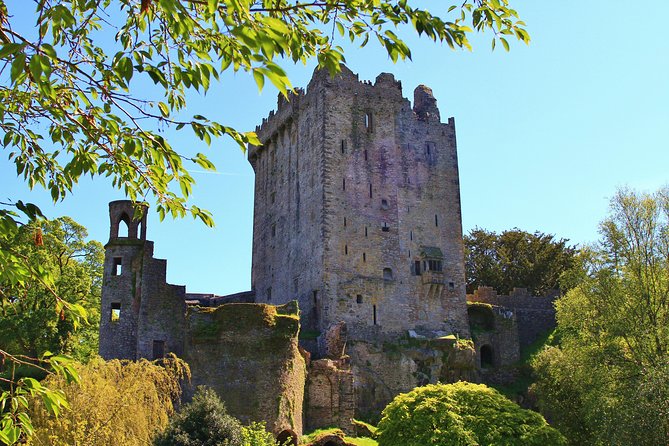
Next comes Blarney Castle and Gardens. The famous stone is reached by climbing through the castle, so be ready for stairs and some waiting at busy times. The gardens provide a calmer counterpoint, with room to wander after the castle visit.
Lunch is not included. Blarney Woollen Mills Restaurant is suggested as a convenient stop, but you pay for your own meal. That pattern continues throughout the tour, so budget separately for food.
Kinsale closes the day with colorful streets, a harbor, and a strong food scene. Two hours lets you get a feel for town and perhaps choose a seafood dinner. Since dinner is not covered, Kinsale is a good place to begin exploring Ireland’s restaurant culture.
Day 2: Kenmare and Killarney National Park
The route continues west toward the Ring of Kerry, though it does not complete the full loop. Kenmare gets two hours, which is enough to browse its shops, walk the streets, and have lunch if you prefer not to eat at the suggested stop near Muckross House.
Moll’s Gap and Ladies View provide the big mountain and lake panoramas. These are quick scenic stops, but they matter because the views are the point. Keep your raincoat handy. Irish weather can turn a sunny overlook into a misty one in minutes.
Ross Castle, a 15th-century fortress on Lough Leane, adds another historic stop. The visit is included, and the lakeside setting gives it more atmosphere than a castle viewed only from a car park.
The day ends in Dingle, with four hours to explore. This is one of the tour’s strongest bases. You can walk the harbor, find a pub with traditional music, and choose your own dinner. The schedule gives you enough free time to make Dingle feel like a place, not just a photograph.
Days 3 and 4: Slea Head, sheepdogs, and the Cliffs of Moher
Slea Head Drive is the scenic centerpiece of the Dingle Peninsula. Over roughly six hours, you follow Atlantic roads past headlands, small harbors, beaches, and ancient beehive huts.
This is where a small vehicle earns its keep. The route is about open views and frequent photo stops, not a checklist of indoor attractions. Wind can be strong, and you will want shoes suitable for uneven ground.
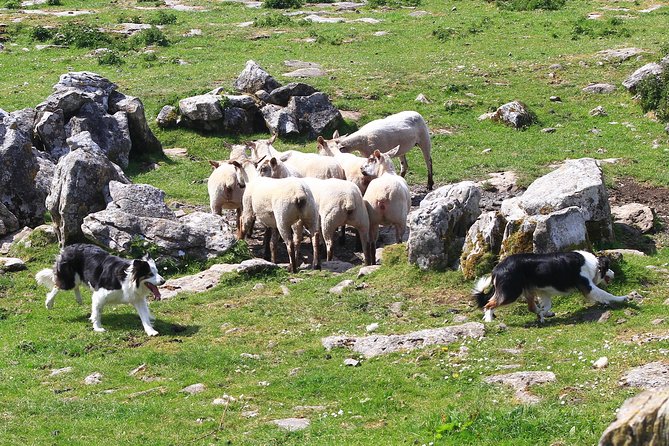
On Day 4, Connor Pass leads you north from Dingle. The road is one of Ireland’s highest mountain routes, followed by Castlegregory and a traditional sheepdog demonstration. The demonstration is more than a quick animal show. You see the farmer and dog working together to move sheep, a practical skill tied to rural life.
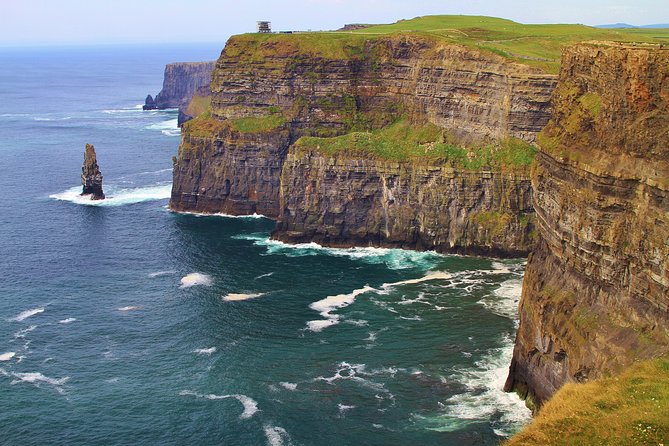
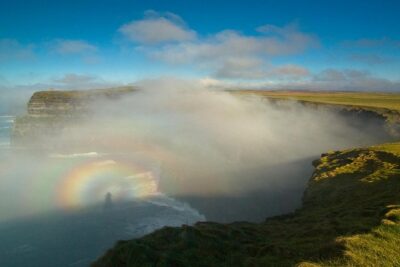
The schedule then crosses the Shannon by ferry and continues through the Burren to the Cliffs of Moher. The Burren’s exposed limestone gives County Clare a stark look that differs sharply from the green fields often associated with Ireland.
At the cliffs, you get about two hours. That is enough to walk along the paths and take in the Atlantic views, though wind and rain may affect how far you want to go. You sleep in Doolin or Ennistymon, both good places for music and a relaxed evening.
For Tuesday departures, the sheepdog visit shifts to Atlantic Sheepdogs near Grange on Day 7. In that version of the route, your morning in Dingle includes a cookery demonstration at Dingle Cookery School, with tea, coffee, and homemade scones.
More day trips out of Dublin:
- From Dublin: Cliffs of Moher, Burren & Galway City Day Tour
★ 4.8 · 18,888 reviews - Kilkenny, Wicklow Mountains & Glendalough Day Tour from Dublin
★ 5.0 · 7,897 reviews - From Dublin: Wicklow Mountains, Glendalough & Kilkenny Tour
★ 4.8 · 6,235 reviews - Cliffs of Moher, Burren and Galway Day Tour from Dublin
★ 4.5 · 2,755 reviews
Day 5: Inis Oírr and Galway
The ferry to Inis Oírr gives the tour one of its most distinctive days. As the smallest and most remote of the Aran Islands, Inis Oírr offers white-sand beaches, old ruins, and a slower sense of place.
The island visit is listed at about four hours, including the ferry time. Weather can affect ferry or outdoor plans, and the operator states that canceled activities due to weather do not receive a refund. That is worth remembering when you weigh a fixed itinerary against independent travel.
Back on the mainland, a Cliffs of Moher cruise gives you a different view of the cliffs from the water. This is a smart pairing with the earlier visit from above, though the cruise depends on conditions.
You continue through the Burren before reaching Galway. Four hours here gives you an evening for food, music, and a walk through the Latin Quarter. Galway is more urban and social than the villages earlier in the trip, so it makes a welcome change.
Day 6: Galway, Kylemore Abbey, and Westport
You have a free morning in Galway, with an optional Welcome to Galway walking tour. I would take it if you want quick context on the City of the Tribes, its landmarks, and its narrow central streets. If you prefer independent time, the Latin Quarter, shops, cafés, and pubs are easy places to wander.
The afternoon heads into Connemara, known for mountains, lakes, and small villages. Kylemore Abbey is the main stop, with time for the abbey grounds and Victorian walled gardens. Entry is included, though the schedule lists the stop as free admission in one section, so confirm the exact inclusions when booking. The separate inclusions list does include Kylemore Abbey and Gardens entry.
Westport follows, with three hours to explore its streets and the Quay area. The town is a comfortable overnight break before the longer run north. You can use the free time for a walk, a meal, or a quiet evening rather than another major attraction.
Day 7: Westport, Benbulben, and Lough Eske Castle
The morning gives you two hours in Westport, useful if the previous evening was short. Westport House and the Quay are the main points of interest mentioned for this stop.
The route then travels through County Sligo, with a substantial stop near Benbulben Mountain. Its unusual shape and local legends make it one of Ireland’s most memorable natural landmarks. You are not simply driving past it, so have your camera ready.
The overnight at Lough Eske Castle is the tour’s luxury flourish. After several active days, a castle hotel surrounded by woodland and water offers a change of mood. Past accommodation feedback singled out Lough Eske, along with stays in Dingle and Kinsale, as especially strong.
Day 8: Slieve League, whiskey, and Derry
Slieve League Cliffs provide another major Atlantic viewpoint, and these cliffs are among Europe’s highest sea cliffs. The stop lasts about two hours, with time to take in the scale and the open views.
The road continues through Glengesh Pass, where winding roads and remote scenery are part of the experience. This is a day for looking out the window as much as getting out of the minibus.
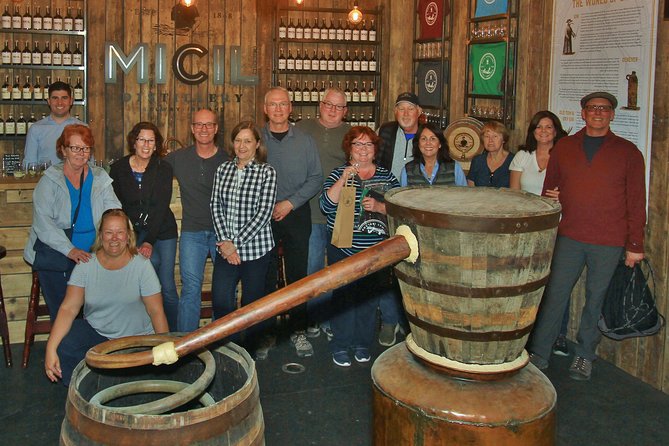
At Sliabh Liag Distillers in Ardara, you learn about Irish whiskey production and sample the finished spirit. The tasting is included, but anyone who does not drink should check with the operator about alternatives.
Derry brings a change from rural scenery to urban history. A guided walk covers the city’s 17th-century walls and the period known as the Troubles. This is valuable context, but it can also be emotionally serious. Listen carefully and allow the subject the respect it deserves.
Day 9: The Antrim Coast and Belfast
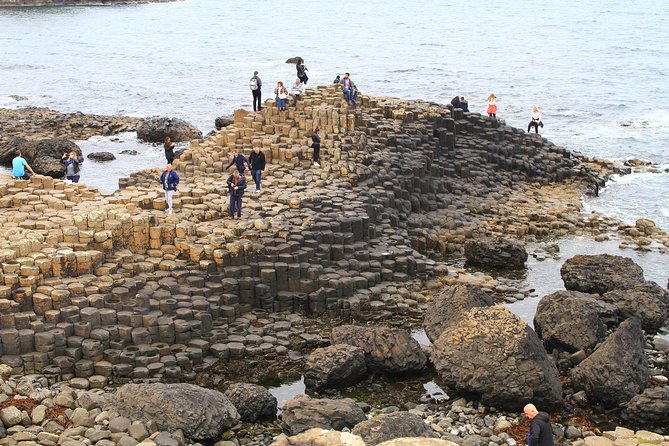
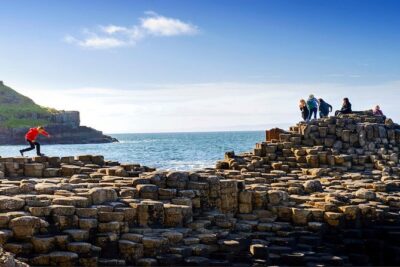
The Giant’s Causeway is the day’s headline stop. Its hexagonal basalt columns were formed by volcanic activity and are tied to old Irish legend. Two hours gives you time to walk among the formations and enjoy the coast.
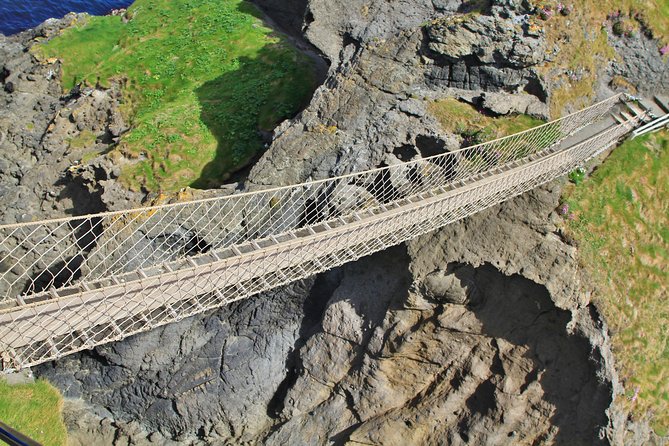
Carrick-a-Rede Rope Bridge adds a physical challenge. Crossing is optional and weather-dependent, so you can still enjoy the views if the bridge is closed or you would rather stay on solid ground.
Dunluce Castle gets only about 20 minutes, making it a photo stop rather than a full visit. Its cliff-top ruins are striking, but do not expect time to explore every corner.
Belfast offers a lively final evening. The Cathedral Quarter has street art, pubs, and restaurants, giving you a chance to choose your own dinner and absorb the city before the final morning.
Day 10: Titanic Belfast and the return to Dublin
You have two hours of free time in Belfast before visiting Titanic Belfast. This interactive museum sits where the ship was designed and launched, and the included visit is a fitting final attraction after a trip filled with Ireland’s older ruins and traditions.
The tour returns to Dublin in the afternoon and ends at Heuston Station. That location connects with trains, trams, and taxis, but do not schedule a tight onward flight. The tour gives an arrival point, not a guaranteed airport transfer.
Pre- and post-tour Dublin accommodation is not included. I would add at least one night before departure from home, especially since the tour begins at 8 a.m. at the Ashling Hotel.
Guide quality and the small-group feel
The guide can make or break a road tour, and this experience depends heavily on that person. Pat O’Mara, David Armitage, and Jack Healy have been praised for mixing historical background with personal stories, humor, food advice, and practical help. Mark has also been noted for bringing a group together quickly.
You should not assume you can select a particular guide, but these names give you a sense of the guiding style to expect: social, flexible, and focused on local context. Guides have arranged group dinner reservations, suggested pubs, led walks, and changed plans during storms.
The maximum of 15 people is a real advantage. You get more room than on a large coach, and the guide can respond to the group. The flip side is that you still share decisions and timing with up to 14 other people. If you want complete freedom, rent a car. If you want someone else to handle the roads and parking, this setup is far easier.
What the $3,853.34 price really covers
At $3,853.34 per person, this is not a budget trip. The value comes from the number of included moving parts: nine nights of accommodation, nine breakfasts, transport, a professional Irish guide, and entry to many major sites.
Included highlights cover Blarney Castle, the Rock of Cashel, Ross Castle, the Cliffs of Moher, Kylemore Abbey, Giant’s Causeway, Carrick-a-Rede, Titanic Belfast, Slieve League, the Inis Oírr ferry, the Cliffs cruise, the Ardara Distillery, the sheepdog demonstration, the Shannon ferry, and a Derry walking tour.
You still need money for every lunch and dinner, drinks, personal purchases, and Dublin nights outside the circuit. There is also a solo supplement for a private ensuite room. Add travel insurance, which is recommended, and allow extra room in your budget for meals in places such as Kinsale, Dingle, Galway, and Belfast.
Who should book this Ireland tour?
I would choose this tour if you want to see Ireland’s major sights without driving, planning hotels, or solving the daily route. It suits first-time visitors who value scenery, history, local food, music, and a friendly group setting.
It also suits active adults who can manage stairs, cliff paths, ferry travel, and long sightseeing days. Most people can participate, but you should tell the operator about health concerns or dietary needs at booking.
I would hesitate if you want long stays in each place, guaranteed sunshine, or control over every meal and hotel. Accommodation is generally boutique or guesthouse style, not uniform. One accommodation report noted that some Northern Ireland rooms felt cramped and warm, while rooms in Lough Eske Castle, Dingle, and Kinsale were especially good.
Pack light layers, a raincoat, sunscreen, and shoes you can walk in. The luggage allowance is one suitcase plus one carry-on, and a solo supplement applies if you want a private ensuite room.
Should you book it?
Book this tour if you want a broad, well-managed look at Ireland with a strong west coast focus and a small enough group for narrow roads. The best reasons are the guide-led storytelling, two nights in Dingle, the Aran Island outing, the mix of famous landmarks and working traditions, and the included Northern Ireland portion.
Skip it if the fixed price feels too high once meals and extra Dublin nights are added, or if you prefer a slow trip with several nights in each base. For the right person, this is a practical way to cover a lot of Ireland while leaving the driving, reservations, and route choices to someone who knows the country.
FAQ
How many people are on the tour?
The tour has a maximum of 15 travelers.
What is included in the price?
The price includes nine nights of boutique hotel or guesthouse accommodation, nine breakfasts, transport, professional guiding, and the listed attractions and activities. Lunches, dinners, drinks, travel insurance, and Dublin accommodation before or after the tour are not included.
Where does the tour start?
The tour starts at 8:00 a.m. at the Ashling Hotel Dublin, 10 to 13 Parkgate Street, Stoneybatter, Dublin 8.
Where does the tour finish?
The tour finishes at Heuston Station in Dublin. The station has access to trains, trams, and taxis.
What luggage can I bring?
Each person may bring one suitcase and one carry-on bag. The stated suitcase limit is a maximum of 65 liters or 143 pounds.
What happens if weather cancels an activity?
Some activities depend on weather, including the Carrick-a-Rede Rope Bridge and ferry-related plans. If an activity or experience is canceled because of weather, no refund is provided.
Recently added around Dublin
- Dublin: Pub Tour. Pour The Perfect Guinness, Whiskey & Music★ 5.0 · 3 reviews
- Waterford Crystal and Kilkenny Full-Day Rail Tour from Dublin★ 5.0 · 3 reviews
- Cliffs of Moher and The Burren Private Tour from Dublin★ 5.0 · 3 reviews
- Private Chauffeur Service From Dublin Airport to Killarney★ 5.0 · 3 reviews
- Beautiful Southwest Tour 2022★ 5.0 · 3 reviews
- A Self Guided Walking Tour of Dublin’s Docklands★ 4.5 · 3 reviews
- Dublin One Day Tour with a Local: 100% Personalized & Private★ 4.5 · 3 reviews
- Ireland: 3-Day West Coast Explorer Tour★ 5.0 · 3 reviews
Dublin Tours, compared.
Dublin to Cliffs of Moher, including Wild Atlantic Way and Galway
Read our review →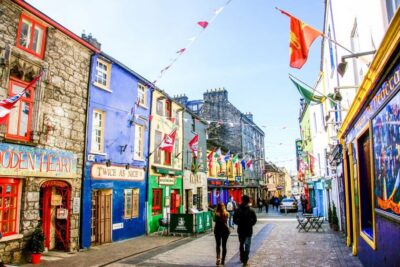
Cliffs of Moher, Burren & Galway City Day Tour
Read our review →
Dublin to Belfast Black Cab, Dunluce Castle and Giant’s Causeway
Read our review →
Kilkenny, Wicklow Mountains & Glendalough Day Tour from Dublin
Read our review →
Wicklow Mountains, Glendalough & Kilkenny Tour
Read our review →
Dublin Highlights and Hidden Gems Guided Walking Tour
Read our review →Browse the lists this tour appears in