
Reviewed · DUBLIN TOURS
A Self-Guided Stroll Along Dún Laoghaire’s East Pier
Dún Laoghaire’s East Pier gives you a fine mix of sea air, Irish history, and easy walking without the cost or fixed schedule of a group tour. For $8.99, you follow a VoiceMap audio route from St Michael’s Church to the harbor, passing memorials, old railway remnants, a Crimean War cannon, and the East Pier Lighthouse.
I like the self-guided pace. You can pause the audio, look across Dublin Bay, or linger at a memorial without holding up a group. I also like the route’s unusual details, especially the Romanov eagle on the Russian cannon and the story of the RMS Leinster.
The main drawback is simple: you need your own smartphone and headphones, and the experience is non-refundable. The single published review is oddly garbled and auto-translated, so the useful rating signal is limited, although the overall score is 4.5 from six reviews.
Key points along the East Pier walk
- St Michael’s Church begins the route: Start in the town center at a church founded in the 1820s.
- The Metals connects old and new Dún Laoghaire: This former railway track now serves as a promenade.
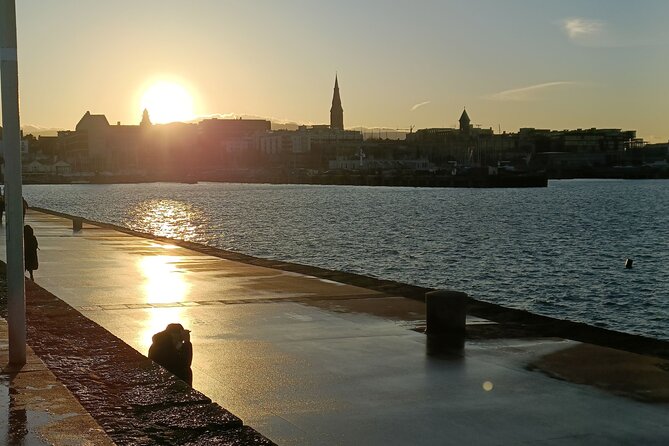
- The East Pier brings the best open views: Walk toward the lighthouse with Dublin Bay and the city spread before you.
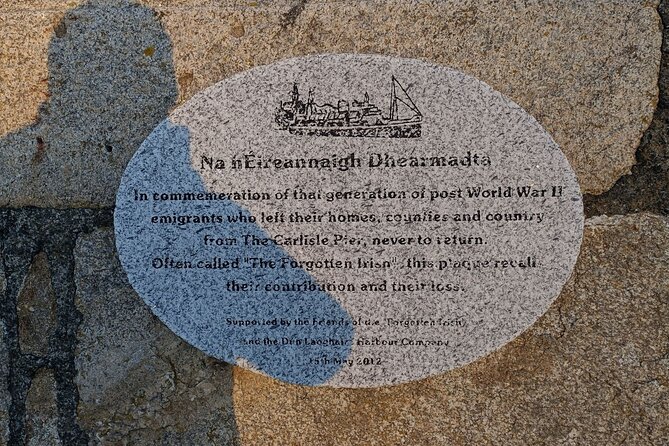
- Memorials add weight to the stroll: The RMS Leinster Memorial and Forgotten Irish Memorial give the harbor a human story.
- A Russian cannon provides an unexpected twist: Look for the Romanov family eagle motif.
- The route ends near Roger Casement’s statue: You finish close to places to eat and continue exploring.
Starting at St Michael’s Church in Dún Laoghaire
Your walk begins at St Michael’s Church on Marine Road. Founded in the 1820s, the church gives you a useful starting point for understanding Dún Laoghaire as more than a seaside promenade. It points to a settled community with a long connection to the harbor and the town around it.
The route is self-guided through the VoiceMap app for Android and iOS. You hear the commentary as you move, while the app supplies maps and geodata. Offline access is included, which matters if you want to avoid relying on a mobile signal during the walk.
I would download the tour material before setting off and bring charged headphones. The experience does not include a phone or headphones, so those are your responsibility. You also need to be comfortable following an app rather than a human guide who can answer questions on the spot.
From St Michael’s Church, you move through the center of Dún Laoghaire toward the harbor. The route gives you a gradual change of mood: church and town first, then public culture, monuments, railway remnants, and finally open water.
More self-guided routes in Dublin:
- Christ Church Cathedral Entrance Ticket & Self-Guided Tour
★ 4.6 · 773 reviews - Dublin Ghost Hunt Exploration Game and Tour
★ 4.0 · 34 reviews - Private Dublin Treasure Hunt Self Guided Tour
★ 4.5 · 14 reviews
Pavilion Theatre and the town’s modern side
The Pavilion Theatre is an early stop. It gives the walk a contemporary note before the route turns toward the older parts of the harbor. Dún Laoghaire is not presented as a preserved museum town. Instead, you see how current cultural life shares space with older buildings, monuments, and working maritime traditions.
This is a small but useful part of the route. If you only came for the pier, you might rush through the town center. The theatre reminds you that Dún Laoghaire is also a local community with arts and entertainment, not only a place for sea views.
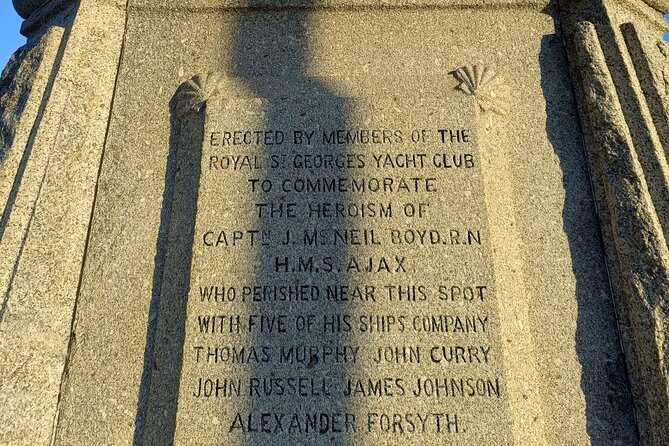
The walk then brings you to the King George IV Monument and the RMS Leinster Memorial. These stops help set the harbor in a wider political and maritime context. The monument connects the town with royal history, while the RMS Leinster memorial recalls the loss of a ship during World War I.
The RMS Leinster Memorial and wartime memory
The RMS Leinster Memorial is one of the most serious stops on the route. It commemorates the sinking of the ship during World War I and the many people who died in one of Ireland’s deadliest maritime disasters.
This is where the pleasant waterfront walk gains emotional weight. You are not simply looking at boats and water. The harbor also carries memories of danger, war, and the effect of international events on a local community.
I appreciate the inclusion of this memorial because it keeps the tour from becoming a string of scenic viewpoints. Give yourself a little time here. The audio can provide context, while the memorial itself gives you a physical place to pause and consider the scale of the loss.
Walking the Metals, an old railway path
The route follows the Metals, remnants of an old railway track that have become a promenade. This is one of the more distinctive elements of the stroll because it lets you walk along a piece of transport history rather than simply hearing about it.
The Metals help explain how Dún Laoghaire changed from a fishing village into a major port and seaside town. Old infrastructure often tells that story better than a grand monument. A railway line means movement: people arriving, goods passing through, and the harbor becoming tied to places beyond the immediate coast.
For you, this section also breaks up the route nicely. The walk is not only pier surface and open water. It moves through a town shaped by rail, port activity, public buildings, and memorials.
The route lasts about one hour to one hour and 15 minutes. That is long enough to give the town a proper look without taking over your day. You can also pause the audio if you want more time at the stops, so your real visit may take longer than the stated running time.
A few more Dublin half-days to weigh up
- Dublin to Cliffs of Moher, including Wild Atlantic Way and Galway
★ 5.0 · 23,331 reviews - From Dublin: Cliffs of Moher, Burren & Galway City Day Tour
★ 4.8 · 18,888 reviews - Dublin: Guinness Storehouse Entry Ticket
★ 4.6 · 16,863 reviews - Dublin to Cliffs of Moher, Burren, Wild Atlantic Way, Galway Tour
★ 5.0 · 12,924 reviews
Dún Laoghaire Pier and the East Pier Lighthouse
The central scenic section follows Dún Laoghaire Pier toward the East Pier Lighthouse. Here, the town opens toward Dublin Bay, and you get broad views of the water and the city.
The pier is the place to slow down. The route explains the harbor’s construction and its role in Ireland’s development. You can connect the engineering work beneath your feet with the larger story of Dún Laoghaire as a port.
I like this part because the audio gives purpose to the view. Without context, a long pier can become a pleasant but ordinary walk. With the harbor story in mind, the stonework and the lighthouse become part of a much bigger account of trade, travel, defense, and local change.
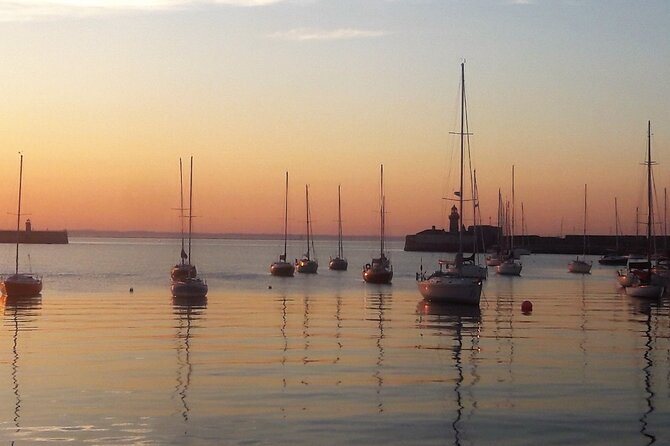
The East Pier Lighthouse provides a natural goal. It also gives you the sort of open outlook that makes Dún Laoghaire attractive in the first place. The route promises panoramic views of Dublin Bay and the city, but the weather will shape how much you see. The tour remains worthwhile in less-than-perfect conditions, though clear weather will make the pier portion more rewarding.
Carlisle Pier and the Forgotten Irish Memorial
Carlisle Pier dates from the 1820s and offers another look at Dún Laoghaire’s seafaring past. It is a maritime marker of the town’s change over time, from a smaller coastal settlement into a significant port.
The Forgotten Irish Memorial shifts the focus from harbor construction to the people who left Ireland. It honors Irish emigrants who traveled far from home in search of new opportunities and faced the hard work of building lives elsewhere.
This pairing works well. Carlisle Pier shows the physical side of departure, while the memorial points to the personal cost and courage behind those journeys. You get a clearer sense that the harbor was not only about ships and structures. It was also about decisions that changed families and communities.
These stops are especially valuable if you want more than scenery. The route gives you several ways to read the waterfront: as an engineering project, a military and wartime setting, a departure point, and a place of remembrance.
The East Pier Bandstand Sun Shelter

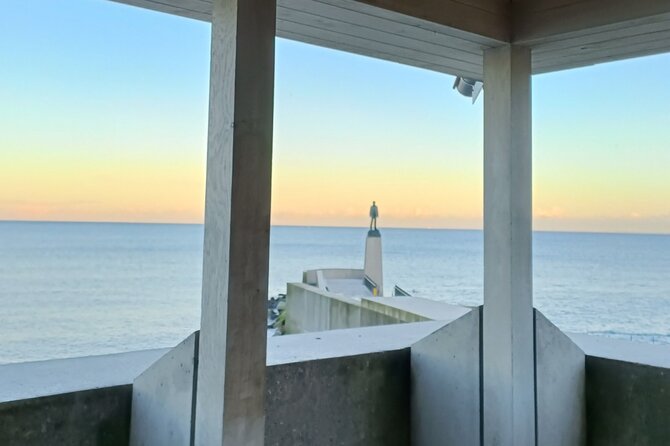
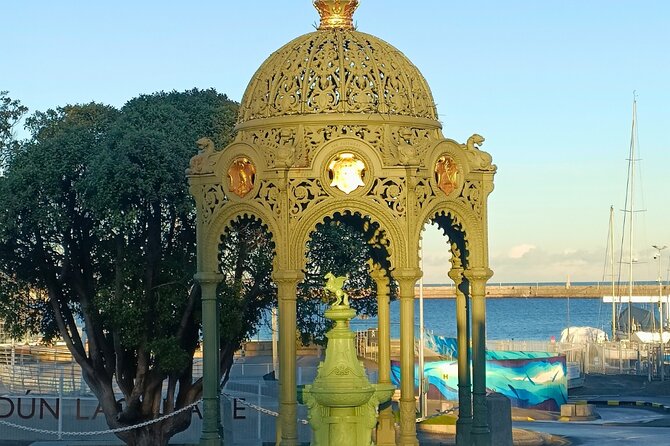
The East Pier Bandstand Sun Shelter adds a small architectural detail to the route. It is an unusual structure and a reminder that the pier was designed not only for ships and harbor work but also for public enjoyment.
You may find that this is the sort of stop you would otherwise pass without noticing. That is one advantage of an audio route with a planned sequence. It directs your attention to details that do not always announce their importance.
Do not expect a major indoor attraction here. The value is in seeing how the pier’s public spaces were shaped and how the waterfront served people on foot. The stop also gives you another reason to look closely rather than treating the pier as a straight line to the lighthouse.
The Crimean War cannon and its Romanov eagle
The Crimean War cannon is one of the route’s most memorable surprises. Look for the eagle motif associated with the Romanov family. The cannon’s presence in Dublin opens a curious story about how a Russian weapon came to be located in this Irish harbor town.
This detail gives the walk a welcome change of scale. You move from broad subjects such as war, emigration, and port construction to a single object with an unexpected connection to Russia.
I would pay attention to the audio at this stop, since the cannon itself may not explain its full story. It is exactly the kind of object that rewards a guided explanation. You see a piece of military hardware, then learn to look for the symbol that links it to the Romanov dynasty.
Finishing near the Roger Casement Statue
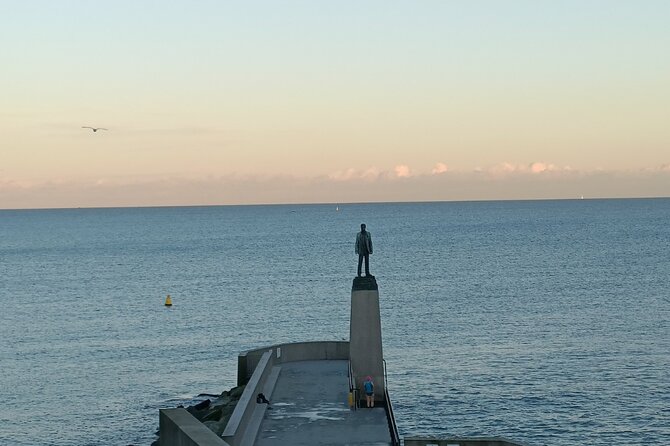
The route ends near the Roger Casement Statue, honoring the Irish revolutionary. That final stop brings the walk back from royal associations and international events to Irish political identity and resistance.
It is a fitting finish for a route that keeps shifting between official power and local resilience. You have seen a royal monument, a memorial to wartime loss, reminders of emigration, and a statue tied to Irish revolution. The result is a broad but manageable introduction to Dún Laoghaire.
The walk ends back at the meeting point, according to the activity details. Nearby eateries give you an easy chance to continue your visit with food or a drink. Since no food or drink is included, plan to buy those separately after the walk.
What $8.99 gets you
At $8.99 per person, the tour offers good value if you want an introduction to Dún Laoghaire without paying for a private guide. You receive lifetime access to the English tour, plus the VoiceMap app, offline audio, maps, and geodata.
The lifetime access matters if you are planning a longer Ireland trip or want to repeat the walk later. You are not limited to one use on one afternoon. The price also compares well with the flexibility you get: no group size, no scheduled departure, and no need to match someone else’s pace.
Still, this is not a full guided excursion. You pay for the route and recorded commentary, not conversation or personal recommendations from a guide. If you want to ask questions as you go, a live tour would suit you better.
The tour is listed as a private activity, with only your group participating. Since it is self-guided, that mainly means you are not placed with other participants. You can enjoy the route privately, but you will need to manage navigation and timing yourself.
Who should book this Dún Laoghaire walk
I would recommend this experience if you enjoy short historical walks, coastal views, and the freedom to stop when you like. It suits solo visitors, couples, families, and small private groups who already have a phone and headphones.
It also works well if you have limited time in the area. The one-hour to 75-minute length gives you a clear slice of Dún Laoghaire without demanding a full day. The route is near public transportation, making it practical to add before or after other plans in Dublin.
Most people can participate, and service animals are allowed. The provided details do not describe specific terrain, seating, or toilet facilities, so you should not assume that every part will suit your needs without checking first.
The English-only format is fine for English speakers, but it will not help you if you need another language. The garbled auto-translated review does not provide useful detail about the audio quality or narration, so I would treat the 4.5 rating from six reviews as encouraging but not conclusive.
Is the East Pier audio tour worth booking?
Book it if you want an affordable, flexible way to connect Dún Laoghaire’s pier views with its church, railway, port, memorial, and political stories. The Russian cannon, Forgotten Irish Memorial, and RMS Leinster Memorial give the walk more substance than a simple seaside stroll.
Skip it if you dislike listening through a phone, need a live guide, or want a tour with food, transport, or a fully planned day included. Also note that the experience cannot be refunded or changed after booking, so make sure the timing and self-guided format suit you first.
For most independent visitors, $8.99 is a sensible price for a compact introduction to Dún Laoghaire. Bring headphones, charge your phone, and allow extra time beyond the audio length if you want to enjoy the pier properly.
FAQ
Where does the tour begin?
The tour begins at St Michael’s Church on Marine Road, Dún Laoghaire, County Dublin.
Where does the tour end?
The activity ends back at the meeting point.
How long does the walk take?
The estimated duration is one hour to one hour and 15 minutes.
What language is available?
The tour is offered in English.
What app is used for the experience?
The tour uses the VoiceMap app, available for Android and iOS.
Is offline access available?
Yes. Offline access includes the audio, maps, and geodata.
Do I need to bring a smartphone?
Yes. A smartphone is not included, so you need to bring your own.
Are headphones included?
No. You need to provide your own headphones.
Is transportation included?
No. Transportation is not included.
Can I bring a service animal?
Yes. Service animals are allowed.
Is this a group tour?
No. It is a private activity, and only your group participates.
Can I cancel for a refund?
No. The experience is non-refundable and cannot be changed for any reason.
Recently added around Dublin
- Dublin: Pub Tour. Pour The Perfect Guinness, Whiskey & Music★ 5.0 · 3 reviews
- Waterford Crystal and Kilkenny Full-Day Rail Tour from Dublin★ 5.0 · 3 reviews
- Cliffs of Moher and The Burren Private Tour from Dublin★ 5.0 · 3 reviews
- Private Chauffeur Service From Dublin Airport to Killarney★ 5.0 · 3 reviews
- Beautiful Southwest Tour 2022★ 5.0 · 3 reviews
- A Self Guided Walking Tour of Dublin’s Docklands★ 4.5 · 3 reviews
- Dublin One Day Tour with a Local: 100% Personalized & Private★ 4.5 · 3 reviews
- Ireland: 3-Day West Coast Explorer Tour★ 5.0 · 3 reviews
Dublin Tours, compared.

Dublin to Cliffs of Moher, including Wild Atlantic Way and Galway
Read our review →
Cliffs of Moher, Burren & Galway City Day Tour
Read our review →

Dublin to Belfast Black Cab, Dunluce Castle and Giant’s Causeway
Read our review →
Kilkenny, Wicklow Mountains & Glendalough Day Tour from Dublin
Read our review →
Wicklow Mountains, Glendalough & Kilkenny Tour
Read our review →

Dublin Highlights and Hidden Gems Guided Walking Tour
Read our review →Browse the lists this tour appears in