
Reviewed · DUBLIN TOURS
Dublin: Highlights and Hidden Gems Walking Tour
Dublin’s story is best read on foot, where Viking lanes, medieval churches, Georgian streets, and modern city life sit close together. This two-hour city-center walk connects the major sights with the stories behind them, so you get more than a quick photo stop at Dublin Castle or Trinity College.
I like the mix of big landmarks and overlooked corners, and I like the practical advice built into the tour. Guides such as Ian, Keith, Alan, Dave, Kieran, Emily, and Karl are praised for humor, local pride, and useful suggestions about food, live music, souvenirs, and places to avoid. The main consideration is pace: the route has no scheduled food or toilet break, and one tour ran close to three hours.
Key points to know before you book
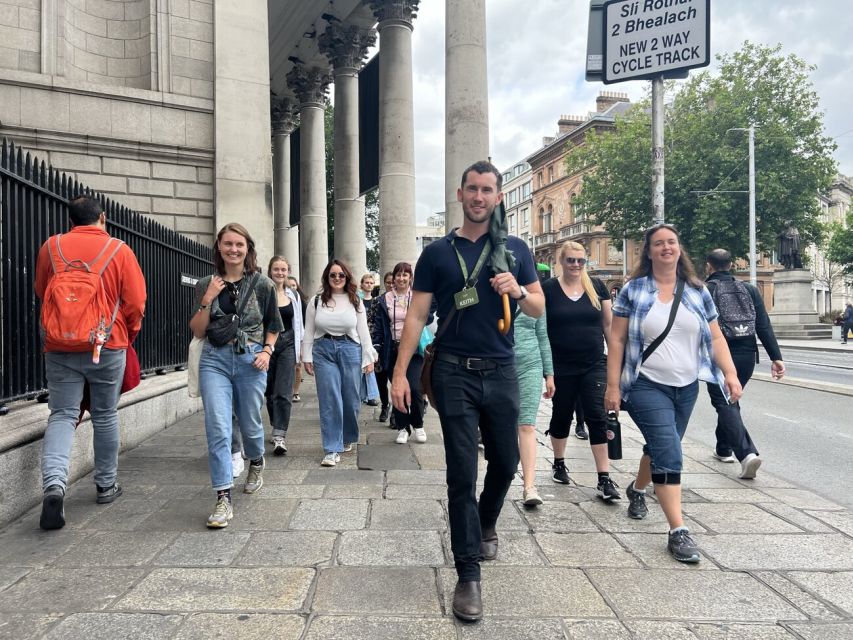
- Dublin’s past unfolds across several eras, from Viking Dublin and medieval streets to Georgian boulevards and Victorian poverty.
- Major sights come with context, including Dublin Castle, Christchurch Cathedral, Trinity College, the GPO, and the Ha’penny Bridge.
- Guide quality is central to the experience, with Ian, Keith, Alan, Dave, Kieran, Emily, Karl, James, Gemma, Helena, and Chris all singled out for humor, warmth, and clear storytelling.
- The tour is practical as well as historical, with tips on eating, drinking, live music, shopping, and tourist-trap areas.
- The meeting point is easy to identify, outside The Old Storehouse pub under a green umbrella.
- At $27 per person, this is a sensible way to get your bearings early in a Dublin visit, especially if you value a good local guide.
Why Dublin makes sense on foot
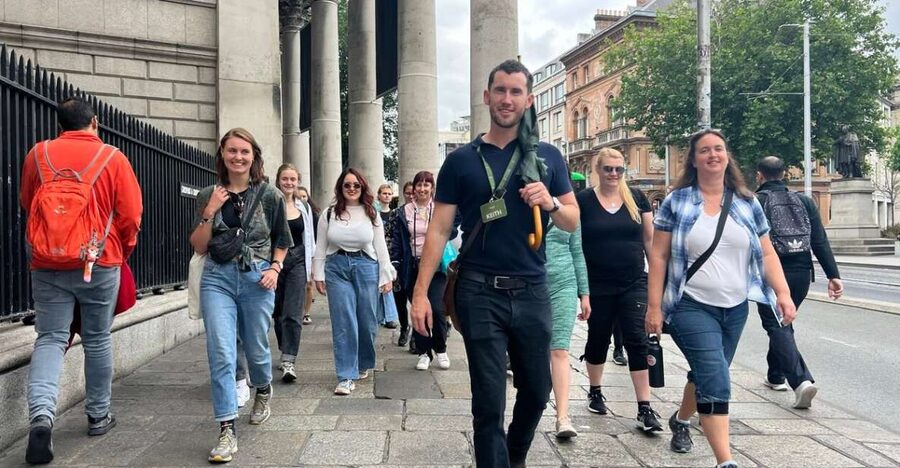
Dublin is compact enough that a short walking tour can cover a surprising amount of ground. In roughly two hours, you move between the River Liffey, old religious sites, civic buildings, theatres, bridges, and college courtyards. The value is not simply seeing each place. It is learning how the pieces fit together.
The tour moves through more than 1,000 years of city life. You hear about Dublin’s Viking beginnings, its medieval development, Georgian expansion, Victorian hardship, and the people involved in Ireland’s political and cultural changes.
That broad time span gives the walk a useful shape. Instead of treating Dublin as a collection of isolated attractions, the guide shows you a city that has changed direction more than once. Writers, rebels, rock stars, and rogues all enter the story, giving the walk a human focus.
You should expect a talk-led experience rather than a series of formal interior visits. The listed stops are viewed and explained from the streets, and the guide’s storytelling is the main attraction. This makes the tour a good first activity, since it helps you decide which places deserve a longer visit later.
More Walking Tours in Dublin
- Dublin Highlights and Hidden Gems Guided Walking Tour
★ 5.0 · 6,020 reviews - 1916 Rebellion Walking Tour
★ 5.0 · 1,605 reviews - 90 Minute Dublin Walking tour and Sightseeing tips
★ 5.0 · 916 reviews
Meeting the guide outside The Old Storehouse
The tour starts outside The Old Storehouse pub. Look for the green umbrella, and arrive at least ten minutes before the scheduled start with your booking ready to show the guide.
This is a central meeting point, but Dublin’s streets can be busy and easy to mix up, particularly if you are still learning the city center. Giving yourself a few extra minutes is sensible. The tour finishes back at the same meeting point, which makes it easy to continue with a meal, a drink, or another nearby sight.
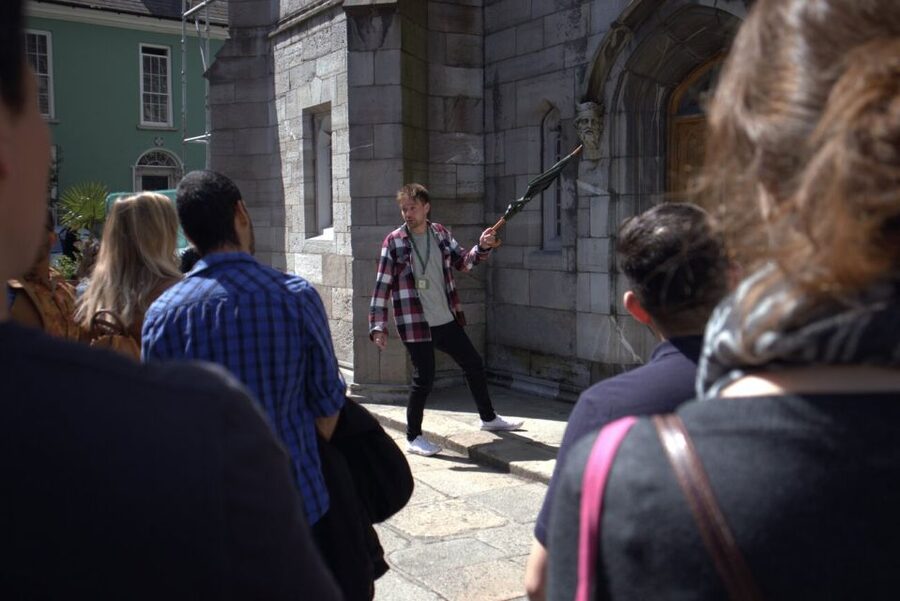
The guide speaks English, and the tour is led by an accredited professional. The individual guide may vary, but the feedback points to a consistent strength: guides are not simply reciting dates. Ian is praised for wit and historical detail, Keith for pride in Ireland and a personal approach, and Dave for humor, kindness, and practical advice.
Kieran is repeatedly praised for making the tour interactive while keeping an eye on the group. Alan is described as organized, friendly, and easy to relate to. Emily, Karl, James, Gemma, Helena, and Chris are also noted for lively delivery and strong storytelling.
That matters because a walking tour can feel very different depending on the person holding the umbrella. Here, the guide’s personality is a major part of the purchase. You are paying for interpretation, not just a route through the center.
Temple Bar and the character of central Dublin
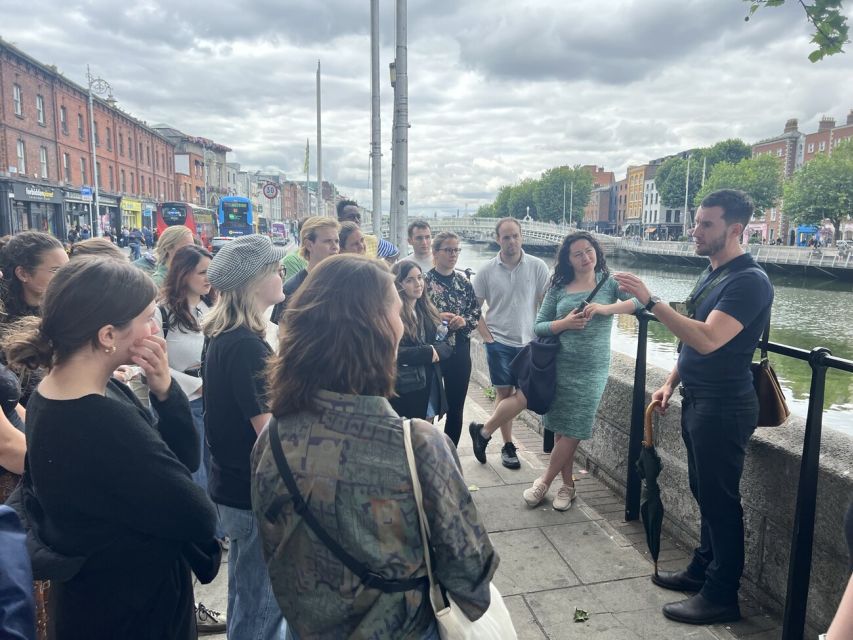
Temple Bar is one of Dublin’s best-known districts, and it is an obvious place to discuss how the city presents itself to visitors. The area is closely tied to pubs, nightlife, and tourism, but a good guide can place it within Dublin’s wider story instead of reducing it to a drinking stop.
Expect the guide to point out the contrast between the polished visitor image and the older layers around it. This is a useful early lesson in Dublin: the most famous streets are not always the best places to spend your entire evening, and a local guide can help you make better choices later.
One of the tour’s practical strengths is its willingness to discuss where to eat, drink, hear live music, and buy souvenirs. A guide may also offer advice on which parts of the city feel overly tourist-focused. That kind of information can save you money and help you spend your limited time in places that better suit your interests.
Temple Bar also places you close to several other stops, including Dublin Castle, Christchurch Cathedral, and the Liffey. The route’s compact geography means you are not wasting the tour on long transfers.
Dublin Castle and the city’s changing power
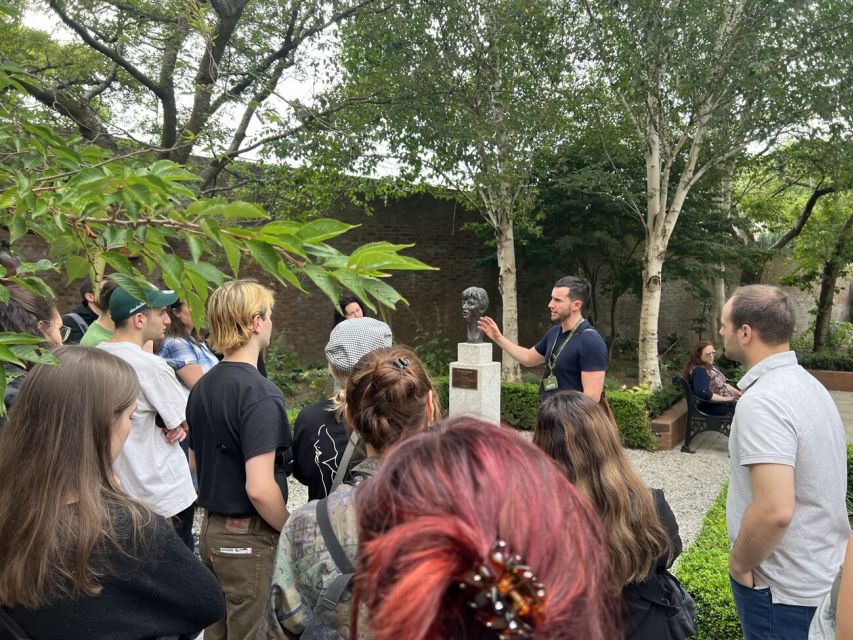
Dublin Castle introduces the political side of the city. It is one of the tour’s must-see locations and a natural setting for stories about authority, administration, and Ireland’s turbulent past.
The strength of a stop like this is the surrounding explanation. A castle can look like a grand stone complex until someone explains what role it played in the city and country. Your guide connects the building to larger changes in Dublin, helping you see why the site mattered rather than simply noting its age.
The tour does not promise an interior visit, so you should book this as a street-level introduction. If the castle interests you, you can return later with more purpose. That is one reason a first-day walking tour can be good value: you learn where to spend your admission fees afterward.
The guide’s humor also helps with a subject that can become heavy. Dublin’s past includes conflict, inequality, and political struggle. The tour’s tone is described as entertaining but not empty, with guides willing to discuss difficult parts of Irish history rather than offering only a postcard version.
A different sort of day from the same base:
- Dublin to Cliffs of Moher, including Wild Atlantic Way and Galway
★ 5.0 · 23,331 reviews - From Dublin: Cliffs of Moher, Burren & Galway City Day Tour
★ 4.8 · 18,888 reviews - Dublin: Guinness Storehouse Entry Ticket
★ 4.6 · 16,863 reviews - Dublin to Cliffs of Moher, Burren, Wild Atlantic Way, Galway Tour
★ 5.0 · 12,924 reviews
Christchurch Cathedral and medieval Dublin
Christchurch Cathedral brings the route into medieval Dublin. The cathedral and the nearby streets offer a visible link to the city’s older religious and civic life, while the surrounding area helps you picture how different Dublin was before modern roads and broad urban planning.
The tour also covers Viking Dublin and medieval Dublin, two periods that are easy to miss if you only visit the city’s famous Georgian buildings. The guide turns those early chapters into a walkable story, showing how Dublin developed over time.
You should not expect a museum-style lecture with every date and name. The best use of this section is to listen for the broad changes: who lived here, how the city grew, and why certain streets and buildings took the form they did. Several guide comments praise the ability to explain historical significance clearly, which is especially helpful at sites where the evidence is not immediately obvious.
Smock Alley Theatre adds another angle. It brings performance and public life into the route, widening the story beyond kings, churches, and political leaders. Dublin’s identity has also been shaped by writers, performers, musicians, and ordinary residents, and this stop supports that wider view.
Crossing the River Liffey by the Ha’penny Bridge
The River Liffey gives the tour a natural change of scene. Crossing the river makes Dublin feel like a connected city rather than a set of separate districts, and the Ha’penny Bridge is one of the most recognizable points on the route.
This is a good place for photographs, but the bridge is more useful when paired with the guide’s explanation of how the river relates to Dublin’s growth and daily life. You also pass O’Connell Bridge, giving you two very different crossing points and a sense of the city’s central axis.
The walking distance is manageable for most people, and the tour is listed as wheelchair accessible. Still, the activity has no planned snack or toilet stop, so plan ahead before meeting the guide. One account described a much longer outing than expected, nearly three hours, while the advertised duration is two hours. That may suit you if you enjoy a generous story, but it can matter if you have a dinner reservation or another timed attraction.
The GPO, O’Connell Street, and modern Ireland
The General Post Office, or GPO, shifts the story toward modern Irish politics. It is one of the city’s most important public buildings and a natural stop for discussing rebellion, national identity, and the events that shaped modern Ireland.
The point of this stop is not just the building’s appearance. The guide gives the GPO a place in the larger story of Dublin, connecting the city center to the political changes that transformed Ireland. This is where a well-organized guide earns the $27 price: the building becomes part of a narrative rather than another landmark to pass without context.
The route also includes O’Connell Bridge, linking the south and north sides of the center. From here, the tour can help you understand how Dublin’s main streets relate to one another. That orientation is practical. After the walk, you are less likely to spend your first evening wandering in circles between the same few streets.
The tour’s approach to history appears direct and open. Guides are praised for discussing the full story and for encouraging people to think about what they are seeing. That makes the experience more useful than a simple list of patriotic anecdotes.
Trinity College and Dublin’s cultural side
Trinity College is another major stop and one of Dublin’s most important cultural landmarks. Even if you plan to visit the college separately, hearing about it during the walk gives you context before you decide how much time to spend there.
The tour treats Trinity as part of the city’s wider intellectual and cultural story. That fits the overall route, which moves between public buildings, religious sites, theatres, bridges, and streets tied to famous characters.
Again, this is an exterior walking-tour experience, not a promise of admission to college buildings. If you want a longer visit, ask your guide for practical advice on timing and nearby activities. The included recommendations are one of the tour’s useful extras, especially for a first visit when every Dublin hour counts.
You also get a better sense of how close Trinity is to the Liffey, O’Connell Bridge, and other central stops. The tour’s route makes the city feel easy to navigate, which is often more valuable than a single isolated fact.
A guide-led history lesson with room for humor
The clearest pattern across the guide feedback is the combination of historical detail and humor. Ian, Keith, Alan, Dave, Kieran, James, Helena, Emily, Karl, Gemma, and Chris are all described in warm terms, but the praise is specific: strong storytelling, clear explanations, local pride, and an ability to keep the group engaged.
That combination suits Dublin. The city’s story includes serious subjects, but a completely formal presentation would miss some of its personality. The best guides use jokes to keep you listening, then give the serious material enough weight.
You should also expect a personal element. Karl is praised for explaining aspects of his culture as they related to the tour, while Keith is described as clearly proud of Ireland and eager to share that feeling. This kind of connection can make the history easier to remember because it sounds like a person explaining his city, not a textbook being read aloud.
The walk is also described as interactive. Kieran, in particular, is praised for making it fun while watching out for the whole group. That matters in a city-center tour, where the guide must manage street crossings, varied walking speeds, and attention in noisy places.
Is $27 a fair price?
At $27 per person, the tour is priced as an affordable introduction to Dublin rather than a full-day historical program. You get a local guide, a two-hour city-center walk, historical and cultural explanation, and recommendations for the rest of your stay.
I consider that good value if you are new to Dublin and want a strong starting point. The tour covers enough ground to help you recognize the city’s main areas, while the guide’s suggestions may help you avoid poor choices later.
The value is less obvious if you prefer to explore silently, spend a long time inside each attraction, or follow your own pace. You will not receive hotel pickup, food, or drinks, and the tour does not promise admission to Dublin Castle, Christchurch Cathedral, or Trinity College.
Book it early in your stay if you can. That way, the advice on restaurants, pubs, music, and souvenirs has time to shape the rest of your visit. At the same time, keep your schedule flexible around the two-hour estimate because the actual outing may run longer.
Who will enjoy this Dublin walk?
This tour suits first-time visitors who want the basic map of central Dublin along with a sense of how the city came to be. It is also a good fit if you enjoy history but do not want a dry lecture.
You will get the most from it if you are happy walking outdoors, listening while standing at several stops, and moving through busy public streets. The tour is listed as wheelchair accessible, and the language is English.
Families, couples, solo visitors, and small groups can all use it as a first-day activity. The humor and practical tips should help keep the route approachable, while the coverage from Viking Dublin to modern Ireland gives adults plenty to think about.
I would be more cautious if you need a strict finish time. The advertised length is two hours, but the pace and storytelling can vary by guide. Also, eat and use the toilet before you start, since there is no planned break.
Practical advice for a better experience
Arrive ten minutes early and look for the green umbrella outside The Old Storehouse. Have your booking ready, and wear comfortable shoes suitable for a city walk.
Check the starting time when you book, since availability changes. The tour runs in English, and you can cancel up to 24 hours before the start for a full refund. You can also reserve now and pay later, which helps if your Dublin plans are still shifting.
Use the walk as an orientation rather than trying to see every attraction in depth. Make a note of the places you want to revisit, and ask the guide for suggestions on food, music, shopping, and less tourist-focused areas.
Should you book the Highlights and Hidden Gems Walking Tour?
Book this tour if you want Dublin explained by a personable local guide, not simply photographed from the pavement. The combination of Viking beginnings, medieval streets, the Liffey, the GPO, Trinity College, Dublin Castle, and practical city advice gives you a useful first look for $27.
Skip it if you need long interior visits or a tightly controlled schedule. For most first-time visitors, though, the price is reasonable, the route is well chosen, and the guide’s humor makes a serious subject easier to absorb. It is a smart way to get oriented before exploring Dublin on your own.
FAQ
How long does the Dublin walking tour last?
The advertised duration is two hours. Starting times vary, so check availability when booking. The actual length may vary with the guide and pace, and one experience lasted close to three hours.
Where does the tour start?
Meet outside The Old Storehouse pub. Look for the green umbrella and arrive at least ten minutes before the scheduled start.
Where does the tour finish?
The tour finishes back at the same meeting point outside The Old Storehouse.
What language is the tour in?
The tour is conducted in English with a live English-speaking guide.
Is the walking tour wheelchair accessible?
Yes. The activity is listed as wheelchair accessible.
What does the $27 price include?
The price includes the local guide, the Dublin city-center walking tour, discussion of Irish history and culture, and tips for making the most of your Ireland visit. Hotel pickup and drop-off, food, and drinks are not included.
Recently added around Dublin
- Dublin: Pub Tour. Pour The Perfect Guinness, Whiskey & Music★ 5.0 · 3 reviews
- Waterford Crystal and Kilkenny Full-Day Rail Tour from Dublin★ 5.0 · 3 reviews
- Cliffs of Moher and The Burren Private Tour from Dublin★ 5.0 · 3 reviews
- Private Chauffeur Service From Dublin Airport to Killarney★ 5.0 · 3 reviews
- Beautiful Southwest Tour 2022★ 5.0 · 3 reviews
- A Self Guided Walking Tour of Dublin’s Docklands★ 4.5 · 3 reviews
- Dublin One Day Tour with a Local: 100% Personalized & Private★ 4.5 · 3 reviews
- Ireland: 3-Day West Coast Explorer Tour★ 5.0 · 3 reviews
Dublin Tours, compared.

Dublin to Cliffs of Moher, including Wild Atlantic Way and Galway
Read our review →
Cliffs of Moher, Burren & Galway City Day Tour
Read our review →
Dublin to Belfast Black Cab, Dunluce Castle and Giant’s Causeway
Read our review →
Kilkenny, Wicklow Mountains & Glendalough Day Tour from Dublin
Read our review →
Wicklow Mountains, Glendalough & Kilkenny Tour
Read our review →
Dublin Highlights and Hidden Gems Guided Walking Tour
Read our review →Browse the lists this tour appears in