
Reviewed · SELF-GUIDED TOURS
St Patrick’s Cathedral: Self-Guided Cathedral Admission
Saint Patrick’s Cathedral brings Dublin’s story into one remarkable building. Founded in 1220 beside the well linked by tradition to Saint Patrick’s baptisms, it is still a working church as well as a major visitor sight. I like the freedom to explore at your own pace, and I like that the audio guide turns details you might otherwise miss into clear, useful history.
The Jonathan Swift connection gives the visit a strong human focus, while the stained glass and Gothic stonework reward slow looking. The main drawback is that the cathedral can feel crowded, especially around early afternoon in summer, and there is a great deal to take in. A self-guided visit works best when you allow more than a quick photo stop.
Key points to know before you go

- Jonathan Swift’s cathedral: See the burial place and artifacts linked to the author of Gulliver’s Travels, who served as dean from 1713 to 1745.
- A famous Irish expression: The Door of Reconciliation is tied to the phrase to chance your arm.
- A 39-image window: Look for the stained-glass sequence showing the life of Saint Patrick.
- Useful audio equipment: Guides are available in English, French, German, Italian, Spanish, and Irish.
- History you can handle: The Discovery Space uses touch screens, choir recordings, iPads, and brass rubbing.
- Flexible, good-value entry: Admission costs $12 per person, is valid for one day, and includes self-guided access.
Why Saint Patrick’s Cathedral matters in Dublin
Saint Patrick’s Cathedral is not simply an old church to photograph before moving on. It is the National Cathedral of the Church of Ireland, and it has been tied to Dublin’s religious and civic life for more than 800 years.
The cathedral was built in 1220 in honor of Ireland’s patron saint. Its location matters. It sits beside the well where tradition says Saint Patrick baptized converts during his visit to Dublin. You are therefore looking at both a medieval building and a place connected to one of Ireland’s oldest Christian stories.
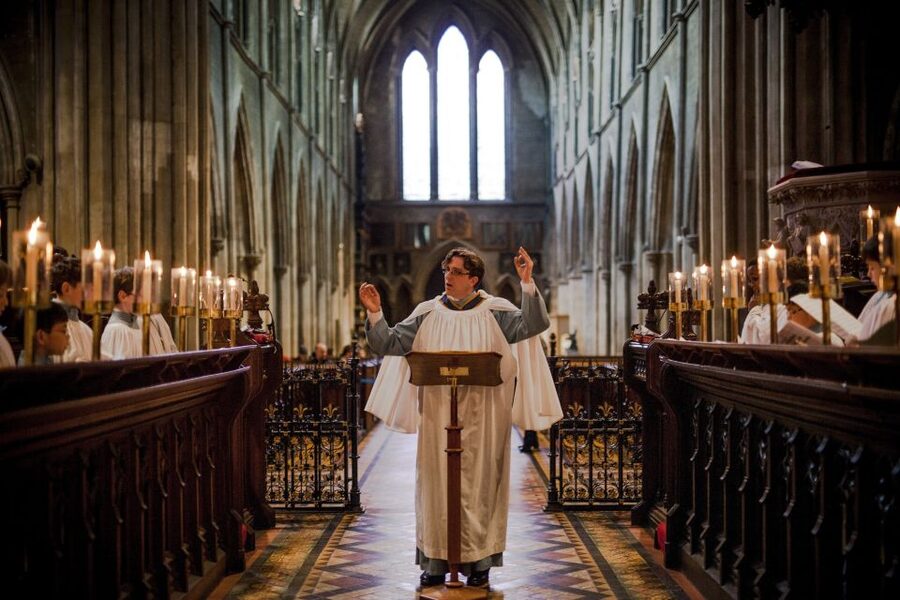
I find the setting useful because it gives the architecture a clear purpose. This is not a modern museum display dressed up as a church. It remains a place of worship, with sung services twice daily from Sunday through Friday. The building’s visitor role exists alongside its religious role, so you should enter with the same quiet respect you would bring to any active church.
The cathedral also speaks to Ireland’s many communities and eras. Its story reaches from the earliest traditions connected with Saint Patrick to the present day. That broad span is what makes the visit worthwhile, but it also explains why the experience can feel full. You will not absorb everything in one pass.
More self-guided routes in Ireland:
- Christ Church Cathedral Entrance Ticket & Self-Guided Tour
★ 4.6 · 773 reviews - Self-Guided Bike Tour of Killarney National Park, Muckross Gardens & Waterfall
★ 5.0 · 223 reviews - Cork: City Gaol Tour with Audio Guide
★ 4.8 · 108 reviews
Entering the Gothic interior
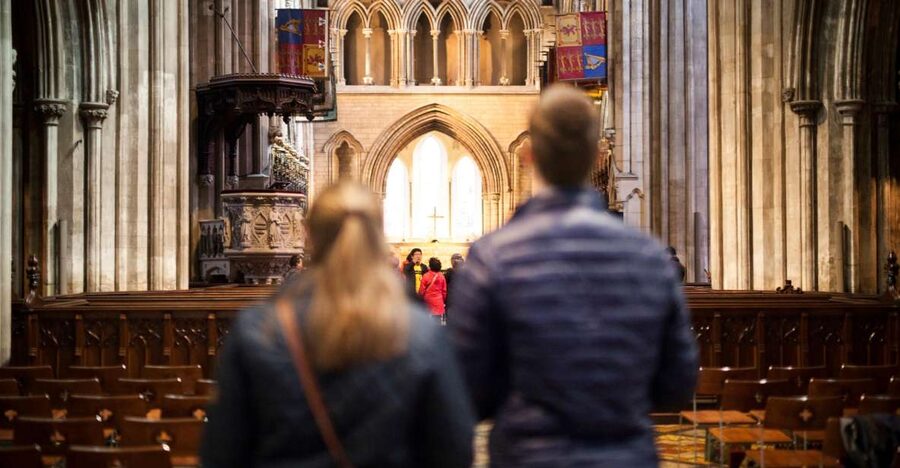
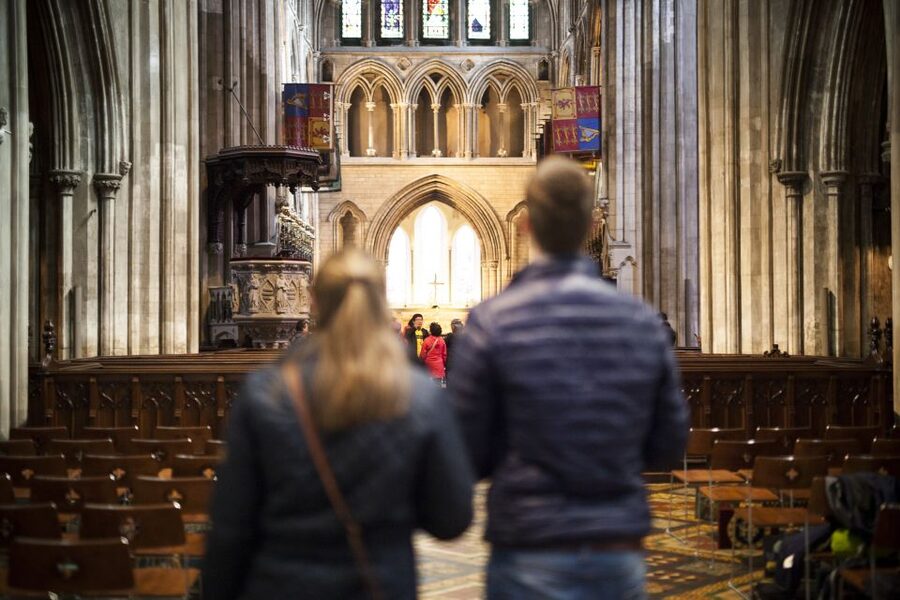
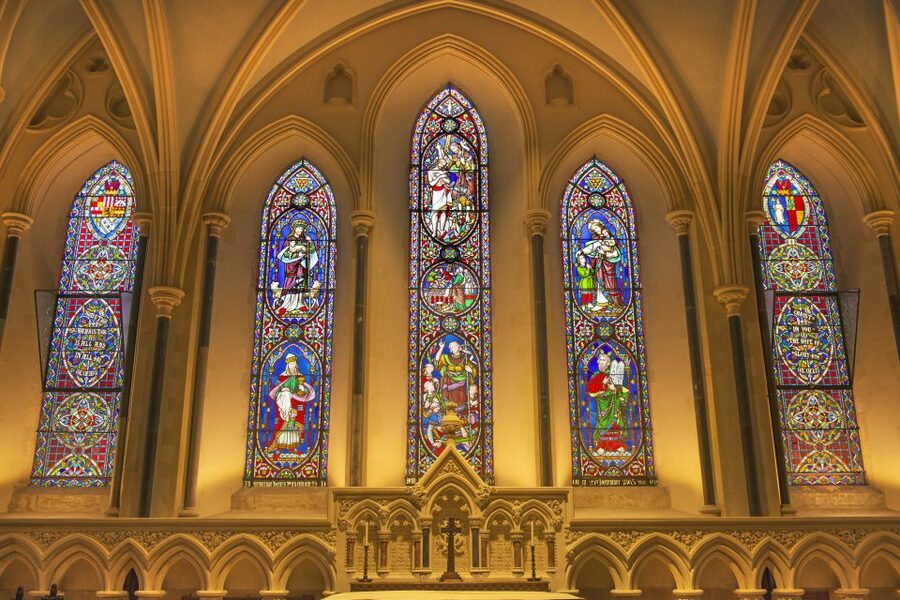
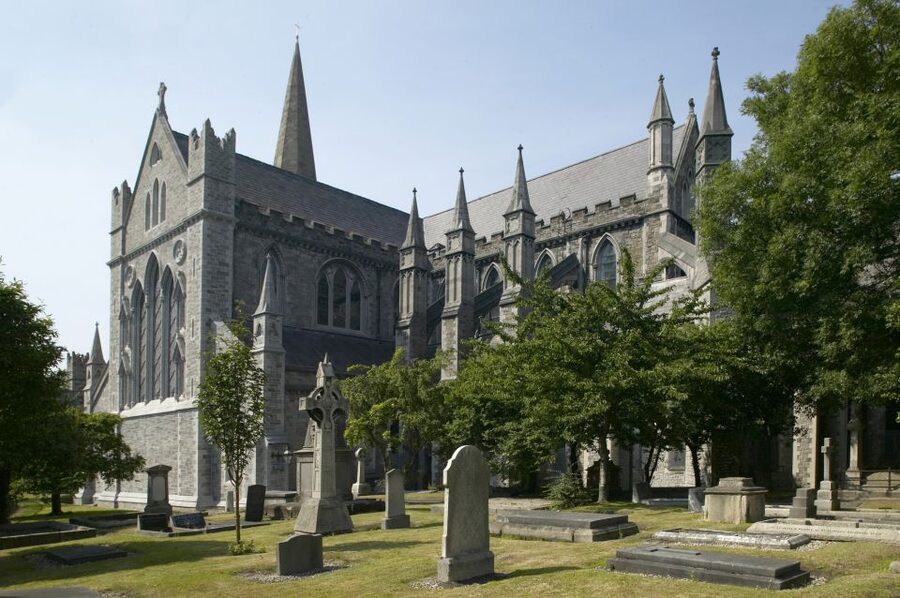
The first thing to give yourself is time to look up. Saint Patrick’s is built in the Gothic style, and its appeal comes from the way stone, height, light, and color work together. The interior stonework has a sturdy, serious character, while the stained glass brings more delicate detail into the long view.
The cathedral is well maintained, which helps you notice the workmanship rather than focus on wear or clutter. Look at the arches, carved stone, windows, and the way the building draws your eye along its length. You do not need to know architectural terms to enjoy it. The audio guide can supply context, but your first few minutes are best spent simply taking in the space.
The stained glass deserves special attention. One window presents the life of Saint Patrick in 39 images. This is the kind of feature that is easy to pass if you are moving quickly, so use the guide or take a slow circuit of the interior. A small booklet focused on the stained glass would make the visit even easier to study, but no such detailed booklet is included in the stated admission.
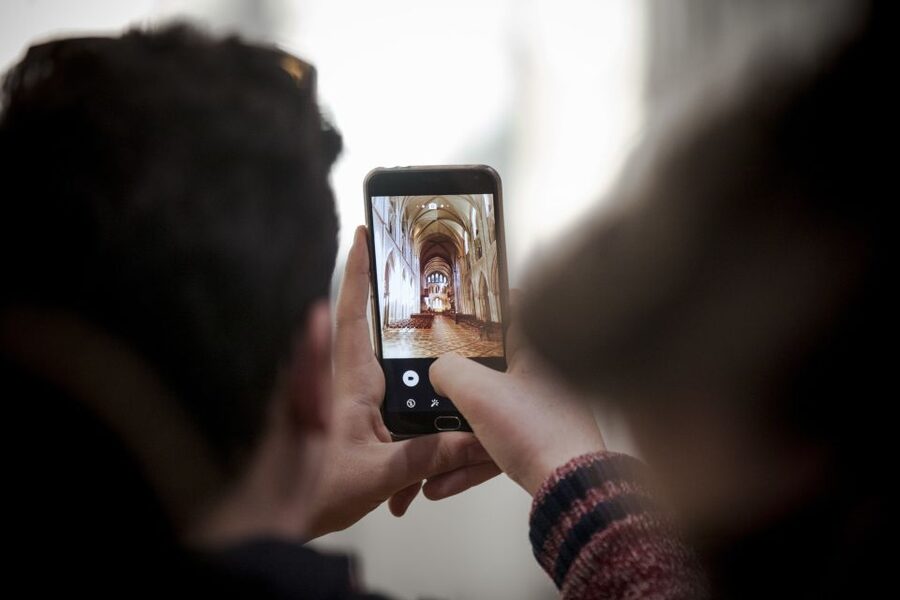
Photography can be tempting at every turn, though the cathedral is more rewarding when you alternate between pictures and quiet observation. You might find a choir performance taking place, which adds another layer to the building’s role as a living church. Do not assume every visit will include a performance, but the regular sung services are part of the cathedral’s ongoing life.
Following Jonathan Swift through the cathedral
The strongest historical personality here is Jonathan Swift. Best known as the author of Gulliver’s Travels, Swift served as dean of Saint Patrick’s Cathedral from 1713 to 1745. He is buried here, and artifacts connected with his life and work are on view.
Swift gives you a way into the cathedral’s past that feels more personal than a list of dates. Instead of thinking only about medieval construction, you can consider the people who worked, worshiped, preached, and were remembered here centuries later.
I recommend giving the Swift section proper attention, even if you know him mainly from school reading. The cathedral presents him not only as a famous writer but also as a churchman with a long connection to this place. The audio guide helps explain that connection and gives the building a human scale.
This is also one reason the cathedral suits different interests. Architecture lovers can study the structure, religious visitors can consider its continuing purpose, and readers can follow the story of one of Ireland’s most famous authors. You do not need to choose just one angle.
Finding the Door of Reconciliation
The Door of Reconciliation is one of the most memorable individual objects inside the cathedral. It is linked to the Irish expression to chance your arm, a phrase associated with taking a bold risk.
The door is valuable because it turns a piece of Irish language into something physical. You are not only hearing a phrase explained in an audio track. You are seeing the object connected with the story behind it.
This stop also breaks up the larger architectural experience. A cathedral can sometimes blur into a series of arches and windows when you are tired. Specific features such as this door give you clear points to seek out and remember.
Use the audio guide here rather than passing by. The detail is easy to miss without an explanation, and it is exactly the kind of small story that makes a self-guided visit feel purposeful instead of passive.
A few more Ireland half-days to weigh up
- Dublin Highlights and Hidden Gems Guided Walking Tour
★ 5.0 · 6,020 reviews - Dublin to Glendalough, Wicklow and Kilkenny Full Day Guided Tour
★ 5.0 · 4,895 reviews - Dublin Book of Kells, Castle and Molly Malone Statue Guided Tour
★ 4.5 · 3,825 reviews - The Little Museum of Dublin Famous Guided Tour
★ 5.0 · 2,948 reviews
Using the Discovery Space
The Discovery Space is the cathedral’s most hands-on addition. It uses touch-screen technology and iPads to explain the building’s long past. You can also hear samples of the cathedral choir and make a brass rubbing.
I like this area because it gives you a break from looking at objects behind barriers. Brass rubbing is especially useful for families and for anyone who learns better by doing something. Children may also receive an activity book, depending on what is being offered during the visit.
The touch screens help organize a complicated story. Saint Patrick’s Cathedral has accumulated centuries of people, events, repairs, worship, and cultural meaning. A digital display can connect those threads more quickly than a wall of printed text.
The Discovery Space should not replace the building itself. Think of it as a tool for understanding what you have already seen and for noticing details you might have missed. If the cathedral feels crowded, this area may also provide a more focused place to spend time with the interpretation.
Making the audio guide work for you
Audio guides are included with admission, and they are available in English, French, German, Italian, Spanish, and Irish. The equipment is designed to let you move through the cathedral at your own pace rather than follow a fixed group.
That flexibility is a major advantage. You can skip sections, pause when you want to inspect a window, and return to a feature that caught your eye. You are not tied to a guide’s walking speed or to a set sequence.
Bring your own wired headphones if possible. Visitors have found that using personal headphones or connecting through a phone can make listening easier, though the cathedral also provides handheld guide equipment. The supplied headsets are generally simple to use and give detailed explanations at the main points of interest.
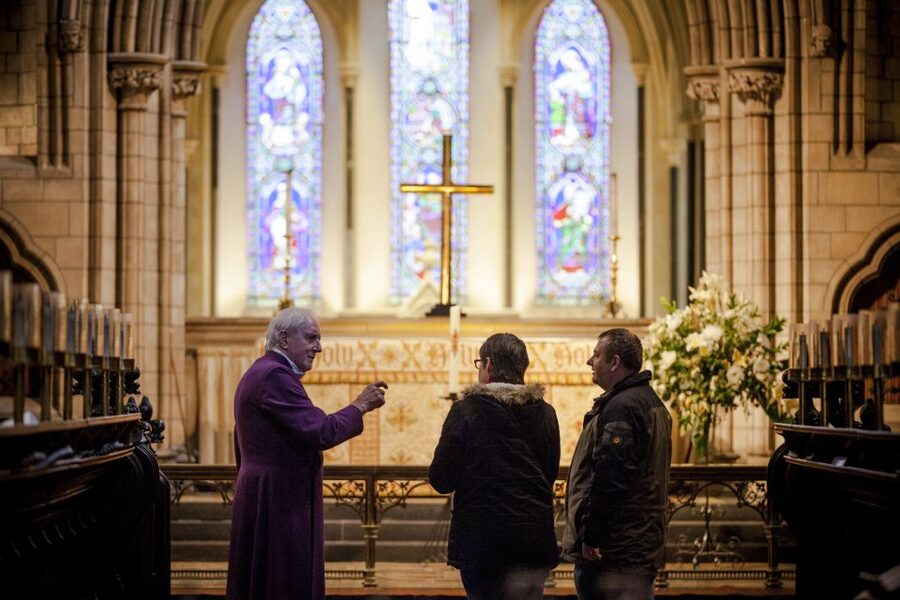
There may also be guided tours at set times, sometimes close together, and guides such as Anna and David have been praised for explaining the building clearly and answering questions. A live tour can add warmth and conversation, but availability depends on timing. If you miss the next scheduled tour, the self-guided option still gives you a solid way to explore.
For most people, I would begin with the audio guide. Then ask staff or an on-site guide about anything that remains unclear. The staff are described as friendly and helpful, which matters in a building with so many layers.
Planning your visit around time and crowds
Your admission is valid for one day, with starting times shown when you check availability. The visit begins and ends at Saint Patrick’s Cathedral, so there is no transport element to plan around.
At $12 per person, this is a fair price for Dublin, especially because the audio guide is included and you can take your time. You are paying for access to a major historic building, interpretation in six languages, and the chance to explore without being rushed.
The value is best if you actually use the guide. If you only want a quick look inside, the price may feel less worthwhile. If you listen to several sections, study the stained glass, visit the Swift displays, and use the Discovery Space, the admission becomes a good use of a small part of your Dublin budget.
Early afternoon can be busy, including on weekdays in June. The cathedral can handle visitors well, but a crowd changes the mood and makes it harder to pause in front of popular features. If your schedule allows, check availability and choose a time that gives you room to move slowly.
Allow enough time for the architecture and the interpretation. The exact length depends on how many audio stops you use, but this is not a sight I would squeeze into a rushed ten-minute gap. You can move quickly, yet the building rewards patience.
Practical details for families and access

Saint Patrick’s Cathedral is wheelchair accessible, making it a practical choice for many visitors with mobility needs. Under-18s must be accompanied by a parent or guardian.
Families should make use of the Discovery Space and any activity materials available for children. A church with 800 years of history can be difficult for younger visitors to follow, but touch screens, brass rubbing, and a simple activity book offer a more active way in.
The on-site toilet is outside the cathedral in a transportable building. That is a small but useful detail, especially if you are visiting with children or planning to spend a while inside.
Remember that this remains a functioning church. Sung services take place twice daily from Sunday through Friday, and the atmosphere may shift from visitor attraction to place of worship. Dress and behave accordingly, and listen to staff instructions about where visitors may go during services.
The small shop is available at the end of the visit. It may appeal if you want a souvenir, though its placement and style will not suit everyone. The cathedral itself is the main event, so do not let the shop determine how long you spend inside.
Who will enjoy this self-guided visit
I would recommend Saint Patrick’s Cathedral to anyone interested in Dublin’s religious past, Irish literature, Gothic buildings, or stained glass. It is also a strong choice if you prefer to explore independently and want information available when you need it.
The experience works particularly well for:
- First-time visitors who want a major Dublin landmark with clear historical context
- Readers interested in Jonathan Swift and Gulliver’s Travels
- Families who want hands-on elements rather than only display cases
- Visitors who need audio information in a language other than English
- Anyone who dislikes being hurried through a historic building
- People with limited time who want a central self-contained attraction
It may be less suitable if you want a quiet, empty church at a popular time of day. It may also disappoint if you expect a full live tour to be included at the exact moment you arrive. The self-guided format is the dependable part of the experience, while guided tours operate at specific times.
I also would not treat it as a complete study visit for architecture or stained glass. The audio guide gives you useful information, but a dedicated book with detailed window notes would help anyone who wants to go much deeper.
Should you book Saint Patrick’s Cathedral?
Yes, if you want a flexible Dublin sight that combines architecture, faith, literature, Irish language, and hands-on interpretation for $12. The cathedral’s best moments are not limited to one grand view. They come from linking the building to Saint Patrick, Jonathan Swift, the Door of Reconciliation, the stained-glass sequence, and the continuing choir services.
Book it if you can give the visit enough time to listen and look. Bring wired headphones, check the available starting time, and consider avoiding the busiest part of the afternoon if you prefer a calmer interior.
Skip it only if your Dublin schedule is already packed with churches and you plan to rush through without using the audio guide. For most visitors, Saint Patrick’s Cathedral offers a substantial look at Ireland’s past, with enough personal stories and visual detail to make the $12 admission worthwhile.
FAQ
Where is Saint Patrick’s Cathedral located?
Saint Patrick’s Cathedral is in Dublin County, Ireland. The activity starts and ends at the cathedral.
How much does admission cost?
Admission costs $12 per person. Self-guided admission and the audio guide are included.
How long is the ticket valid?
The admission is valid for one day. Check availability for the starting times offered on your chosen date.
Which languages are available for the audio guide?
Audio guides are available in English, French, German, Italian, Spanish, and Irish.
Is Saint Patrick’s Cathedral wheelchair accessible?
Yes, the cathedral is wheelchair accessible.
Can children visit without an adult?
No. Anyone under 18 must be accompanied by a parent or guardian.
Recently added around Ireland
- Killarney: Gap of Dunloe Day Tour★ 4.7 · 3 reviews
- Sean’s Bar, Athlone Castle and Clonmacnoise Monastery★ 4.5 · 3 reviews
- Dublin: Pub Tour. Pour The Perfect Guinness, Whiskey & Music★ 5.0 · 3 reviews
- Ferry ticket – Day return ticket to Inishbofin Island from Cleggan. Self Guided.★ 5.0 · 3 reviews
- Connemara/Galway: Inis Meáin Return Ferry Transfer★ 4.7 · 3 reviews
- Cork Private Walking Tour★ 5.0 · 3 reviews
- Waterford Crystal and Kilkenny Full-Day Rail Tour from Dublin★ 5.0 · 3 reviews
- (Christmas Morning) Glendalough Half Day Tour from Dublin★ 3.7 · 3 reviews
Self-Guided Tours, compared.
Christ Church Cathedral Entrance Ticket & Self-Guided Tour
Read our review →
Self-Guided Bike Tour of Killarney National Park, Muckross Gardens & Waterfall
Read our review →



Browse the lists this tour appears in