
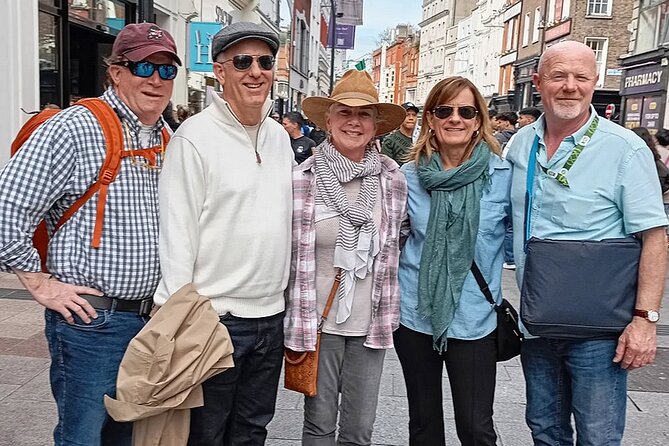
Reviewed · DUBLIN TOURS
Dublin Private Walking Tour | 3 hour Highlights & Hidden Gems
Dublin’s story comes alive on foot, especially when a guide can connect a medieval castle, a famine memorial, a rebel proclamation, and a pub-lined lane in one clear thread. This private walk with David Ryan covers the city center’s major sights while leaving room for songs, folklore, politics, and the small details you could easily miss alone.
I like the personal format and the useful local advice. You get a private guide rather than a fixed group, plus a digital list of cafes, restaurants, pubs, and traditional music venues. The main consideration is pace: fourteen stops in about three hours means most are brief, external visits rather than full museum or building tours.
Key points at a glance
- David Ryan’s storytelling: Expect history, Irish traditions, humor, songs, and personal attention from an experienced licensed guide.
- Fourteen central stops: The route links Dublin Castle, Trinity College, Temple Bar, St Stephen’s Green, the Famine Memorial, and more.
- A useful first-day orientation: You receive help with transport, city layout, eating, pubs, and traditional music.
- Private and flexible: Pickup can be arranged from a city-center hotel, and the finish can change to suit your plans.
- Mostly outdoor sightseeing: Paid attractions are not included, so this is best for seeing the city and deciding what to visit later.
- Good historical range: The route moves from medieval Dublin to the 1798 rebellion, the 1916 Rising, the Great Famine, and modern Irish music.
A fast, personal introduction to Dublin

At $144.03 per person, this is not the cheapest way to walk around Dublin. It can make good sense for couples, families with older children, or a small group that wants a private introduction without waiting for strangers or following a large flag through the streets.
I especially like the way the tour mixes famous sights with easy-to-miss places such as Dubh Linn Gardens and Powerscourt Townhouse Centre. I also value the practical finish: you can ask David how to use local transport, where to eat, and which pubs offer Irish traditional music.
The drawback is that the schedule is ambitious. The listed stops add up to more than three hours even before walking between them, so you should expect short visits and outside views. If your main goal is to tour the Book of Kells, enter Dublin Castle’s state rooms, or spend time inside museums, you will need separate tickets and extra time.
More Walking Tours in Dublin
- Dublin Highlights and Hidden Gems Guided Walking Tour
★ 5.0 · 6,020 reviews - Dublin: Highlights and Hidden Gems Walking Tour
★ 4.9 · 2,140 reviews - 1916 Rebellion Walking Tour
★ 5.0 · 1,605 reviews
Molly Malone to Dublin Castle
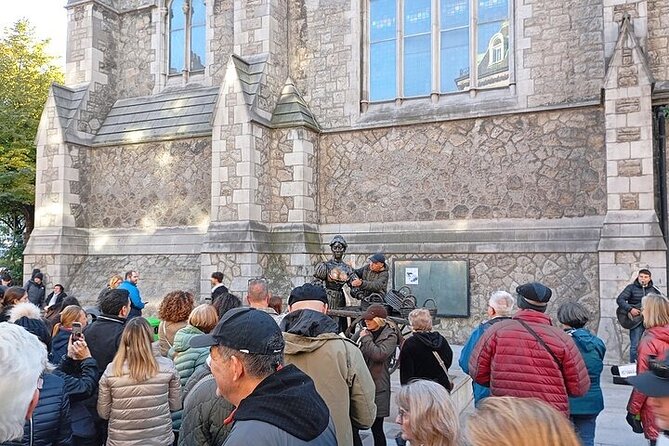
The usual central meeting point is the Molly Malone statue on Suffolk Street, though pickup can be arranged from a city-center hotel or accommodation. This is a handy place to begin because you are already close to Trinity College, Temple Bar, College Green, and Dublin Castle.
Molly Malone is tied to Dublin’s unofficial singing anthem and has become one of the city’s most photographed statues. David can use this familiar figure to move beyond the postcard view and into Dublin’s songs, local character, and storytelling tradition.
From there, the walk reaches Dublin Castle. The first stone was laid in 1204, and the castle served for centuries as a center of British rule and administration in Ireland. The planned visit is external, with about twenty minutes for the history and setting rather than an interior tour.
That distinction matters. You can understand the castle’s place in Irish government and medieval Dublin, but you will not receive admission to ticketed rooms as part of this experience. I would treat this stop as an orientation, then return later if the interiors are high on your list.
Trinity College and College Green
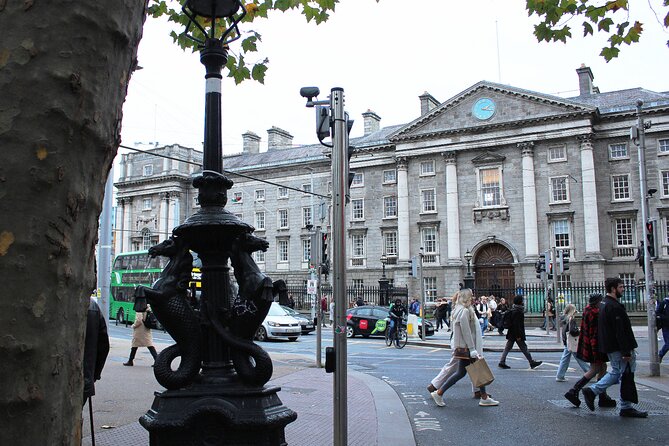
Trinity College Dublin was founded in 1592 by Queen Elizabeth I and is Ireland’s oldest university. The walk through its grounds lasts about fifteen minutes and focuses on the exterior setting, architecture, and the role of the college in Dublin life.
You should not confuse this stroll with entry to the Old Library or the Book of Kells exhibition. Those are separate paid attractions. Still, a guide adds value here by helping you read the college as part of the city rather than simply taking a few photographs at the gate.
College Green gives you a second look at this important area. The three-sided plaza is framed by Trinity College, the former Irish Parliament House, and Georgian and Victorian buildings. The old Parliament House is now the Bank of Ireland, while the square itself carries reminders of Irish political history.
The route also includes Parliament House as a separate stop. If opening times allow, you may enter the old House of Lords, preserved inside the Bank of Ireland, but entry is not guaranteed. Consider this an opportunity rather than a promise, and check your schedule before counting on it.
Temple Bar beyond the famous pub
Temple Bar is more than the well-known pub of the same name. The district covers about 28 acres and contains lanes, alleys, eateries, public houses, and places linked with Irish traditional music.
A short guided walk here is more useful than simply being pointed toward the pub. David can explain how the area fits into Dublin’s cultural life and direct you toward side streets that many people pass without a second glance.
Still, twenty minutes is enough only for a taste. Temple Bar can be loud and crowded, especially at popular times, and this tour does not include a drink or meal. The digital recommendations supplied afterward may help you choose a venue later, when you can sit down and listen at your own pace.
The walk then crosses Ha’penny Bridge, one of Dublin’s best-known footbridges. The wrought-iron bridge links the north and south sides of the city across the River Liffey, offering views east and west. It is a brief stop, but a good one for photographs and for understanding Dublin’s compact central layout.
A different sort of day from the same base:
- Dublin to Cliffs of Moher, including Wild Atlantic Way and Galway
★ 5.0 · 23,331 reviews - From Dublin: Cliffs of Moher, Burren & Galway City Day Tour
★ 4.8 · 18,888 reviews - Dublin: Guinness Storehouse Entry Ticket
★ 4.6 · 16,863 reviews - Dublin to Cliffs of Moher, Burren, Wild Atlantic Way, Galway Tour
★ 5.0 · 12,924 reviews
Powerscourt Townhouse and St Stephen’s Green

Powerscourt Townhouse Centre offers a change of mood. Built in the eighteenth century as the Dublin residence of Richard Wingfield, the second Viscount Powerscourt, and Lady Elizabeth, it once hosted parties for the city’s wealthy social circle.
Today, it is a tucked-away city-center stop that many people miss. Ten minutes is enough to see the setting and hear how a private residence became part of modern Dublin’s shopping and social fabric. It is not a substitute for a long interior visit, but it breaks up the procession of statues and public buildings.
St Stephen’s Green gives you the tour’s biggest pause in a park setting. The roughly 22-acre space includes gardens, flower beds, lakes, wildlife, exotic plants, winding paths, sculptures, and monuments tied to Irish history.
Fifteen minutes will not let you explore every path. I would use the guide’s explanation to identify the parts you want to revisit. The park is also a welcome breathing space after the denser streets around College Green and Temple Bar.
Dubh Linn Gardens and Dublin Castle connections
Dubh Linn Gardens is a quieter stop in the center, with brickwork and Celtic patterns that carry their own stories. Its name connects to Dublin’s older identity, and the garden provides a small green pause near major historic buildings.
This is the sort of place a private guide can make worthwhile. Without context, you might cross it quickly. With David pointing out the design and history, ten minutes can turn an overlooked corner into a memorable part of the city.
Because the tour is private, you can ask questions as they arise. That is particularly useful in Dublin, where political history, folklore, language, architecture, and music often overlap. The experience is not just a march from one monument to the next. It is a chance to follow your own interests for a few minutes when the schedule permits.
The Famine Memorial and Ireland’s difficult past
Edward Delaney’s Famine Memorial is among the most serious stops. The emaciated figures commemorate more than one million people who died during the Great Irish Famine of 1845. The sculptures also recall starvation, displacement, and the large Irish diaspora that followed.
This is not a light sightseeing moment, and it should not be rushed emotionally. The ten-minute stop gives you the essential setting and meaning, while David’s historical explanation can help place the memorial within Ireland’s wider story.
The tour also visits the statue of Theobald Wolfe Tone, a leading figure in the movement for greater Irish autonomy and independence. Tone played a major role in the 1798 rebellion and is often called the father of Irish nationalism.
Together, these stops help explain why Dublin’s public monuments are rarely decorative only. They mark loss, resistance, political change, and the long effort to define Ireland’s future.
The 1916 Rising on Dame Lane
Dame Lane brings the story closer to modern Ireland. Here, you learn about the 1916 Rising through a copy of the Proclamation of the Irish Republic, issued on April 24, 1916.
The document declared an independent republic and set out principles concerning equal citizenship and people’s rights. It remains a central text in the story of modern Ireland and helps connect Dublin’s streets to the political events that reshaped the country.
This stop is best for anyone who wants more than dates and famous names. You can ask David about the language of the proclamation, its place in Irish identity, and how the Rising fits between earlier efforts such as the 1798 rebellion and later independence.
As with the other historical stops, the value comes from explanation. The tour does not include entry to a dedicated 1916 museum, so visitors with a strong interest in the Rising may want to add one separately.
Music, folklore, and David Ryan’s style
Dublin’s Music Wall of Fame celebrates Irish performers and bands who made an impact in Ireland and around the world. The fifteen-minute visit adds a modern cultural note after the tour’s concentration on castles, parliaments, rebellion, and famine.
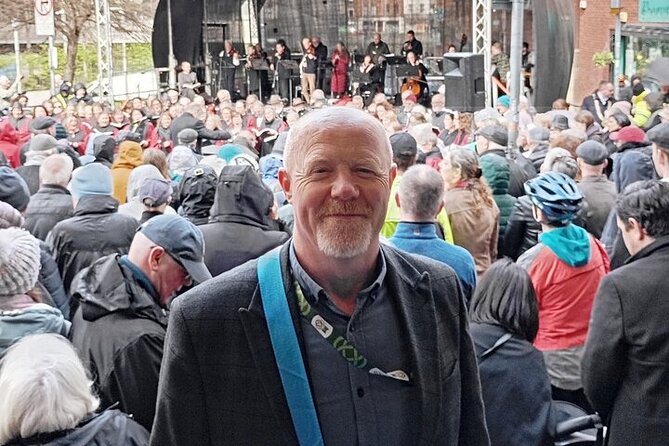
David Ryan’s approach appears especially suited to this mix. He is described as bringing songs, photographs, and other items in a portfolio, along with humor and stories about Irish traditions. His singing is part of the appeal, though you should think of it as an entertaining addition to the historical walk, not a formal concert.
The personal manner also matters. Past touring groups have found David responsive before and after the walk, especially when asking for places to eat, drink, or hear traditional music. His digital recommendations are included, giving you something practical to use that evening or during the rest of your stay.
That local guidance can help justify the private-tour price. You are paying not only for three hours of walking, but also for a city orientation and advice tailored to your plans.
Timing, walking, and what is included
The activity lasts about three hours and is offered in English. The route is entirely in central Dublin, and it is near public transport. Most people can take part, but the tour is not recommended for babies or children under five.
You should wear comfortable shoes and expect to walk between stops. No special equipment is listed, and service animals are allowed. Since many stops last ten to twenty minutes, the route favors people who like moving along rather than sitting for long explanations at one site.
The tour includes a certified, licensed guide, historical background from medieval Dublin to the modern era, personal attention, transport advice, and the digital recommendations. Food, drinks, and admission to paid attractions are not included.
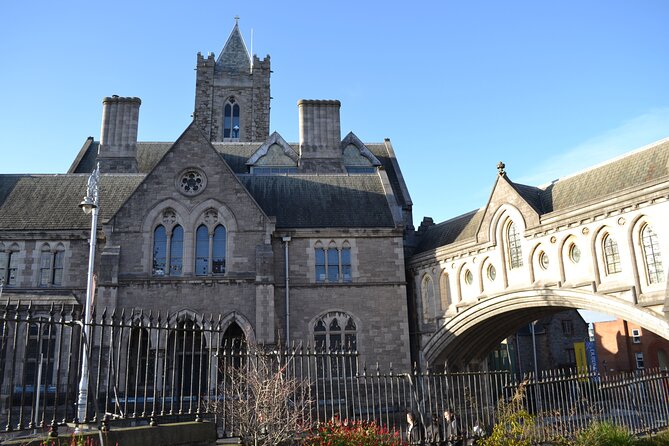
Hotel pickup is offered from city-center accommodation, or you can meet at the Molly Malone statue. The usual ending is College Green, but the finish can be adjusted. For example, if you plan to visit the Guinness Storehouse or Christ Church Cathedral next, you can ask for a more convenient endpoint.
That flexibility is useful on a short Dublin visit. I would book this early in your stay, then use David’s advice to plan the next days. The experience is booked, on average, about 61 days ahead, so last-minute availability may be limited.
Who gets the best value
This tour suits first-time visitors who want a broad introduction without joining a large group. It is also a good fit for couples, families with older children, cruise passengers, and anyone who prefers to ask direct questions.
It works particularly well if you enjoy history, politics, music, folklore, and architecture in equal measure. The route gives you enough context to decide which places deserve a longer return visit.
The value is weaker if you want extensive interior access. Dublin Castle, Trinity College, the Old Parliament House, museums, and other paid sights require separate arrangements. You also may feel rushed if you want long photo stops, shopping time, or a relaxed pub break.
The private format solves some problems but not the length of the day. Fourteen stops in three hours is a lot. Ask David at the start which places matter most to you, especially if your schedule is tight or you have mobility concerns.
Should you book Dublin Walkabout Tours?
Book this private walk if you want Dublin explained by a personable local guide, with a strong mix of national history and everyday city life. David Ryan’s energy, songs, visual materials, and practical recommendations add something a basic sightseeing route cannot provide.
Skip it if you mainly want paid admissions, long visits inside major attractions, or a slow half-day stroll. For everyone else, this is a strong first-day choice: central, flexible, personal, and packed with enough ideas to shape the rest of your Dublin visit.
Free cancellation is available up to 24 hours before the start time. Changes or cancellations inside that window are not accepted for a refund.
FAQ
How long is the Dublin private walking tour?
The tour lasts approximately three hours.
What language is the tour offered in?
The tour is offered in English.
Is this a private tour?
Yes. Only your group participates in the activity.
Where does the tour start?
The usual central meeting point is the Molly Malone statue on Suffolk Street, Dublin 2. Pickup may also be arranged from a city-center hotel or accommodation.
Where does the tour end?
The usual endpoint is College Green, Dublin. You can request a different convenient endpoint, such as Christ Church Cathedral, depending on your itinerary.
Is hotel pickup available?
Yes. Pickup can be arranged from hotels or city-center accommodation, or you can meet at the central Molly Malone statue.
Are attraction admission tickets included?
No. The tour includes external visits and historical explanations. Entry to ticketed or paid attractions is not included.
Can young children join the tour?
Most people can participate, but the experience is not recommended for babies or children under five years old.
What is the cancellation policy?
You can cancel up to 24 hours before the experience start time for a full refund. Cancellations or changes made less than 24 hours before the start time are not accepted.
More 3-Hour Experiences in Dublin
- All Dublin 3 hours italian walking tour
★ 4.8 · 16 reviews - From Galway: Guided tour of Connemara with 3 hour stop at Connemara National Pk.
★ 5.0 · 561 reviews - From Galway: Guided tour of Connemara with 3 hour stop in Kylemore Abbey
★ 5.0 · 175 reviews - Cobh: 3-Hour Cultural Tour Plus
★ 4.9 · 31 reviews
Recently added around Dublin
- Dublin: Pub Tour. Pour The Perfect Guinness, Whiskey & Music★ 5.0 · 3 reviews
- Waterford Crystal and Kilkenny Full-Day Rail Tour from Dublin★ 5.0 · 3 reviews
- Cliffs of Moher and The Burren Private Tour from Dublin★ 5.0 · 3 reviews
- Private Chauffeur Service From Dublin Airport to Killarney★ 5.0 · 3 reviews
- Beautiful Southwest Tour 2022★ 5.0 · 3 reviews
- A Self Guided Walking Tour of Dublin’s Docklands★ 4.5 · 3 reviews
- Dublin One Day Tour with a Local: 100% Personalized & Private★ 4.5 · 3 reviews
- Ireland: 3-Day West Coast Explorer Tour★ 5.0 · 3 reviews
Dublin Tours, compared.

Dublin to Cliffs of Moher, including Wild Atlantic Way and Galway
Read our review →
Cliffs of Moher, Burren & Galway City Day Tour
Read our review →

Dublin to Belfast Black Cab, Dunluce Castle and Giant’s Causeway
Read our review →
Kilkenny, Wicklow Mountains & Glendalough Day Tour from Dublin
Read our review →
Wicklow Mountains, Glendalough & Kilkenny Tour
Read our review →

Dublin Highlights and Hidden Gems Guided Walking Tour
Read our review →Browse the lists this tour appears in