
Reviewed · DUBLIN TOURS
Dublin Traditional Irish Music Walking Tour with Live Performance
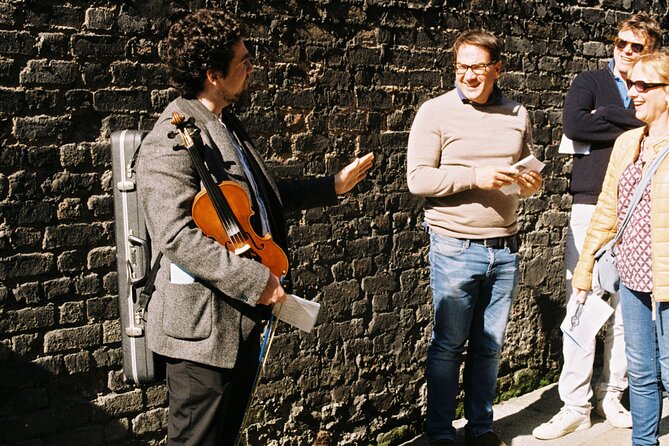
Dublin’s past comes alive here through songs tied to real places. Instead of hearing a guide recite dates, you may hear a ballad about Dublin’s people, a poem linked to Irish politics, or a Gaelic song that gives the old streets a human voice. The guide is an acclaimed musician, not simply a walking-tour narrator.
I like the short walks between stops, which keep the two-hour outing easy on the feet. I also like the route itself: it links Temple Bar, the River Liffey, Christ Church Cathedral, Dublin Castle, and St Patrick’s Cathedral without trying to cover too much ground. The main caution is sound and meeting-point confusion. One poor experience involved a late guide, while another group joined the wrong historical walk and missed the music.
Key points to know before you book
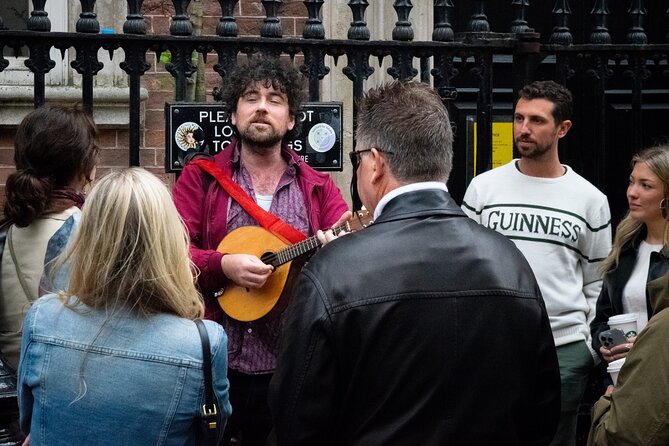
- Songs explain the city: Each stop combines a short talk with a traditional song, poem, or piece of Irish lore.
- The route covers central Dublin: You walk from 3 Crown Alley in Temple Bar to St Patrick’s Park beside St Patrick’s Cathedral.
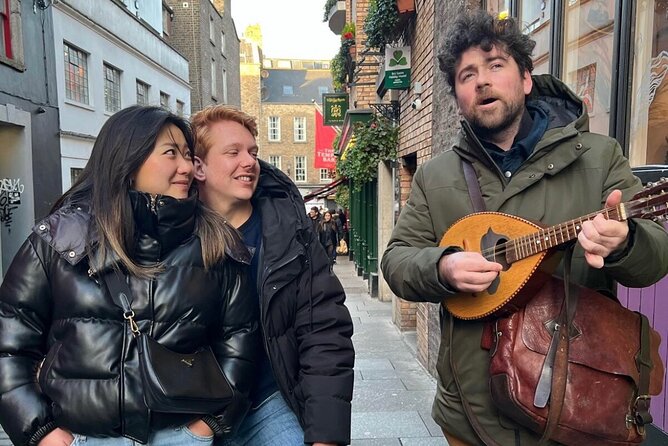
- Guides are working musicians: Sean, Ciaran, and Dylan have led tours, often with guitar, mandolin, or another portable instrument.
- The pace is gentle: Walks between the six listed stops are short, with roughly 10 minutes at each location.
- Small groups make a difference: The maximum is 20 people, though some outings have had only six or nine.
- Plan for outdoor listening: Street noise can make a large group harder to hear, and the tour does not include admission to the cathedral interiors.
Dublin history told with a guitar and a good story
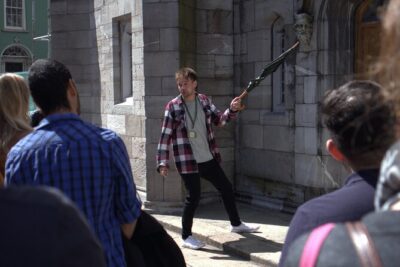
This is not a standard Dublin highlights walk with a few musical touches added at the end. The music is the organizing idea. Your guide uses songs, poems, dance, and humor to explain how Dublin grew, suffered, celebrated, and argued.
That approach works best when the song fits the place. A stop near a theatre leads into performance history. A street associated with Handel’s Messiah opens a door to Dublin’s musical past. At Christ Church Cathedral, darker tales of medieval and Victorian Dublin are told through song.
I like this method because music carries emotion that a list of dates cannot. You may forget a year, but remember the sound of a ballad in a narrow lane or the reason a particular chorus belongs to Dublin. The guides also explain the songs before performing them, so you are not left guessing why the piece matters.
Past guides have included Sean, Ciaran, and Dylan. The strongest feedback centers on their mix of musical skill, humor, and historical detail. Ciaran has been praised for an eclectic mix of Irish music and for getting even reluctant participants involved. Sean is known for banter, mandolin playing, poetry, and practical suggestions for pubs and restaurants after the walk. Dylan has connected each song clearly to the history of its location, including a song in Gaelic.
The exact guide is not stated in advance, so treat those names as examples rather than a promise. The format depends heavily on the person leading it. A talented singer who can project outdoors makes this memorable. A late start or low-energy presentation can take some shine off the experience.
More Walking Tours in Dublin
- Dublin Highlights and Hidden Gems Guided Walking Tour
★ 5.0 · 6,020 reviews - Dublin: Highlights and Hidden Gems Walking Tour
★ 4.9 · 2,140 reviews - 1916 Rebellion Walking Tour
★ 5.0 · 1,605 reviews
From Crown Alley into old Temple Bar
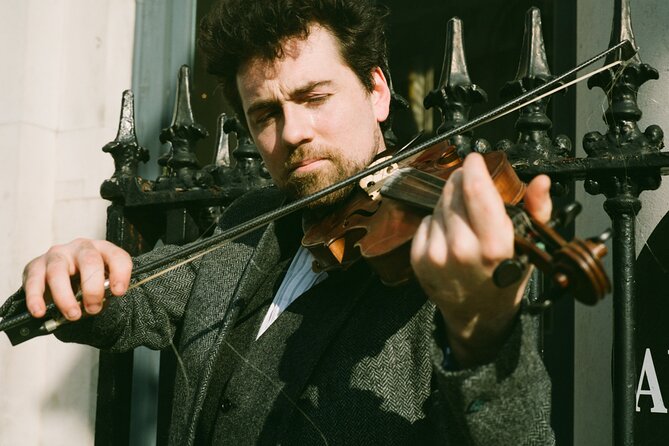
Meet at 3 Crown Alley in Temple Bar at 1 p.m. This is a central location, but Temple Bar can be crowded and noisy, so give yourself extra time to find the exact spot. The tour has a mobile ticket, and confirmation arrives when you book.
The first stop is Smock Alley Theatre 1662, described as Ireland’s oldest theatre. It sits in the heart of Temple Bar, making it a useful first lesson in how Dublin’s performance culture is tied to the old center of town.
You spend about 10 minutes here. That is enough time for a story and song, not a full theatre visit. Admission is listed as free because the tour pauses outside or around the site rather than offering a separate ticketed theatre program.
This opening stop sets the tone. You are not simply photographing an old building. You are hearing how theatre, song, and public life have shared Dublin’s streets for centuries.
Grattan Bridge and the River Liffey
The walk continues to Grattan Bridge, one of the more picturesque crossings over the Liffey. Its seahorse lanterns give it a distinctive look, and it connects Capel Street with Parliament Street.
The bridge is a good place for photographs, especially if you want a classic Dublin city view without leaving the center. It also gives the guide a natural setting for stories about the river, movement through the city, and the people who used these streets.
Again, the stop lasts about 10 minutes. Expect a short explanation followed by music rather than a long lecture. That rhythm is one of the tour’s strengths. You move often enough to stay interested, but not so fast that you miss the point of each location.
The drawback is noise. Cars, pedestrians, and nearby city activity can compete with an unamplified voice or instrument. If you have trouble hearing in groups, stay near the guide and avoid drifting toward the back.
Fishamble Street and Dublin’s musical past
Fishamble Street is often called Dublin’s oldest street. It was once part of a major Viking settlement, described as the largest Viking settlement found outside Scandinavia. It is also linked with the first performance of Handel’s Messiah.
That combination makes this one of the tour’s most satisfying stops. You get medieval Dublin, Viking Dublin, and the city’s place in European music history in one short stretch of street.
This is where the tour’s format makes particular sense. A guide can explain the significance of Messiah, then connect the location to the wider story of performance in Dublin. The music becomes a bridge between a street you can see and an event that happened long ago.
You may also hear a song in Irish or a piece chosen for its link to the place. Dylan’s presentation, for example, has included an explanation of the song before singing it. That small detail matters. It turns a performance into a lesson rather than a random pub singalong.
More Irish Music and Pub Tours in Dublin:
- Dublin: Irish Music and Dance Show with Dance Lesson
★ 4.7 · 567 reviews - Dublin: Irish Music Walking Tour with Live Performance
★ 4.8 · 137 reviews - Classic Irish Pubs Private Tour of Dublin: Live Music, Beer and Nightlife
★ 4.5 · 20 reviews - Galway: Trad on the Prom Ticket with Irish Music and Dancing
★ 4.9 · 482 reviews
Christ Church Cathedral and medieval Dublin
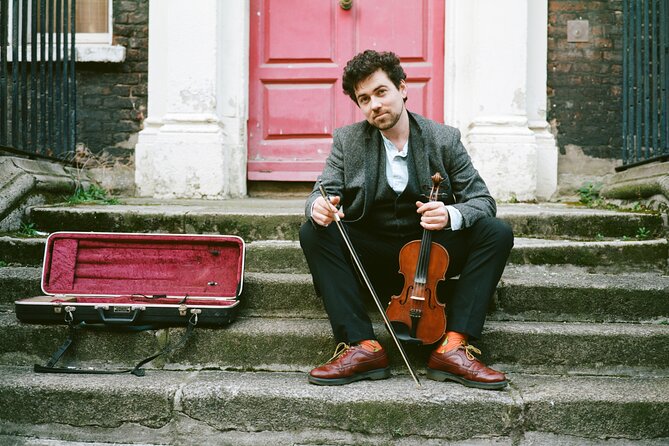
Christ Church Cathedral is the historical center of the route. It represents medieval Dublin, but its appearance also reflects later Victorian changes. The guide explores the cathedral and nearby streets through stories with a darker edge.
The tour does not include a standard cathedral admission, and the stop is listed as free. You should therefore expect to see the building and surrounding area from the route, not take a full guided tour of the interior. If you want to explore Christ Church inside, allow separate time and budget.
The music here appears to focus on the uneasy side of Dublin’s past. That can include old legends, loss, conflict, and the city’s stranger stories. The format is a good fit for the setting: stone walls and old lanes lend themselves to a tale told in verse.
Christ Church is also one of the best photo stops. Have your camera ready, but do not let photography take over. The musical performance is brief, and you will get more from it if you listen closely.
Dublin Castle and the Ship Street gate
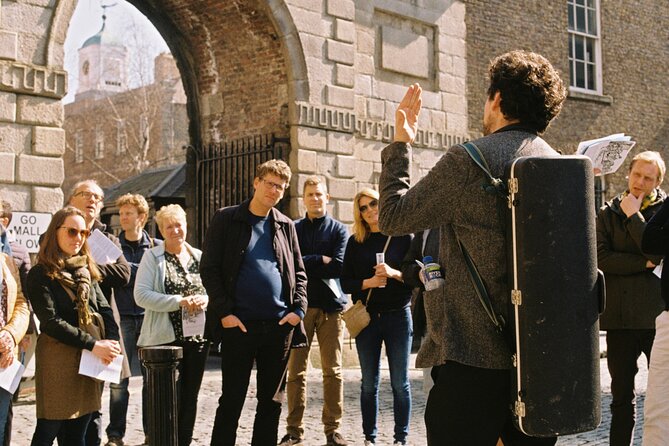
The route swings by the Ship Street gate of Dublin Castle, including some of the city’s most famous steps. This is a compact stop, but it adds political and civic weight to the walk.
Dublin Castle is not treated here as a long palace visit. The guide uses the gate and steps as a setting for another story and song. That makes this stop useful for orientation, but not a substitute for touring the castle buildings.
I like this balance. A first-time visitor gets a look at one of Dublin’s major landmarks without spending an hour inside a single site. You also keep moving toward the final cathedral stop, rather than doubling back across the city.
The route’s central location means you can continue sightseeing afterward. You are close to many of Dublin’s main streets, pubs, restaurants, and historic buildings, though the tour itself does not include food or drinks.
St Patrick’s Park and the final performance
The walk ends at St Patrick’s Park beside St Patrick’s Cathedral. This is a pleasant place to finish because the park gives the group a little room after several narrow streets and busy crossings.
St Patrick’s Cathedral is one of Dublin’s essential landmarks, but the tour ends in the adjoining park rather than offering cathedral admission. You can take photos, get your bearings, and decide if you want to visit the cathedral separately.
The final part may include more singing, poetry, or audience participation. Some people arrive unsure about dancing or singing along, but the guide’s style can make participation feel natural rather than forced. You are not required to perform, though the experience is livelier if you join in when invited.
The end point is practical. If you have a cathedral visit planned, you can continue there. If not, the park is a clear place to separate from the group and continue exploring on your own.
What the two-hour format really gives you
The advertised duration is about two hours, with six main stops listed at roughly 10 minutes each. The remaining time covers the walks, introductions, songs, questions, and small pauses along the way.
This is enough time to get a musical introduction to central Dublin, but not enough for a detailed treatment of every landmark. You should book it for atmosphere and connections, not for a scholarly survey of Irish history.
The pacing has been a strong point in the best outings. Short distances make the route manageable, and the frequent stops prevent the performance from becoming tiring. The walk suits most people, and most participants can take part. Service animals are allowed, and the meeting point is near public transport.
The group limit is 20. A group of six or nine should feel personal and make it easier to hear and interact with the guide. A full group may feel less intimate, especially on a noisy street. One account described a group of about 21 where street noise made the guide difficult to hear, so positioning yourself close to the musician is sensible.
The value of $27.81
At $27.81 per person, this is reasonably priced for a two-hour guided walk with live music. You are paying for three things at once: a central Dublin orientation, a performance by a musician-guide, and historical interpretation tied to specific streets and buildings.
The value is best if you already enjoy folk music or want something more personal than a standard sightseeing walk. A normal city tour may cover more facts. A pub music session may offer more songs. This experience sits between the two, giving you movement, landmarks, history, and live performance in one package.
There are no separate admission tickets included for Christ Church Cathedral, Dublin Castle, or St Patrick’s Cathedral. That keeps the price down, but you should not assume the tour replaces a paid visit to those interiors.
The high rating, 4.9 from 253 reviews, and 98 percent recommendation rate suggest that the format usually works well. Still, the occasional poor experience matters. A late guide, unclear group separation, or weak projection can affect a two-hour tour more than it would affect a self-guided walk.
Who will enjoy this most
I would choose this tour for:
- First-time Dublin visitors who want a quick introduction to the central landmarks.
- People who enjoy traditional Irish music and want context for the songs.
- Couples and small groups looking for a social afternoon activity.
- Visitors who prefer stories, humor, and performance to a long factual talk.
- Families with older children who can manage a two-hour city walk.
- Anyone who wants to finish near St Patrick’s Cathedral.
I would think twice if you want extensive interior access to the cathedrals or castle. I would also choose a conventional walking tour if your main goal is architecture, dates, and detailed political history.
This is not a quiet museum experience. You may be invited to sing, clap, or dance. That is part of its charm, but a very private or strictly lecture-based visitor may find the participatory style less comfortable.
Practical advice for a smoother afternoon
Arrive early at Crown Alley. Temple Bar is easy to reach but not always easy to navigate quickly, and the meeting point can be busy. Look for the correct group before the 1 p.m. start rather than assuming every walking tour gathered nearby is the same one.
Confirm that you are joining the music walk. One mix-up placed people with a historical walking group, so a quick check with the guide can prevent you from spending the afternoon waiting for instruments that are not coming.
Stay close enough to hear. The route passes through public streets, and the guide may not have amplification. If you are in a large group, stand near the front during the stories and performances.
Wear comfortable shoes. The walk is only about two hours, but it uses city streets, bridges, lanes, and public spaces. You will stop often, yet you will still be on your feet for most of the afternoon.
Bring a camera, but keep the phone ready for the practical details too. The mobile ticket is convenient, and your confirmation gives you the meeting information. Afterward, ask the guide for local suggestions if that is useful. Sean has been particularly praised for pointing people toward pubs and restaurants.
Cancellation is flexible if your plans change early. You can receive a full refund by canceling at least 24 hours before the local start time. Within 24 hours, the payment is not refunded, and changes are not accepted.
Should you book this Dublin music walk?
Book it if you want Dublin explained through live folk music rather than a standard script. The route covers several major landmarks, but the real reward is the connection between place and song. The strongest guides, including Sean, Ciaran, and Dylan, have brought humor, poetry, Gaelic music, and useful local advice to the walk.
At $27.81, it is a good buy for a two-hour introduction, especially if you are interested in Irish culture and do not need cathedral or castle admission included. Just arrive early, confirm you have found the music group, and stay near the guide so street noise does not steal the performance.
If you prefer a quiet, highly detailed architectural tour, choose something else. If you want a friendly, slightly playful way to see central Dublin and hear why its streets matter, this is an appealing choice.
FAQ
Where does the Dublin Traditional Irish Music Walking Tour start?
The tour starts at 3 Crown Alley in Temple Bar, Dublin, at 1 p.m.
Where does the tour finish?
It finishes at St Patrick’s Cathedral, specifically at St Patrick’s Close and the adjoining St Patrick’s Park.
How long does the tour last?
The tour lasts approximately two hours.
What landmarks are included?
The route includes Smock Alley Theatre 1662, Grattan Bridge, Fishamble Street, Christ Church Cathedral, Dublin Castle’s Ship Street gate, and St Patrick’s Cathedral.
Is admission to the landmarks included?
The stops are listed with free admission, but the experience does not state that it includes entry tickets to the cathedral or castle interiors. It finishes at St Patrick’s Park beside St Patrick’s Cathedral.
Who leads the tour?
The guide is an Irish musician. Guides who have led this experience include Sean, Ciaran, and Dylan, though the specific guide is not guaranteed.
How many people can join?
The tour has a maximum group size of 20 people.
Can I cancel for a refund?
Yes. You can cancel at least 24 hours before the local start time for a full refund. Cancellations or changes made within 24 hours are not accepted and are not refunded.
Recently added around Dublin
- Dublin: Pub Tour. Pour The Perfect Guinness, Whiskey & Music★ 5.0 · 3 reviews
- Waterford Crystal and Kilkenny Full-Day Rail Tour from Dublin★ 5.0 · 3 reviews
- Cliffs of Moher and The Burren Private Tour from Dublin★ 5.0 · 3 reviews
- Private Chauffeur Service From Dublin Airport to Killarney★ 5.0 · 3 reviews
- Beautiful Southwest Tour 2022★ 5.0 · 3 reviews
- A Self Guided Walking Tour of Dublin’s Docklands★ 4.5 · 3 reviews
- Dublin One Day Tour with a Local: 100% Personalized & Private★ 4.5 · 3 reviews
- Ireland: 3-Day West Coast Explorer Tour★ 5.0 · 3 reviews
Dublin Tours, compared.

Dublin to Cliffs of Moher, including Wild Atlantic Way and Galway
Read our review →
Cliffs of Moher, Burren & Galway City Day Tour
Read our review →
Dublin to Belfast Black Cab, Dunluce Castle and Giant’s Causeway
Read our review →
Kilkenny, Wicklow Mountains & Glendalough Day Tour from Dublin
Read our review →
Wicklow Mountains, Glendalough & Kilkenny Tour
Read our review →
Dublin Highlights and Hidden Gems Guided Walking Tour
Read our review →Browse the lists this tour appears in