
Reviewed · DUBLIN TOURS
Dublin: Irish Rock ‘N’ Roll Museum with Tour in English
Dublin’s Irish Rock ’N’ Roll Museum is more than a room full of old guitars and photographs. In 75 minutes, you go behind the Wall of Fame in Temple Bar and into the music venues, rehearsal spaces, and recording rooms tied to Irish performers. That access gives the tour a real sense of place.
I like the dedicated Thin Lizzy exhibition, which gives the band more than a passing mention. I also like the way the tour connects famous names such as U2, Van Morrison, Hozier, The Script, and Sinéad O’Connor with the working spaces where music is made.
The main drawback is that the tour is offered only in English, and your experience depends heavily on the guide. Most sessions receive warm praise for lively storytelling, though one visitor found a guide too quiet and felt the treatment of U2 was unfair.
Key points to know before booking
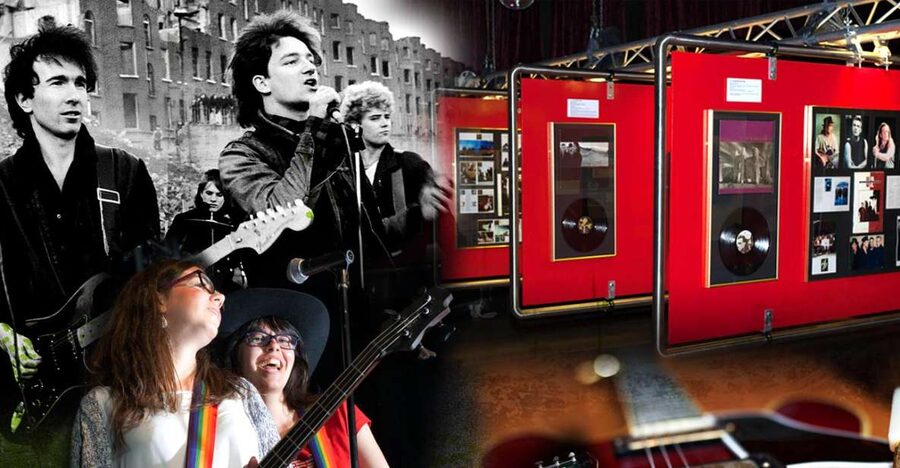
- Behind-the-scenes access: Visit a Dublin music venue, rehearsal spaces, and a commercial recording studio.
- Thin Lizzy focus: See a dedicated exhibition alongside displays connected with U2, The Pogues, The Script, and Michael Jackson.
- Central Temple Bar location: Meet on Curved Street, Dublin 2, in the heart of the city’s Cultural Quarter.
- Guide-led storytelling: The English-speaking guide supplies the context, personal details, and humor that turn displays into a proper tour.
- Short, focused visit: Allow 75 minutes, with some tours possibly lasting closer to an hour and a half.
- Important limits: Video recording is not allowed, and the experience is not suitable for children under five or wheelchair users.
Entering Dublin’s Wall of Fame in Temple Bar
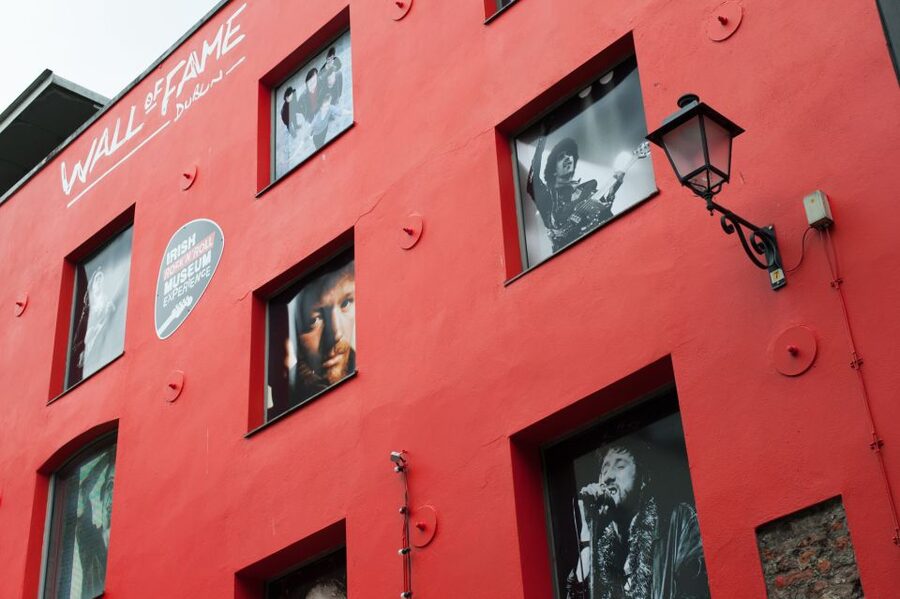
You meet on Curved Street in Temple Bar, Dublin 2. That is a useful starting point for a city break because the museum sits in one of central Dublin’s most visited areas, surrounded by pubs, restaurants, galleries, and other cultural stops.
The museum is housed inside the Wall of Fame, so the tour feels like a trip behind a public display rather than a standard museum visit. You are not simply looking at names on a wall. The guide takes you into the story behind those names and explains how Irish rock developed, changed, and reached audiences far beyond Ireland.
That setting matters. Irish music can feel abstract if you only see album covers in a glass case. Here, the building itself is linked to the music scene, and the working venue and studio help you picture artists as working performers rather than distant celebrities.
The meeting point is also easy to combine with other Dublin plans. You could schedule this before an evening show in Temple Bar, after a walk through the city center, or during a rainy afternoon when outdoor sightseeing loses its charm.
More Museums in Dublin
- Irish Rock ‘N’ Roll Museum Experience Dublin
★ 5.0 · 6,112 reviews - The Little Museum of Dublin Famous Guided Tour
★ 5.0 · 2,948 reviews - Dublin EPIC Museum Admission Ticket
★ 4.5 · 1,729 reviews
The Irish rock story starts with people, not just objects
The first part of the experience sets out the story of Irish rock ’n’ roll. I would not expect a huge national museum with long rows of formal displays. This is a guided experience, and the guide does much of the explaining as you move through the spaces.
That format is a strength if you enjoy stories, connections, and small details. A good guide can explain why a performer mattered, how a band fit into Ireland’s music scene, and what made certain songs or careers important. Guides named Alan and Bryan have led tours praised for their information, humor, and ability to add details that are easy to miss when you walk around alone.
The guide is especially important because the displays do not need to carry the full burden of the story. You get photographs, memorabilia, and exhibitions, but the live commentary gives them a timeline and a human angle.
The tour also appears willing to discuss newer Irish acts, not just established names. That is useful if you already know the standard U2 and Thin Lizzy story and want some attention paid to more recent bands. One especially positive account praised the inclusion of newer performers who have not yet become part of the usual history books.
Thin Lizzy and U2 take center stage
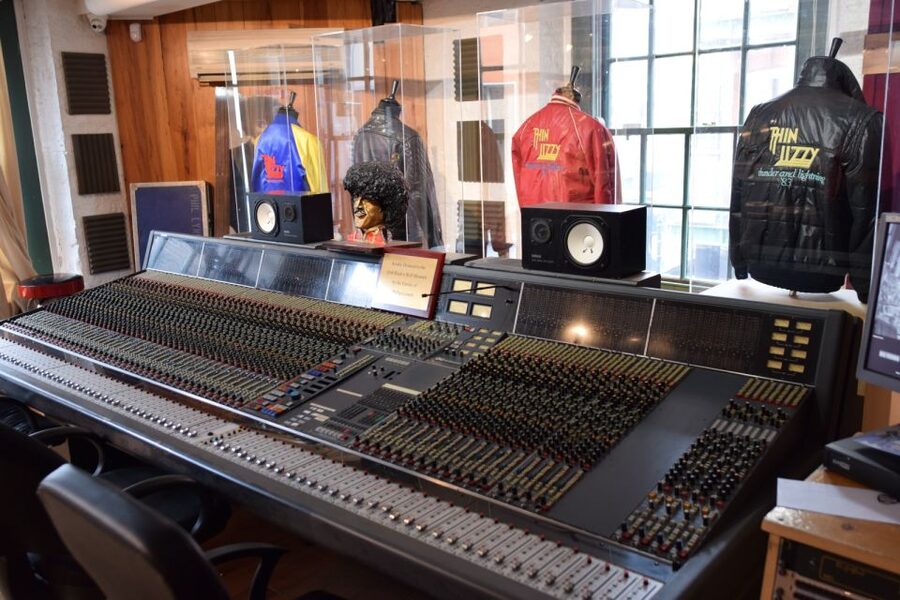
The Thin Lizzy exhibition is one of the clearest reasons to book this experience. Thin Lizzy is central to Ireland’s rock story, and a dedicated display gives the band more space than a general music collection usually can.
Expect photographs, memorabilia, and stories that place the group within Irish popular music. If you are a serious Thin Lizzy fan, the 75-minute visit may not answer every question, but it gives the band a proper place in the tour rather than treating it as one name among many.
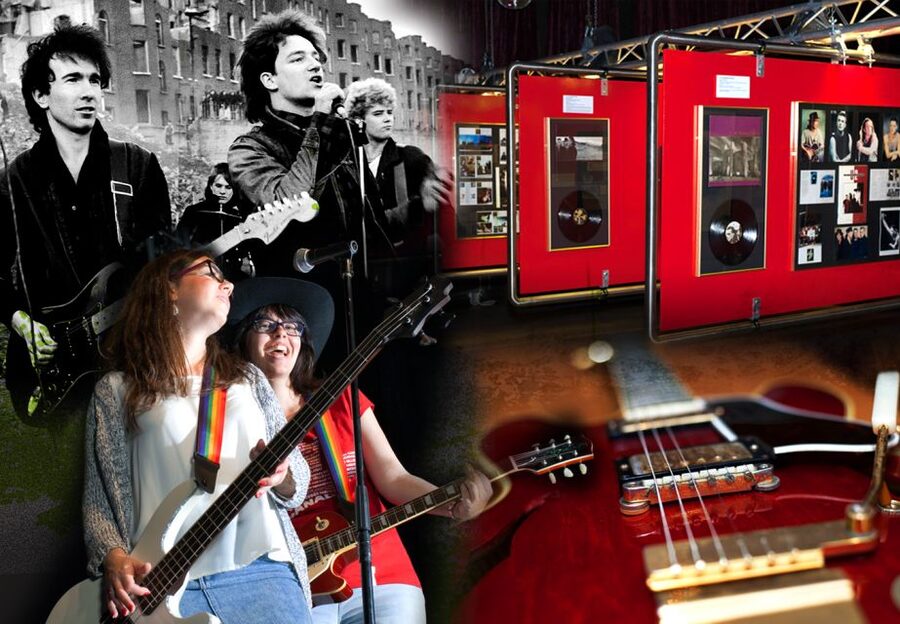
U2 also receives major attention. The museum presents U2 as part of the wider Irish rock story, alongside performers from different eras and musical styles. That broader setting is helpful because it keeps the tour from becoming only a single-band tribute.
Still, you should know that the tone may vary by guide. One visitor felt that a guide spoke too quietly, moved too slowly, and seemed openly dismissive of U2. That does not appear to match the overwhelmingly positive response, but it is a fair reminder that a live guided tour is not a fixed audio recording. If U2 is your main reason for booking, keep your expectations measured and remember that the experience covers Irish rock as a whole.
Memorabilia from The Pogues, The Script, and Michael Jackson

The collection reaches beyond the two best-known headline acts. You can see material connected with The Pogues, The Script, and Michael Jackson, along with photographs of Irish rock stars.
This mix gives the tour a wider appeal. You might arrive for Thin Lizzy and find yourself more interested in a performer you had not expected to see. You might also appreciate the contrast between bands, solo artists, songwriters, and performers who worked in very different periods.
The display is not described as a vast archive, so do not book it expecting every important Irish album, instrument, or costume to appear. Its value comes from the combination of selected objects and the guide’s explanation of why they matter.
I find that approach more useful than a room packed with labels and little context. If you know the names already, the stories help connect them. If you are less familiar with Irish music, the tour gives you a starting point for further listening after you leave.
A different sort of day from the same base:
- Dublin to Cliffs of Moher, including Wild Atlantic Way and Galway
★ 5.0 · 23,331 reviews - From Dublin: Cliffs of Moher, Burren & Galway City Day Tour
★ 4.8 · 18,888 reviews - Dublin: Guinness Storehouse Entry Ticket
★ 4.6 · 16,863 reviews - Dublin to Cliffs of Moher, Burren, Wild Atlantic Way, Galway Tour
★ 5.0 · 12,924 reviews
The music venue and rehearsal rooms
The museum’s strongest feature may be its access-all-areas element. The tour includes a visit to one of Dublin’s top music venues, working rehearsal spaces, and a commercial recording studio.
This changes the mood of the experience. You are not only looking backward at old careers. You are seeing places that still relate to the practical work of music: rehearsing, recording, and performing.
The facilities have hosted artists including Thin Lizzy, Van Morrison, Hozier, The Script, and Sinéad O’Connor. That connection gives the rooms more weight than a replica stage would have. You are walking through active music spaces with links to artists who shaped Irish and international listening habits.
The available information does not promise that you will see a recording session or meet a musician. I would not expect a live performance as part of the standard tour. The appeal is access and context, not a concert.
For me, this is where the experience earns its place over a conventional memorabilia stop. The studio and rehearsal areas show the less glamorous side of music, the work that happens before an audience hears a finished song.
Why the guide can make or break the visit
You receive a live tour in English, not a self-guided pass. That means the guide sets the pace and determines how much detail each artist receives.
Several guides have made a strong impression. Alan is described as professional and full of lesser-known details, while Bryan is praised for being informative. Another account singled out a guide’s humor as the reason the visit became so enjoyable.
That feedback points to the ideal experience: a guide who knows the material, speaks clearly, and keeps the mood relaxed. Music history works well with a little humor. The subject includes famous personalities, dramatic careers, and plenty of room for colorful stories.
The one negative account is worth taking seriously. If the guide speaks quietly or offers a strongly personal opinion about a band, the tour can feel less satisfying. This is particularly important for visitors who arrive with strong feelings about U2 or another major act.
You can help yourself by treating the tour as a guided overview rather than a neutral academic lecture. It is designed to be informative and interactive, with personality included. That is part of its charm, but it also means the tone can differ from one session to another.
Is 75 minutes enough for Irish rock?
The advertised duration is 75 minutes, which is a sensible length for a music stop in a packed Dublin itinerary. You get a focused introduction without giving up half a day.
One account described a tour lasting about an hour and a half, but you should plan around the official 75-minute duration. If the guide runs longer, treat that as extra time rather than something to count on when arranging a train, meal, or timed attraction.
The short format works best if you want an introduction to Irish music and a few memorable highlights. It is less suitable if you want a detailed study of every band or a long period to examine each item independently.
You will spend much of the visit listening, moving through displays, and taking in the working spaces. Since video recording is not allowed, focus on the stories and photographs rather than trying to document the tour on your phone.
Photography rules are not otherwise specified, so follow the guide’s instructions on the day. The ban on video is clear and should be respected, especially inside working or commercial recording areas.
What the $25 price buys you
At about $25 per person, this is not the cheapest quick stop in Dublin. Its value depends on whether you want more than a small collection of music memorabilia.
You are paying for a guided visit, the live explanation, the Thin Lizzy and U2 exhibitions, wider displays, and access to a venue, rehearsal spaces, and a commercial studio. That combination makes the price easier to justify than a simple room of posters.
It is also a good value for people who would otherwise spend money on separate music-themed activities. You get a central Temple Bar location and a compact visit that can fit around lunch, sightseeing, or an evening performance.
The value is weaker if you dislike guided tours or already know the Irish rock story in great detail. You cannot simply wander at your own pace, and the visit is not designed as a quiet, independent research archive.
You can reserve now and pay later, which helps if you are still arranging a Dublin itinerary. Free cancellation is available up to 24 hours before the tour for a full refund. Those terms are useful, but the main question remains whether the subject interests you enough to make the most of the guide’s storytelling.
Who should book this Temple Bar music experience?
I would recommend it most strongly to rock and pop fans, especially anyone interested in Thin Lizzy, U2, The Pogues, Van Morrison, Hozier, or The Script. It also suits people who want to understand Ireland’s contribution to popular music without committing to a long museum visit.
You do not need to be an expert. In fact, newcomers may get the most from the tour because the guide supplies the background and points out connections among artists.
It can also work for a mixed-interest group. A dedicated fan may focus on the memorabilia, while a casual listener can enjoy the recording studio, rehearsal spaces, and stories about Dublin’s music scene.
I would be cautious about bringing very young children. The tour is not suitable for children under five, and the English-only format may not work well for children who cannot follow a spoken historical presentation.
The experience is also not suitable for wheelchair users. Check this carefully before booking, particularly if accessibility is an important part of your planning.
How to fit it into a Dublin day
Because the meeting point is on Curved Street in Temple Bar, the tour is easiest to add to a central Dublin day. You do not need to build a separate trip around it if you are already visiting the city center.
A morning or afternoon starting time lets you pair the museum with other nearby sights. An evening booking could work before music, food, or a pub stop, though you should leave enough time if the tour runs beyond its stated 75 minutes.
The central location also means you can use the experience as a weather-friendly backup. Dublin weather can change quickly, and a guided indoor music visit gives you a useful alternative to spending the whole day outdoors.
I would avoid booking it immediately before a non-flexible reservation unless you allow extra time. The official duration is 75 minutes, and one reported visit ran closer to 90 minutes. A little breathing room keeps the afternoon relaxed.
Final verdict: book it for the access and the stories
Book this tour if you want Irish music history with a human guide, not a silent display of famous names. The working venue, rehearsal rooms, and recording studio give the visit a sense of connection that ordinary memorabilia collections often lack.
The Thin Lizzy exhibition is a strong draw, while the U2 material and displays linked to The Pogues, The Script, and Michael Jackson broaden the subject. Guides such as Alan and Bryan have been praised for useful details and humor, although you should remember that guide style can vary.
Skip it if you need an accessible attraction, a tour in another language, or a long independent visit. For everyone else, $25 is a fair price for a focused 75-minute look at the people and places behind Ireland’s rock ’n’ roll story.
FAQ
Where does the Irish Rock ’N’ Roll Museum tour start?
The tour starts on Curved Street in Temple Bar, Dublin 2.
Where does the tour end?
The activity ends back at the meeting point on Curved Street.
How long does the tour last?
The listed duration is 75 minutes. One tour account described a visit lasting about an hour and a half, so allow a little extra time if your schedule is tight.
What language is the tour offered in?
The guided tour is offered only in English.
Is the tour suitable for children?
The experience is not suitable for children under five.
Is the experience wheelchair accessible?
The activity is listed as not suitable for wheelchair users.
Can I cancel the booking?
You can cancel up to 24 hours in advance for a full refund. A reserve-now, pay-later option is also available.
Recently added around Dublin
- Dublin: Pub Tour. Pour The Perfect Guinness, Whiskey & Music★ 5.0 · 3 reviews
- Waterford Crystal and Kilkenny Full-Day Rail Tour from Dublin★ 5.0 · 3 reviews
- Cliffs of Moher and The Burren Private Tour from Dublin★ 5.0 · 3 reviews
- Private Chauffeur Service From Dublin Airport to Killarney★ 5.0 · 3 reviews
- Beautiful Southwest Tour 2022★ 5.0 · 3 reviews
- A Self Guided Walking Tour of Dublin’s Docklands★ 4.5 · 3 reviews
- Dublin One Day Tour with a Local: 100% Personalized & Private★ 4.5 · 3 reviews
- Ireland: 3-Day West Coast Explorer Tour★ 5.0 · 3 reviews
Dublin Tours, compared.

Dublin to Cliffs of Moher, including Wild Atlantic Way and Galway
Read our review →
Cliffs of Moher, Burren & Galway City Day Tour
Read our review →

Dublin to Belfast Black Cab, Dunluce Castle and Giant’s Causeway
Read our review →
Kilkenny, Wicklow Mountains & Glendalough Day Tour from Dublin
Read our review →
Wicklow Mountains, Glendalough & Kilkenny Tour
Read our review →

Dublin Highlights and Hidden Gems Guided Walking Tour
Read our review →Browse the lists this tour appears in