
Reviewed · DUBLIN TOURS
Dublin: North Quay Guided Ghost Walk
Dublin’s northside has more than pubs, Georgian doors, and literary landmarks. This walk leads you through medieval Oxmantown, former Viking territory, past ruined monastic sites, rebel burial grounds, and the locations of some of the city’s best-known ghost stories. I like the way it uses real places and hard history as its base, rather than relying on actors, costumes, or cheap shocks.
I also like the strong storytelling. Guides including Kate, Darragh, Matthew, and Derek have been praised for humor, local detail, and clear explanations. The main consideration is that this is often more historical than frightening, and the advertised duration is 1.5 hours, while some descriptions and past experiences put the walk closer to two hours.
Key points to know before you book
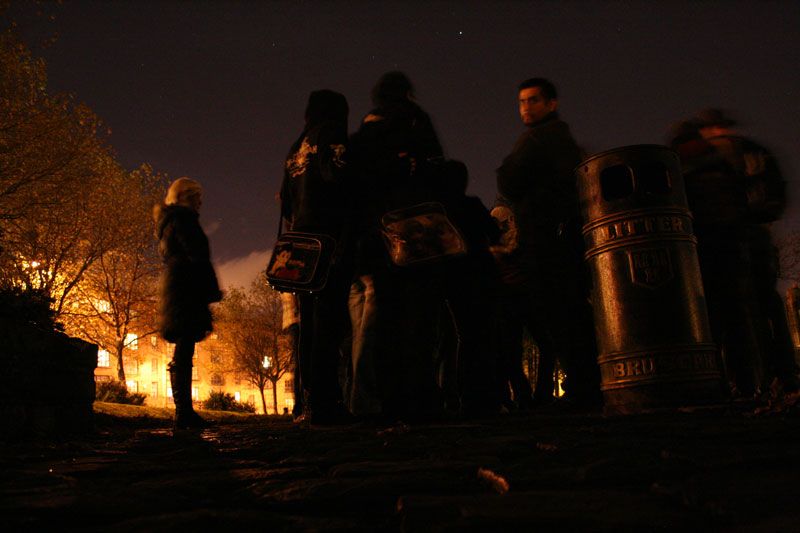
- Medieval Dublin beyond the usual sights: Walk through former Oxmantown and old Viking enclaves on the northside.
- Real locations with grim stories: See Saint Mary’s Abbey, Hendrick Street, and Croppie’s Acre.
- Ghost lore without theatrical tricks: The focus is on spoken stories, history, and atmosphere rather than staged scares.
- A strong guide makes the difference: Past guides named Kate, Darragh, Matthew, and Derek have been singled out for wit and storytelling.
- An evening walk on city streets: Wear comfortable shoes and expect to remain on your feet for most of the experience.
- Good value for history-minded visitors: At $28 per person, the tour offers a focused introduction to an overlooked part of Dublin.
Starting outside The Church Bar on Mary Street

The walk begins outside The Church Bar and Restaurant on Mary Street. That central meeting point makes the tour easy to add to an evening in Dublin, though you should check your booking details for the exact start time.
The route stays on foot and finishes back at the same meeting point. That return is useful if you are planning dinner or drinks afterward, since you do not need to arrange a ride from an unfamiliar part of the city.
The tour is given in English by a live guide. Hidden Dublin Walks presents the experience as a macabre stroll, but the tone is not built around theatrical horror. You are there to listen, look closely at ordinary streets, and hear what happened at places that are easy to pass without noticing.
I would allow a little extra time beyond the stated 1.5 hours. The main description also refers to a two-hour walk, and past experiences have described it as about two hours. That may depend on the group, the guide, and the pace of the evening.
More Walking Tours in Dublin
- Dublin Highlights and Hidden Gems Guided Walking Tour
★ 5.0 · 6,020 reviews - Dublin: Highlights and Hidden Gems Walking Tour
★ 4.9 · 2,140 reviews - 1916 Rebellion Walking Tour
★ 5.0 · 1,605 reviews
Saint Mary’s Abbey and the city beneath the pavement
One of the first important themes is how much of medieval Dublin survives in fragments. Saint Mary’s Abbey was once one of the most powerful monastic settlements in Ireland. Today, only a small ruin remains down an alleyway, hidden from the flow of commuters.
That contrast gives the walk much of its appeal. You are not simply hearing a ghost tale at an old building. You are seeing how a major religious center can fade into the modern city, leaving behind a few stones and a long memory.
The guide uses the site to place you in an older Dublin, before the city took its current shape. The story of the abbey is valuable even if you are not especially interested in ghosts, because it shows how little of medieval Dublin is obvious from the main visitor routes.
I especially like stops such as this because they reward attention. You might pass the alley on another day and see nothing more than a shortcut. On the walk, it becomes a doorway into a period of monastic power, political change, and buried stories.
Oxmantown, Viking connections, and the old northside

The route explores medieval Oxmantown and former Viking enclaves. This part of the tour helps explain why Dublin’s northside feels different from the polished image many first-time visitors carry with them.
The walk is not just a parade of haunted addresses. It connects ghost lore to the city’s growth, old communities, crime, religion, rebellion, and changing streets. That wider setting gives the stories more weight.
You will hear about Scaldbrother, described as an infamous medieval thief. A figure like this gives the tour a useful change of pace. Not every tale depends on a ghost. Some concern theft, violence, fear, and the rough lives of people who shaped the city’s reputation long before modern Dublin existed.
This is also where the tour’s limits become clear. If you want constant supernatural activity, you may find the historical background slows the pace. If you enjoy learning how a city developed, the extra context makes the ghost stories more convincing and easier to remember.
Hendrick Street and six ghosts between two houses
Hendrick Street is one of the more concentrated stops. Between numbers 7 and 8, the story involves no fewer than six ghosts. The appeal comes from the ordinary setting. These are not distant castles or isolated ruins. They are city houses, close together, in a street you could easily walk past without a second thought.
The guide tells you what is associated with the buildings and why the location gained such a dark reputation. This is the kind of stop that works best after sunset, when familiar architecture can feel less familiar. Still, the tour does not promise a supernatural encounter, and you should approach the stories as local folklore rather than proven fact.
The setting also makes this stop practical for mixed groups. One person can enjoy the ghost tale, another can focus on the building’s past, and a third can simply enjoy seeing a side of Dublin that is absent from the standard sightseeing circuit.
Past guides have been praised for making these stories lively without turning them into a performance. Matthew, in particular, was described as funny and informative, with a good sense of timing. Kate was also praised for answering questions and adding useful Dublin details beyond the formal route.
A different sort of day from the same base:
- Dublin to Cliffs of Moher, including Wild Atlantic Way and Galway
★ 5.0 · 23,331 reviews - From Dublin: Cliffs of Moher, Burren & Galway City Day Tour
★ 4.8 · 18,888 reviews - Dublin: Guinness Storehouse Entry Ticket
★ 4.6 · 16,863 reviews - Dublin to Cliffs of Moher, Burren, Wild Atlantic Way, Galway Tour
★ 5.0 · 12,924 reviews
Croppie’s Acre and the memory of 1798
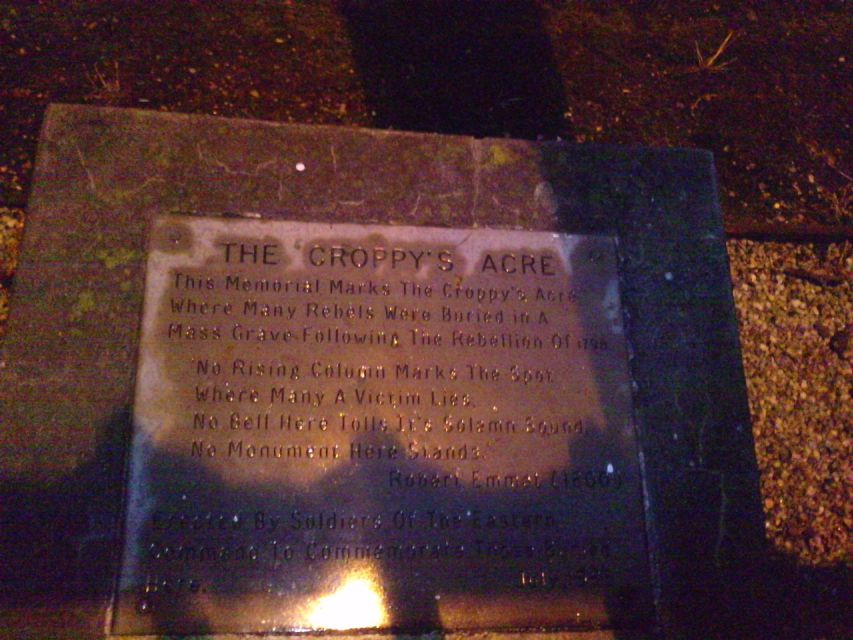
Croppie’s Acre brings a much grimmer kind of history. The abandoned site was used as a football pitch in the 20th century, but beneath it lies a mass grave connected with rebels executed during the 1798 rebellion.
This is not a light ghost story. The stop gives the walk a serious center and reminds you that Dublin’s haunted places are often linked to real suffering. The site’s later use as a football pitch adds another layer. Ordinary recreation took place above a place of death, with much of the earlier story out of sight.
I find this kind of contrast more affecting than a staged scare. It asks you to think about how cities bury difficult memories, sometimes literally. The guide’s job here is to explain the setting carefully, not simply to frighten you.
You may want to prepare younger members of your group for the subject matter. The tour can work well for families, and one family of five found it a good evening activity, but the stories include executions, graves, ghosts, and other macabre material.
Saint Michan’s mummies and Bram Stoker
The walk also tells you about the mummies of Saint Michan’s Church. Saint Michan’s is widely known as one of Ireland’s most macabre attractions, and its underground remains are linked in the tour to Bram Stoker, the Dublin-born author of Dracula.
The route does not appear to include a separate visit inside Saint Michan’s Church. Instead, you hear about the mummies as part of the wider walk. That distinction matters when you plan your sightseeing. If you want to see the crypt and mummies themselves, you would need to arrange that as a separate activity.
Even as a spoken stop, the story adds useful literary context. Stoker was born in Clontarf, and the guide connects his Dublin background with the city’s stories of bodies, crypts, and the supernatural. It is a good example of how the walk links folklore with familiar cultural history.
This section should appeal to you if you like Dracula, Gothic fiction, or the less polished side of Dublin’s past. It also helps break up the route with a story that is famous beyond the city.
The Virgin Mary apparition and modern ghost lore
Not all the stories belong to the medieval or revolutionary past. The walk includes the site of a 21st century apparition of the Virgin Mary.
That modern date gives the tour a useful shift in tone. Medieval ghosts can feel safely remote, while a recent apparition raises different questions about belief, rumor, community, and how stories continue to form in modern cities.
The stop is likely to interest you most if you enjoy comparing religious visions with older ghost tales. It shows that Dublin’s supernatural traditions are not limited to ruins and ancient cemeteries.
As with the other stops, the value comes from hearing the account at the place connected with it. The street itself may look ordinary, but the story changes how you read the setting. That is the central trick of this walk: familiar streets gain another layer.
Electric factories, tunnels, and unexpected stories
The route can also touch on an electric factory and underground tunnels, along with stories of thieves and sad events. The available details do not identify the exact access arrangements, so you should not assume that the tour enters tunnels or industrial buildings.
The mention of these locations points to one of the walk’s strengths: it includes odd corners of the northside that standard city tours often skip. A past experience described the electric factory as the most frightening location encountered on a number of ghost walks, largely because of the atmosphere and the stories tied to it.
That does not mean you should expect a haunted-house attraction. The walk is conducted on city streets, and the guides rely on narration and the character of the places. The absence of costumes and forced theatrics will suit you if you prefer a calm, story-led tour.
Some passersby may interrupt the atmosphere, especially on a busy evening. One experience included drunken teenagers shouting at the guide. That is not part of the tour, of course, but it is a reminder that this is a public urban walk, not a sealed attraction.
What the guides add to the experience
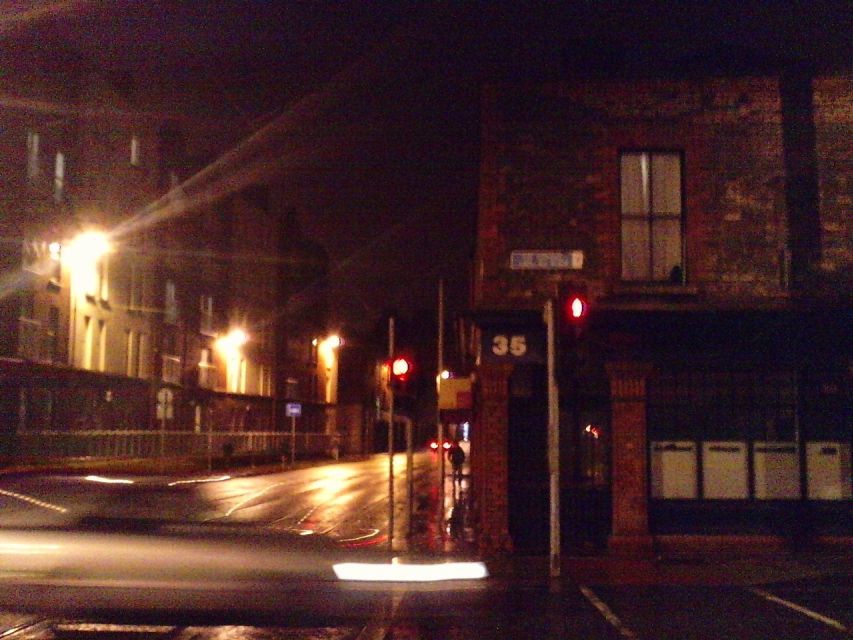
The guides are central to the quality of the evening. The strongest accounts describe guides who are funny, personable, well prepared, and able to connect the stories to wider Dublin life.
Kate was praised for answering questions, knowing the locations well, and adding suggestions for things to do after the walk. Darragh was described as an excellent storyteller with a friendly manner. Matthew was noted for his humor and strong local stories, while Derek was praised for knowing a great deal of detail.
The names and styles may change from one departure to another. You should think of these as examples of the guide team rather than a promise that a particular person will lead your walk.
The best guides appear to avoid overacting. That matters because ghost tours can become corny when every stop is presented as a guaranteed scare. Here, humor and historical explanation do much of the work.
One small caution is worth keeping in mind. A Dublin family found that some facts were not always handled perfectly, with invented details mixed into the history. If you already know the city well, you may notice occasional loose storytelling. For most visitors, the overall experience should still provide plenty of new material.
How scary is the North Quay Ghost Walk?
This is a spooky history walk, not a horror attraction. You will hear about ghosts, mass graves, executions, mummies, apparitions, tunnels, and notorious criminals, but there is no stated promise of actors, jump scares, or special effects.
I would rate the fear factor as moderate and dependent on the guide, the group, and the light. An evening departure should create a better mood than a bright summer walk, and one past experience noted that late summer daylight can reduce the eerie feeling.
Skeptics can still enjoy it. The stories offer atmosphere and local color even if you do not believe in ghosts. At the same time, anyone who wants a strictly documented history lecture may find the folklore frustrating.
The tour may suit older children and families who are comfortable with grim subjects. Use your own judgment, since the material includes executions, graves, mummies, and apparitions.
Value at $28 per person
At $28 per person, the walk is fairly priced for a live, English-language city tour lasting roughly 1.5 to two hours. You are paying for a guide who interprets places you could technically visit on your own, not for admission to a major attraction.
The value is strongest if you want orientation on Dublin’s northside. The route can point out places you might otherwise miss, and the stories give you reasons to return during daylight. Several guides have also offered suggestions for other things to do after the tour, adding practical value to the evening.
The price is less attractive if you want a highly theatrical ghost show or guaranteed access to underground sites. The included service is the guided walk itself. There are no stated admissions, food, drinks, or transport included.
Free cancellation up to 24 hours before the activity and the option to reserve now and pay later make it easier to fit into a changing Dublin schedule. You should still check availability for the current starting times.
Who should book this Dublin ghost walk?
I would recommend it to you if you enjoy:
- Local stories tied to real streets
- Medieval, religious, and rebel history
- Literary connections involving Bram Stoker
- A relaxed evening walk with humor
- Seeing a less familiar side of Dublin
- Ghost lore without costumes or forced scares
You may want another activity if you need step-free access information, a very short walk, or a fully verified academic history of every stop. The supplied details do not give specific accessibility information, and the route keeps you on your feet for most of the evening.
Wear comfortable shoes. The walk is long enough for poor footwear to become irritating, especially if it runs closer to two hours. In wet or cold weather, bring suitable outdoor clothing, since the activity takes place outside.
Should you book the North Quay Guided Ghost Walk?
Book this tour if you want Dublin history with a spooky edge, especially if you have already seen the main sights and want to explore the northside. The strongest parts are the overlooked locations, the stories of Croppie’s Acre and Hendrick Street, and guides who can make local history funny and memorable.
Skip it if you expect a haunted-house production or a nonstop stream of supernatural scares. At $28, it is good value for a story-led city walk, but its appeal depends on your interest in folklore, old streets, and the darker side of Dublin’s past.
FAQ
Where does the Dublin North Quay Guided Ghost Walk start?
The walk starts outside The Church Bar and Restaurant on Mary Street in Dublin.
Where does the tour finish?
The activity ends back at the meeting point outside The Church Bar and Restaurant.
How long does the ghost walk last?
The activity information gives a duration of 1.5 hours. The overview and some past experiences describe the walk as lasting about two hours, so check the current booking details and allow extra time.
How much does the tour cost?
The listed price is $28 per person.
What language is the tour conducted in?
The tour is conducted in English by a live guide.
What is included in the price?
A guided walking tour is included.
Can I cancel for a full refund?
Yes. You can cancel up to 24 hours in advance for a full refund.
Do I have to pay when I book?
No. The reserve now and pay later option lets you hold a place without paying immediately.
Recently added around Dublin
- Dublin: Pub Tour. Pour The Perfect Guinness, Whiskey & Music★ 5.0 · 3 reviews
- Waterford Crystal and Kilkenny Full-Day Rail Tour from Dublin★ 5.0 · 3 reviews
- Cliffs of Moher and The Burren Private Tour from Dublin★ 5.0 · 3 reviews
- Private Chauffeur Service From Dublin Airport to Killarney★ 5.0 · 3 reviews
- Beautiful Southwest Tour 2022★ 5.0 · 3 reviews
- A Self Guided Walking Tour of Dublin’s Docklands★ 4.5 · 3 reviews
- Dublin One Day Tour with a Local: 100% Personalized & Private★ 4.5 · 3 reviews
- Ireland: 3-Day West Coast Explorer Tour★ 5.0 · 3 reviews
Dublin Tours, compared.

Dublin to Cliffs of Moher, including Wild Atlantic Way and Galway
Read our review →
Cliffs of Moher, Burren & Galway City Day Tour
Read our review →
Dublin to Belfast Black Cab, Dunluce Castle and Giant’s Causeway
Read our review →
Kilkenny, Wicklow Mountains & Glendalough Day Tour from Dublin
Read our review →
Wicklow Mountains, Glendalough & Kilkenny Tour
Read our review →
Dublin Highlights and Hidden Gems Guided Walking Tour
Read our review →Browse the lists this tour appears in