
Reviewed · DUBLIN TOURS
Street Art Walking Tour
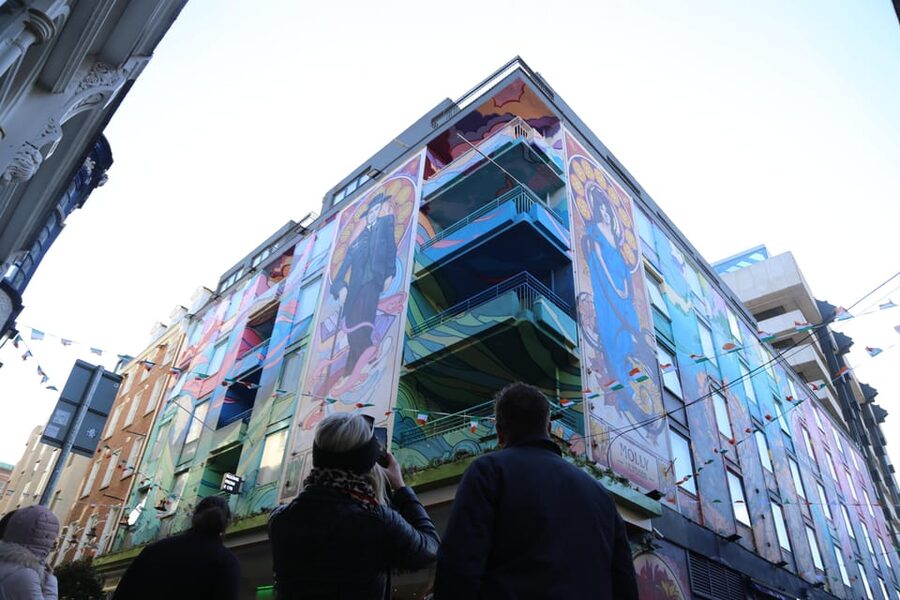
Dublin’s street art is easy to miss if you stick to the usual sights. This two-hour walk takes you from the Ha’penny Bridge through side streets, courtyards, Temple Bar, and lesser-known art spots, with more than 30 works along the way. Some guides, including Liam, also make street art and graffiti in their spare time.
I like the small-scale discoveries, especially the stickers, paste-ups, and tucked-away pieces you might walk past without noticing. I also like the direct link to Dublin’s working art scene, since the guide can point you toward artists, prints, galleries, workshops, and later events.
The main drawback is practical: parts of the route are not suitable for wheelchair users or people with mobility impairments. You should also prepare for Irish weather, since tours continue in the rain.
Key points to know before you go
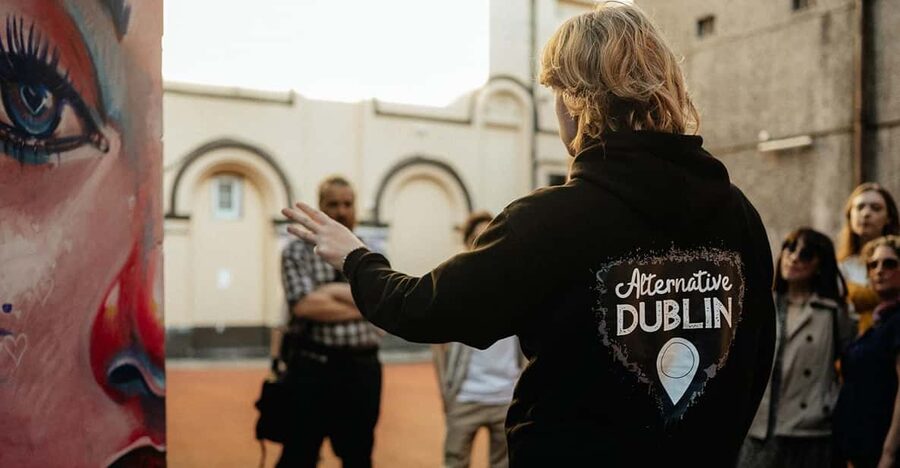
- More than 30 works in two hours: Expect murals, graffiti, stickers, paste-ups, and other forms of public art.
- A local art angle: Some guides make street art or graffiti in their spare time, giving the walk a connection to the scene itself.
- A central route: The tour begins beside the Ha’penny Bridge and visits Temple Bar, the Icon Walk, Crampton Court, and other city-centre locations.
- A useful gallery stop: You visit a small gallery where you can support artists by buying work or discussing commissions.
- Good photo opportunities: Each stop leaves time for pictures, with several stops lasting 15 to 25 minutes.
- Weather matters: The tour runs in rain, so bring an umbrella or rain jacket.
Dublin’s art scene begins beside the Ha’penny Bridge
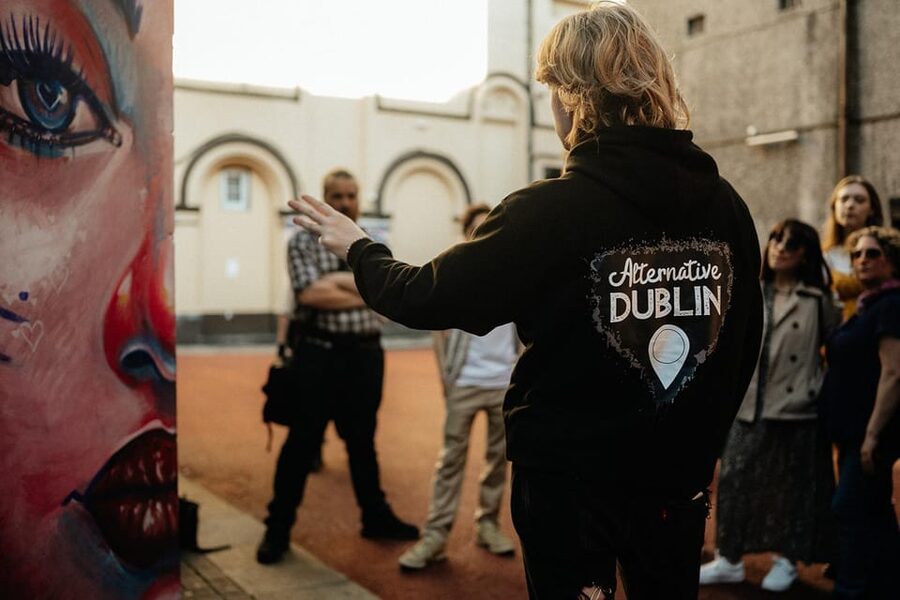
The meeting point is outside The Grand Social on Liffey Street, in the public space with trees beside the Ha’penny Bridge. This is a smart place to begin because you are already in central Dublin, close to Temple Bar and several busy pedestrian routes.
Your guide introduces the idea behind the walk before leading you into the city centre. The focus is not only on large painted walls. You also learn how graffiti, stickers, paste-ups, murals, and smaller interventions all fit into Dublin’s street art culture.
That distinction matters. Large murals are easy to photograph, but small pieces often say just as much about how artists use public space. A sticker on a post or a paste-up on a side wall may have a short life, so the guide’s explanation can add useful context that a photograph alone cannot provide.
The walk is in English, and the provider uses guides with a personal connection to street art. Liam is named in one of the available comments, and he received particular praise for explaining the backstory behind individual murals. You should not expect every departure to have Liam, but his role gives you a sense of the informal, artist-led tone of the experience.
More Walking Tours in Dublin
- Dublin Highlights and Hidden Gems Guided Walking Tour
★ 5.0 · 6,020 reviews - Dublin: Highlights and Hidden Gems Walking Tour
★ 4.9 · 2,140 reviews - 1916 Rebellion Walking Tour
★ 5.0 · 1,605 reviews
Yamamori Tengu and the first photo stop
The first listed stop is Yamamori Tengu, where you spend about 15 minutes on guided sightseeing and photographs. This early stop gives you time to settle into the walk and learn how the guide reads a piece of art.
I like having a proper first stop rather than rushing straight through a series of walls. Fifteen minutes is enough for an explanation, questions, and a few pictures without making the tour feel slow.
As with all street art, what you see can change. Pieces may be painted over, removed, or replaced. That is part of the subject, but it also means your exact route and artwork selection can vary from the examples used in tour descriptions.
Abbey Court Hostel and art in everyday places
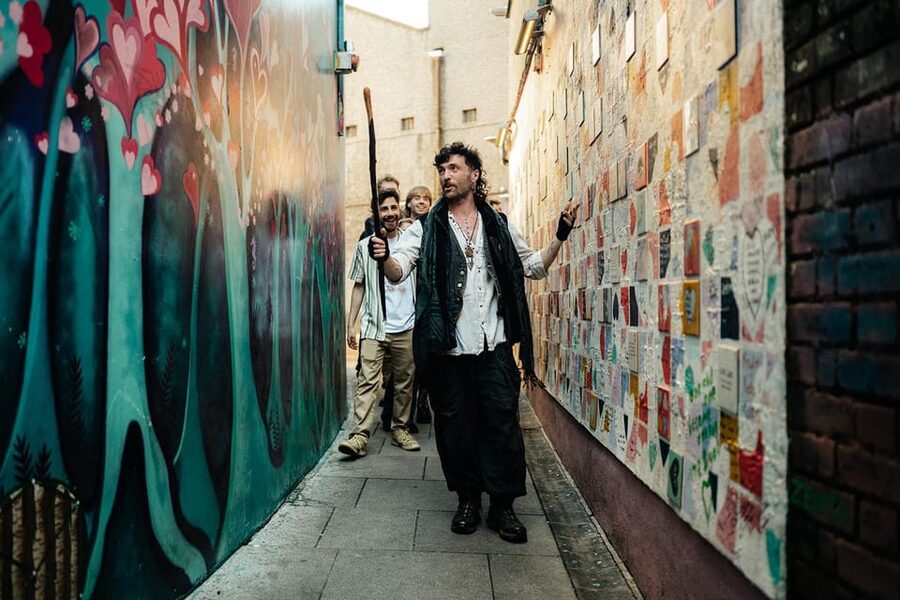
The route then reaches Abbey Court Hostel for around 20 minutes. The longer stop suggests that this is one of the more substantial parts of the walk, with time for both sightseeing and discussion.
A hostel may not sound like a traditional art stop, which is precisely why it fits the tour. Dublin’s street art is not arranged in a formal museum sequence. It appears around businesses, accommodation, lanes, walls, doors, and public spaces.
This stop should help you see the city differently. Instead of treating art as something confined to a gallery, you begin to notice how it shares space with ordinary city life. The guide can also explain the stories behind particular murals, an aspect that one available rating singled out as especially useful.
The Icon Factory and the Icon Walk
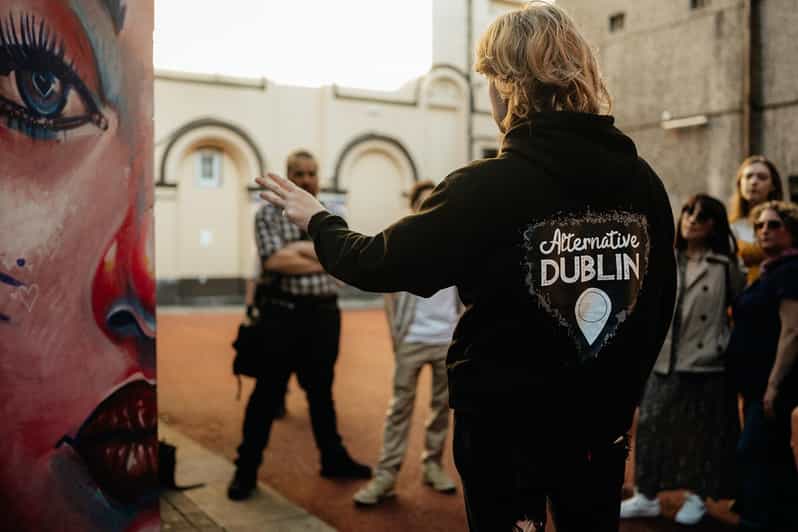
The Icon Factory and the Icon Walk receive about 25 minutes, making this one of the longest stops. The Icon Walk is particularly suited to a street art tour because it offers a concentrated place to look at public artwork without needing to cross a large part of the city.
You get time for photographs and for a closer look at the different methods artists use. A mural has a very different presence from a pasted image or a quick piece of graffiti. Seeing several formats near one another makes the tour more useful than a simple list of large wall paintings.
The Icon Factory also connects the outdoor art scene with a more organised artist setting. That contrast is worthwhile. Dublin’s art culture includes both temporary public work and artists who sell prints, paintings, or take commissions.
A few more Dublin half-days to weigh up
- Dublin Street Art Walking Tour
★ 5.0 · 68 reviews - Dublin : Street Art Walking Tour
★ 5.0 · 3 reviews
Temple Bar beyond the nightlife image
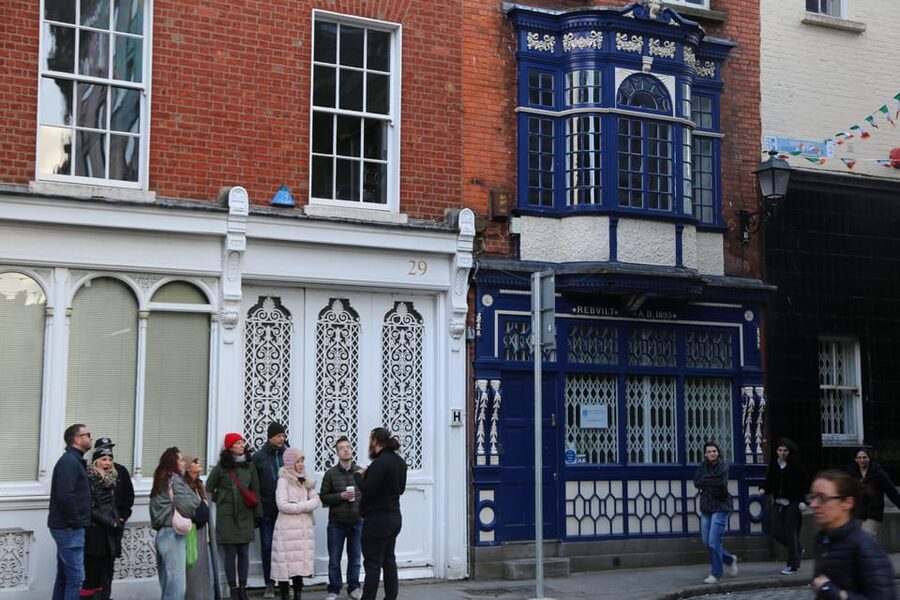
Temple Bar takes about 25 minutes, another substantial section of the walk. Most people associate this area with pubs, restaurants, crowds, and evening entertainment. This tour asks you to look beyond that familiar image.
The art here may be easier to find than pieces in quiet side streets, but the guide’s job is to explain what you are seeing and how it fits into the city’s current scene. The stop can also show you how public art interacts with one of Dublin’s most visited districts.
I would schedule this experience early in your stay if you want to return to places that catch your eye. The guide offers recommendations for other things to do in Dublin, and the walk may give you a useful starting point for exploring the centre on your own.
Blooms Hotel and the value of smaller works
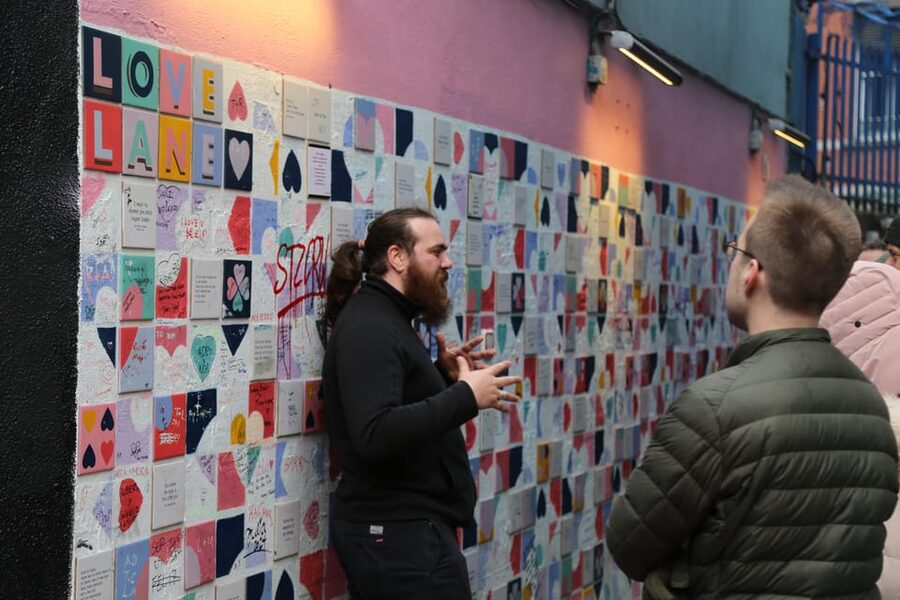
The Blooms Hotel stop lasts about 15 minutes. Here, you continue the same mix of guided interpretation, sightseeing, and photographs.
This part of the route is a reminder that street art is not only about a single dramatic mural. A smaller work may be harder to spot but can reveal a different kind of humour, style, or message. Since the tour includes stickers and paste-ups as well as painted work, you should expect the guide to draw your attention to details that are easy to overlook.
That is one of the best reasons to book a guided walk instead of simply searching for Dublin murals online. A map can take you to a wall. It cannot always tell you what has changed, what is temporary, or why a particular piece matters to the people who follow the scene.
Project Arts Centre and Dublin’s wider art network
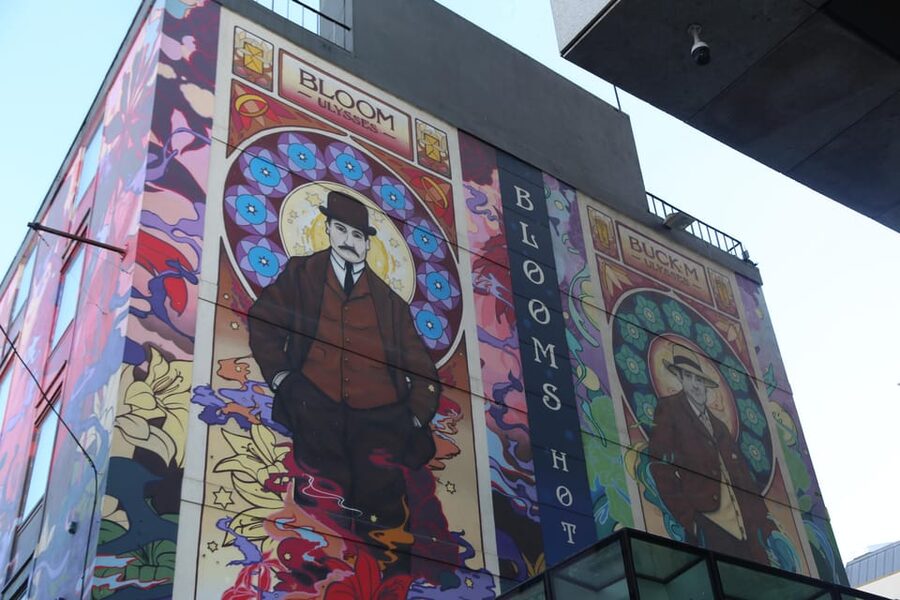
The route continues to Project Arts Centre for approximately 10 minutes. This is a shorter stop, but it adds an important connection to Dublin’s formal arts world.
The tour is not limited to independent marks on city walls. It also introduces you to places where artists, exhibitions, events, and creative projects take place. The provider runs art nights, pottery, workshops, storytelling, and other creative events, so the guide may be able to suggest ways to continue exploring after the walk.
If you already know Dublin’s main museums and galleries, this connection can make the tour more useful. It gives you a broader picture of the city’s art activity without turning the walk into a conventional gallery visit.
Crampton Court and the final discoveries
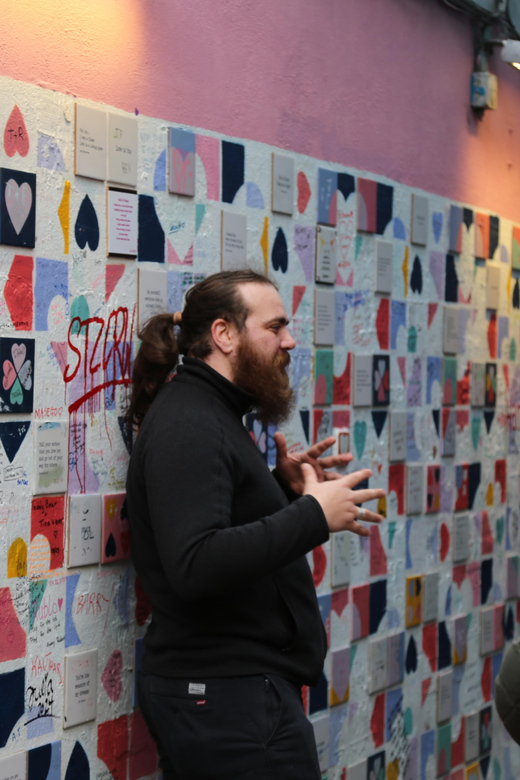
The final listed stop is Crampton Court, with about 10 minutes for guided sightseeing and photos. Courtyards and narrow urban spaces are well suited to this kind of tour because they can hold works that are easy to miss from the main road.
Crampton Court is also listed as the endpoint of the itinerary. The meeting information says the activity ends back at the starting point, so I would confirm the exact finish with the provider before booking if you need to meet a train, reserve a table, or reach another attraction at a precise time.
The route is described as city-centre walking, with no transport included. Two hours is long enough to cover a good number of sites, but short enough to fit around other Dublin plans. Wear comfortable shoes, and leave room in your schedule for the walk to run slightly over if questions or street conditions slow the group.
What the guide adds that a self-guided walk cannot
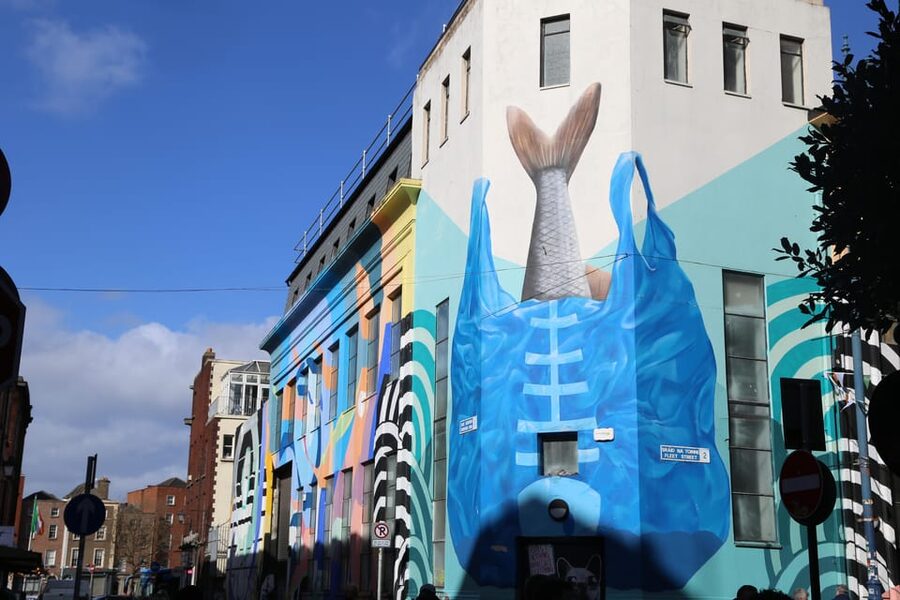
The central benefit is interpretation. You see more than 30 pieces, but the artwork count is not the whole point. A guide helps you understand the difference between a commissioned mural, graffiti, a paste-up, a sticker, and other forms of public work.
The guides also offer information about what is happening in Dublin’s art scene now, rather than presenting street art as a fixed historical display. That current focus is valuable because public work changes quickly.
One available rating calls the tour very informative and specifically praises the backstory behind certain murals. The same comment gives Liam a warm personal mention, while adding a humorous warning about eating chicken tenders before a walking tour. Take that as a practical hint: this is a continuous city walk, so a light meal and water may serve you better than heavy food right before the start.
The guides keep any tips they receive. Tipping is optional, but it gives you a direct way to support the artists and creatives leading the walk.
Visiting the gallery and supporting local artists
After the tour, the provider sends a link to each artist featured. You are also brought to a gallery where you can support artists by buying prints or paintings, or by discussing a commission.
That follow-up is a real advantage if you want more than photographs. You can connect the public work you saw on the streets with artwork you can take home or commission for yourself.
You should not treat the gallery visit as a large museum experience. The information describes it as a unique gallery tucked away in the city centre, so the appeal is its connection to the local creative community rather than a major collection of famous works.
Is $17 a good price for two hours?
At $17 per person, this is reasonably priced for a two-hour guided walk in central Dublin. You are paying for a live English-speaking guide, access to places you may not find alone, explanations of more than 30 works, and recommendations for other art-related activities.
The value is strongest if you are curious about how Dublin’s public art scene works, not simply looking for a checklist of famous murals. A self-guided walk costs less, but you would need to find the locations yourself and would miss much of the context.
The price is less compelling if you dislike walking in all weather, need guaranteed step-free access, or prefer polished museum collections. Parts of the route are not accessible to wheelchair users or people with mobility impairments, and the tour continues in rain.
The company also offers private tours for friend groups, work parties, educational groups, and community events. Those options are separate from the $17 public experience, but they may suit you if your group wants a more tailored route.
Who should book this Dublin walking tour?
I would recommend it to first-time Dublin visitors who want to see another side of the city centre. It also suits repeat visitors who have already covered the Book of Kells, major museums, and standard historic sights.
You will get the most from it if you enjoy photography, independent art, urban culture, and informal stories about the people and places behind public work. It is also a good fit for anyone who wants ideas for art nights, workshops, galleries, and other creative events during a Dublin stay.
I would hesitate if you have limited mobility, dislike uncertain outdoor conditions, or want a predictable collection of permanent artworks. Street art changes, and the route may not look exactly the same on every date.
At the time of the supplied details, the experience had a 5 out of 5 rating from nine ratings, while the provider also cites more than 100 online reviews. That points to a well-received experience, but the small current rating sample means I would judge it mainly on the clear itinerary, personal guide approach, and the kind of art you want to see.
Booking details worth checking
The tour lasts two hours, but starting times depend on availability. Reserve and pay later options are offered, which is useful if your Dublin schedule is still shifting.
The published cancellation information is not fully consistent. One section says you can cancel up to 24 hours before the tour for a full refund, while the provider’s own practical notes say five days’ notice is needed for a refund or ticket change. Confirm the rule that applies to your booking before paying.
If rain is forecast, bring a jacket or umbrella. The tour goes ahead in wet weather, and there is no indication that poor weather automatically cancels it.
FAQ
Where does the Street Art Walking Tour start?
It starts outside The Grand Social on Liffey Street. Your guide waits in the public space with the trees beside the Ha’penny Bridge.
How long does the tour last?
The guided walking tour lasts up to two hours.
What language is the tour in?
The tour is conducted in English with a live guide.
How many artworks will I see?
The experience includes more than 30 pieces of public art. These can include murals, graffiti, stickers, paste-ups, and other forms of street art.
Does the tour run if it rains?
Yes. Tours proceed in rainy weather, so you should bring an umbrella or rain jacket.
Is the tour wheelchair accessible?
No. The route is not suitable for wheelchair users, and it is not recommended for people with mobility impairments.
Can I cancel for a full refund?
The activity information says you can cancel up to 24 hours in advance for a full refund. A separate provider note says five days’ notice is needed, so confirm the applicable policy before booking.
Can I give my ticket to someone else?
The provider says tickets cannot normally be swapped without five days’ notice, but you can transfer your ticket to another person to attend in your place.
Should you book it?
Book this walk if you want Dublin’s streets to function as your gallery and you value stories, local connections, and works you might not find alone. The $17 price is fair for two hours of guided access to more than 30 pieces, with a gallery visit and follow-up artist links adding value.
Skip it if you need full accessibility, dislike walking in rain, or want a formal museum tour. For everyone else, this is a practical way to see Dublin through its changing public art, then use the guide’s recommendations to keep exploring after the two hours are over.
Recently added around Dublin
- Dublin: Pub Tour. Pour The Perfect Guinness, Whiskey & Music★ 5.0 · 3 reviews
- Waterford Crystal and Kilkenny Full-Day Rail Tour from Dublin★ 5.0 · 3 reviews
- Cliffs of Moher and The Burren Private Tour from Dublin★ 5.0 · 3 reviews
- Private Chauffeur Service From Dublin Airport to Killarney★ 5.0 · 3 reviews
- Beautiful Southwest Tour 2022★ 5.0 · 3 reviews
- A Self Guided Walking Tour of Dublin’s Docklands★ 4.5 · 3 reviews
- Dublin One Day Tour with a Local: 100% Personalized & Private★ 4.5 · 3 reviews
- Ireland: 3-Day West Coast Explorer Tour★ 5.0 · 3 reviews
Dublin Tours, compared.

Dublin to Cliffs of Moher, including Wild Atlantic Way and Galway
Read our review →
Cliffs of Moher, Burren & Galway City Day Tour
Read our review →

Dublin to Belfast Black Cab, Dunluce Castle and Giant’s Causeway
Read our review →
Kilkenny, Wicklow Mountains & Glendalough Day Tour from Dublin
Read our review →
Wicklow Mountains, Glendalough & Kilkenny Tour
Read our review →

Dublin Highlights and Hidden Gems Guided Walking Tour
Read our review →Browse the lists this tour appears in