
Reviewed · DUBLIN TOURS
Dublin: Boyne Valley with Newgrange and Bru Na Boinne Entry
Newgrange is the star here: a 5,000-year-old passage tomb built before Stonehenge and Egypt’s pyramids. You enter the ancient chamber, learn how sunlight reaches it at the winter solstice, and then connect that distant world to later Irish history at the Battle of the Boyne and Monasterboice.
I like the included Newgrange and Bru Na Boinne entry, which saves you from sorting out one of Ireland’s more controlled historic-site visits. I also like the guides’ role between stops, with Matt, Kevin, and Richard praised for clear storytelling, good timing, and making the long drive useful. The main drawback is a tight day, with no food included and only a short stop at Monasterboice.
Key points to know before booking
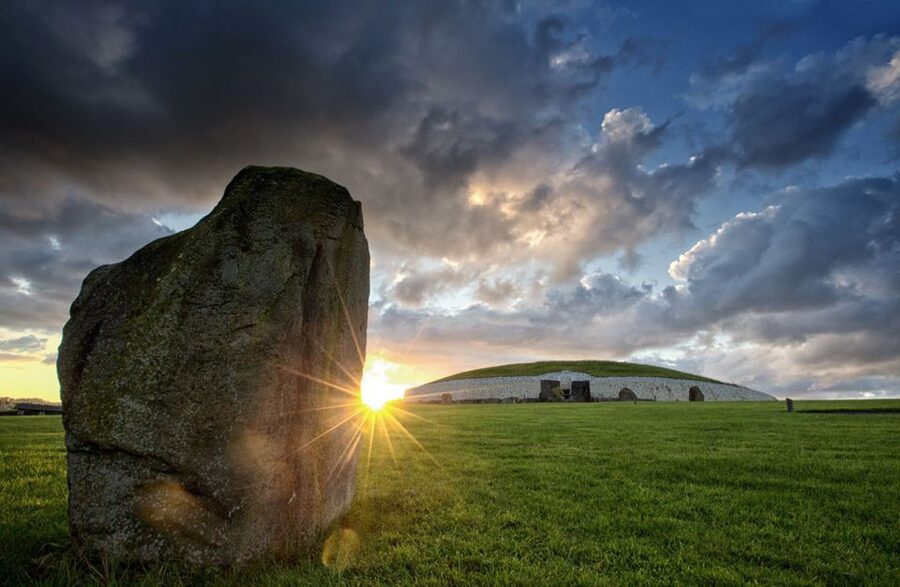
- Newgrange is the main event: Enter a Neolithic tomb with a ceremonial passage and a famous solar alignment.
- Knowth changes by season: Between November 1 and March 1, Knowth is not accessible, so the Bru Na Boinne visit is shorter.
- The history covers thousands of years: You move from early farming communities to Celtic beliefs, Norman-era Christianity, and the 1690 Battle of the Boyne.
- You travel in a small white minibus: Meet at the Molly Malone Statue on Suffolk Street 10 minutes before departure.
- The guides add real value: Matt, Kevin, Richard, and other Hilltoptreks guides are praised for stories, humor, clear instructions, and careful driving.
- Bring food planning into the equation: Lunch and drinks are not included, and the food options at Newgrange may not suit every taste.
Why Newgrange makes this Dublin day trip special
Many day trips from Dublin chase famous scenery. This one gives you something more unusual: direct contact with Ireland’s earliest known monumental builders.
Newgrange was built more than 5,000 years ago as a passage tomb and ceremonial site. Its grassy mound looks modest from a distance, but the design is astonishing. A long passage leads toward an inner chamber, and a roof box above the entrance allows sunlight to reach inside around the winter solstice.
You do not simply walk up to the mound and wander in. Entry is controlled, and the visit includes a guided experience inside the monument. That matters because the stones, passage, and solar alignment make far more sense when someone explains what you are seeing.
The Newgrange visit takes up much of the day’s central block, listed at about three hours for the wider Bru Na Boinne experience. That time includes the visitor facilities, transport arrangements within the site area, guided sightseeing, and the monument visit. Expect some walking outdoors, so comfortable shoes are a must.
The experience is especially good for you if ancient sites interest you more than postcard views. It is also a smart choice if you have limited time in Ireland but want to see a place that reaches beyond medieval castles and nineteenth-century streets.
More Newgrange and Boyne Valley days:
- Celtic Boyne Valley & Ancient Sites Day Tour From Dublin
★ 4.5 · 865 reviews - From Dublin: Celtic Boyne Valley and Ancient Sites Tour
★ 4.5 · 618 reviews - Dublin to Newgrange, Monasterboice Small Group Guided Tours
★ 4.5 · 500 reviews
Bru Na Boinne and the seasonal Knowth difference
Bru Na Boinne is the visitor area for the great Neolithic monuments of the Boyne Valley. Newgrange is the best-known site, while Knowth adds another major prehistoric complex with passage tombs and carved stones.
The tour includes entry and skip-the-queue access, a useful advantage on a full day when every lost minute affects the schedule. You should still expect a structured visit. This is a protected archaeological area, not a place where you freely explore every corner at your own pace.
From March 2 through October 31, Knowth is accessible as part of the visit described for this experience. From November 1 through March 1, Knowth cannot be visited, and the Bru Na Boinne portion is shorter. Check the date carefully before booking if Knowth is one of your main reasons for going.
That seasonal limit does not make a winter trip pointless. Newgrange remains the central attraction, and the Boyne Valley still gives you a strong sense of how long Irish settlement reaches back. But if you want the fullest prehistoric program, choose a date outside the winter access period.
The drive from Dublin and the Boyne Valley setting
The trip begins at the Molly Malone Statue on Suffolk Street. Arrive 10 minutes before departure and look for the small white Hilltoptreks minibus. The ride to the Boyne Valley takes about an hour, giving your guide time to introduce the area and set the historical scene.
This is one of the tour’s best features. Instead of treating the drive as dead time, guides such as Matt and Kevin use it for background stories about Ireland’s first farmers, Neolithic monuments, Celtic beliefs, and later political struggles. Richard has also been praised for clear explanations and considerate handling of the day.
The vehicle is a minibus rather than a large coach. That can make the trip feel more personal, though the available information does not specify the exact passenger capacity. If you prefer a completely private outing, this is not that. You are joining a shared guided trip with a fixed route and timetable.
The Boyne River runs through County Meath and County Louth before reaching the sea near Drogheda. Its surrounding hills and green fields give the day a welcome change from Dublin. You get open views, historic sites, and a sense of how one river valley became a long-running center of settlement and conflict.
What you get at Newgrange
The most valuable part of the visit is the context. A bare stone mound can be hard to read, but the guided explanation helps you understand its scale, purpose, and careful orientation.
Inside, the passage and chamber are the focus. The solar design is the detail most people remember. Around the winter solstice, sunlight travels through the roof box and down the passage into the chamber. The tour includes an example of this effect, giving you a clearer idea of the engineering and ceremony involved.
The site also carries religious and ceremonial meaning. The builders left no written explanation, so guides must present the evidence and likely interpretations with care. You will hear about the Neolithic settlers who created these monuments, then consider how later Celtic beliefs became part of Ireland’s story.
Allow for the fact that this is not a quick photo stop. You may spend time moving between the visitor area and monument, listening to site staff, and following the group’s schedule. That structure is part of what makes entry possible, but it also means you cannot linger wherever you like.
A few more Dublin half-days to weigh up
- Dublin to Cliffs of Moher, including Wild Atlantic Way and Galway
★ 5.0 · 23,331 reviews - From Dublin: Cliffs of Moher, Burren & Galway City Day Tour
★ 4.8 · 18,888 reviews - Dublin: Guinness Storehouse Entry Ticket
★ 4.6 · 16,863 reviews - Dublin to Cliffs of Moher, Burren, Wild Atlantic Way, Galway Tour
★ 5.0 · 12,924 reviews
The Battle of the Boyne Visitor Centre
After Bru Na Boinne, the minibus travels about 15 minutes to the Battle of the Boyne Visitor Centre. The visit lasts roughly an hour to an hour and a half, depending on the day’s timing.
The battle took place in 1690. It was fought between the Catholic King James II and William of Orange, the Protestant king of Holland, over the English throne. Its outcome affected Ireland, Britain, and wider European politics.
This stop gives the day a sharp change of subject. You move from prehistoric ritual to a battle that helped shape political control in Ireland and the later division between communities. The center also explains why the Battle of the Boyne is commemorated on July 12 by the Loyalist community.
I value this stop because it places Irish history in a wider political frame. It is not just a battlefield story about two kings. It helps explain the displacement of Irish Catholics and the long conflict over power, religion, land, and identity.
You should not expect the same ancient atmosphere as Newgrange. The visitor center is more interpretive and educational, and the available time is limited. Still, it adds essential context and prevents the day from becoming a string of unrelated monuments.
The stop also gives you a chance to take a break and get food. Meals and drinks are not included. Food feedback varies, so I would carry something small rather than depend entirely on what is available on the day.
Monasterboice and Ireland’s finest high crosses
The final major stop is Monasterboice, reached after a drive of about 20 minutes. The visit lasts around 30 to 45 minutes, depending on the schedule.
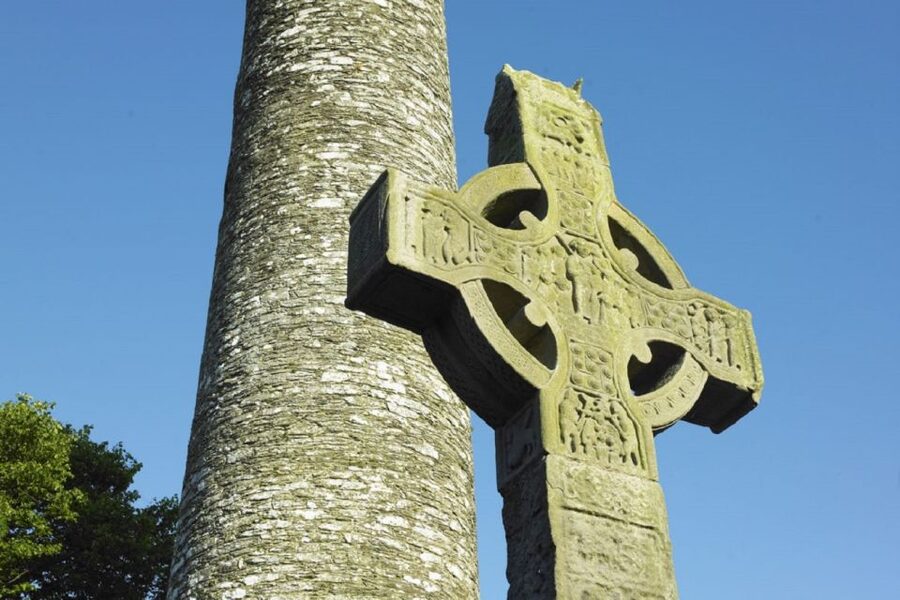
Monasterboice means the monastery of Buithe. St Buithe founded the site in the fifth century, and the ruins include two churches built in the fourteenth century, a round tower, and three tenth-century high crosses.
The round tower rises about 28 meters and remains in very good condition. It was likely built shortly after 968 and was damaged by fire in 1098. Even with limited time, it gives you a strong visual sense of the scale and design of an Irish monastic settlement.
The high crosses are the real prize. They form a scriptural group, with carved scenes from the Old and New Testaments. The 5.5-meter Muiredach’s High Cross is regarded as the finest high cross in Ireland and is named for the abbot Muiredach mac Domhnaill, who died in 923.
Look closely at the carvings rather than rushing straight to a photograph. The surface is crowded with biblical scenes and figures, and your guide can help you read the monument as more than an ornate stone pillar.
The weakness is time. Thirty minutes can feel short at a site with several major remains. One alternative version of the day has included Mellifont Abbey, and some visitors have wished for more time at that ruin. On this listed itinerary, Monasterboice is the stop, so treat it as a focused introduction rather than a full archaeological visit.
The guides make the long day easier
This tour depends heavily on the guide. The route covers prehistoric religion, Irish mythology, British and Irish politics, and medieval monastic art. A weak guide would leave you with scattered facts. A strong one turns the drive into part of the experience.
Matt is praised for detailed briefings, patient answers, humor, and knowing when to let the group enjoy quiet. Kevin is singled out for managing the timing well, driving safely, and telling good stories. Richard is described as kind, clear, and careful, with a talent for explaining Irish history and local curiosities.
The guides do more than recite dates. They explain what to expect at each stop, keep the group moving, and connect one period of Irish history to the next. Several comments also point to a relaxed pace rather than a rushed, herded feeling.
The experience is conducted in English. If you enjoy learning through stories, the live commentary is a major part of the value. If you prefer silent sightseeing and total independence, the fixed schedule and continuous narration may feel more restrictive.
Price, timing, and practical value
At $96 per person, the trip is not the cheapest way to leave Dublin, but the price is reasonable if you want Newgrange without arranging transport and admission yourself. Transport, a live English-speaking guide, and entry to Newgrange and Bru Na Boinne are included.
An independent visit would require you to manage the journey from Dublin, site timing, admission, and the connections between Newgrange, the Battle of the Boyne site, and Monasterboice. The tour bundles those pieces into an eight-hour day and returns you to central Dublin at about 5:00 PM, though some departures have returned closer to 4:30 PM.
That earlier return can matter. You still have time for an evening meal, music, or another Dublin activity, unlike some longer day trips that leave you worn out and back late.
You need to budget separately for food and drinks. The schedule includes breaks, but meals are not part of the price. Bring comfortable shoes for outdoor walking and an umbrella for Ireland’s changeable weather.
Free cancellation is available up to 24 hours before departure for a full refund. You can also reserve and pay later, which helps if your Dublin plans are still shifting.
Who should book this Boyne Valley trip?
I would recommend it most strongly to you if:
- You want to visit Newgrange but do not want to arrange public transport and timed entry.
- You enjoy archaeology, early Irish history, or religious monuments.
- You want a guide to explain the meaning behind the sites.
- You have one full day outside Dublin and prefer a focused itinerary.
- You like a mix of ancient monuments, political history, and medieval ruins.
- You want to return to Dublin in time for the evening.
Families with older children may also find the variety useful. The solar alignment at Newgrange, the battle story, and the carved crosses offer three very different ways to approach Irish history.
I would hesitate if you dislike group schedules, need a long lunch, or want to spend several hours at one ruin. Monasterboice is brief, and the winter version loses access to Knowth. You should also choose your date carefully if seeing both major Bru Na Boinne sites is important.
Final verdict: a strong choice for ancient Ireland
You should book this tour if Newgrange is high on your Ireland list and you want the site explained rather than simply photographed. The combination of controlled entry, transport, strong guide commentary, and several major historic stops gives you good value for a day from Dublin.
The key decision is seasonal. Book from March 2 through October 31 if you want Knowth included, and pack food in case the available choices do not appeal to you. With those points in mind, this is a well-balanced outing that takes you from Ireland’s first monumental builders to the political conflicts that shaped the country later on.
FAQ
Where does the tour start?
Meet at the Molly Malone Statue on Suffolk Street 10 minutes before departure. Look for a small white minibus with the Hilltoptreks sign.
Where does the tour finish?
The activity ends back at the Molly Malone Statue in Dublin.
How long does the tour last?
The tour lasts about eight hours. The stated arrival back in Dublin is around 5:00 PM, though some departures have returned around 4:30 PM.
Is entry to Newgrange included?
Yes. Transport, guides, and entry with skip-the-queue access to Newgrange and Bru Na Boinne are included.
Can I visit Knowth all year?
No. Knowth is not accessible between November 1 and March 1. During that period, the Bru Na Boinne portion of the tour is shorter.
Is food included?
No. Food and drinks are not included. You should plan for food during the day.
What should I bring?
Bring comfortable shoes and an umbrella. The tour includes outdoor sightseeing at several historic sites.
Recently added around Dublin
- Dublin: Pub Tour. Pour The Perfect Guinness, Whiskey & Music★ 5.0 · 3 reviews
- Waterford Crystal and Kilkenny Full-Day Rail Tour from Dublin★ 5.0 · 3 reviews
- Cliffs of Moher and The Burren Private Tour from Dublin★ 5.0 · 3 reviews
- Private Chauffeur Service From Dublin Airport to Killarney★ 5.0 · 3 reviews
- Beautiful Southwest Tour 2022★ 5.0 · 3 reviews
- A Self Guided Walking Tour of Dublin’s Docklands★ 4.5 · 3 reviews
- Dublin One Day Tour with a Local: 100% Personalized & Private★ 4.5 · 3 reviews
- Ireland: 3-Day West Coast Explorer Tour★ 5.0 · 3 reviews
Dublin Tours, compared.
Dublin to Cliffs of Moher, including Wild Atlantic Way and Galway
Read our review →
Cliffs of Moher, Burren & Galway City Day Tour
Read our review →
Dublin to Belfast Black Cab, Dunluce Castle and Giant’s Causeway
Read our review →
Kilkenny, Wicklow Mountains & Glendalough Day Tour from Dublin
Read our review →
Wicklow Mountains, Glendalough & Kilkenny Tour
Read our review →
Dublin Highlights and Hidden Gems Guided Walking Tour
Read our review →Browse the lists this tour appears in