
Reviewed · DUBLIN TOURS
Dublin: EPIC Museum Entrance Ticket
EPIC The Irish Emigration Museum tells Ireland’s story by following the people who left it. Instead of stopping at kings, battles, and dates, the museum asks what happened when Irish men, women, and children carried their skills, beliefs, music, and ambition across the globe. The result is an interactive account of Irish emigration that feels personal without being sentimental.
I especially like the touch screens and motion-sensor quizzes, which give you something to do rather than simply another wall of text. I also like the free return visit within 10 days. That matters because the museum is packed with short sections, audio, films, and hands-on displays that are hard to absorb in one pass.
The main consideration is time. You can rush through in under two hours, but the better visit takes at least two to two and a half hours. Some people may also find the heavy use of multimedia a little much, especially if you prefer quiet, object-filled museums.
Key points to know before you go
- Irish history told through emigration: Follow the people who left Ireland and the worldwide impact of their work, art, politics, science, and music.
- Interactive galleries throughout: Use touch screens, motion quizzes, audio, and video instead of relying only on labels and display cases.
- A useful return-ticket perk: Come back within 10 days if you missed a section or want more time with the exhibits.
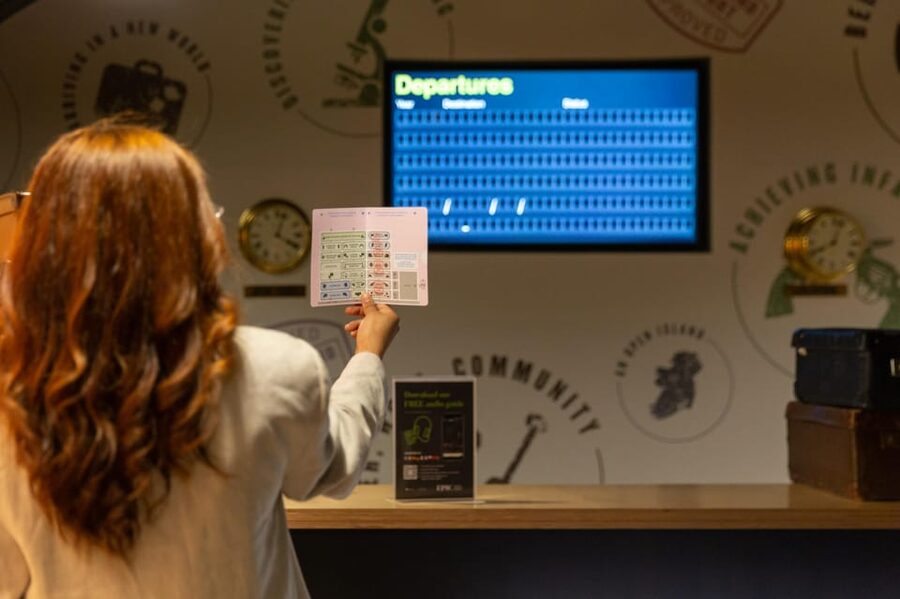
- A souvenir passport included: Collect a simple memento that adds a playful touch to the self-guided visit.
- An easy Docklands location: EPIC is in the CHQ building, a five-minute walk from Connolly and Tara Street stations.
- Good for a full Docklands outing: The Jeanie Johnston famine ship is two minutes away, with cafés and restaurants in the building.
What EPIC is really trying to explain
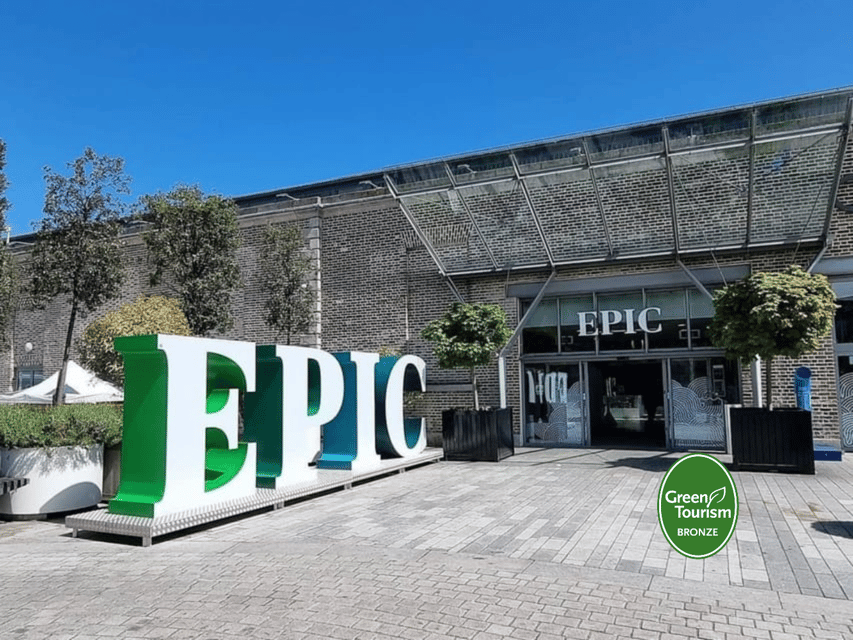
The name EPIC refers to The Irish Emigration Museum, and the central idea is simple: Ireland’s influence cannot be understood by looking only at the people who stayed.
The museum follows Irish emigrants and their descendants into many parts of life. You’ll encounter stories connected with religion, convicts, inventors, politicians, artists, musicians, and scientists. The point is not that every famous person was Irish. It is that Irish emigration created communities and connections that reached far beyond the island.
That approach gives the museum a wider reach than a standard national history display. You are not simply learning why people left Ireland. You are also looking at what they did after leaving, how Irish identity changed abroad, and how those communities shaped the wider world.
For anyone with Irish ancestry, this can feel personal. EPIC is aimed at the estimated 70 million people worldwide who claim Irish heritage, but you do not need Irish family connections to get something from it. The museum also works as a clear introduction to the forces that pushed people overseas and the ways emigrants adapted to new countries.
More Museums in Dublin
- Irish Rock ‘N’ Roll Museum Experience Dublin
★ 5.0 · 6,112 reviews - The Little Museum of Dublin Famous Guided Tour
★ 5.0 · 2,948 reviews - Dublin EPIC Museum Admission Ticket
★ 4.5 · 1,729 reviews
Entering the CHQ building in Dublin’s Docklands
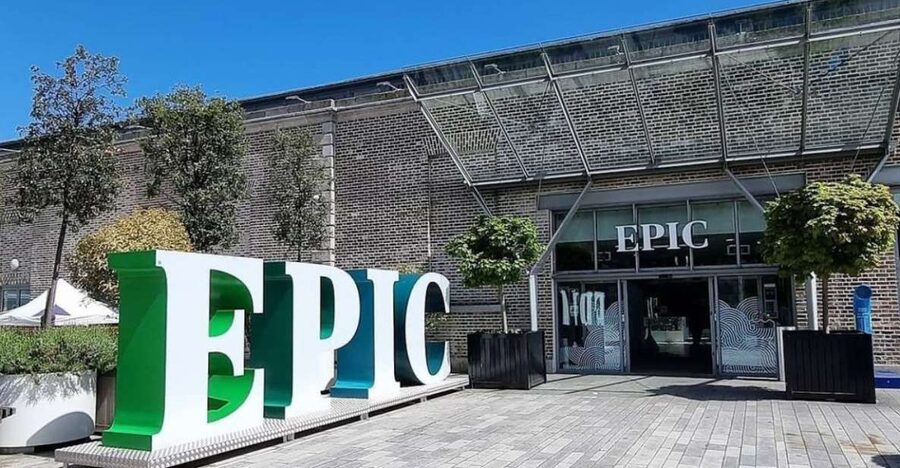
EPIC is located in the CHQ building at George’s Dock on Custom House Quay. This is a practical location rather than one you stumble across while walking between Dublin Castle and Trinity College, so plan it as part of a Docklands visit.
You can reach the museum in about 10 minutes from Dublin city centre. Connolly and Tara Street train stations are each roughly a five-minute walk away, making the museum easy to reach without arranging a special tour transfer.
The building itself adds to the visit. EPIC occupies a repurposed historic setting, and the museum’s modern design is fitted into that older structure. One of the pleasures here is the contrast between the handsome building and the bright digital displays inside.
At the ticket desk, present your voucher and receive access to the museum. The experience is self-guided. There is no guided tour included, so you control the pace and can pause, skip, or return to sections as you like.
Following the galleries through Irish emigration
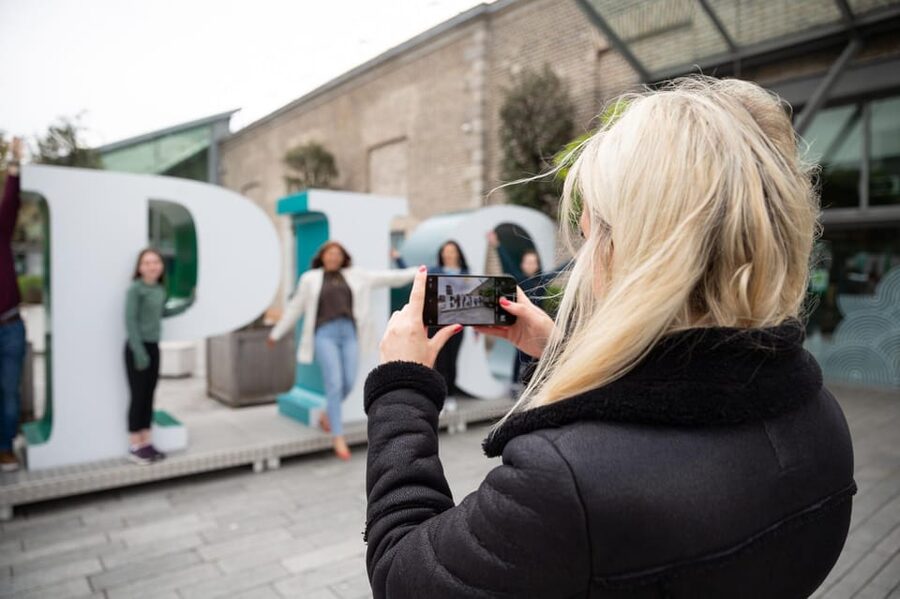
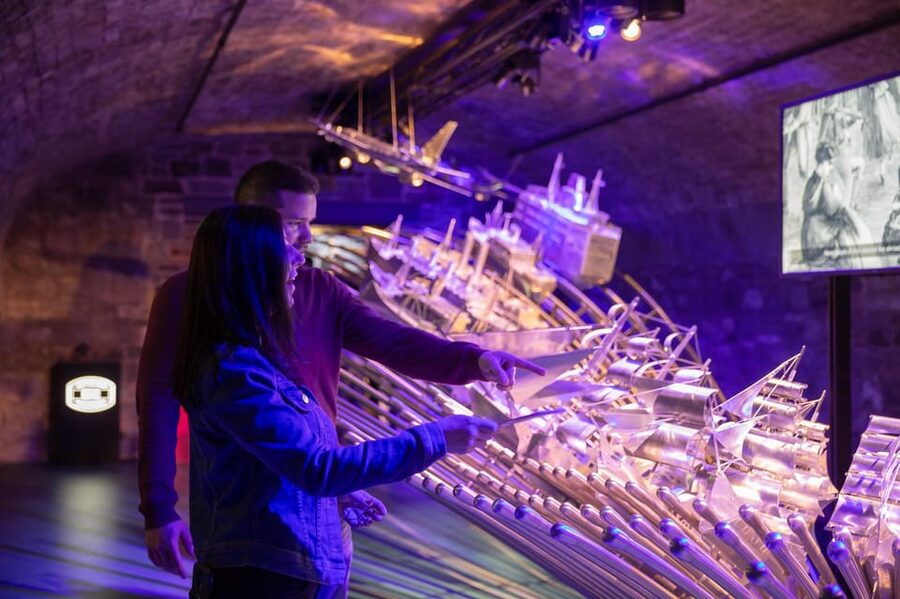
The museum is arranged as a series of interactive galleries rather than one long corridor of objects. Each section gives you a different angle on Irish identity and the experience of leaving home.
Expect to use touch screens, motion-sensor quizzes, audio, and video as you move through the museum. The displays are built in small sections, which helps break up a large subject. You can spend a few minutes with a story, then move on before the information begins to blur together.
The audio guide app adds useful context. You need a charged smartphone and headphones, and downloading or using the app is part of the self-guided format. Bring your own headphones if you want to listen without relying on the sound in the galleries.
The technology is not just decoration. Touch screens allow you to explore at your own speed, while quizzes make you stop and think about the material. Audio and film add voices and atmosphere to a subject that could otherwise feel like a list of statistics.
Still, this is not a quiet museum. One useful criticism is that there can be too much multimedia if you try to take in every screen and audio point. My advice is to be selective. Choose the stories that catch your attention and accept that you will not absorb every single item in one visit.
The human side of leaving Ireland
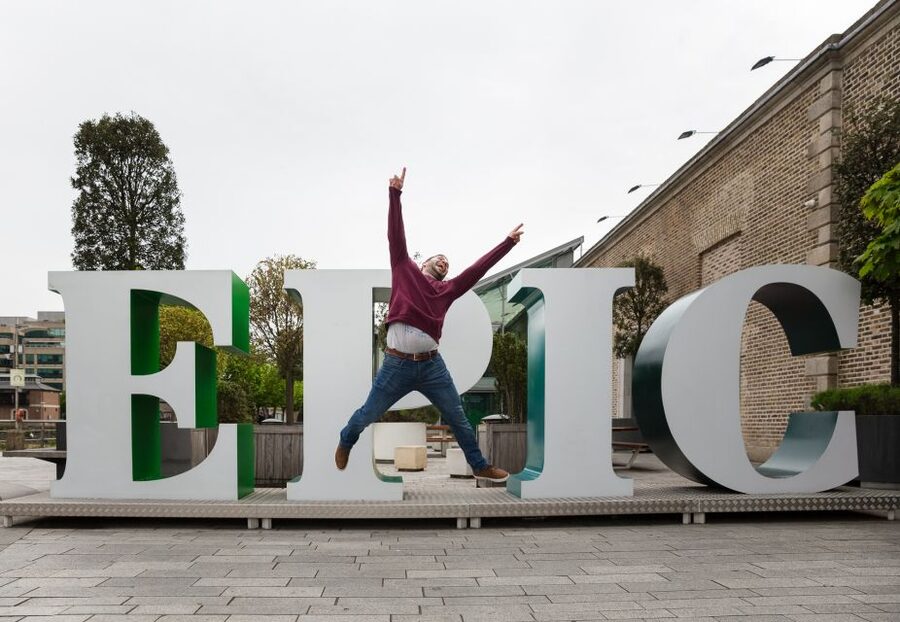
Irish emigration is often reduced to the famine, but EPIC presents it as a much longer and broader story. The galleries cover different periods and reasons for leaving, including religious pressures, criminal transportation, economic hardship, and the search for opportunity.
That wider view is one of the museum’s strengths. It shows that Irish emigration did not begin or end with a single event. The famine is an essential part of the story, but the museum places it within a larger pattern of movement that affected families and communities over generations.
You’ll also see how emigrants carried more than luggage. They took language, religion, political ideas, songs, family traditions, and practical skills with them. That helps explain why Irish identity remains strong in places far from Ireland itself.
The subject can be emotional, particularly if you have Irish ancestors. The tone is proud, but the museum does not need to turn every story into a celebration. Hardship, displacement, and loss are part of the picture, and the interactive format gives you room to consider those experiences at your own pace.
A different sort of day from the same base:
- Dublin to Cliffs of Moher, including Wild Atlantic Way and Galway
★ 5.0 · 23,331 reviews - From Dublin: Cliffs of Moher, Burren & Galway City Day Tour
★ 4.8 · 18,888 reviews - Dublin: Guinness Storehouse Entry Ticket
★ 4.6 · 16,863 reviews - Dublin to Cliffs of Moher, Burren, Wild Atlantic Way, Galway Tour
★ 5.0 · 12,924 reviews
Science, politics, music, and the Irish worldwide
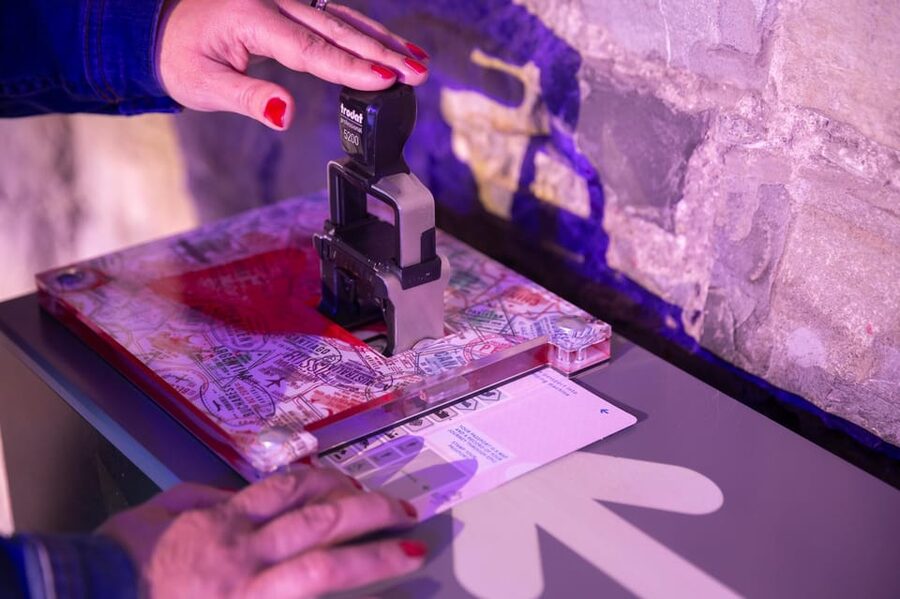
EPIC broadens the story by showing the achievements of Irish people and their descendants around the world. The themes include science, politics, art, music, and crime, along with the influence of Irish communities in their adopted countries.
This is where the museum becomes more than an emigration exhibit. You begin with people leaving Ireland, then follow their contribution to wider society. The route connects personal migration with public life, from politicians and inventors to poets, performers, and musicians.
The displays also give you plenty of unexpected facts. You might arrive expecting a narrow account of famine migration and leave with a much wider view of the people Ireland sent into the world.
The museum’s focus on famous figures will appeal to anyone who likes biography and cultural history. If you prefer detailed objects, original documents, or long scholarly labels, you may find the experience less satisfying. EPIC is designed around stories and participation, not a traditional collection of rare artifacts.
One useful point from the feedback is that the coverage of Irish cultural figures may not feel complete to everyone. The museum has a broad subject to handle, so some musicians and personalities you expect may receive little attention or none at all. Treat it as an overview with many starting points, not the final word on every Irish contribution.
How long you should allow
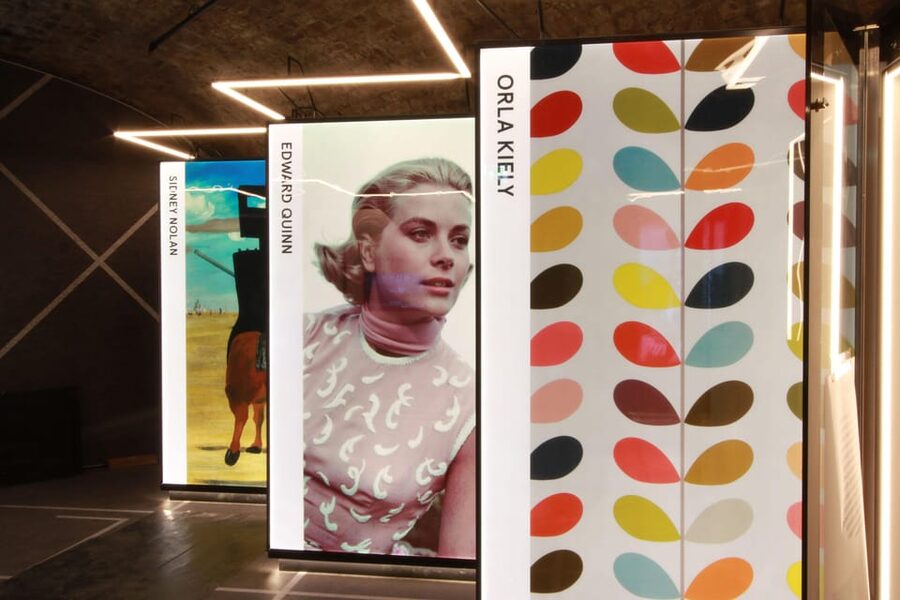
Give yourself a minimum of two hours. If you stop at most displays, listen to the audio, try the interactive features, and read carefully, two and a half hours is more realistic.
The ticket’s free return visit within 10 days makes this easier. You can make a first pass through the main galleries, then return to spend more time with the sections you skipped. This is particularly useful if you are visiting with family members who move at different speeds.
The return option also helps if you combine EPIC with the Jeanie Johnston or other Docklands sights. You do not have to force the museum into one hurried block at the end of a busy day.
A practical tip: do not arrive hungry late in the afternoon if you want to take your time. Food and drinks are not allowed inside the museum, and the experience can take longer than expected. Plan a café break before or after, or use one of the cafés and restaurants in the CHQ building.
The souvenir passport and audio app

Your souvenir passport is a small but effective part of the visit. It gives you something physical to take away from an experience that otherwise relies heavily on screens and sound.
For children, the passport can give the visit a clear purpose. For adults, it is a simple memento that reinforces the museum’s idea of identity, movement, and belonging.
The audio guide app is included, but you should arrive with a charged smartphone and headphones. The audio adds short explanations to the galleries and can help you understand the purpose of each section without stopping to read every label.
I would use the app as a supplement, not a requirement. The displays are designed to be explored directly, and you can still follow the main story without listening to every audio segment. If you want the fullest experience, though, make sure your phone is charged before you leave your accommodation.
Combining EPIC with the Jeanie Johnston
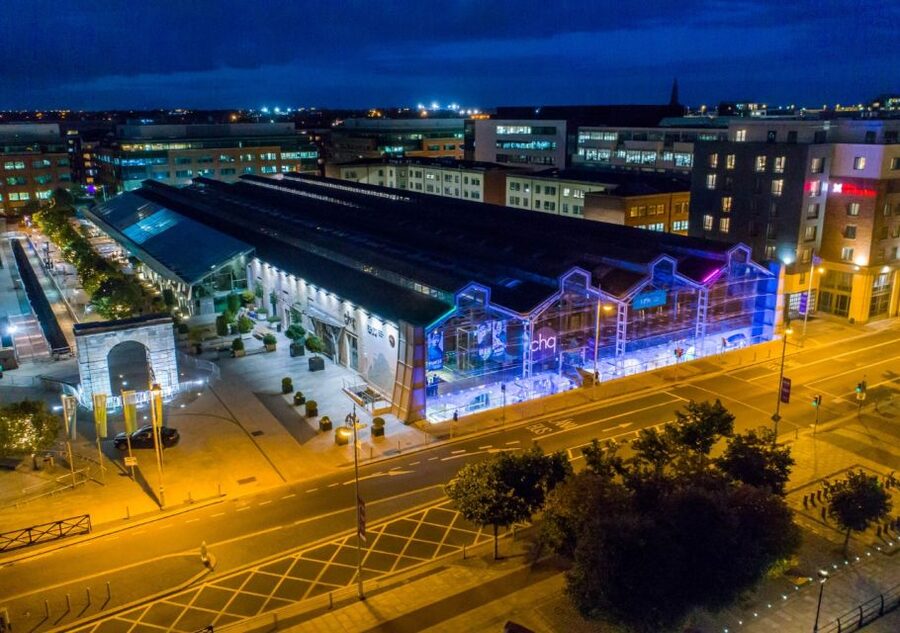
EPIC is directly opposite The Jeanie Johnston famine ship, which makes the two attractions natural companions. The ship is about a two-minute walk away, but its admission is not included in the EPIC ticket.
The pairing works because the two experiences approach Irish emigration in different ways. EPIC gives you a broad, worldwide story through interactive galleries. The Jeanie Johnston gives you a closer connection to the voyage and the conditions associated with famine-era migration.
You should budget separate time and money for the ship if you want to visit both. EPIC’s ticket does not include entry to the Irish Family History Centre either, even though that centre is located on-site.
The result can be a full half-day or day in the area without much transport between stops. Add a meal or coffee in the CHQ building, and the Docklands becomes a convenient part of your Dublin plan rather than a single museum stop.
Is the $24 ticket good value?
At $24 per person, EPIC is not a bargain-basement attraction, but the ticket offers more than a quick walk through a few rooms. You get a full day of admission, the audio guide app, a souvenir passport, and a free return visit within 10 days.
The return option is the key value point. If you use it, the price becomes easier to justify, especially when you consider the amount of multimedia content and the time needed to see the museum properly.
Booking online can also be cheaper than buying at the door, so compare the available prices before you go. The reserve-now-and-pay-later option may help if your Dublin plans are still shifting, and free cancellation is available up to 24 hours in advance for a full refund.
You should think of the ticket as a substantial museum visit, not a quick attraction you squeeze into 45 minutes. If you only have a short time in Dublin and want a classic historic building, EPIC may not be your first choice. If you want an accessible, modern account of Ireland’s worldwide influence, the price is reasonable.
Access, comfort, and practical details
EPIC is fully wheelchair accessible, and seating is available inside. Secure lockers can be used for bags and coats, which is helpful if you are carrying luggage or touring Dublin in changeable weather.
The host or greeter speaks English, and the museum experience is in English. No guided tour is included, so you should be comfortable using the displays and app independently.
Food and drinks are not allowed inside. Leave time for a break outside the galleries, especially if you are visiting with children or anyone who needs to rest.
The ticket is valid for one day, with starting times based on availability. The free return visit within 10 days is separate from the main day’s admission and gives you a useful second chance to finish the galleries.
Who will enjoy EPIC most?
I would recommend EPIC to anyone interested in Irish family history, migration, genealogy, or the worldwide influence of Irish culture. It is particularly useful for people who know they have Irish ancestry but want more context than a family tree can provide.
It also suits first-time Dublin visitors who want a clear introduction to Ireland beyond the usual castles, churches, and literary landmarks. The museum connects personal stories with major events, making the subject approachable even if you know little about Irish history.
Families may appreciate the hands-on approach, motion quizzes, and passport. The amount of reading and listening still means that very young children may need help staying focused, but the format gives them more to do than a traditional museum.
I would be more cautious if you dislike screens, headphones, or self-guided attractions. EPIC is thoughtfully arranged, but technology is central to the experience. You should also allow enough time to avoid feeling that you paid for a museum you had to rush through.
Should you book EPIC The Irish Emigration Museum?
Book it if you want to understand how Irish people and their descendants shaped the world, not just how Ireland looks on a map. The museum is easy to reach, wheelchair accessible, well suited to independent exploration, and strong on personal stories.
The best plan is to allow two to two and a half hours, bring headphones and a charged smartphone, then combine EPIC with the Jeanie Johnston and a meal in the CHQ building. Use the return visit if you can, since the galleries reward a second look.
Skip it only if you are seeking a quiet museum built around original objects or if your Dublin schedule is too tight for a proper visit. For most people with an interest in Ireland, ancestry, or migration, EPIC earns its place in the itinerary.
FAQ
Where is EPIC The Irish Emigration Museum located?
The museum is in the CHQ building at George’s Dock, Custom House Quay, in Dublin’s Docklands. It is about a five-minute walk from Connolly and Tara Street train stations and roughly 10 minutes from Dublin city centre.
How long is the EPIC museum ticket valid?
The ticket is valid for one day, with starting times based on availability. It also includes a free return visit within 10 days.
Is a guided tour included?
No. The ticket provides self-guided admission, along with access to the museum’s audio guide app. A guided tour is not included.
What does the EPIC ticket include?
The ticket includes entrance to EPIC The Irish Emigration Museum, the audio guide app, a souvenir passport, and a return visit within 10 days. It does not include the Irish Family History Centre or The Jeanie Johnston famine ship.
Is the museum wheelchair accessible?
Yes. EPIC is fully wheelchair accessible. Seating and secure lockers for bags and coats are also available.
What should I bring to EPIC?
Bring headphones and a charged smartphone if you want to use the audio guide app. Food and drinks are not allowed inside the museum.
Recently added around Dublin
- Dublin: Pub Tour. Pour The Perfect Guinness, Whiskey & Music★ 5.0 · 3 reviews
- Waterford Crystal and Kilkenny Full-Day Rail Tour from Dublin★ 5.0 · 3 reviews
- Cliffs of Moher and The Burren Private Tour from Dublin★ 5.0 · 3 reviews
- Private Chauffeur Service From Dublin Airport to Killarney★ 5.0 · 3 reviews
- Beautiful Southwest Tour 2022★ 5.0 · 3 reviews
- A Self Guided Walking Tour of Dublin’s Docklands★ 4.5 · 3 reviews
- Dublin One Day Tour with a Local: 100% Personalized & Private★ 4.5 · 3 reviews
- Ireland: 3-Day West Coast Explorer Tour★ 5.0 · 3 reviews
Dublin Tours, compared.

Dublin to Cliffs of Moher, including Wild Atlantic Way and Galway
Read our review →
Cliffs of Moher, Burren & Galway City Day Tour
Read our review →

Dublin to Belfast Black Cab, Dunluce Castle and Giant’s Causeway
Read our review →
Kilkenny, Wicklow Mountains & Glendalough Day Tour from Dublin
Read our review →
Wicklow Mountains, Glendalough & Kilkenny Tour
Read our review →

Dublin Highlights and Hidden Gems Guided Walking Tour
Read our review →Browse the lists this tour appears in