
Reviewed · DUBLIN TOURS
Dublin: Highlights and Hidden Corners Walking Tour
Dublin reveals itself best on foot, and this tour links the city’s famous sights with the odd little details you could easily miss alone. In 2.5 hours, you move from the Viking and medieval quarter across the River Liffey, then up O’Connell Street to Trinity College.
I like the small group of no more than 16, which makes it easier to hear the guide and ask questions. I also like the human stories and curious stops: a church that is now a café and bar, a former Lisbon tram, a wobbly bridge, and a naked statue of an 18th-century composer. The one thing to consider is the pace. One guest found the walking a little quick, so ask your guide to slow down if needed.
Key points at a glance
- A two-sided view of Dublin: The route covers the south side and north side of the River Liffey.
- A compact group: Numbers are limited to 16, and extra guides may be added when needed.
- A story-led route: Expect political history, architecture, local characters, and small Dublin oddities.
- A strong first-day tour: The walk gives you a useful map of central Dublin before you explore on your own.
- A landmark finish: The route takes you past the Bank of Ireland and ends around Trinity College and the Book of Kells.
- Outdoor sightseeing: All stops are viewed from outside, though you have opportunities to visit sites afterward.
Why this walk works as a first look at Dublin
At $31 per person, this is a sensible way to get your bearings in central Dublin without spending half a day inside one attraction. You are paying for a live guide, a carefully arranged route, and the connections between places that can seem unrelated when you see them one at a time.
The walk is not just a checklist of façades. It explains how Dublin’s medieval core, civic buildings, revolutionary landmarks, shopping streets, and university quarter fit together. I especially like that it crosses both sides of the Liffey. Many first-time visits stay around Temple Bar and Trinity College, but the north side gives you a fuller sense of the city.
The guides bring different strengths. Joe Brennan is praised for a comfortable walking pace and clear delivery. John O’Flynn brings an engaging account of Dublin’s architecture and political past. Jacob is noted for patience with questions and for helping with directions after the walk. Katie combines historical detail with humor, while Dave is described as friendly, funny, and attentive to the group.
That range matters because a walking tour can feel dry if the guide simply recites dates. Here, the aim is to connect events with people, buildings, and everyday details. You should expect an easy-going tone rather than a formal lecture.
More Walking Tours in Dublin
- Dublin Highlights and Hidden Gems Guided Walking Tour
★ 5.0 · 6,020 reviews - Dublin: Highlights and Hidden Gems Walking Tour
★ 4.9 · 2,140 reviews - 1916 Rebellion Walking Tour
★ 5.0 · 1,605 reviews
Starting at the Tree of Gold on Dame Street
The meeting point is the Tree of Gold statue, also called Crann an Óir, at the Central Plaza on Dame Street in Dublin 2. It is at the corner of Dame Street and Fownes Street Upper.
Dame Street is a useful starting place because it sits between several of the city’s key zones. From here, the walk heads into the former Viking and medieval quarter. You will not need a bus or taxi during the tour, and the route is designed as one continuous city-center walk.
The guide speaks English, and the activity is listed as wheelchair accessible. Since this is an outdoor urban walk, comfortable shoes and clothing suited to Dublin weather are practical choices. The duration is 2.5 hours, so you get a substantial introduction without giving up the whole day.
City Hall, Dublin Castle, and the medieval quarter
The first section brings you toward City Hall and the grounds and gardens of Dublin Castle. These places give the tour its civic and historical base.
City Hall is one of the city’s major public buildings, while Dublin Castle connects the center of modern Dublin with earlier periods of government and power. The tour visits the grounds and gardens from outside, so you should not expect an indoor castle tour as part of the $31 price.
That distinction is important. If you want to see the interiors of Dublin Castle, Christ Church Cathedral, or the Book of Kells, you will need to arrange those separately. The advantage here is that the guide gives you context before you decide which interiors deserve your time and admission money.
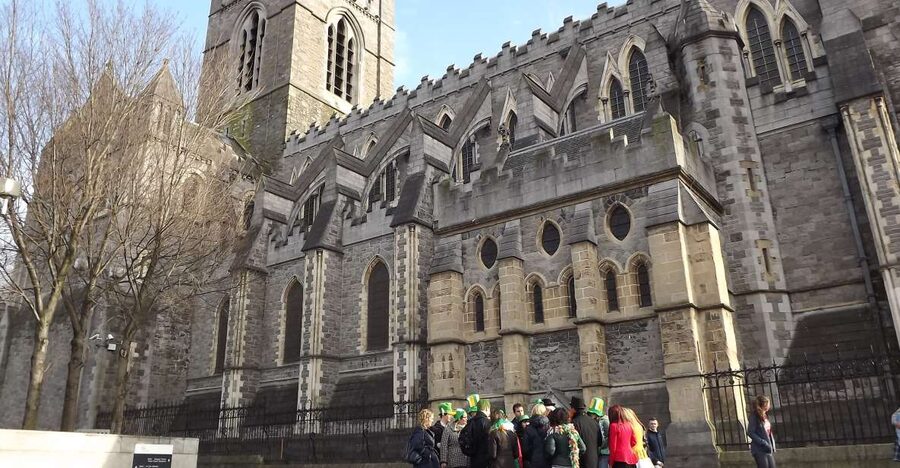
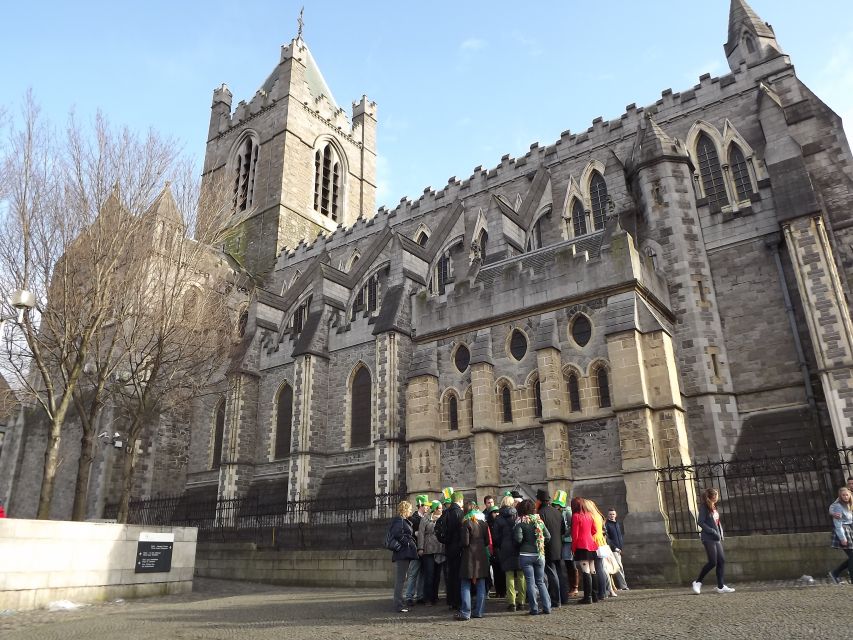
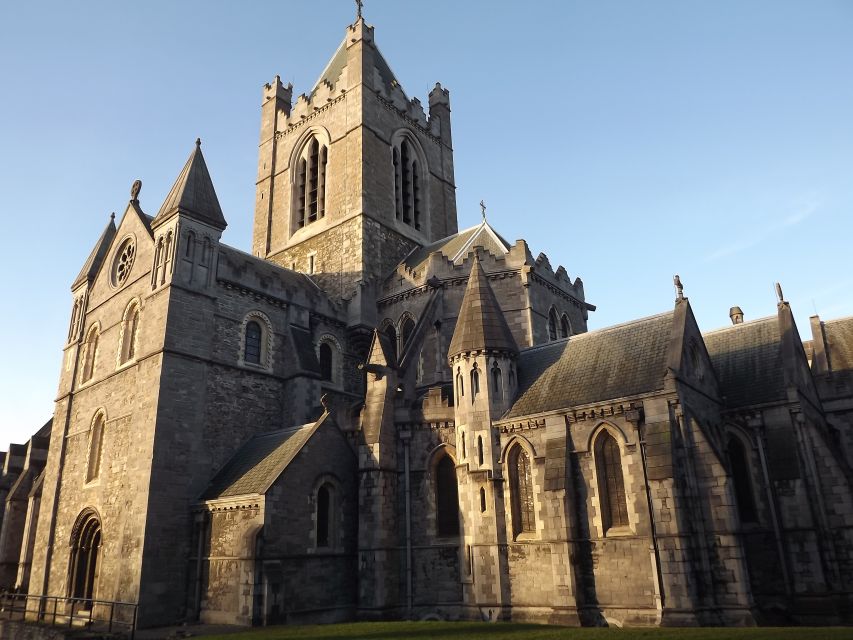
Christ Church Cathedral follows in this part of the route. Its position in the old quarter makes it one of the key markers of Dublin’s early city center. Even from outside, the cathedral helps you understand how concentrated the medieval quarter is. The guide also adds the sort of local stories that can make a familiar stone façade more memorable.
Fishamble Street and Smock Alley
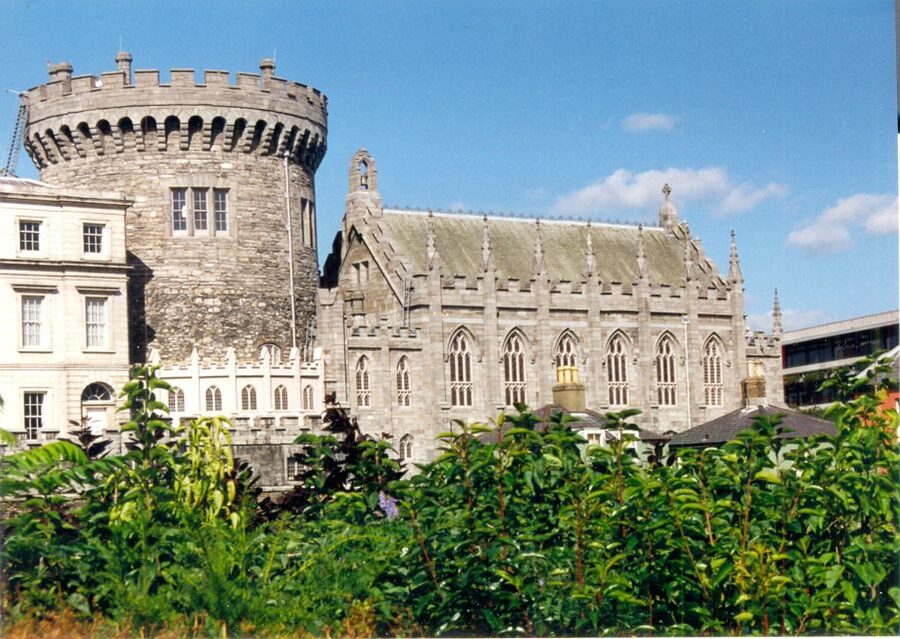
Fishamble Street and Smock Alley add a more intimate scale to the walk. Instead of only seeing grand public buildings, you move through streets connected with Dublin’s older civic and cultural life.
This is where the tour’s less obvious details become useful. Your guide points out places that are easy to pass without knowing their importance. The route also includes Dublin’s first full-time cinema, now defunct, which gives you a glimpse of the city’s entertainment past beyond the standard sights.
I like this part because it slows the story down from famous names and major events. You get streets, former uses, and small changes in the city’s fabric. The experience is strongest when you let the guide connect the visible building with what once happened there.
A different sort of day from the same base:
- Dublin to Cliffs of Moher, including Wild Atlantic Way and Galway
★ 5.0 · 23,331 reviews - From Dublin: Cliffs of Moher, Burren & Galway City Day Tour
★ 4.8 · 18,888 reviews - Dublin: Guinness Storehouse Entry Ticket
★ 4.6 · 16,863 reviews - Dublin to Cliffs of Moher, Burren, Wild Atlantic Way, Galway Tour
★ 5.0 · 12,924 reviews
Temple Bar beyond the pub signs
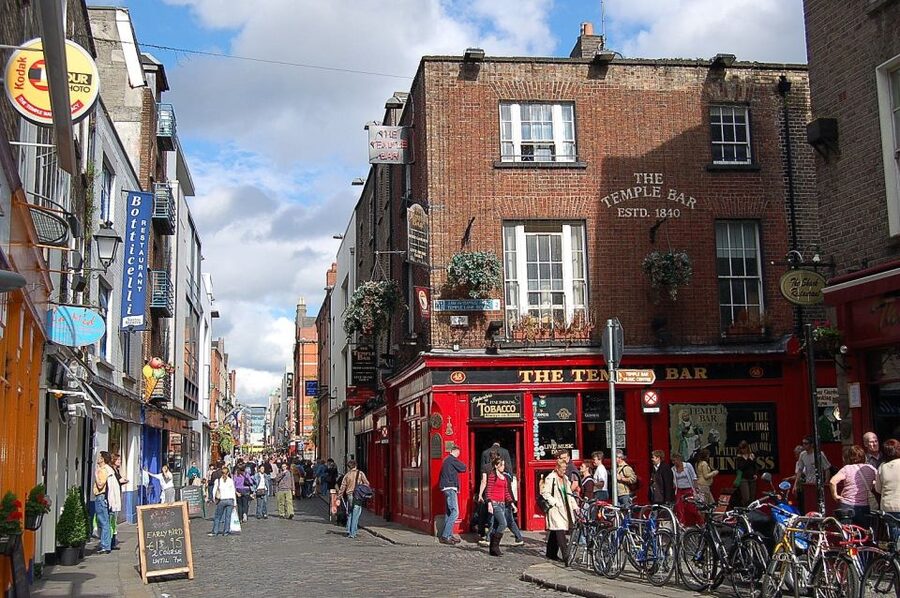
The route continues through Meeting House Square and Temple Bar. This is the part of Dublin many people already know from photos and nightlife advertising, but the walk presents more than the usual pub district.
Meeting House Square helps show that Temple Bar has cultural and civic spaces as well as restaurants and bars. The guide can also point out the details that are easily lost when you move through the area on your way to dinner.
Temple Bar can be crowded, and that may affect how easily you hear or move with the group. The small maximum group size helps, but you should still stay close to the guide in busy areas. The tour is not designed as a long stop for food or drinks, so save those plans for afterward.
Crossing the Liffey by Millennium Bridge
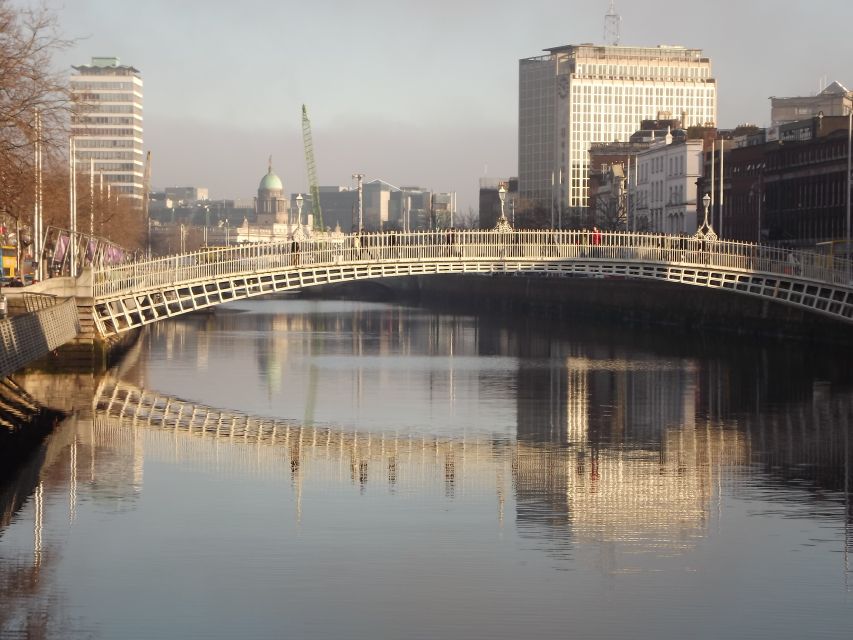
The Millennium Bridge provides a clear transition in the route. You cross the River Liffey from the south side to the north side, shifting from the medieval and Temple Bar areas toward central O’Connell Street.
The bridge is also one of the tour’s playful moments. You may get to feel its slight bounce as you walk. It is a small experience, but it gives the crossing a physical character that a standard sightseeing bus cannot offer.
From the bridge, the tour moves through the Italian Quarter. This section is another reminder that Dublin is best understood through its smaller neighborhoods and changing uses. You are not simply being led from one postcard view to the next. The guide uses the route to point out how different parts of central Dublin sit close together.
The former church that became a café and bar
St Mary’s Church is one of the tour’s more surprising stops. It is now a famous café and bar, but its former religious identity remains part of the story.
This is the kind of place I would likely walk past without a guide and fail to understand. The change from church to café and bar gives you a concrete example of how old Dublin buildings continue to find new uses.
The tour also points out a former Lisbon tram that now serves as a café. Details like this are a major reason to choose a guided walk instead of following a basic map. You get a series of visual clues to Dublin’s past and present, not just a list of monuments.
Henry Street, Moore Street, and everyday Dublin
Henry and Moore Streets bring the walk into a more everyday part of central Dublin. These streets are tied to shopping, local movement, and ordinary city life, so they balance the older civic and religious landmarks.
This section is useful if you want to understand where Dublin feels like a working city rather than an attraction zone. Your guide may also share practical suggestions for the rest of your visit. Katie, in particular, is praised for giving recommendations that can help shape the rest of a Dublin stay.
The pace can be important here. With so much to cover, the walk keeps moving, and one guest wanted a slower rhythm. If you like taking photographs or need extra time at each stop, say so early. A group guide cannot always stop for long, but a clear request may help.
O’Connell Street and the story of 1916
O’Connell Street is one of the tour’s most important sections. The route passes the General Post Office, the headquarters of the rebels during the 1916 Rising.
The building was badly damaged during the uprising, along with much of the surrounding street. The guide explains the event through the building and the people connected with it, rather than treating it as a detached date in Irish history.
The O’Connell Monument adds another layer to the street. This broad historic avenue helps you see how Dublin’s political memory is written into its public spaces. The tour’s focus on personal stories is especially valuable here because the buildings alone cannot explain why the street matters so much.
The guide may also point out a post box that reflects Ireland’s move toward independence. It is an easily missed object, but it shows how a national change can appear in a small piece of street furniture. That is the tour at its best: a major event explained through a detail you can actually see.
The Bank of Ireland and Trinity College
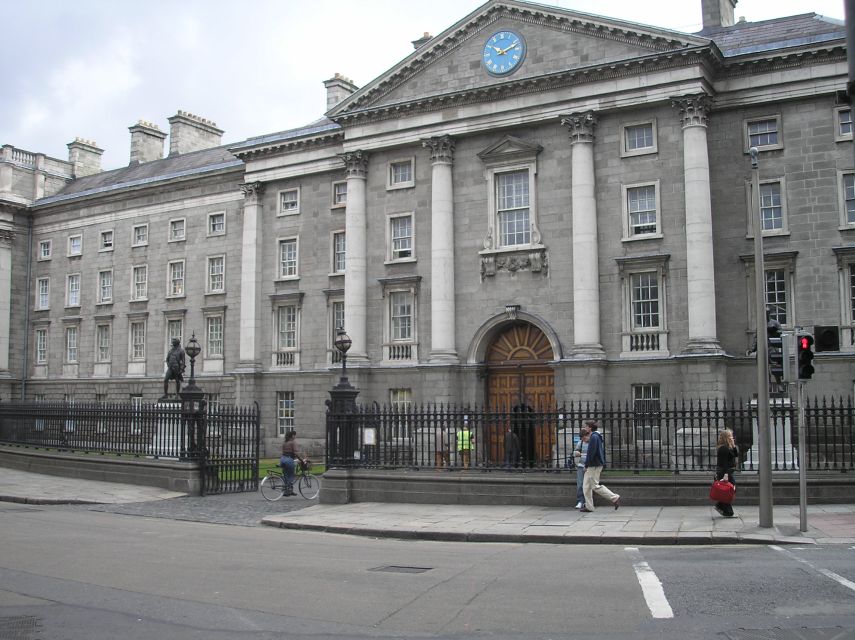
The final section takes you past the former Parliament House, now the Bank of Ireland. The building connects Dublin’s architectural story with the political institutions that once met there.
The walk then finishes around Trinity College and its famed Book of Kells. The tour views the attraction from outside, so you will not see the manuscript as part of the guided experience. Still, ending here gives you an ideal point for a separate visit.
The route description says the walk finishes outside Trinity College, while the activity information also lists the end as back at the meeting point. That is a detail worth confirming when you book, especially if you have a timed Trinity College entry or another appointment afterward.
This ending works well for planning. You can ask the guide about visiting the Book of Kells, continue exploring Trinity College, or walk onward to other central sights. The guide’s local suggestions can be just as useful as the formal route.
The odd details make the tour memorable
The unusual stops are not filler. They give the walk its personality and help you remember Dublin after the tour ends.
You may see:
- Dublin’s first full-time cinema, now gone
- A church that has become a café and bar
- A former Lisbon tram serving as a café
- An amusing version of a Leonardo da Vinci painting
- The slightly wobbly Millennium Bridge
- A post box linked to Ireland’s change to independence
- A naked representation of a famous 18th-century composer
These details are valuable because they do not appear on every standard city tour. They also make the experience suitable for people who have already seen the main Dublin landmarks and want something less predictable.
Group size, timing, and value at $31
The maximum group size is 16, and extra guides may be added when needed. That is a good balance for a city walk. A private tour would offer more flexibility, but it would cost more. A large coach tour would cover less of Dublin on foot and make questions harder.
The 2.5-hour length is another strength. It is long enough to cover a wide central route, but short enough to fit around a museum, meal, or afternoon visit. You should not expect a slow photographic walk. This is a steady introduction with frequent stops for explanation.
At $31, the value depends on what you want. If you only need directions between major sights, you can walk the route yourself for free. But you would miss the stories, the odd street details, and the connections between the medieval quarter, Temple Bar, the Liffey, O’Connell Street, and Trinity College.
The price does not include admissions, and all visits are external. That keeps the tour affordable, but you should budget separately for places you decide to enter afterward.
Free cancellation is available up to 24 hours before the tour, and you can reserve now and pay later. Those terms are helpful if your Dublin schedule is still changing.
Who should book this Dublin walk
I would choose this tour for a first or second day in Dublin. It gives you a usable mental map of the center and leaves you with several ideas for later. It also suits anyone who likes history delivered through stories rather than a long formal speech.
The walk is a good fit for:
- First-time visitors who want the major city-center sights in one outing
- Independent visitors who want local suggestions for the rest of their stay
- People interested in Dublin’s political and architectural past
- Repeat visitors looking for unusual street details
- Small groups who prefer to ask questions
- Visitors who want an outdoor introduction before choosing paid attractions
You may want another option if you dislike walking for 2.5 hours, need long stops for photographs, or want to tour the interiors of Dublin Castle, Christ Church Cathedral, or Trinity College during the same booking.
Should you book Pat Liddy’s Walking Tour?
Book it if you want a well-paced introduction to central Dublin with major landmarks, local stories, and unusual corners in one route. The guide quality is a clear strength, with Joe Brennan, John O’Flynn, Jacob, Katie, Dave, and other trained guides bringing humor, patience, and practical advice to the walk.
Skip it if you want a full interior tour or a very slow stroll. For most people, though, the combination of a 16-person limit, a sensible 2.5-hour route, and a $31 price makes this a useful first step into Dublin. Wear comfortable shoes, stay open to the small curiosities, and leave time afterward for Trinity College or any other site that catches your interest.
FAQ
How long is the Dublin Highlights and Hidden Corners Walking Tour?
The tour lasts 2.5 hours. Starting times vary, so check availability when booking.
What is the price?
The price is $31 per person.
Where does the tour start?
It starts at the Tree of Gold statue, also called Crann an Óir, at Central Plaza on Dame Street, Dublin 2. The meeting point is at the corner of Dame Street and Fownes Street Upper.
What language is the tour conducted in?
The tour is conducted in English, with a live English-speaking guide.
How large is the group?
The maximum group size is 16 people. Additional guides are provided when required.
Does the tour go inside Dublin Castle, Christ Church Cathedral, or Trinity College?
No. All visits are external. Opportunities are available to visit some of these places after the walking tour.
Is the tour wheelchair accessible?
Yes, the activity is listed as wheelchair accessible.
Can I cancel the booking?
Yes. You can cancel up to 24 hours in advance for a full refund. You can also reserve now and pay later.
Recently added around Dublin
- Dublin: Pub Tour. Pour The Perfect Guinness, Whiskey & Music★ 5.0 · 3 reviews
- Waterford Crystal and Kilkenny Full-Day Rail Tour from Dublin★ 5.0 · 3 reviews
- Cliffs of Moher and The Burren Private Tour from Dublin★ 5.0 · 3 reviews
- Private Chauffeur Service From Dublin Airport to Killarney★ 5.0 · 3 reviews
- A Self Guided Walking Tour of Dublin’s Docklands★ 4.5 · 3 reviews
- Beautiful Southwest Tour 2022★ 5.0 · 3 reviews
- Dublin One Day Tour with a Local: 100% Personalized & Private★ 4.5 · 3 reviews
- Ireland: 3-Day West Coast Explorer Tour★ 5.0 · 3 reviews
Dublin Tours, compared.

Dublin to Cliffs of Moher, including Wild Atlantic Way and Galway
Read our review →
Cliffs of Moher, Burren & Galway City Day Tour
Read our review →

Dublin to Belfast Black Cab, Dunluce Castle and Giant’s Causeway
Read our review →
Kilkenny, Wicklow Mountains & Glendalough Day Tour from Dublin
Read our review →
Wicklow Mountains, Glendalough & Kilkenny Tour
Read our review →

Dublin Highlights and Hidden Gems Guided Walking Tour
Read our review →Browse the lists this tour appears in