
Reviewed · DUBLIN TOURS
Dublin: Jeanie Johnston Tall Ship Irish Famine History Tour
The Jeanie Johnston puts Ireland’s famine story in a place where the hardship is easier to grasp: inside the cramped wooden hull of an emigrant ship. In 50 minutes, you walk the upper deck, then go below to see where as many as 250 passengers spent most of a long Atlantic crossing.
I like the mix of shipbuilding and human stories. You learn why the vessel changed from carrying timber to carrying people, then meet the passengers and crew through their personal accounts. I also like the setting on Dublin’s North Dock, where the masts, gulls, wind, and working waterfront add something a museum room cannot.
The main drawback is the short running time. The tour is focused and well paced, but it cannot cover every part of famine history in depth. The steep and confined shipboard spaces also make this a poor choice for wheelchair users or anyone with limited mobility.
Key points to know before you go
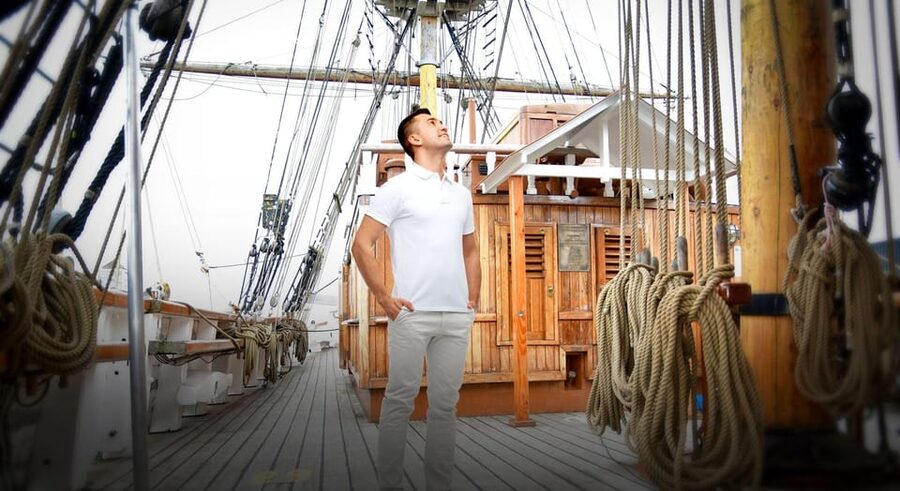
- A real shipboard setting: Walk the upper deck and descend into the cramped quarters used by famine-era emigrants.
- Personal stories matter: The guide explains how passengers paid for the crossing, what they ate, and what awaited them at the other end.
- A compact 50-minute visit: The tour is easy to fit between other Dublin sights.
- Strong live guiding: Steve, Claire, Eoin, Owen, Klee, Katrina, and other guides have helped make the history clear, warm, and engaging.
- Good value at $16: You get admission and a guided visit, with no extra charge for the main experience.
- Plan for stairs and tight spaces: Comfortable shoes are useful, but the ship is not suitable for wheelchair users or people with limited mobility.
Why the Jeanie Johnston makes famine history feel real
Ireland’s Great Famine forced about one million people to leave the country. The Jeanie Johnston carried roughly 2,500 of them on difficult voyages, giving this tour a direct connection to one of the largest movements of people in Irish history.
Numbers alone can feel remote. Standing below deck, with the ceiling close overhead and the living space tightly packed, gives those numbers a human scale. You can picture families trying to sleep, eat, care for children, and protect their belongings during a voyage that lasted for weeks.
The tour does not treat the ship as a decorative attraction. It uses the vessel to explain why people left, how they arranged passage, and what risks they accepted. Disease, starvation, and shipwreck were real dangers. Even the promise of a new life came with uncertainty, debt, separation, and the possibility of arriving with very little.
A particularly striking detail is the number of people who could be carried at once. Up to 250 passengers spent most of their time below deck and were allowed only about half an hour of fresh air each day. That fact changes how you look at the ship’s attractive exterior. The tall masts and neat lines are impressive, but the lower deck tells the harder story.
More Historical Tours in Dublin
- Dublin Historical Centre Food Tour with 8 Food Tastings & Drinks
★ 5.0 · 1,718 reviews - 2-Hour Historical Walking Tour from Dublin
★ 5.0 · 875 reviews - Historical 2-Hour Guided Walking Tour of Dublin
★ 4.7 · 865 reviews
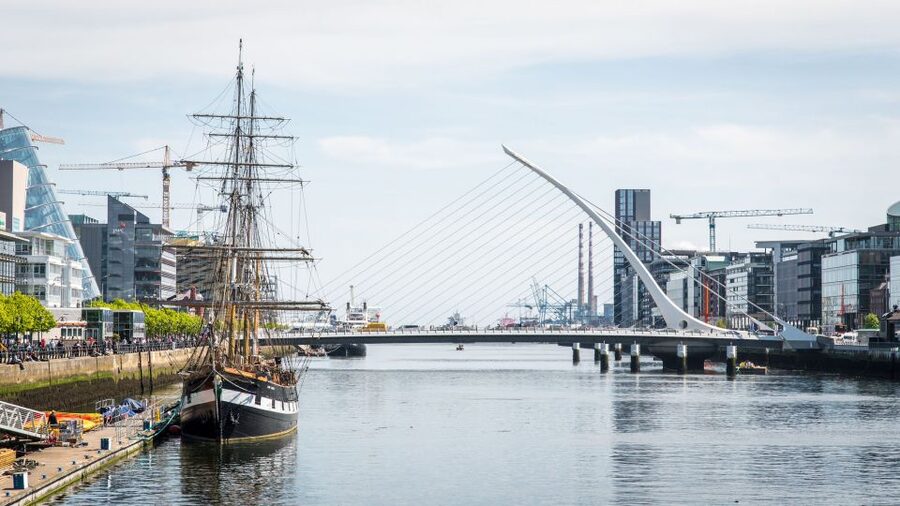
Starting at Custom House Quay in Dublin’s North Dock
The tour begins at the Jeanie Johnston Tallship at City Moorings, Custom House Quay, Dublin 1. This puts you in the Docklands rather than in the middle of the old city center, so leave enough time to reach the meeting point.
The location adds useful context. From the upper deck, you can look across Dublin’s Docklands and hear the working sounds of the waterfront. Wind, salt air, and gulls help you picture the ship as a vessel built for movement, not simply as an indoor exhibit.
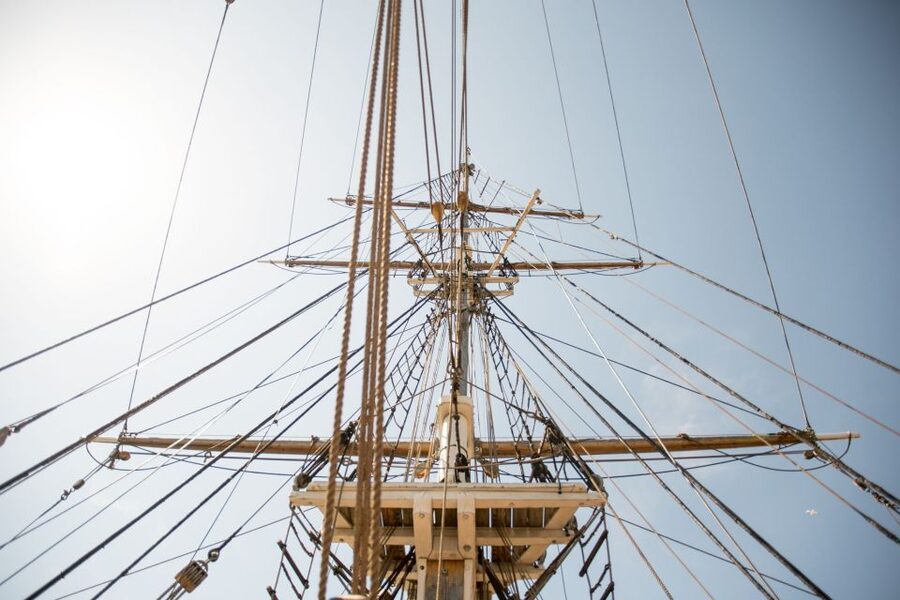
The ship is also one of the area’s most photographed attractions. You will have a natural chance to take pictures on deck, with the masts and rigging providing the best visual reminder that this is a tall ship. Bring a jacket if the day looks cool or windy, since the open deck can feel quite different from the streets nearby.
The exact starting time depends on availability. Since the full visit lasts only 50 minutes, it can fit neatly into a Dublin day, but I would avoid arriving at the last possible moment. A little breathing room helps you find the mooring and get ready for the guide’s introduction.
The upper deck: masts, timber, and the shipping trade
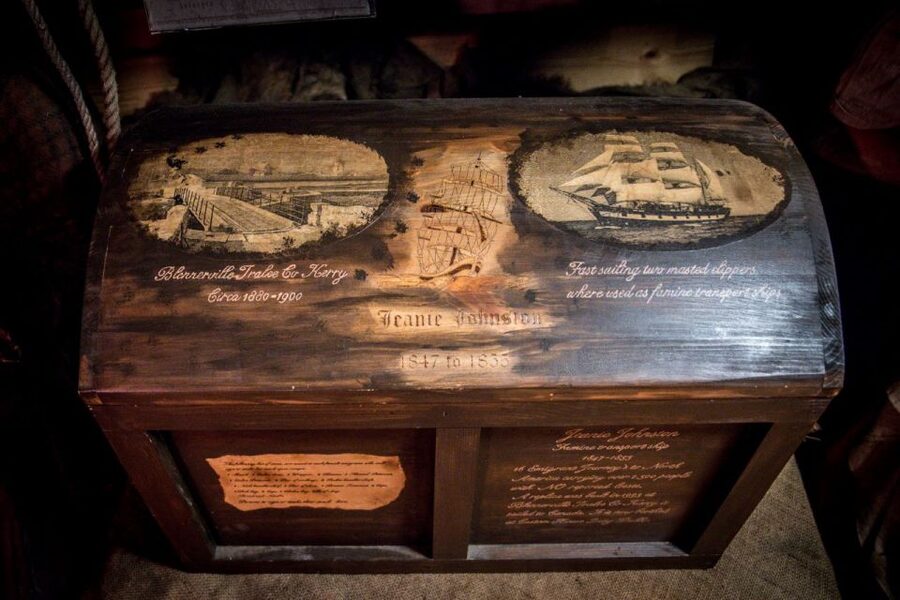
The visit begins above deck. Here, the guide introduces the original Jeanie Johnston, explains its place in the nineteenth-century shipping trade, and points out how the ship was built.
You learn that the vessel began its working life transporting timber before its role changed to carrying people. That shift says a lot about the economic pressures of the era. A ship designed for cargo became part of a desperate migration system, carrying people who were trying to escape hunger and find work elsewhere.
The upper deck is the right place to start because it lets you see the ship as a sailing craft before confronting its living conditions. Look up at the masts and take in the carpentry. Then consider the practical question at the heart of the tour: how could a vessel built for ocean travel also become a temporary home for hundreds of people?
The guide also explains the building of the replica ship. This matters because the vessel you visit is a replica, while the original ship is part of the historical story. The replica allows you to move through a ship of the same name and design tradition, giving physical form to the accounts of those who crossed the Atlantic.
This section is not just a photo stop. It connects the ship to the wider nineteenth-century shipping trade and gives you a basic framework before the tour moves below. If you have children with you, the masts and deck make an immediate visual impression, while the guide’s questions and stories help keep the visit moving.
Below deck: the hardest part of the visit
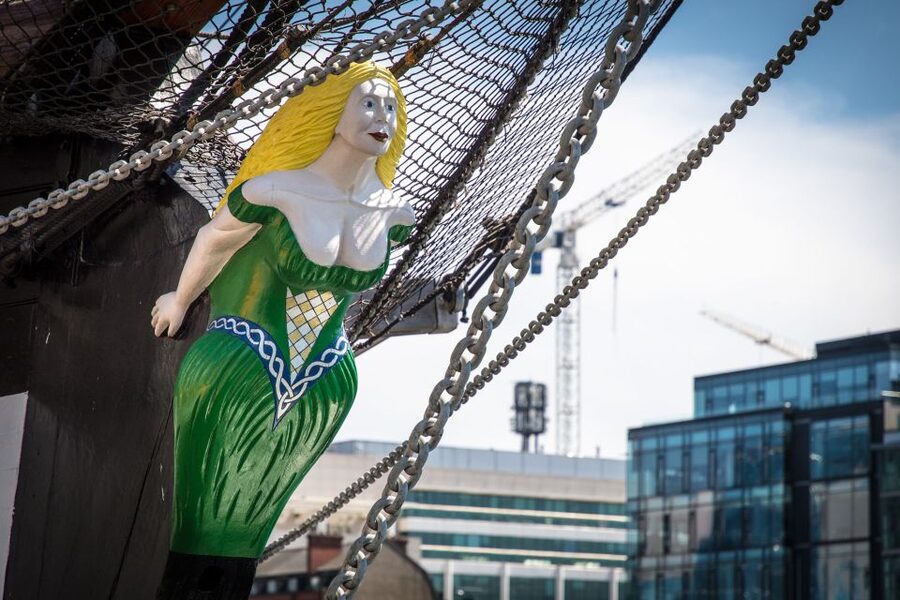
Going below deck changes the mood. The space is cramped, and the contrast with the open air above is the tour’s most effective lesson.
As many as 250 passengers spent most of their voyage in these confined conditions. They came out for only a short period of fresh air each day, so below deck was not simply a sleeping area. It was where people waited, ate, talked, worried, and tried to endure the crossing.
The guide introduces selected passengers and crew through personal stories. You learn how people paid for their passage, what food they had during the voyage, and how they passed the time. These details are valuable because they show that the passengers were not just part of a statistic. They had names, families, plans, and different reasons for making the journey.
The tour also explains the grim practical realities. Disease could spread quickly in tight quarters. Hunger and poor sanitation created further danger. A ship crossing the ocean offered no easy way to escape illness, and a storm or accident could turn a hard trip into a disaster.
The enclosed spaces may feel emotional, especially when you think about children and elderly passengers spending so much time there. The guides use a balance of seriousness and humor, which helps the experience remain accessible without making light of the suffering. Guides including Steve, Claire, Owen, Eoin, and Gearoid have been singled out for making difficult material clear and involving.
Some passengers may find the mannequins unsettling, especially younger children. One guide, Catriona, was praised for helping a child feel comfortable around them. That reflects an important strength of the tour: a good guide can adjust the delivery for families, children, and adults without losing the subject’s seriousness.
A different sort of day from the same base:
- Dublin to Cliffs of Moher, including Wild Atlantic Way and Galway
★ 5.0 · 23,331 reviews - From Dublin: Cliffs of Moher, Burren & Galway City Day Tour
★ 4.8 · 18,888 reviews - Dublin: Guinness Storehouse Entry Ticket
★ 4.6 · 16,863 reviews - Dublin to Cliffs of Moher, Burren, Wild Atlantic Way, Galway Tour
★ 5.0 · 12,924 reviews
The people behind the passenger numbers
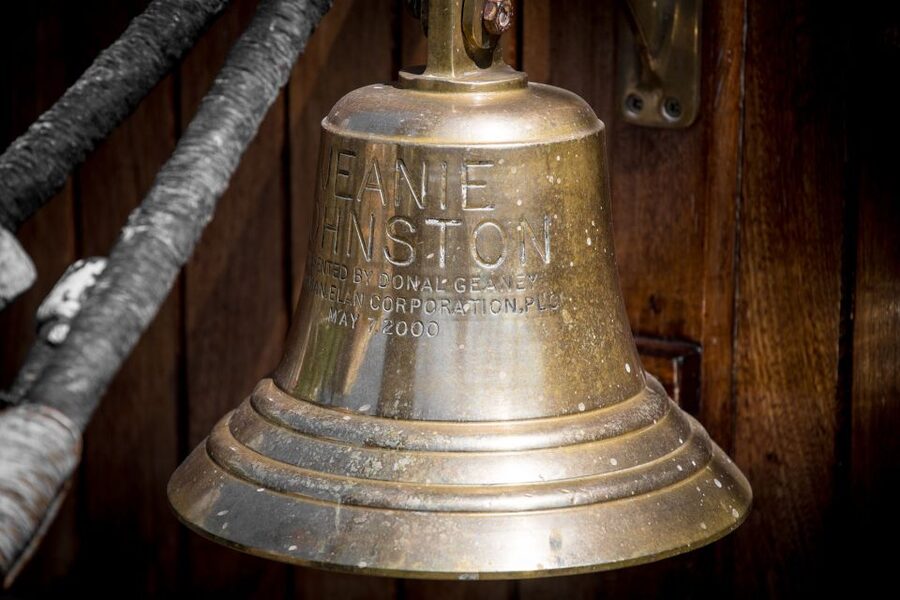
The best part of the tour is its attention to ordinary people. You hear about the choices families had to make and the lengths they went to in order to survive.
The guide explains how passengers paid for the journey, a detail that brings the economics of emigration into view. Passage was not an abstract ticket. Families had to find the money or make arrangements during a period when food, work, and security were already scarce.
You also hear about what happened after arrival. Leaving Ireland did not end the struggle. The destination could bring work and opportunity, but it also meant uncertainty and separation from home. The tour encourages you to think about the crossing as one stage in a much longer story.
The Jeanie Johnston’s own record adds another striking element. It made 16 voyages to America without a death on board, according to the history presented during the visit. That does not make the conditions comfortable or safe, but it does set this ship apart from the worst famine ships, where disease and death were common.
I find this detail particularly useful because it prevents the story from becoming too simple. The voyage was harsh, but the ship’s record was unusual. Good history allows room for both truths: passengers faced terrible conditions, and this particular vessel had a comparatively successful record.
Guides make the difference
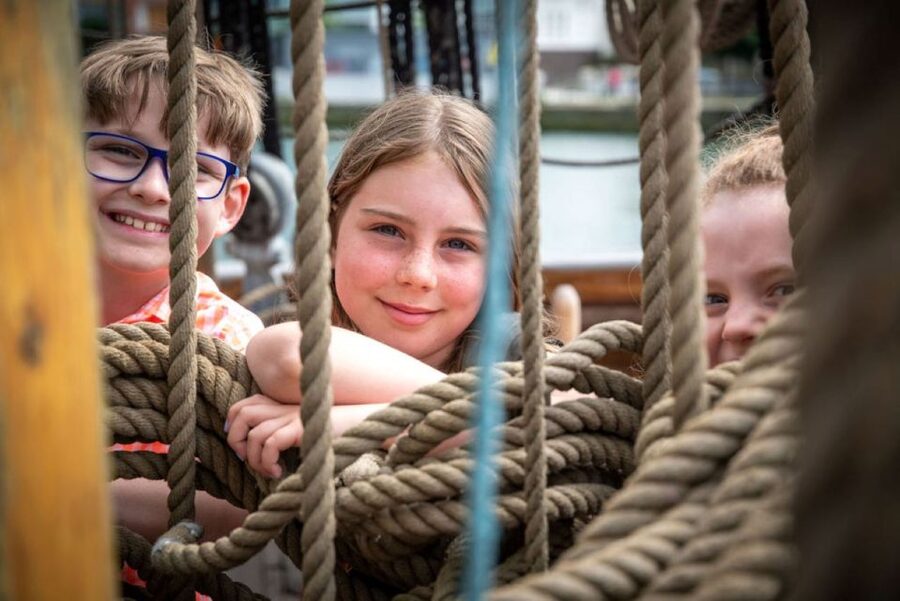
The tour is delivered in English by a live guide. That matters here because the experience depends on pacing, tone, and the ability to connect separate facts into a clear human story.
Steve has been praised for being friendly, informative, and entertaining, including with families whose children ranged from age seven to fifteen. Claire has been described as funny, clear, and well prepared, while Eoin brought both seriousness and humor to the story. Other named guides include Josh, Owen, Ronan, Rolland, Gearoid, Katrina, Klee, and Catriona.
You should not book this expecting an identical script delivered in exactly the same way each time. The guide’s personality will shape the visit. That is part of the appeal of a live tour, though it also means the quality depends on who leads your departure.
The strongest guides do more than recite dates. They ask where people are from, encourage questions, and relate the ship’s story to the people standing in front of them. This approach has worked well for children and teenagers, with one family reporting that even a 16-year-old stayed engaged throughout.
If you have questions, ask them. The guides have handled questions about the ship, the passengers, the crossing, food, payment, and the wider famine period. A 50-minute tour moves quickly, so ask during the relevant section rather than saving everything for the end.
Is $16 good value for 50 minutes?
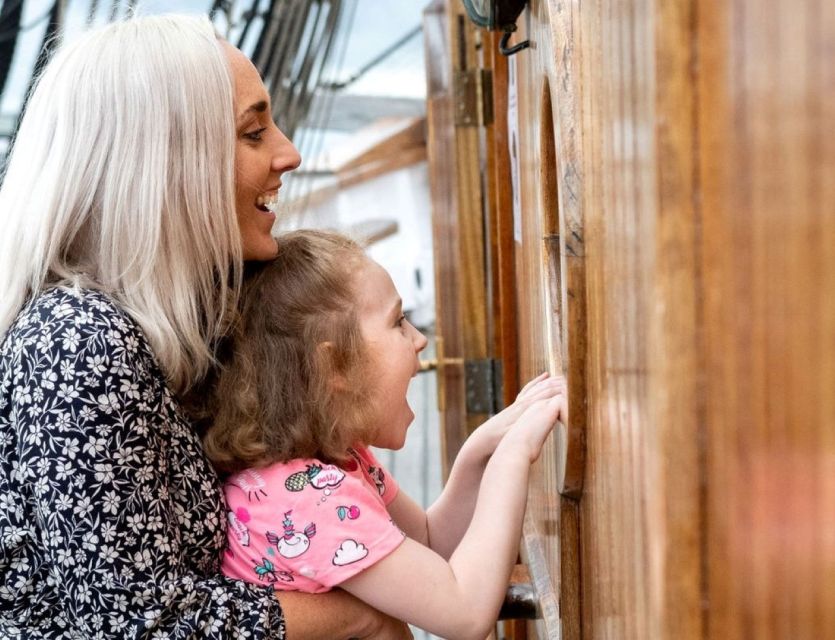
At $16 per person, this is a reasonably priced Dublin attraction, especially if you want a guided experience rather than a quick look around a ship.
You are paying for admission and the guided tour, not transport, food, or hotel pickup. The visit lasts 50 minutes, which keeps the cost manageable and makes it easy to pair with other Docklands sights. I would not judge the value by minutes alone. The ship provides a physical setting that helps the history stick, and the live guide adds interpretation that you would not get from simply viewing the exterior.
The limitation is that the tour is brief. If you want a long museum visit with many exhibits, documents, or time for quiet reading, this will feel focused rather than extensive. Its value comes from the combination of place, storytelling, and a clear introduction to famine-era emigration.
I consider it especially good value for families and first-time visitors who want a concise introduction. It also works for anyone who has visited Dublin several times but has never made time for the Jeanie Johnston.
Practical details for a comfortable visit
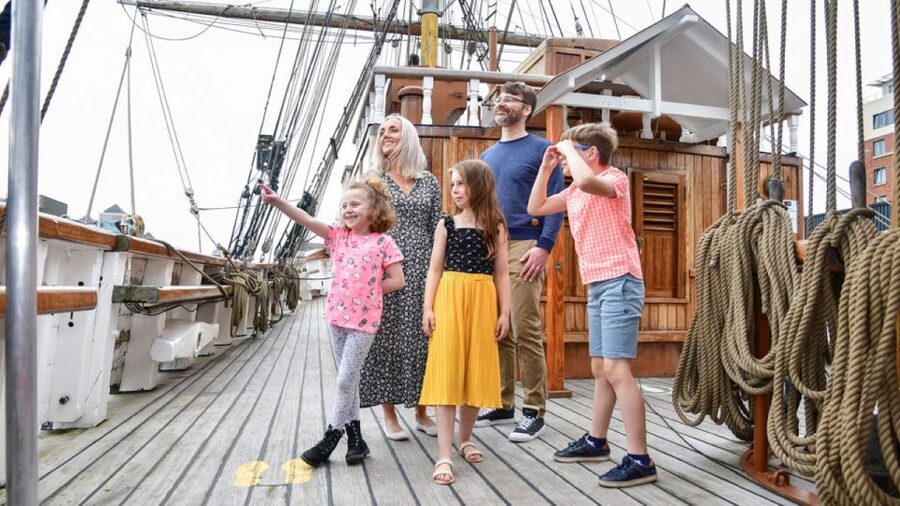
Wear comfortable shoes. You will move around the ship and use stairs, and the lower deck is confined. The attraction is not recommended for people with limited mobility and is not suitable for wheelchair users.
This is not a hotel pickup experience. You make your own way to City Moorings, Custom House Quay, Dublin 1, and the activity finishes back at the same meeting point.
The tour is in English, with a live guide. If you are traveling with children, prepare them for a serious story and the possibility of mannequins below deck. The material can be emotional, but guides have shown they can explain it in a way that keeps younger visitors involved.
You can cancel up to 24 hours before the start for a full refund. You can also reserve now and pay later, which is useful when you are arranging several Dublin activities and want to keep your schedule flexible.
Who should book the Jeanie Johnston?
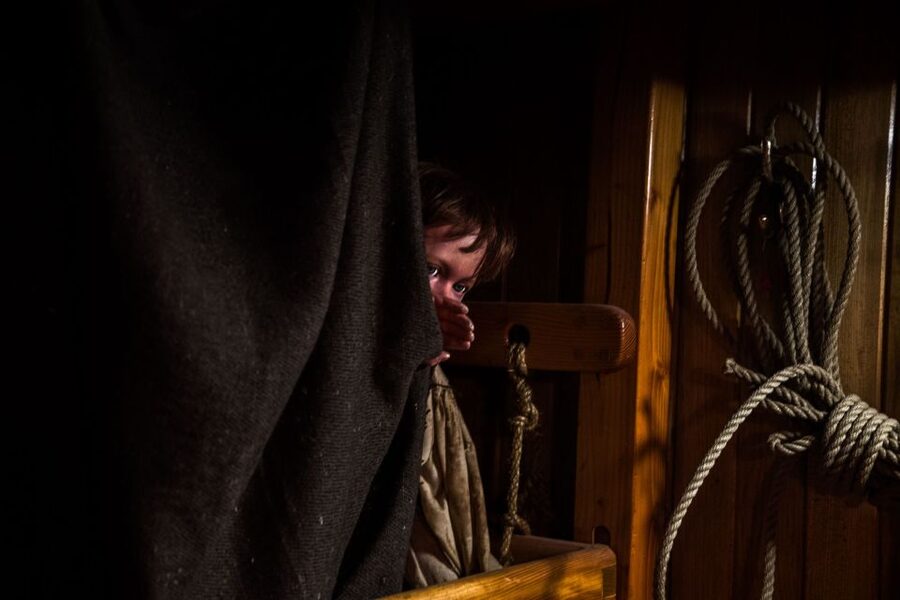
I would book this if you want Irish history presented through real spaces and personal accounts. The ship’s upper deck is photogenic, but the lower deck is the real reason to come. It gives you a physical sense of crowding that a standard city walk cannot match.
Families should consider it, particularly if the children are old enough to follow a serious story. The guides have done well with children as young as eight and with teenagers, but the confined space and famine subject will not suit every child.
This is also a good choice for anyone interested in migration, maritime history, genealogy, or the social effects of the Great Famine. You do not need specialist knowledge. The guide explains the story in plain terms and leaves time for questions.
I would choose another attraction if you need step-free access, dislike tight spaces, or want a longer and quieter museum visit. For most other visitors, the $16 price and compact format make it an easy addition to a Dublin itinerary.
FAQ
How long does the Jeanie Johnston tour last?
The guided tour lasts 50 minutes. Check availability when booking for the current starting times.
Where does the tour begin and end?
It begins at the Jeanie Johnston Tallship, City Moorings, Custom House Quay, Dublin 1. The activity ends back at the same meeting point.
What language is the tour in?
The tour is conducted in English by a live guide.
What is included in the price?
The price includes entrance and access to the guided tour of the Jeanie Johnston tall ship. Hotel pickup and drop-off are not included.
Is the tour suitable for wheelchair users?
No. The tour is not suitable for wheelchair users or people with limited mobility.
What should I bring?
Wear comfortable shoes. You will walk around the ship and use stairs, including when visiting the lower deck.
Recently added around Dublin
- Dublin: Pub Tour. Pour The Perfect Guinness, Whiskey & Music★ 5.0 · 3 reviews
- Waterford Crystal and Kilkenny Full-Day Rail Tour from Dublin★ 5.0 · 3 reviews
- Cliffs of Moher and The Burren Private Tour from Dublin★ 5.0 · 3 reviews
- Private Chauffeur Service From Dublin Airport to Killarney★ 5.0 · 3 reviews
- Beautiful Southwest Tour 2022★ 5.0 · 3 reviews
- A Self Guided Walking Tour of Dublin’s Docklands★ 4.5 · 3 reviews
- Dublin One Day Tour with a Local: 100% Personalized & Private★ 4.5 · 3 reviews
- Ireland: 3-Day West Coast Explorer Tour★ 5.0 · 3 reviews
Dublin Tours, compared.
Dublin to Cliffs of Moher, including Wild Atlantic Way and Galway
Read our review →
Cliffs of Moher, Burren & Galway City Day Tour
Read our review →
Dublin to Belfast Black Cab, Dunluce Castle and Giant’s Causeway
Read our review →
Kilkenny, Wicklow Mountains & Glendalough Day Tour from Dublin
Read our review →
Wicklow Mountains, Glendalough & Kilkenny Tour
Read our review →
Dublin Highlights and Hidden Gems Guided Walking Tour
Read our review →Browse the lists this tour appears in