
Reviewed · DUBLIN TOURS
Historical 2-Hour Guided Walking Tour of Dublin
Dublin’s past is complicated, and this tour does a fine job of making it understandable in two hours. You’ll walk from the Henry Grattan Statue by Trinity College through Dublin Castle, Temple Bar, City Hall, and the Medieval City, while your guide links buildings and streets to the American and French revolutions, the Potato Famine, the 1916 Rising, the War of Independence, and the Northern Ireland peace process.
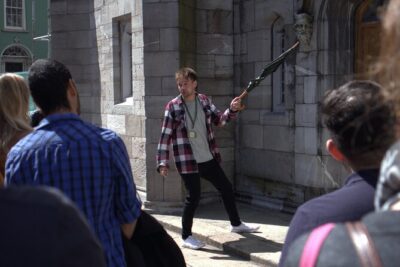
I like two things here. First, the guides are history graduates of Trinity College Dublin or University College Dublin, so you get more than a string of dates. Second, the tour uses wit, anecdotes, and sometimes even singing to keep the past moving. The main consideration is pace: two hours covers a lot, and the information can feel dense if you prefer a slow stroll with long photo stops.
- Trinity-trained guides: Expect strong command of Irish history, with guides such as Jodie, Daragh, Colm, Eoin, Grace, Nate, and Tommy leading recent tours.
- A useful central route: See Dublin Castle, Temple Bar, City Hall, and medieval streets without needing transport between stops.
- History with personality: Guides mix dates and political context with humor, personal stories, songs, and questions.
- Major turning points explained: The walk connects the Famine, 1916 Rising, War of Independence, and Northern Ireland peace process.
- Good first-day orientation: The tour gives you a framework for understanding Dublin before visiting more museums and historic sites.
- Practical value: At $22 per person, it offers two hours of live guiding and entrance fees listed on the itinerary, though Dublin Castle’s State Apartments cost extra.
Why This Dublin Walk Works So Well
This is not simply a walk past old buildings. The guide’s job is to explain why those buildings matter, and that makes the route useful.
Dublin can be hard to read at street level. A castle, a civic building, a pub-filled lane, and a medieval church may sit close together, yet each belongs to a different chapter of Irish life. A good guide turns those separate sights into a connected story.
The tour begins at the Henry Grattan Statue opposite Trinity College’s front gate. That is a sensible meeting point in central Dublin, and it places you near one of the city’s best-known institutions before the walk even starts. Look for the guide wearing an Authenticity Tours lanyard or badge.
The walk is conducted in English. You should be ready to listen closely, since the route covers a long span of history, from early Ireland through modern political change. Several guides receive particular praise for making difficult material easy to follow, including Jodie and Daragh, whose lively delivery and clear explanations are mentioned again and again. Colm is also noted for combining dates, anecdotes, humor, and songs.
Dublin Castle and the Seat of Power
Dublin Castle is one of the most important stops because it helps explain how Ireland was governed for centuries. The tour uses the castle as a place to discuss power, administration, and the British connection to Ireland.
You will see the castle as part of the walking route, but the State Apartments are not included. That distinction matters. If you want a fuller indoor visit, you’ll need to arrange and pay for that separately. The walking tour still gives you useful context before a later castle visit, but it is not a substitute for the State Apartments experience.
This is also where the guide can bring national history down to street level. Instead of treating Irish independence as one dramatic moment, the commentary connects outside forces and local events. The American and French revolutions, for example, help explain the political ideas circulating in Ireland.
I like this approach because it avoids presenting Irish history as a simple chain of heroes and villains. You hear about influence, reaction, protest, government, and the changing meaning of Irish identity. In a short tour, that wider frame is valuable.
More Historical Tours in Dublin
- Dublin Historical Centre Food Tour with 8 Food Tastings & Drinks
★ 5.0 · 1,718 reviews - 2-Hour Historical Walking Tour from Dublin
★ 5.0 · 875 reviews - Dublin to Cork, Blarney Castle & Cóbh Heritage Centre by train
★ 4.5 · 510 reviews
Temple Bar Beyond the Pubs
Temple Bar is best known today for nightlife, pubs, and narrow streets, but its place on the route gives the guide a chance to show another side of the district. You’ll encounter it as part of old central Dublin, not just as a place to stop for a drink.
The area can be noisy, and that is one practical drawback. Stay close to the guide and pay attention when the group crosses streets or gathers near busy footpaths. One useful detail from the feedback is that guides such as Jodie have been easy to hear even in loud parts of the city, but your experience can still depend on the crowd and street noise.
Temple Bar works well in a history tour because it helps you notice how modern Dublin sits on top of older layers. The guide’s stories give the streets more meaning, and you may look at the district differently when you return later on your own.
Do not expect a long break here. This is a walking history lesson, not a pub crawl. If you want photographs, take them when the guide pauses rather than assuming there will be extended free time.
City Hall and Dublin’s Civic Story
City Hall adds another useful perspective. Dublin’s history is not only about rebellions and military conflict. It is also about civic government, public life, and the way the city changed over time.
The route brings these themes together with the surrounding streets and buildings. Your guide may tie local places to larger events, helping you see how national politics affected daily life in Dublin.
This is one reason I would take the tour early in a visit. Once you understand the difference between the city’s medieval core, its administrative center, and its later political landmarks, other sights become easier to place. Museums and memorials make more sense when you already have a basic timeline.
The walk does not promise entry into every major building. Its value comes mainly from the guide’s interpretation of the streets and exteriors. If you want an interior-heavy day, pair this with a separate castle or museum visit.
The Medieval City and Signs of Conflict
The Medieval City section gives the tour some of its most atmospheric walking. You’ll move through older parts of Dublin and hear about the city’s early development, political changes, and the people who shaped it.
The exact sequence of stops can vary, but the stated route includes important sites around the medieval center. Guides also point out small physical clues that are easy to miss. One guide, Daragh, was praised for drawing attention to details such as bullet holes. These marks help connect abstract events to real walls and streets.
That is the strongest kind of city guiding: not simply telling you that something happened, but showing you where the evidence remains. You may leave with a better eye for Dublin’s buildings, statues, and odd details.
The walk is described as easy, but it lasts about two hours and includes standing and moving between stops. Wear comfortable shoes. There is no need for hiking gear, but this is not a seated sightseeing activity.
More Walking Tours in Dublin
- Dublin Highlights and Hidden Gems Guided Walking Tour
★ 5.0 · 6,020 reviews - Dublin: Highlights and Hidden Gems Walking Tour
★ 4.9 · 2,140 reviews - 1916 Rebellion Walking Tour
★ 5.0 · 1,605 reviews - 90 Minute Dublin Walking tour and Sightseeing tips
★ 5.0 · 916 reviews
The Events That Shape Modern Ireland
The tour’s central strength is its timeline. Ireland’s past is not easy to compress, and the guide has to make choices. Here, the main themes include the Potato Famine, the 1916 Rising, the War of Independence, and the Northern Ireland peace process.
The Potato Famine is essential context for understanding Ireland’s population, migration, politics, and relationship with Britain. The 1916 Rising and War of Independence then show how opposition developed into a more direct struggle for self-government.
The tour also moves into modern history, including the effects of the Northern Ireland peace process. That helps prevent the walk from ending with independence as if Irish history stopped there. You get a sense of how earlier conflicts continued to affect politics and society.
I appreciate that the guides appear comfortable with questions. Several of the strongest comments describe guides answering questions with ease while keeping the group moving. That makes a difference when a subject raises issues you want clarified.
Still, you should know what kind of experience this is. There are many names and dates. One person found the presentation a little like a lecture, though still more entertaining than a classroom lesson. If you enjoy organized historical explanation, that density will be a benefit. If you mainly want atmosphere and photographs, it may feel heavy.
Why the Guides Make or Break the Experience
The company’s main selling point is its guides, and the individual names that come up most often are Jodie or Jody Fitzpatrick, Daragh, Colm, Eoin, Nate, Grace, and Tommy. The guide assigned to your tour may be different, so do not book on the assumption that one particular person will lead it.
The common thread is academic training and an ability to perform. Several guides are described as history graduates, while Jody Fitzpatrick is also described as an actor. That combination explains the tour’s tone: plenty of facts, but delivered with timing, humor, and personality.
Some guides sing short portions of songs linked to the events being discussed. That will not appeal to every listener, but it adds a distinctly Irish touch and breaks up a dense sequence of political facts.
The best guides also make room for questions. You are not expected to remain silent for two hours, though it helps to listen during the main explanation and ask when the guide pauses.
English ability matters. One comment specifically notes that strong English skills are useful because the tour contains a lot of information. Accents, street noise, and proper names can make Irish history harder to follow, so this is not the best choice if you want a tour with very little spoken explanation.
What $22 Gets You
At $22 per person, this is a reasonable price for a two-hour guided walk in central Dublin. You are paying for a live local guide, a planned route, and historical interpretation that would take considerable reading to assemble on your own.
The value is highest if you are new to Dublin or want a clear introduction to Irish history. Two hours gives you enough structure to learn the major events without committing to a full-day activity.
The price includes entrance fees as listed for the itinerary, but not entry into the State Apartments at Dublin Castle. Personal expenses are also excluded. Since the tour is mainly outdoors and focused on city streets, budget separately for any castle interior visit or other attraction you add afterward.
The activity ends back at the meeting point. That is handy for planning a museum visit, lunch, or another central Dublin activity afterward. Starting times vary, so check availability before building your day around it.
Free cancellation is available up to 24 hours before the tour for a full refund, and you can reserve now and pay later. Those terms are useful if your Dublin schedule is still shifting.
Who Should Book This Tour?
I would recommend this walk to first-time visitors who want context before exploring Dublin independently. It also suits anyone interested in politics, rebellion, social change, and the forces that shaped modern Ireland.
History fans should be especially happy. The tour gives you a broad timeline and then attaches it to streets, buildings, and physical traces. It is also a good choice for repeat visitors who have seen the main sights but want a stronger understanding of what they are looking at.
Families and mixed-age groups can enjoy it if everyone is comfortable listening for two hours. The humor helps, but the subject matter remains serious and the pace is information-heavy.
You may want another kind of tour if you prefer food, music, literary Dublin, or a relaxed photo walk. This experience focuses on historical explanation, not tastings or entertainment alone.
The tour is wheelchair accessible, which makes it available to more people than many old-city walks. Even so, you should consider the practical demands of moving through central streets and standing at stops.
A Simple Way to Fit It Into Your Dublin Day
Take the walk near the start of your stay. You’ll finish back at Trinity College with a mental map of the center and a set of historical reference points.
Afterward, you can revisit the places that caught your interest. Dublin Castle is the obvious follow-up if you want to see the State Apartments, while the surrounding medieval streets reward a slower second look.
Bring comfortable shoes and arrive at the Henry Grattan Statue with enough time to identify the guide’s Authenticity Tours badge. Keep the group within sight, especially around Temple Bar, and save detailed questions for natural pauses.
Most of all, treat the tour as a foundation. It cannot tell the whole story of Ireland in two hours, but it can give you a useful order for the major events and show you where Dublin fits into them.
Should You Book the Historical Dublin Walking Tour?
Book it if you want serious history delivered with humor, especially from a guide who can explain dates, personalities, and political events without losing the thread. The route covers major central sights, the walk is manageable, and $22 is fair for two hours of live interpretation.
Skip it if you want a quiet stroll, extensive indoor access, or lots of free time at each stop. For most first visits, though, this is a practical way to get your bearings and understand why Dublin’s streets carry so much political weight.
FAQ
Where does the Historical Dublin Walking Tour start?
Meet at the Henry Grattan Statue opposite the front gate of Trinity College in Dublin.
Where does the tour finish?
The walk ends back at the meeting point near Trinity College.
How long does the tour last?
The activity lasts two hours. Starting times vary, so check availability when booking.
What language is the tour conducted in?
The live guided tour is conducted in English.
Which Dublin sights are included?
The route visits Dublin Castle, Temple Bar, City Hall, and the Medieval City.
Is entry to the State Apartments at Dublin Castle included?
No. Entrance into the State Apartments is not included.
Who leads the tour?
The guides are history graduates of Trinity College Dublin or University College Dublin. Guides named in tour feedback include Jodie, Daragh, Colm, Eoin, Nate, Grace, and Tommy, though the assigned guide may vary.
Is the walking tour wheelchair accessible?
Yes, the activity is listed as wheelchair accessible.
Can I cancel for a full refund?
Yes. You can cancel up to 24 hours in advance for a full refund. You can also reserve now and pay later.
More 2-Hour Experiences in Dublin
- 2 Hour Walking Tour of Dublin’s City Centre
★ 5.0 · 63 reviews - Dublin: 2-Hour Premium Whiskey and Food Tasting Tour
★ 4.7 · 54 reviews - Dublin: 2 Hour City Center Guided Walking Tour
★ 4.9 · 12 reviews - 2-Hour Deluxe Whiskey & Food Tasting
★ 4.6 · 9 reviews
Recently added around Dublin
- Dublin: Pub Tour. Pour The Perfect Guinness, Whiskey & Music★ 5.0 · 3 reviews
- Waterford Crystal and Kilkenny Full-Day Rail Tour from Dublin★ 5.0 · 3 reviews
- Cliffs of Moher and The Burren Private Tour from Dublin★ 5.0 · 3 reviews
- Private Chauffeur Service From Dublin Airport to Killarney★ 5.0 · 3 reviews
- A Self Guided Walking Tour of Dublin’s Docklands★ 4.5 · 3 reviews
- Beautiful Southwest Tour 2022★ 5.0 · 3 reviews
- Dublin One Day Tour with a Local: 100% Personalized & Private★ 4.5 · 3 reviews
- Ireland: 3-Day West Coast Explorer Tour★ 5.0 · 3 reviews
Dublin Tours, compared.

Dublin to Cliffs of Moher, including Wild Atlantic Way and Galway
Read our review →
Cliffs of Moher, Burren & Galway City Day Tour
Read our review →
Dublin to Belfast Black Cab, Dunluce Castle and Giant’s Causeway
Read our review →
Kilkenny, Wicklow Mountains & Glendalough Day Tour from Dublin
Read our review →
Wicklow Mountains, Glendalough & Kilkenny Tour
Read our review →
Dublin Highlights and Hidden Gems Guided Walking Tour
Read our review →Browse the lists this tour appears in