
Reviewed · DUBLIN TOURS
Irish Famine Museum / Exhibition Dublin
The Irish Famine Museum tells a painful national story in a very modern setting: a temporary exhibition upstairs inside St. Stephen’s Green Shopping Centre. You’ll move through displays on the Great Hunger, see original objects and 19th-century images, then watch a 15-minute film.
I like the self-guided format, since you can take your time with the material instead of following a fixed group. I also like the rare aerial views of St. Stephen’s Green, which give you a memorable look at central Dublin before or after the exhibition. The main drawback is that this is a compact, text-led pop-up rather than a large traditional museum, and the film room may feel warm.
Key points to know before you go
- A temporary exhibition in a shopping centre: The museum is upstairs at St. Stephen’s Green Shopping Centre, not in a purpose-built history museum.
- A one-hour visit: Allow about 60 minutes, including the 15-minute documentary.
- Original objects and printed material: You’ll see an original soup pot, newspapers, 19th-century photographs, and information panels.
- Self-guided and flexible: You explore at your own pace, with no guide or scheduled walking group.
- Useful language support: Translation guides are available in French, German, Italian, and Spanish.
- A strong choice for history-minded visitors: The exhibition explains how crop failure, political decisions, and slow relief efforts affected Ireland and drove mass emigration.
Entering the exhibition at St. Stephen’s Green Shopping Centre
Your visit begins at St. Stephen’s Green Shopping Centre, St. Stephen’s Green, Dublin, D02 HX65. That location makes the exhibition easy to fit into a day in central Dublin, especially if you are already visiting the park, shopping centre, or nearby sights.
This is not a grand stone museum with a formal entrance. It is a temporary pop-up exhibition upstairs in the shopping centre, which shapes the experience from the start. You should arrive expecting a focused room of displays rather than several galleries filled with interactive technology.
That modest setting is not necessarily a problem. The exhibition’s subject is serious, and the simple layout keeps the focus on photographs, documents, objects, and written explanation. Still, setting your expectations correctly matters. If you want a large museum with elaborate displays, this will feel small. If you want a clear introduction to the Great Hunger in about an hour, it fits the bill.
Admission costs $18.15 per person. I consider that a reasonable price for a central Dublin activity lasting roughly an hour, particularly because it includes the documentary and access to the exhibition’s unusual views. It is less convincing value if you read quickly or prefer hands-on displays, since much of the visit depends on printed panels.
Booking in advance provides a mobile ticket and helps you avoid an entrance line. The experience is often booked well ahead, with an average booking time of about 35 days before the visit, so advance planning makes sense during a busy Dublin trip.
More Museums in Dublin
- Irish Rock ‘N’ Roll Museum Experience Dublin
★ 5.0 · 6,112 reviews - The Little Museum of Dublin Famous Guided Tour
★ 5.0 · 2,948 reviews - Dublin EPIC Museum Admission Ticket
★ 4.5 · 1,729 reviews
Reading the story of the Great Hunger
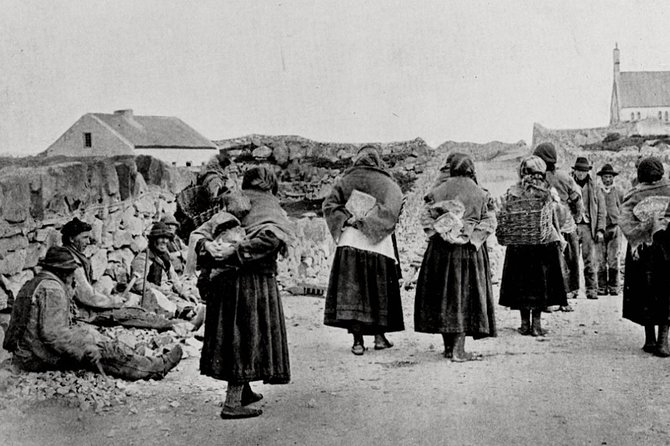
The exhibition covers the Irish Potato Famine, also called the Great Hunger. It presents the crisis through historical facts, photographs, newspapers, and physical objects rather than through a live guide.
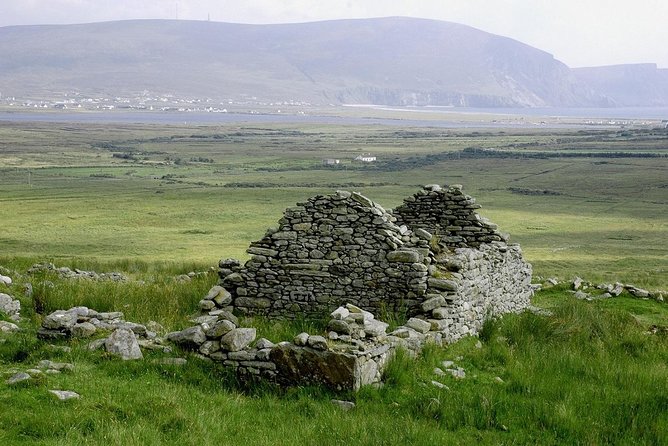
You will encounter information about the agricultural disaster and the political response to it. The material also addresses poor decisions, delayed relief, and the role of the British government and landowners. That approach gives the exhibition a clear point of view: the famine was not only a crop failure, but also a human disaster shaped by policy and slow action.
I find that framing useful for a first visit because it links the immediate cause to the wider consequences. A failed potato crop explains the spark, but it does not explain the scale of hunger, displacement, and emigration. The exhibition works to fill in that larger picture.
The written material is presented in a straightforward way. You will need to read, and you should plan on spending time with the panels rather than simply walking from object to object. One visitor described the displays as information-heavy and suggested that the experience may not suit people who dislike reading. That is fair advice.
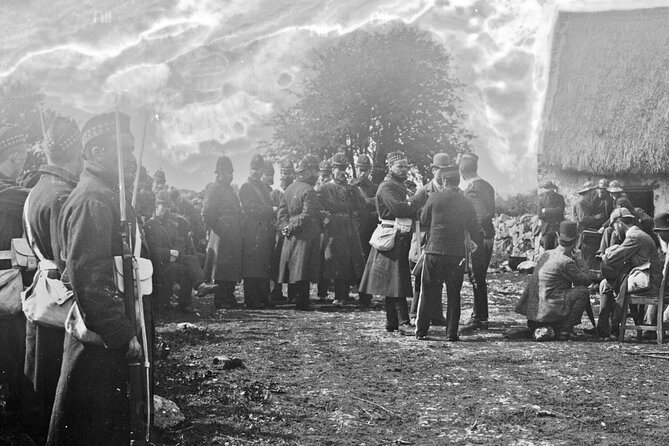
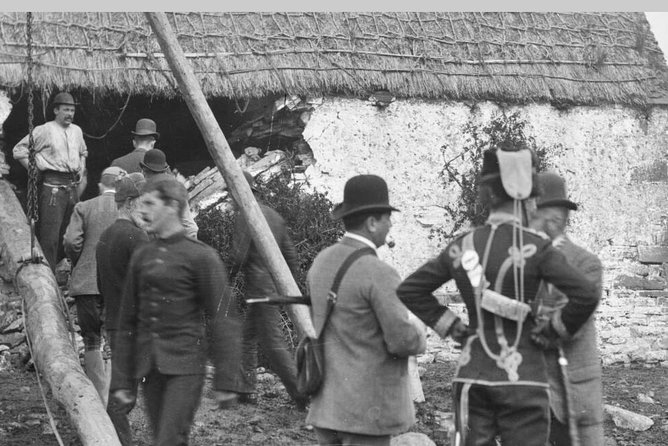
The exhibition does try to break up the text with visual material. The 19th-century photographs help put faces and places beside the facts. Newspapers show how the crisis was recorded at the time, while an original soup pot gives you a direct, physical link to the relief efforts and everyday struggle.
You may also find the presentation emotionally difficult. The subject includes hunger, failed support, and the loss of homes and communities. The strongest reactions often come from understanding how government choices affected ordinary Irish people, not simply from learning the dates and statistics.
The original soup pot and 19th-century evidence
The small collection of objects is important because the exhibition does not rely only on modern interpretation. An original soup pot is among the most memorable pieces, connecting the story to attempts to feed people during the crisis.
Newspapers and 19th-century photographs add another layer. They show how the famine was seen and recorded in its own time, rather than presenting it only through later summaries. I would give these items more attention than their number might suggest. A compact exhibition can make a strong impression when one real object anchors a large historical subject.
The visual material also helps if you are visiting with a family member who may tire of long explanations. Children must be accompanied by an adult, and the exhibition is open to most participants, but it is not designed as a children’s attraction. Younger children may find the reading and subject matter demanding.
For adults and older children, the format can work well as a shared learning experience. You can pause at the displays, discuss the decisions described, and then watch the film together. The lack of a guide means you will need to keep yourselves moving and make sense of the sequence, but that freedom can be useful for families with different reading speeds.
Watching the 15-minute documentary
The short documentary is included in admission and lasts about 15 minutes. It gives the visit an audio-visual break after the reading panels and helps pull the story together.
Do not expect a full-length cinema presentation. This is a brief film within a one-hour exhibition, so its role is to reinforce the material rather than replace it. I would watch it after reading at least some of the displays, since the background will help you understand what the film is showing.
The viewing area may be warm because the exhibition space is not climate controlled. That is a practical detail worth knowing, especially if you are visiting during warmer weather or wearing several layers. You may want to time the film for when you feel comfortable sitting in the room.
The documentary is particularly useful for anyone who prefers to hear and see a historical account rather than read every panel. Even so, the exhibition remains mainly text-based. If you skip the displays and only watch the film, you will miss much of the detail about political decisions, relief, and emigration.
A different sort of day from the same base:
- Dublin to Cliffs of Moher, including Wild Atlantic Way and Galway
★ 5.0 · 23,331 reviews - From Dublin: Cliffs of Moher, Burren & Galway City Day Tour
★ 4.8 · 18,888 reviews - Dublin: Guinness Storehouse Entry Ticket
★ 4.6 · 16,863 reviews - Dublin to Cliffs of Moher, Burren, Wild Atlantic Way, Galway Tour
★ 5.0 · 12,924 reviews
Looking down on St. Stephen’s Green
The rare aerial views of St. Stephen’s Green are one of the exhibition’s more distinctive features. They offer a different way to see one of Dublin’s best-known central parks and add visual interest to a serious historical visit.
These views are not the main reason to book the exhibition, but they improve the setting. After reading about famine-era Ireland, looking out over the park gives you a moment to connect the exhibition with the modern city around you.
I would plan to enjoy this feature before leaving rather than rush past it. The exhibition itself takes about an hour, and the views provide a useful pause between the historical material and the shopping centre outside. They also make the visit feel more tied to Dublin instead of being a completely enclosed display room.
How the self-guided hour works
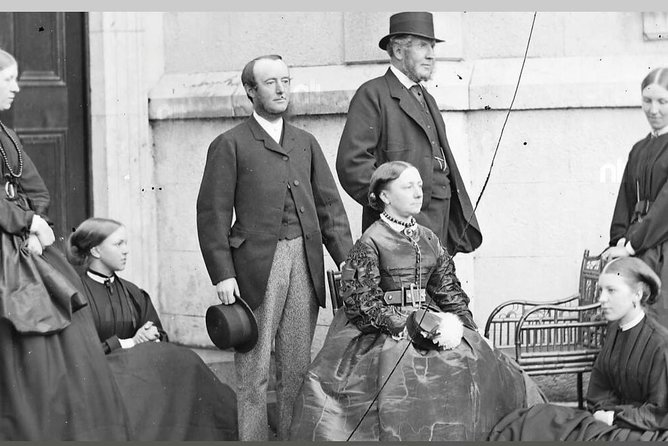
The exhibition has no named guide and no scheduled tour commentary. You receive admission and explore independently. That means you can spend extra time on photographs, move quickly through familiar material, or pause when a particular subject catches your attention.
A typical visit might look like this:
- Spend the first few minutes getting oriented and checking the exhibition layout.
- Read the main panels explaining the famine and its causes.
- Examine the photographs, newspapers, and original soup pot.
- Watch the 15-minute documentary.
- Finish with the aerial views and any displays you want to revisit.
The one-hour estimate is realistic for a focused visit. You could move faster if you read selectively, while a careful reader may want more time. Since the space is temporary and compact, you are not likely to lose half a day here.
The maximum group size is 90 people, but the self-guided format means you are not tied to a large guided procession. A busy period could still make the room feel crowded, so the mobile ticket and advance booking are useful. The opening hours listed for January 4 through September 30, 2026, are noon to 6 p.m., Monday through Sunday.
The temporary nature of the exhibition is important. It is scheduled to end in September, so check the operating dates when planning a later visit. The exhibition may appeal most to people who want a focused stop before moving on to the rest of Dublin.
Language help, access, and practical planning
The main exhibition is offered in English. Translation guides are available in French, German, Italian, and Spanish, which makes the displays more approachable if English is not your first language.
The meeting point and end point are the same: St. Stephen’s Green Shopping Centre. The site is near public transportation, so it is easy to combine with other central Dublin plans. No separate transport or transfer is part of the experience.
Service animals are allowed, and most people can participate. Children must be accompanied by an adult. The information provided does not describe special seating, detailed step-free access, or other specific facilities, so you should confirm those points directly if they matter to your visit.
Free cancellation is available up to 24 hours before the start time for a full refund. Changes or cancellations made less than 24 hours before the experience are not accepted for a refund, and the cut-off uses local Dublin time.
You can also purchase a book of the exhibition separately. That may be worthwhile if you are studying family connections to Ireland or want a printed reminder of the material, but it is not included in the admission price.
Who will get the most from this visit
I would recommend the exhibition most strongly to you if you:
- Want a clear introduction to the Irish Potato Famine.
- Are interested in the political choices behind a humanitarian crisis.
- Prefer a quiet, self-guided visit to a scheduled tour.
- Enjoy reading historical panels and examining photographs.
- Have Irish family connections and want context for emigration.
- Need a short central Dublin activity that fits into a packed day.
The exhibition can be especially powerful for someone who knows little about the famine. It explains why so many people left Ireland and how the crisis reshaped families and communities. A visitor who already knows the main story may find fewer surprises, but the original objects and photographs still give the subject a human scale.
I would be more cautious about recommending it if you want an interactive museum, a live historian, or a long guided presentation. The exhibition does not appear to offer much audio-visual material beyond the 15-minute documentary, and the setting is functional rather than atmospheric.
The strong 4.7 rating from 247 reviews and 93 percent recommendation rate fit my view of its likely appeal: people who want a compact, serious history stop should find plenty to consider. The lower marks are understandable too. The exhibition can feel like a pop-up in a mall, the room may be warm, and reading is central to the visit.
Should you book the Irish Famine Museum?
Book it if you want a focused one-hour lesson in Irish history with original objects, old photographs, newspapers, a short film, and unusual views over St. Stephen’s Green. At $18.15, it offers fair value for a central Dublin stop, especially when you use the full hour and take time with the written displays.
Skip it if you need a polished, large-scale museum or find text-heavy exhibitions tiring. This is a temporary, self-guided presentation in a shopping centre, but it tackles its subject directly and gives you useful context for Ireland’s later emigration and social history.
For most history-minded visitors, I would add it to a Dublin schedule, particularly before September 30, 2026. Go with enough time to read, watch the film, and let the subject sit with you for a while.
FAQ
Where is the Irish Famine Museum located?
It is located upstairs inside St. Stephen’s Green Shopping Centre at St. Stephen’s Green, Dublin, D02 HX65, Ireland.
How long does the visit take?
The visit lasts approximately one hour, including a 15-minute documentary film.
Is the experience guided?
No. This is a self-guided exhibition, so you explore the displays at your own pace.
What language is the exhibition offered in?
The experience is offered in English. Translation guides are available in French, German, Italian, and Spanish.
What does admission include?
Admission includes entry to the exhibition and the 15-minute documentary. The exhibition book may be purchased separately.
What can I see inside?
You can see information displays about the Irish Potato Famine, 19th-century photographs, newspapers, an original soup pot, aerial views of St. Stephen’s Green, and a short documentary.
When is the exhibition open?
From January 4 through September 30, 2026, it is open daily from 12 p.m. to 6 p.m.
Can children visit?
Yes, but children must be accompanied by an adult.
Can I cancel for a refund?
Yes. You can cancel at least 24 hours before the start time for a full refund. Cancellations or changes made less than 24 hours before the start time are not accepted for a refund.
Recently added around Dublin
- Dublin: Pub Tour. Pour The Perfect Guinness, Whiskey & Music★ 5.0 · 3 reviews
- Waterford Crystal and Kilkenny Full-Day Rail Tour from Dublin★ 5.0 · 3 reviews
- Cliffs of Moher and The Burren Private Tour from Dublin★ 5.0 · 3 reviews
- Private Chauffeur Service From Dublin Airport to Killarney★ 5.0 · 3 reviews
- A Self Guided Walking Tour of Dublin’s Docklands★ 4.5 · 3 reviews
- Beautiful Southwest Tour 2022★ 5.0 · 3 reviews
- Dublin One Day Tour with a Local: 100% Personalized & Private★ 4.5 · 3 reviews
- Ireland: 3-Day West Coast Explorer Tour★ 5.0 · 3 reviews
Dublin Tours, compared.

Dublin to Cliffs of Moher, including Wild Atlantic Way and Galway
Read our review →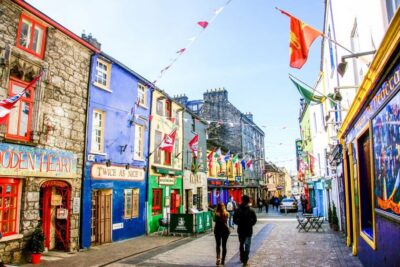
Cliffs of Moher, Burren & Galway City Day Tour
Read our review →
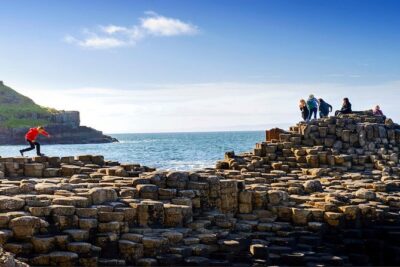
Dublin to Belfast Black Cab, Dunluce Castle and Giant’s Causeway
Read our review →
Kilkenny, Wicklow Mountains & Glendalough Day Tour from Dublin
Read our review →
Wicklow Mountains, Glendalough & Kilkenny Tour
Read our review →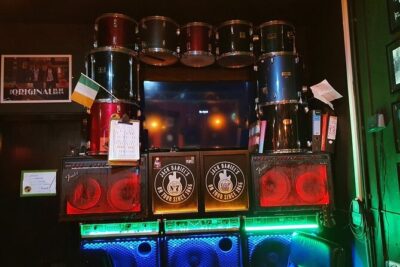
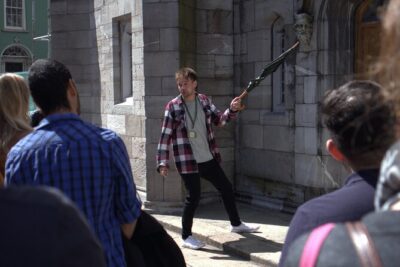
Dublin Highlights and Hidden Gems Guided Walking Tour
Read our review →Browse the lists this tour appears in