
Reviewed · DUBLIN TOURS
Private Guided Walking Tour in Dublin
Dublin’s old center reveals itself best on foot, and this tour follows that story from the former Viking settlement at Wood Quay to the medieval walls, churches, pubs, and castle that shaped the city. I especially like the private format, which lets you ask questions freely, and the unusual video route map with captioned photos, clips, and music.
I also like the way the walk links famous sights to ordinary street names and old trades. You pass Temple Bar, Fishamble Street, the Liberties, and Dublin Castle rather than simply ticking off major landmarks. The main consideration is distance: this is a history walk with hills, cobbles, and several hours on your feet, so comfortable shoes are essential.
Key points to know before booking
- Dublin’s medieval core: Follow old walls, Viking traces, Fishamble Street, Christ Church Cathedral, and St. Audoen’s Church.
- A genuinely private outing: Your group alone joins the guide, with a maximum of 15 people.
- A flexible guide-led walk: Guide Ben is praised for clear explanations, humor, photos, questions, and practical Dublin suggestions.
- Church access depends on opening times: St. Audoen’s visitor center is available from April through October, subject to opening.
- The Brazen Head adds local character: You can pause at Dublin’s oldest pub, though food and drinks cost extra.
- A useful take-home souvenir: The video route map includes captioned photographs, short video clips, and music.
Why this walk works for seeing old Dublin
This is not just a march between Dublin’s famous buildings. The route explains how the city grew, where medieval commerce happened, and how Viking, Norman, British, religious, and Georgian influences overlap in a compact area.
That context matters. Christ Church Cathedral means more when you have already walked the old city edge. Dublin Castle makes more sense after you have seen the Norman walls and heard how government power operated from this part of town. The Liberties feel less like a collection of streets and more like a working neighborhood shaped by markets, churches, breweries, and political figures.
The guide is the main variable in any walking tour, and Ben’s approach appears particularly conversational. He explains details, welcomes questions, checks that everyone can hear, and can adjust the pace or focus to suit your interests. His humor is also a recurring part of the experience, which helps keep several centuries of political and religious upheaval from becoming a lecture.
The private setup is valuable for families and small groups. You can ask about Irish history, Dublin pubs, dinner ideas, or places to visit later without holding up a large public group. Ben has also provided suggestions for meals and the rest of a Dublin stay, so use the final part of the walk to ask for practical advice.
More Walking Tours in Dublin
- Dublin Highlights and Hidden Gems Guided Walking Tour
★ 5.0 · 6,020 reviews - Dublin: Highlights and Hidden Gems Walking Tour
★ 4.9 · 2,140 reviews - 1916 Rebellion Walking Tour
★ 5.0 · 1,605 reviews
City Hall and the Royal Exchange
The tour begins at the Dublin Tourist Information Centre in Barnardo Square, near Palace Street. From there, City Hall is the first major landmark.
Built in the 18th century as the Royal Exchange, the building later became the headquarters of Dublin Corporation, the city authority. That change tells you something useful about Dublin: grand commercial buildings often found new civic roles as the city’s government and business needs shifted.
City Hall is now used for several purposes, including weddings and film shoots. It is a good opening stop because it introduces the city’s architectural layers without requiring an interior visit. The guide can point out how Dublin’s public buildings reflect changing power, trade, and administration.
You will not spend the entire tour inside historic attractions. Much of the value comes from the guide explaining what you are seeing from the street, keeping the walk moving and avoiding a long series of admission queues.
Parliament Street and a glimpse of Temple Bar
The route continues along Parliament Street toward Temple Bar. This is one of the busier parts of central Dublin, but the tour does not treat Temple Bar as the whole city.
You pass Dublin’s oldest shop and a hotel that once served as the city’s custom house in the 17th century. These details give the street a working past. Trade, lodging, taxation, and transport all shaped this small section of town long before Temple Bar became one of Dublin’s best-known nightlife districts.
You get a look at Temple Bar without being confined to its pubs and souvenir shops. That is a useful balance. The area is convenient and atmospheric, but it can also be crowded and expensive. The walking route uses it as one chapter in Dublin’s story, then turns into quieter lanes with older traces.
Fishamble Street and the medieval city edge
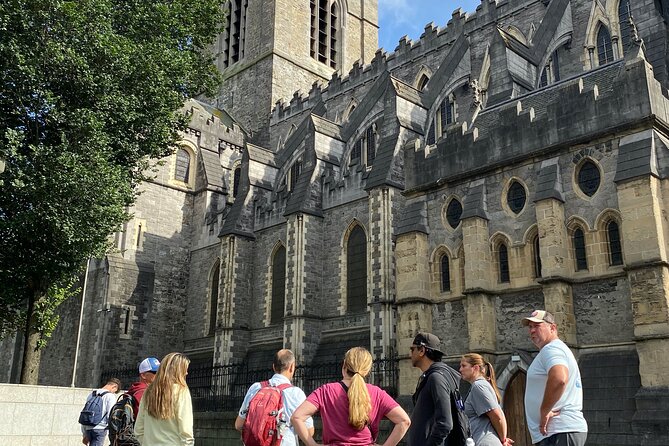
At Essex Gate, the route takes a cobbled street named after an entrance in Dublin’s medieval wall. This is where the walk begins to feel less like a general city tour and more like a reconstruction of old Dublin.
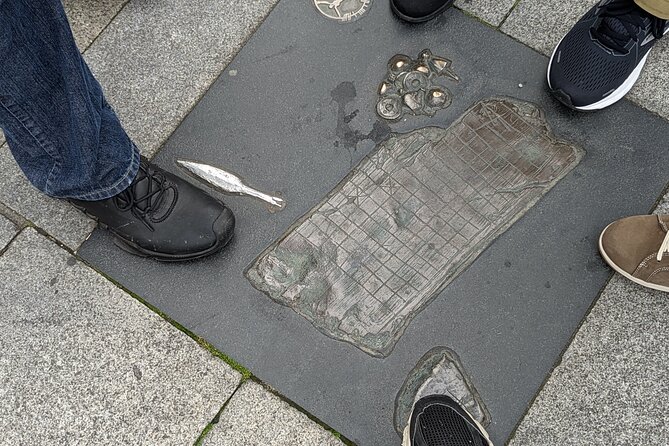
You pass a famous theatre first opened in the 17th century and a Viking longboat placed as a reminder of the seafaring visitors who arrived here centuries ago. At Wood Quay, you hear about the ancient Viking settlement that once occupied this area.
From there, the route turns up Dublin’s oldest street, Fishamble Street. Its name comes from the fish market that once operated here. Old street names are one of the strongest tools in this tour because they preserve practical clues about medieval life. You are not only hearing dates and names. You are learning what people bought, sold, built, and argued about in the same places you are walking.
The cobbles and uneven surfaces add atmosphere, but they also require care. If you have mobility concerns, ask about the route before booking. The tour is described as suitable for most people, but it is still an active city walk.
A different sort of day from the same base:
- Dublin to Cliffs of Moher, including Wild Atlantic Way and Galway
★ 5.0 · 23,331 reviews - From Dublin: Cliffs of Moher, Burren & Galway City Day Tour
★ 4.8 · 18,888 reviews - Dublin: Guinness Storehouse Entry Ticket
★ 4.6 · 16,863 reviews - Dublin to Cliffs of Moher, Burren, Wild Atlantic Way, Galway Tour
★ 5.0 · 12,924 reviews
Christ Church Cathedral from the outside
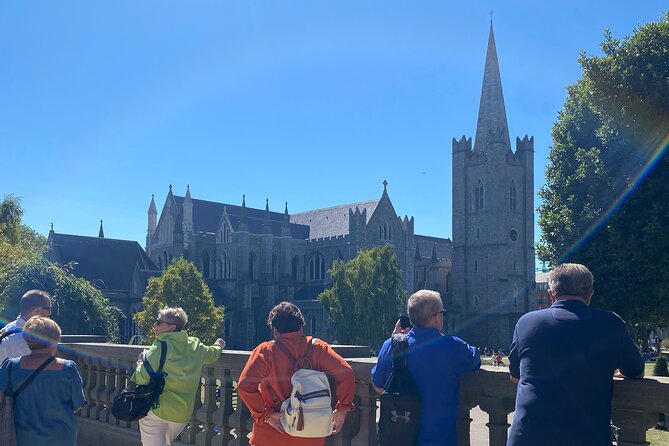
Christ Church Cathedral was built by the Normans in the 12th century and is one of the route’s biggest visual moments. The walk approaches along a cobbled passage, giving you time to take in the cathedral above the surrounding streets.
The guide fills in the political and religious background, while the setting provides plenty of photo opportunities. This stop is especially useful if you plan to visit the cathedral separately, since you can first learn what to look for and then decide how much time you want to spend inside.
The tour description does not promise admission to Christ Church Cathedral itself, so plan on an exterior visit unless your booking details say otherwise. That is not a serious weakness for a walking tour, but it is important if you want a full cathedral interior visit.
St. Audoen’s Church and the surviving wall
After crossing Winetavern Street, the route enters a residential area that has remained residential from medieval times into the modern period. At Cook Street, you see one of the longest and oldest surviving sections of Dublin’s medieval city wall.
The route then passes the Gates of Hell on the way to St. Audoen’s Church. Services have continued here since the 12th century, and the building now also functions as a visitor center.
Entrance is included when the church and visitor center are open. The stated visiting period is April through October, and access depends on opening times. This is one of the tour’s most worthwhile included features because it lets you move beyond street-level views into a place connected with prayer, guilds, and burials.
The stop is scheduled for about 20 minutes. That is enough for an introduction and a look inside when open, but not a long self-guided visit. If St. Audoen’s is a priority, confirm the timing and opening conditions before you go.
The Brazen Head and a possible pub pause
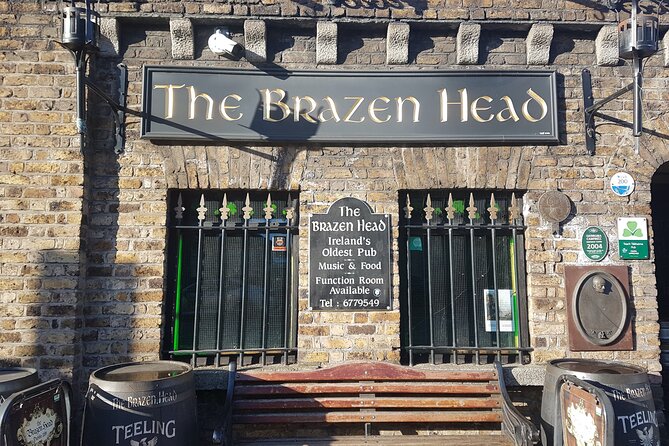
The Brazen Head is presented as Dublin’s oldest pub, established in 1198. Its name is linked to braziers, barrels of burning fuel used to warm the hands of people passing through on cold nights.
The pub adds a welcome human scale to the historical walk. Instead of hearing only about kings, walls, and church politics, you get a place connected with everyday Dublin social life. You can stop for a drink and hear more stories while looking around the old tavern.
Drinks and refreshments are not included, so treat this as an optional pause rather than part of the tour price. The scheduled stop is about 15 minutes. That is enough for a quick look or drink, but not a full pub meal.
The Liberties and the city walls
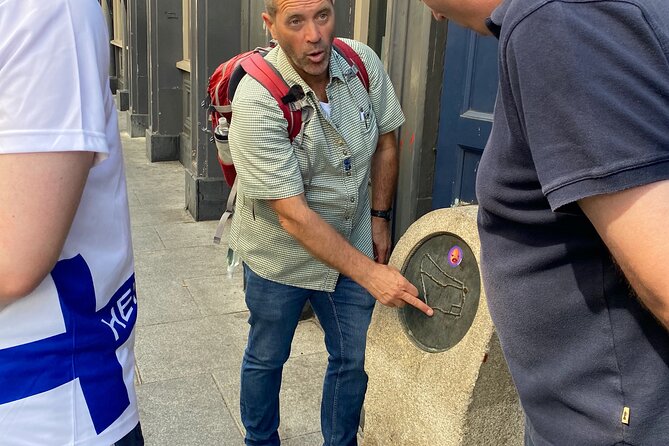
The route doubles back briefly and climbs toward Lamb Alley, where another substantial piece of the medieval perimeter appears. From here, you enter the Liberties, one of Dublin’s oldest neighborhoods.
This part of the walk is valuable because it moves away from the standard central sights. You pass St. Nicholas of Myra, the former Iveagh Market, and streets named for figures including Dean Swift, John Dillon, and Thomas Davis. Those names become prompts for stories about the people and movements tied to the area.
The Liberties also show how Dublin’s past remains mixed into daily city life. You walk through streets that are not preserved as a museum set. Homes, businesses, churches, and older structures share the same space. An arched alley then leads toward Saint Patrick’s Cathedral, creating a strong transition from neighborhood history to one of Dublin’s grandest buildings.
Saint Patrick’s Cathedral and its gardens
Saint Patrick’s Cathedral is the rival to Christ Church Cathedral in the route’s story. You stop outside to take in the building and gardens, then hear about the forces that shaped it, from the Vikings and Normans to the Reformation, Oliver Cromwell, Guinness, and the cathedral’s present role.
The outdoor setting makes this a pleasant place to pause, particularly in good weather. There is garden seating and an outdoor cafe, although the tour only allows about 10 minutes here. That gives you a view and an introduction, not a full cathedral visit.
If you want to tour the interior, set aside separate time. The walk is designed to connect the cathedral to Dublin’s wider story rather than provide a detailed examination of every chapel, monument, or architectural feature.
Dubh Linn Gardens and the meaning of Dublin
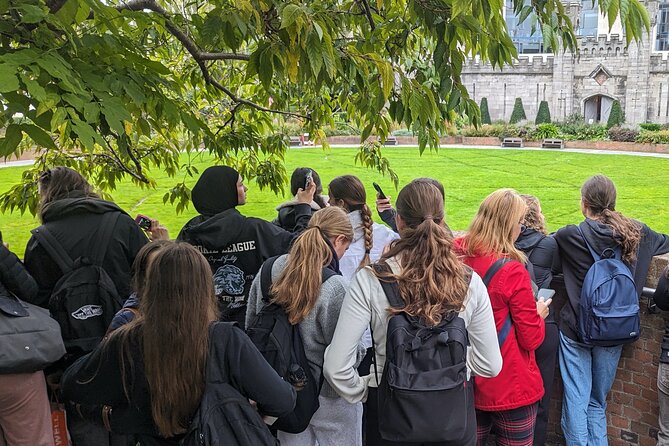
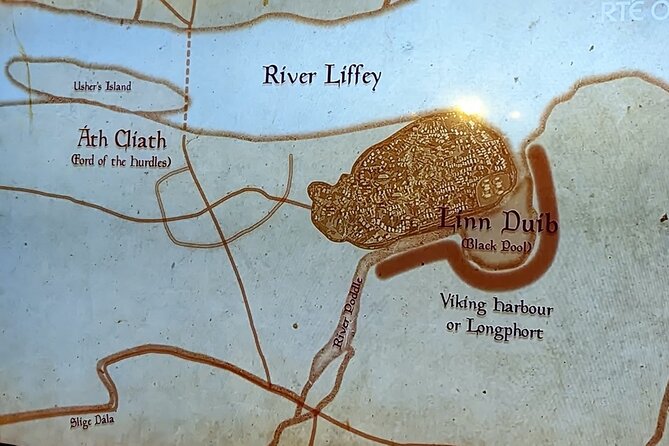
Leaving Saint Patrick’s, the route loops back toward another intact section of the Norman wall on the southern edge of the old city. You then pause at Dubh Linn Gardens, a small city-center oasis named for the dark pool that gave Dublin its name.
This is one of the more satisfying stops because it connects the city’s modern name to a physical place. The garden also brings together several reminders of Dublin’s civic life, including the Garda Memorial, the David and Goliath statue, and a tribute to the Special Olympics.
The guide also points out the Chester Beatty Museum and Library. The tour does not include admission, but knowing about it can help you plan a return visit. The gardens are scheduled for around 10 minutes, so use the stop for photographs and questions rather than expecting a long break.
Dublin Castle and the final return to City Hall
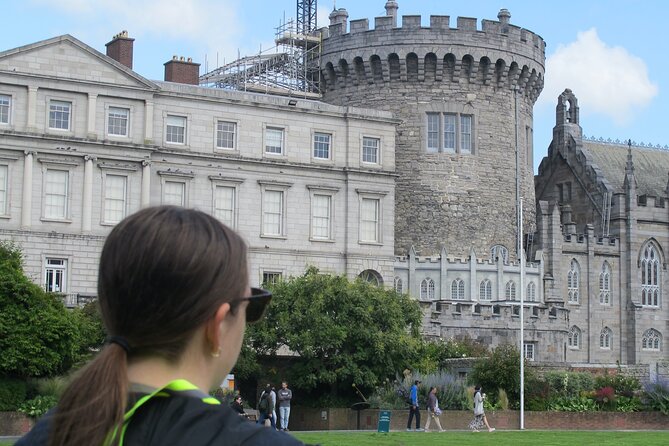
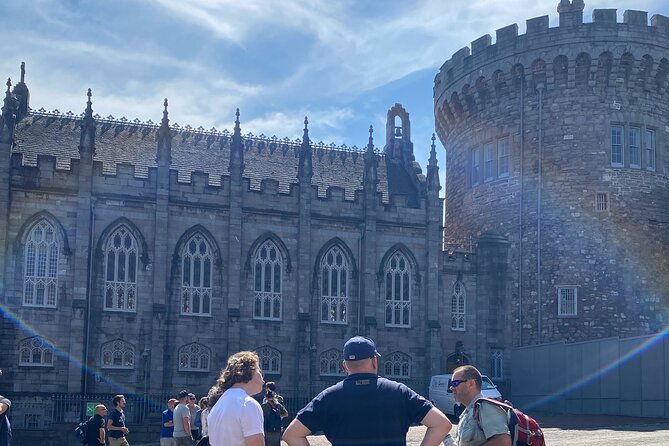
The final major stop is Dublin Castle, which served as the center of government administration while Ireland was under British rule. Here, the route brings together the older Norman remains and later 18th-century architecture.
That contrast is the point. You see more than one period at once, with remnants of the early Norman stronghold alongside buildings from a later era of government. The guide also tells the story of the 16th-century escape of the last Gaelic chiefs from the still-intact Record Tower.
The stop lasts about 10 minutes and includes the courtyard. The tour then exits by City Hall and finishes back at the original meeting point. Returning to where you began makes the walk easy to fit into a day of sightseeing, though the overall timing can vary from about 2 hours 20 minutes to 3 hours 30 minutes.
What the private price gives you
The price is $200.62 per group of up to 15 people. For a full group, that can be excellent value. Split among 10 people, it works out to roughly $20 per person, while a group of four pays about $50 each.
For one or two people, the price feels much less like a bargain. You are paying for exclusive guiding time, not a low-cost public walk. The benefit is the ability to shape the conversation, ask as many questions as you like, and adjust attention to your group’s interests.
The package includes live commentary from a qualified local guide, entrance to the medieval church and visitor center when open, and a mobile ticket. Snacks, drinks, and refreshments are extra. Wear walking shoes, and bring weather-ready clothing because the tour requires good weather and spends most of its time outside.
Free cancellation is available up to 24 hours before the start time. A cancellation made later is not refunded. If poor weather or failure to meet the minimum number of participants cancels the tour, you are offered another date or a full refund.
Who should book this Dublin walk
I would choose this tour for a first visit when you want the city’s major sights explained in a connected story. It also suits families, friends, and larger private groups who would rather have one guide than split up or follow a fixed public schedule.
It is a good match for people who enjoy questions, local recommendations, and history delivered with some humor. Ben has also guided visitors toward pub experiences, dinner suggestions, coastal walks, and the Book of Kells on other Dublin outings, so you can use his local knowledge to improve the rest of your stay.
I would be more cautious if you want long interior visits at Christ Church Cathedral, Saint Patrick’s Cathedral, or Dublin Castle. This tour gives you orientation and outdoor access, with St. Audoen’s as the included medieval church when open. You will need separate admission and extra time for a deeper visit.
Should you book it?
Book this private Dublin walking tour if you want to understand how Viking settlement, medieval walls, churches, government, and neighborhood life fit together. Its strongest features are the private conversation with Ben, the carefully linked route, and the chance to see less obvious parts of the old city.
The value improves sharply with a family or group of friends. If you are alone or traveling as a couple, compare the price with a public walking tour. But if personalized attention matters, and you are happy to spend several hours walking outdoors, this is a practical and unusually detailed introduction to central Dublin.
FAQ
Where does the tour start?
The tour starts at the Dublin Tourist Information Centre in Barnardo Square, 3 Palace Street, Dublin 2.
Where does the tour end?
The activity ends back at the meeting point.
How long does the walking tour last?
The approximate duration is between 2 hours 20 minutes and 3 hours 30 minutes.
Is this a private tour?
Yes. Only your group participates, and the group can include up to 15 people.
What is included in the price?
The price includes live commentary from a qualified local guide, entrance to the medieval church and visitor center subject to opening times, and a mobile ticket.
Are food and drinks included?
No. Snacks, refreshments, and drinks are not included.
Can I visit St. Audoen’s Church?
You can visit the church and visitor center when they are open. Access is subject to opening times, with visits listed between April and October.
Does the tour enter Christ Church Cathedral or Saint Patrick’s Cathedral?
The route includes visits to the cathedral exteriors and surrounding areas. The provided details do not include admission to either cathedral.
Is the tour suitable for most people?
Most people can participate, and service animals are allowed. The walk includes cobbled streets, city streets, and time on foot, so comfortable walking shoes are recommended.
What happens if the weather is poor?
The experience requires good weather. If it is canceled because of poor weather, you are offered a different date or a full refund.
How far in advance can I cancel for a full refund?
You must cancel at least 24 hours before the experience start time for a full refund. Changes or cancellations made less than 24 hours in advance are not accepted or refunded.
Recently added around Dublin
- Dublin: Pub Tour. Pour The Perfect Guinness, Whiskey & Music★ 5.0 · 3 reviews
- Waterford Crystal and Kilkenny Full-Day Rail Tour from Dublin★ 5.0 · 3 reviews
- Cliffs of Moher and The Burren Private Tour from Dublin★ 5.0 · 3 reviews
- Private Chauffeur Service From Dublin Airport to Killarney★ 5.0 · 3 reviews
- Beautiful Southwest Tour 2022★ 5.0 · 3 reviews
- A Self Guided Walking Tour of Dublin’s Docklands★ 4.5 · 3 reviews
- Dublin One Day Tour with a Local: 100% Personalized & Private★ 4.5 · 3 reviews
- Ireland: 3-Day West Coast Explorer Tour★ 5.0 · 3 reviews
Dublin Tours, compared.

Dublin to Cliffs of Moher, including Wild Atlantic Way and Galway
Read our review →
Cliffs of Moher, Burren & Galway City Day Tour
Read our review →

Dublin to Belfast Black Cab, Dunluce Castle and Giant’s Causeway
Read our review →
Kilkenny, Wicklow Mountains & Glendalough Day Tour from Dublin
Read our review →
Wicklow Mountains, Glendalough & Kilkenny Tour
Read our review →

Dublin Highlights and Hidden Gems Guided Walking Tour
Read our review →Browse the lists this tour appears in