
Reviewed · WATERFORD TOURS
Waterford: House of Waterford Factory Tour
The most compelling part of this one-hour tour is how close you get to real craftwork. You watch glowing molten crystal become a shaped object, then see craftspeople cut, sculpt, and engrave it by hand. This is not a museum display behind glass. It is a working process, with the tools, heat, skill, and patience on view.
I like the clear walk through every stage, from the history room to the blowing room and cutting department. I also like the chance to ask questions near the craftspeople, rather than simply watching a film about the process. Guides such as James and Sean have been singled out for their energy and personal touch.
The main consideration is time. At about one hour, the visit is neatly contained, but it can feel brief if you want a long look at every artisan or a relaxed browse in the shop. The tour is also most rewarding when the workshop is active, so your experience may depend on which stages are operating during your visit.
Key points to know before you go

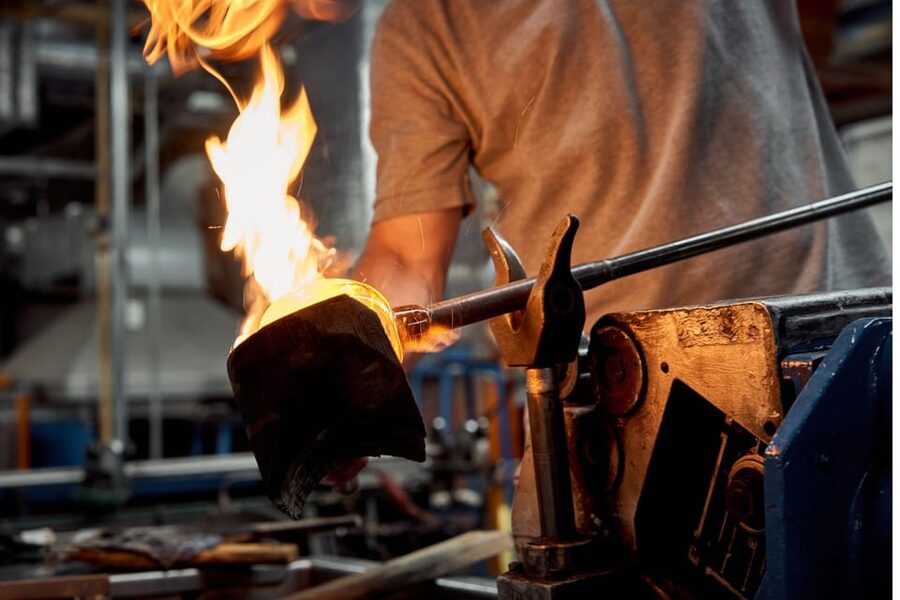
- Molten crystal takes center stage: Watch master blowers shape glowing material into elegant forms using wooden molds and hand tools.
- The cutting is done by hand: Industrial diamond-tipped wheels create Waterford’s precise, bright cuts.
- The history room sets the scene: Antique pieces and company exhibits explain how Waterford developed.
- You can ask questions: The route brings you close enough to speak with craftspeople about their work.
- The final stop is the showroom: The House of Waterford retail store displays the largest collection of Waterford crystal in the world.
- The visit is easy to fit into a city day: It lasts one hour, begins at The Mall in Waterford City, and is wheelchair accessible.
Why the factory floor matters
A crystal factory tour can easily become a sales pitch with a few machines in the background. House of Waterford takes a better route. The focus is on the labor behind each piece, and that changes how you look at the finished glass.
You see that a crystal object is not made in one grand step. It moves through a chain of trained hands. A blower shapes the hot material. A cutter marks the surface. A sculptor refines the form. An engraver adds the final detail. Each stage calls for a different kind of control.
That sequence gives the visit its value. After watching the work, the prices in the showroom make more sense. You are not paying only for the raw material or a familiar name. You are also paying for years of training and the time needed to make a piece accurately.
The strongest part of the tour is the human scale. You are close enough to see the craftspeople at work and ask questions. The exact viewing position can vary, but the experience is designed to let you watch the process rather than simply hear about it.
A few more Waterford half-days to weigh up
- House of Waterford Crystal Guided Factory Tour
★ 4.5 · 2,303 reviews - Skip the Line: Hook Lighthouse Entrance Ticket and Guided Tour
★ 5.0 · 470 reviews - Waterford Treasures: Epic Walking Tour
★ 4.5 · 152 reviews
Starting in the history room
The tour begins with Waterford’s story. The history room includes detailed displays about the firm’s development, along with antique crystal pieces that show earlier styles and techniques.
This opening section is useful because it gives you a reason to care about the work ahead. Without it, the blowing and cutting could seem like separate demonstrations. With it, the workshop becomes part of a long tradition of design and production in Waterford.
Do not rush this room. The antique pieces help you notice how much depends on shape, pattern, and finish. They also give you a point of comparison for the new pieces you see later in the shop.
The history section is not the main reason to book the tour, especially if you are mainly interested in live craftwork. Still, it adds structure and helps explain why Waterford crystal has such a strong place in Irish manufacturing and design.
Wooden molds and the first shape

Next comes the mold room. Here, master blowers still use wooden molds and hand tools to shape molten crystal.
That detail is easy to miss, but it is one of the most revealing parts of the visit. In a modern factory, you might expect an automated line to make every piece. Instead, the early form is guided by a craftsperson who must judge shape, heat, timing, and movement.
The wooden molds also show how much of the process depends on judgment rather than a simple button press. The material is hot and changing. A small mistake at this stage can affect every later stage.
You may not see every mold being used during your visit, but the room explains the practical foundation of the craft. It is a good place to ask how the molds help control the form and how much work remains after the initial shape is made.
Watching the blowing room

The blowing room is where the process becomes most dramatic. Craftspeople transform glowing balls of molten crystal into elegant shapes.
This is the moment children and adults tend to remember. You see an object begin as a bright, rough mass and then take form through controlled blowing and handling. The finished piece in the showroom may look still and effortless, but here you see the heat and movement behind it.
The work can look simple until you consider the timing. The blower must shape the material while it is workable, using tools and breath with care. The tour helps you understand why this job requires substantial training.
You should pay attention to the transition from the mold room to the blowing room. The two areas are related, but they show different parts of the same task. One explains the structure and tools. The other lets you watch the crystal become an object.
A different sort of day from the same base:
- Waterford Treasures: Medieval Museum Admission Ticket
★ 4.5 · 132 reviews - Irish Wake Museum Tour Rituals of Death and Celebration of Life
★ 5.0 · 115 reviews - Osprey Viking Cruises
★ 5.0 · 56 reviews - Waterford Treasures: Bishop’s Palace
★ 4.5 · 53 reviews
Diamond wheels and precise cutting
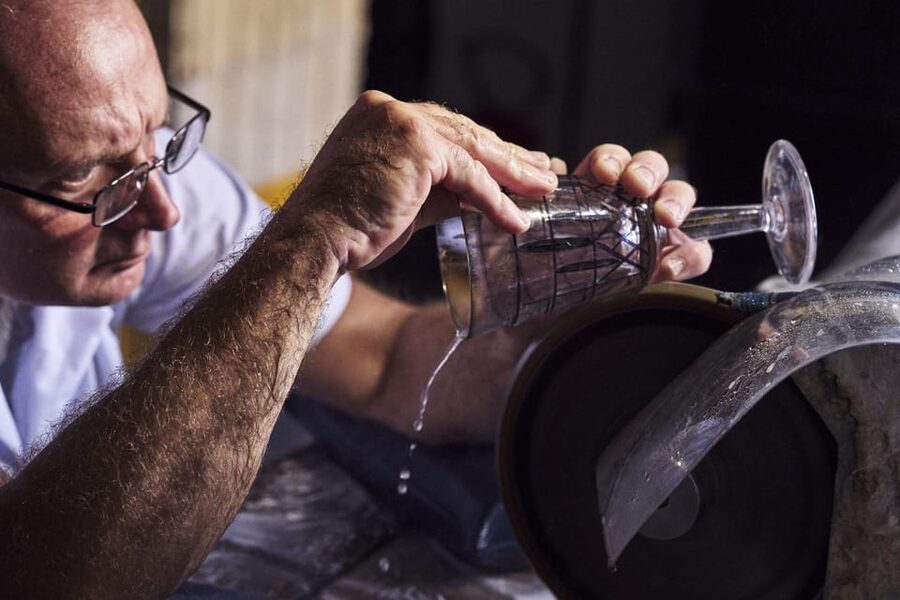
The cutting department shows another kind of skill. Master craftspeople use industrial diamond-tipped wheels to cut the crystal surface.
The diamond wheel is important because it allows a high-quality cut. The patterns are not just decoration added at the end. They affect how the piece catches light, and small changes in angle or depth can change the look of the finished object.
This stage may seem less dramatic than the glowing crystal in the blowing room, but it is just as important. The cutter must work with accuracy and restraint. Too little cutting can make a pattern look weak. Too much can spoil the form.
I find this section especially useful for understanding why a Waterford glass or bowl can look so bright under showroom lights. The sparkle is tied to the cut pattern, not simply to the material itself.
Sculpting and engraving the final details

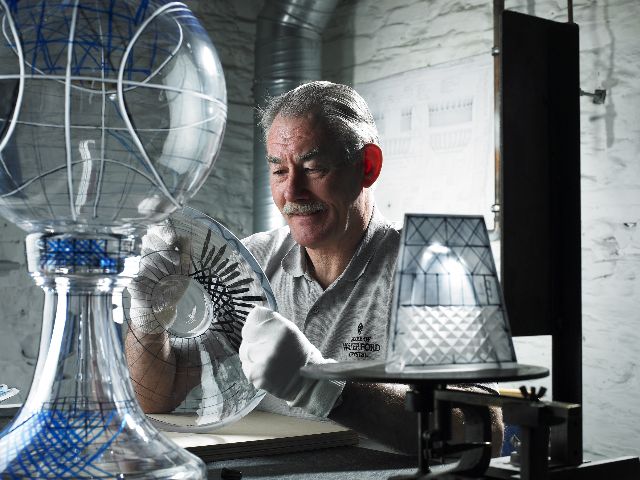
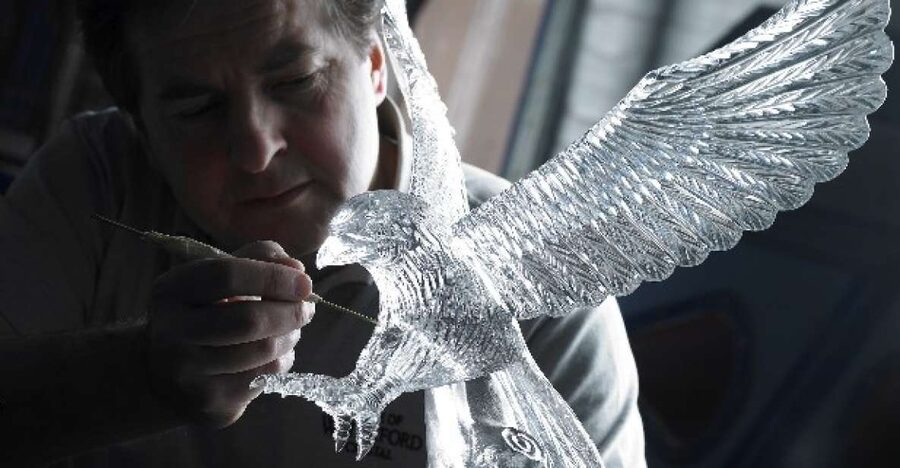
The last stages are sculpting and engraving. These are among the most precision-based parts of the process.
Sculpting refines the piece and brings out its intended form. Engraving adds fine lines and images to the surface. At this point, there is very little room for error. Much of the earlier work has already taken place, so a mistake near the end can waste a great deal of effort.
The tour does not treat these steps as minor finishing touches. You see them as skilled trades in their own right. That is one reason the visit feels more substantial than a basic factory walk-through.
A particular strength is the ability to see the work at close range and ask questions. One visitor described watching commissioned pieces being made, including unusual items such as a gingerbread house in progress. That kind of project shows that the craftspeople are not limited to ordinary glasses and bowls.
The showroom and the true cost of crystal
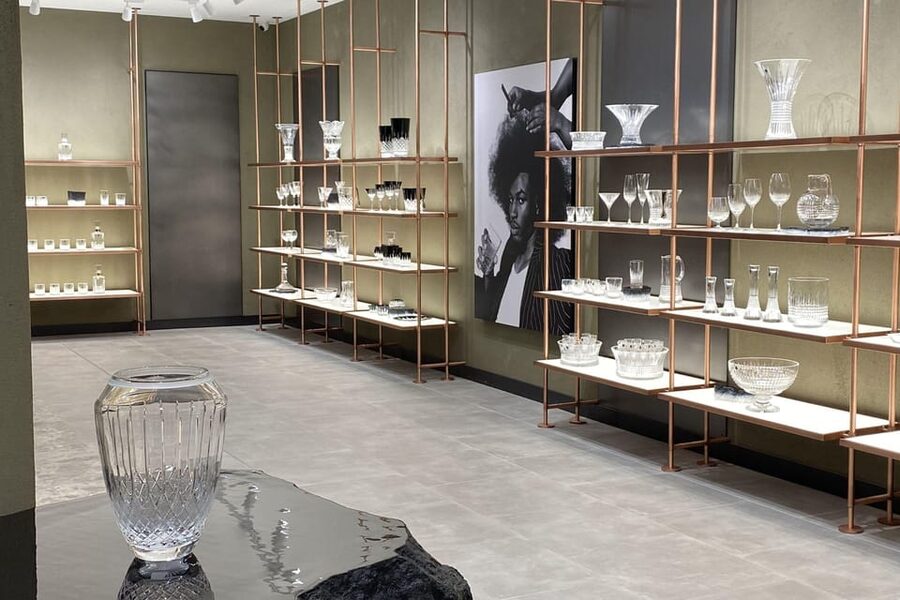
The tour ends at the House of Waterford retail store, described as the largest display of Waterford crystal in the world. This is a fitting final stop because you can now look at the finished objects with a better sense of the work involved.
The showroom is bright, polished, and full of elegant wares. You will find the largest concentration of Waterford pieces here, and it gives you time to compare forms, patterns, and levels of detail.
You do not need to buy anything for the shop to be worthwhile. In fact, I suggest treating it as a final gallery rather than assuming a purchase is part of the visit. Souvenirs are not included in the admission price, and crystal can be a serious expense.
The shop also provides the clearest answer to the question of value. After seeing several people contribute to a single piece, you may understand why hand-finished crystal costs more than ordinary glassware. You may still decide it is outside your budget, but the price is no longer a mystery.
A café is also available, with coffee and treats noted as a pleasant addition after the tour. Food and drinks are not included, so plan to pay separately.
Is one hour enough?

For most people, one hour is a good length. The tour covers the full sequence without asking you to give up half a day in Waterford. It works well as part of a wider city visit, especially because the meeting point is at The Mall in Waterford City.
The short format also keeps the visit focused. You move from the historical background to the working departments, then to the shop. There is little wasted time.
The tradeoff is that you may want longer in certain areas. If a craftsperson is working on an intricate piece, you might wish to watch for several more minutes. The showroom can also tempt you into a slow browse after the guided portion is over.
If you want a detailed technical course in glassmaking, this is not it. You get a clear introduction and a close look at the main stages, but the tour is built for general visitors rather than specialists.
The guide can shape the experience
The guide matters here because the process is technical and the workshop can be visually busy. A good explanation helps you notice what your eyes might otherwise miss.
James has been praised for his enthusiasm and ability to keep the details interesting. Sean has also been noted for making the process memorable. The tour is conducted in English, and the guide explains the steps while allowing questions.
The best use of your time is to ask about the parts that interest you most. You might ask how the wooden molds shape the crystal, why diamond wheels are used, or how sculpting differs from engraving.
The tour is not a silent route through a factory. Its value comes partly from the explanations and the chance to connect the finished pieces with the work happening in front of you.
Accessibility and practical planning
The activity is wheelchair accessible. One visitor specifically noted that staff accommodated a wheelchair user, which is useful confirmation for anyone planning around mobility needs.
The meeting point is The Mall in Waterford City, and the activity finishes back at that meeting point. It lasts one hour, with starting times based on availability.
The tour is guided in English. Interpretive equipment is not included, and meals, drinks, and souvenirs are extra.
You can cancel up to 24 hours before the activity for a full refund. A reserve-now, pay-later option is also offered, which can help if your Waterford schedule is still shifting.
The listed price is $20 per person. I consider that fair value for the length of the visit because you are getting more than a display of finished products. You receive a guided look at several working departments, historical context, access to questions, and entry to the main showroom.
One practical warning: check your booking carefully. A scheduling mix-up led one person to pay twice after finding conflicting availability information. That is not a reason to skip the tour, but it is a reason to confirm that only one reservation has been charged.
Who will enjoy this tour most?
This is a strong choice for anyone interested in Irish craft, design, manufacturing, or luxury goods. It also suits families because the glowing material and visible transformation give the visit a clear visual hook.
You do not need prior knowledge of crystal. The guide takes you through the process in order, and the one-hour length is manageable for most attention spans.
It is especially useful if you are wondering why Waterford pieces cost so much. Seeing the number of skilled stages involved gives you a fairer basis for judging the product.
The tour may be less appealing if you dislike retail settings or have no interest in how objects are made. The final shop is part of the route, and the visit is closely tied to the brand’s finished products.
Still, you are not pushed to buy anything. You can enjoy the workshop, learn how the pieces are made, and leave with a better understanding of the craft.
Should you book the House of Waterford tour?
Book it if you want to see real craftspeople at work rather than simply admire crystal behind glass. The strongest reasons are the close view of blowing and cutting, the explanation of sculpting and engraving, and the chance to ask questions during the route.
At $20 and one hour, it is an easy addition to a Waterford itinerary. I would especially recommend it to first-time visitors, families, design fans, and anyone who has ever wondered how a hand-cut crystal piece is made.
Skip it only if your schedule is extremely tight or if factory and craft tours do not interest you. For most visitors, the combination of history, live work, and a major showroom makes this a practical and worthwhile stop in Waterford.
FAQ
Where does the House of Waterford Factory Tour start?
The tour starts at The Mall in Waterford City.
Where does the activity finish?
The activity ends back at the meeting point.
How long does the tour last?
The tour lasts one hour.
What language is the tour conducted in?
The live guided tour is conducted in English.
What will I see during the tour?
You will visit the history room, mold room, blowing room, cutting department, sculpting and engraving areas, and the House of Waterford retail store.
Can I watch craftspeople making crystal?
Yes. The tour lets you watch craftspeople blow, cut, sculpt, and engrave crystal, with the chance to ask questions about their work.
Is the tour wheelchair accessible?
Yes, the activity is wheelchair accessible.
What does the $20 price include?
The price includes factory admission, a guided tour, information about Waterford crystal’s history, access to the working areas, the ability to ask questions of craftspeople, and a visit to the retail store.
Are food, drinks, and souvenirs included?
No. Meals, drinks, souvenirs, and interpretive equipment are not included.
Recently added around Waterford
- Waterford: The Irish Wake Museum Guided Tour★ 4.8 · 6 reviews
- Waterford: Mount Congreve Gardens Entry Ticket★ 5.0 · 7 reviews
- Semi Private tour Rock of Cashel – Cahir castle & Kilkenny★ 3.5 · 9 reviews
- Waterford, Kilkenny and House of Waterford Crystal★ 4.0 · 12 reviews
- Full day Private Tour from Waterford★ 4.5 · 14 reviews
- Irelands Ancient East Waterford Greenway Cycle Tours & Bike Hire★ 3.5 · 16 reviews
- Waterford Treasures: Medieval Museum Entry Ticket★ 4.5 · 20 reviews
- Waterford Treasures: Walking Tour of the Viking Triangle★ 4.7 · 43 reviews
Waterford Tours, compared.

House of Waterford Crystal Guided Factory Tour
Read our review →
Skip the Line: Hook Lighthouse Entrance Ticket and Guided Tour
Read our review →
Waterford Treasures: Medieval Museum Admission Ticket
Read our review →
Irish Wake Museum Tour Rituals of Death and Celebration of Life
Read our review →


Waterford Treasures: Walking Tour of the Viking Triangle
Read our review →Browse the lists this tour appears in