
Reviewed · DUBLIN TOURS
Dublin: Macabre History Walking Tour
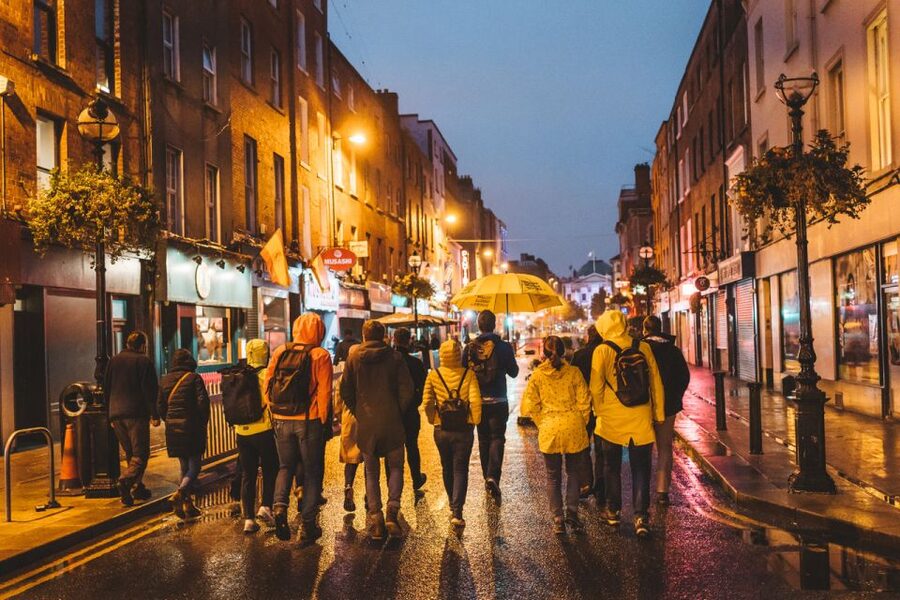
Dublin’s darker past comes alive in the back streets of the old city, where ordinary-looking corners carry stories of executions, grave robbing, disease, murder, and public scandal. This two-hour walk crosses both sides of the River Liffey and adds a grim twist to the usual Dublin sightseeing route.
I like the way the tour connects small, easily missed places with big stories, and I like the guides’ lively delivery. Peter is praised for his dramatic storytelling, patience, and local tips, while Rob brings humor and a relaxed manner. The main drawback is that the tour may feel more historical and theatrical than truly frightening, so horror fans wanting graphic gore may find it a little tame.
Key points at a glance
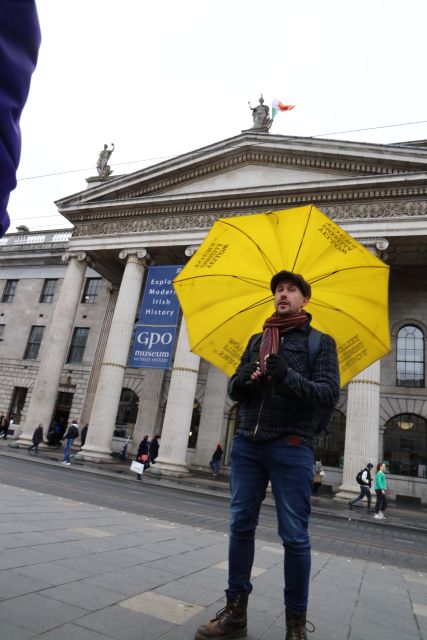
- Meet at Dublin’s Spire: Find the yellow umbrella beside the Spire in the middle of O’Connell Street.
- Hear Dublin’s darker stories: Expect tales of Cuchulainn, grave robbers, mummified bodies, serial killers, rats, executions, and disease.
- Explore both sides of the Liffey: The route reaches lesser-known parts of the old city center rather than staying on the standard sightseeing path.
- Expect a strong storyteller: Guides Peter and Rob are known for humor, drama, clear explanations, and friendly answers to questions.
- Plan for adults only: The tour is not suitable for children under 18.
- Good value at $19: Two hours of guided walking gives you a focused way to see overlooked corners of central Dublin.
Why Dublin’s macabre past makes a good walking tour
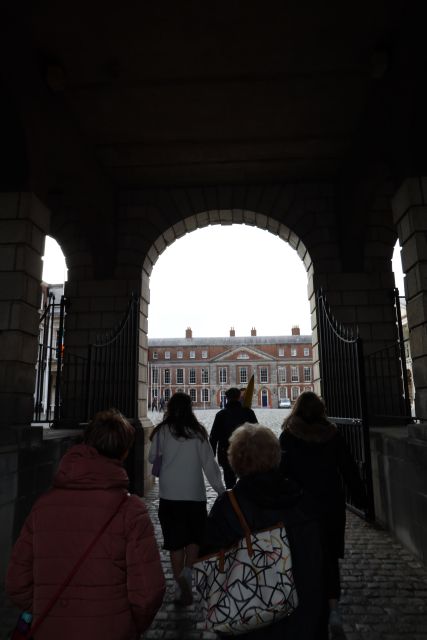
Dublin’s grim stories work especially well on foot because the setting is close at hand. You are not simply hearing about old deaths in a museum room. You are moving through streets, old lanes, riverside areas, and locations near the former city walls while the guide explains what happened there.
That physical connection gives the stories weight. A place you might otherwise pass without a glance can become a clue to how Dublin once dealt with disease, death, crime, punishment, and public spectacle.
The tour is not presented as a formal academic lecture. It uses humor, drama, and some of the stranger episodes in Irish history to keep the pace moving. That makes it a good choice if you have already seen the Book of Kells, Trinity College, Dublin Castle, or the usual pub-centered sights and want a different view of the city.
You should also know what this tour is not. It is not described as a ghost hunt, a costumed theatrical show, or a visit to a haunted building. The emphasis is on historical tales and local legends, told outdoors as you walk.
More Historical Tours in Dublin
- Dublin Historical Centre Food Tour with 8 Food Tastings & Drinks
★ 5.0 · 1,718 reviews - 2-Hour Historical Walking Tour from Dublin
★ 5.0 · 875 reviews - Historical 2-Hour Guided Walking Tour of Dublin
★ 4.7 · 865 reviews
Starting beside the Spire on O’Connell Street
The meeting point is easy to recognize: the Spire, the tall needle-like monument in the middle of O’Connell Street. Look for the yellow umbrella.
That landmark matters because O’Connell Street is one of the easiest places in central Dublin to reach, but there can be more than one yellow umbrella in the area. Give yourself a little extra time and check that you have found the correct guide before the group sets off.
The tour begins with a short walk away from the main road and into lesser-known sections of the old city. You do not get hotel pickup, so you need to make your own way to the Spire. At the end, the walk returns to the same meeting point, which makes it simple to continue your evening from central Dublin.
The activity lasts about two hours. Starting times vary, so check the schedule when you book. Since this is an outdoor walk, sensible shoes and a weather-ready jacket are practical choices for Dublin’s changeable conditions.
Cuchulainn and the story of a warrior’s death
One of the early stories centers on the death of Cuchulainn, the mighty warrior of Irish legend. The tale includes the unsettling image of a raven on his shoulder and his eyes being pecked out.
This is a good example of the tour’s style. You get a story with mythic scale, but it is tied to a particular place and used as an entry point into Dublin’s older cultural memory. The guide is not simply listing dates and monuments. You hear how stories, symbols, and frightening images shaped the way people understood death and heroism.
For you, the appeal is the contrast. Dublin’s historic center can look polished and familiar, yet its older stories are often violent, strange, and theatrical. The Cuchulainn episode sets that tone without requiring you to be an expert in Irish mythology.
A strong guide makes a difference here. Peter is repeatedly praised for bringing stories to life with clear explanations and a dramatic touch. He also takes time for questions, which helps if you are unfamiliar with the names or events.
Grave robbing beside the city mortuary

The tour then turns to the grim business of grave robbing, especially the thriving trade that developed near the city mortuary in the 19th century. This is one of the most historically revealing stops because it shows how death could become a source of income.
Grave robbing was not only a sensational crime. It was linked to the demand for bodies for medical study, making it part of the wider story of medicine, anatomy, poverty, and law. The walk uses this episode to show how Dublin’s institutions and streets were connected to difficult social problems.
You may find this section more disturbing than the tales of monsters and rats because it deals with real people and real desperation. It also gives the tour some substance beyond spooky entertainment.
The location is important too. You might walk near the old mortuary area without realizing what once happened there. That is one of the tour’s strongest ideas: look twice at the ordinary street. A plain corner, wall, or lane can hold a story that standard city tours leave out.
More Walking Tours in Dublin
- Dublin Highlights and Hidden Gems Guided Walking Tour
★ 5.0 · 6,020 reviews - Dublin: Highlights and Hidden Gems Walking Tour
★ 4.9 · 2,140 reviews - 1916 Rebellion Walking Tour
★ 5.0 · 1,605 reviews - 90 Minute Dublin Walking tour and Sightseeing tips
★ 5.0 · 916 reviews
Mummified corpses near the old city walls
Close to the old city walls, the guide tells stories of mummified corpses. This section adds another layer to Dublin’s relationship with death, shifting from crime and commerce to burial and the preservation of bodies.
The macabre appeal is obvious, but the stop also helps you picture the older city as a more enclosed and vulnerable place. Walls, crowded streets, illness, and limited medical care all shaped daily life in ways that modern visitors rarely see.
This is one of the places where the tour’s walking format earns its price. You are not being rushed from one famous attraction to another. Instead, the guide uses the physical remains and layout of the old city to create a sense of place.
The exact mood depends on the guide and the group. Peter is described as passionate and animated, with a talent for acting out stories. Rob is praised for combining information with humor. That style should appeal to you if you prefer history with personality rather than a dry recital.
Disease and medieval quarantine
Medieval quarantines form another key part of the walk. These stories bring disease into the tour, showing how Dublin responded when illness threatened the population.
This part is less about a single villain and more about fear, isolation, and public health. It gives the tour a useful change of pace. After stories of individual crimes and grisly deaths, you consider the wider dangers faced by whole communities.
The quarantine material also helps explain why old cities could feel dangerous even without murders or executions. Disease was an everyday threat, and the methods used to contain it could be harsh. A guide who explains the human side of these events can make the history feel immediate without relying on shock alone.
If your interest is limited to blood and crime, this may be one of the quieter sections. If you want a fuller picture of Dublin’s darker past, it is an important stop.
The legless serial killer and man-eating rats
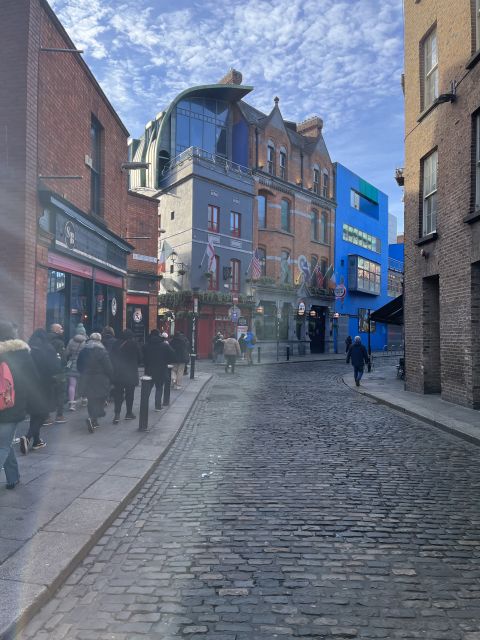
Near the old city walls, the tour moves into stranger territory with stories of a legless serial killer and man-eating rats. These are the kinds of tales that give the experience its unusual character.
The guide’s job is to keep the line between documented history and entertaining legend clear. The tour includes probably-fact and definitely-fun material, so you should expect a mix of historical information, local lore, and dramatic storytelling rather than a source-heavy history seminar.
That blend is part of the fun. You can listen for the details, enjoy the absurdity, and ask questions when you want to know how firmly a story is rooted in fact. Guides are described as happy to explain and answer questions, which is useful when a tale sounds too strange to be true.
The rat story may be especially effective for visitors who like urban folklore. It connects fear to the physical city: narrow streets, poor sanitation, disease, and animals living close to people. The serial killer story, meanwhile, adds a more direct crime element.
Still, do not expect a horror attraction with jump scares. The experience is a guided history walk, and its darkness comes mainly from the subject matter and the way the guide tells it.
Public executions and Dublin’s culture of spectacle
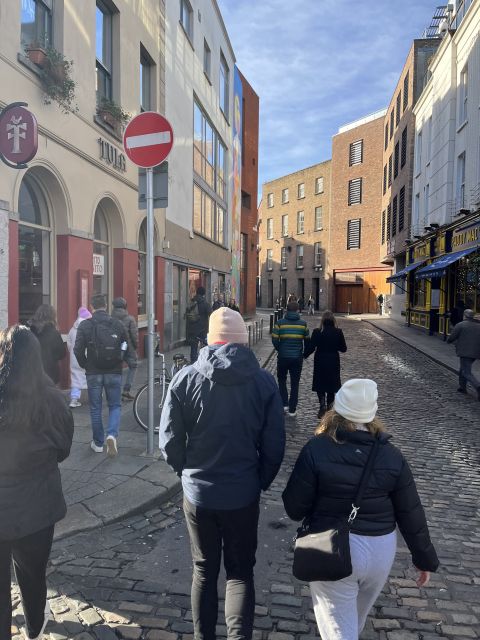
Public executions are another major theme. This section shows how punishment once took place in front of crowds and could become a form of public entertainment.
That detail is valuable because it changes how you see old city spaces. A place used today for shopping, transport, or daily errands may once have been associated with law, fear, and public punishment. The guide helps connect the modern street plan to those older uses.
This is also where the tour can feel most socially revealing. Executions tell you about crime, but they also tell you about authority and the public appetite for spectacle. The story is not only who died. It is who watched, who ordered the punishment, and what the event was meant to teach.
The walk does not appear to linger on one theme for too long. It moves between legends, crime, disease, and social history, which keeps the two-hour route from becoming repetitive.
Ending beside the cathedral with Dublin’s famous brothel keeper
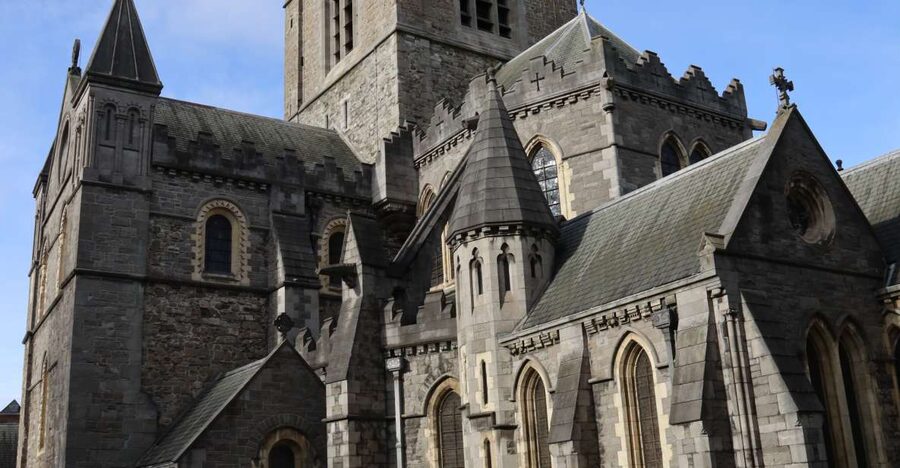
The final story takes place beside the cathedral and concerns Dublin’s most famous brothel keeper, including her untimely death by fire at the stake.
It is a fitting ending because it combines scandal, crime, gender, punishment, and public drama. The story gives the walk a strong final scene rather than simply stopping after a series of unrelated grisly facts.
For you, the cathedral setting adds a striking contrast. Sacred surroundings and a story of vice and execution sit close together, reminding you that Dublin’s past was not neatly divided into respectable and disreputable districts.
After this final stop, the activity ends back at the Spire. That return is helpful if you are meeting friends, heading to dinner, or using the tour as an introduction to the city center.
The guides and the feel of the group
The guide can make or break a storytelling walk, and this experience receives especially strong praise for its human touch. Peter is described as warm, enthusiastic, clear, and highly engaging. He slows down when needed, makes space for questions, and brings scenes to life with humor and acting.
Rob receives similar praise for his easy manner and comic timing. One useful practical detail is that group sizes can sometimes be very small. A three-person group can feel almost like a private walk, giving you more chances to ask questions and making the guide’s attention feel personal.
Small groups are not guaranteed, so you should not book on the assumption that you will get a private tour. Still, the format appears well suited to conversation. Several accounts describe the guides as friendly and willing to offer local tips beyond the macabre stories.
The tour is conducted in English. If you enjoy learning through spoken storytelling, that is a plus. If you prefer reading displays at your own pace, a museum may suit you better.
Is $19 a fair price for two hours?
At $19 per person, this is a reasonable price for a two-hour guided walk in central Dublin. You are paying for a live guide, a planned route, and stories you would be unlikely to assemble on your own during a normal city stroll.
The value is strongest if you enjoy local history and want to notice places you might otherwise ignore. It is less compelling if you only want major landmarks or a quick orientation to Dublin’s layout.
You also avoid the added cost and time of transportation because the experience stays within the old city center and begins and ends at the Spire. Hotel pickup is not included, but that is not a major issue for visitors already staying or sightseeing in central Dublin.
Free cancellation up to 24 hours before the start gives you useful flexibility, and you can reserve now while paying later. Those policies matter if your Dublin plans are still shifting.
Who should book this Dublin walk?
I would recommend it to adults who enjoy unusual history, local legends, crime stories, and a guide with personality. It works well for solo visitors, couples, and small groups who want something more focused than a standard orientation walk.
It is also a good add-on after you have seen Dublin’s major sights. The route takes you into less obvious parts of the center and may change the way you look at streets you have already crossed.
You should skip it if you are traveling with children under 18, want a purely factual academic tour, or expect a very frightening ghost experience. One fair criticism is that the walk may not feel bloody or macabre enough for serious horror fans.
The tour is wheelchair accessible, but the information provided does not describe every surface or route detail. If you need specific access information, confirm the practical arrangements before booking.
Should you book the Macabre History Walking Tour?
Book it if you want two hours of strange, dark, human stories in the heart of Dublin, especially if you value a lively guide over a polished attraction. Peter and Rob bring warmth, humor, and drama to material that could otherwise feel like a list of old crimes.
At $19, the risk is low, and the return to the Spire keeps your plans simple. Just set your expectations correctly: this is macabre city history, not a haunted-house show. For curious adults who want to see Dublin from an overlooked angle, it is a smart and entertaining choice.
FAQ
How long does the Dublin Macabre History Walking Tour last?
The tour lasts two hours. Starting times vary, so check availability for the date you want.
Where does the tour meet?
The group meets beside the Spire, the large needle-like monument in the middle of O’Connell Street. Look for the yellow umbrella.
Where does the tour end?
The walk ends back at the original meeting point beside the Spire.
What language is the tour in?
The live tour is conducted in English.
What does the tour include?
The price includes the walking tour and a guide.
Is hotel pickup included?
No. Hotel pickup and drop-off are not included, so you need to reach the Spire on your own.
Is the tour suitable for children?
No. The activity is not suitable for children under 18.
Is the walking tour wheelchair accessible?
Yes. The activity is listed as wheelchair accessible.
Can I cancel for a full refund?
Yes. You can cancel up to 24 hours in advance for a full refund. You can also reserve now and pay later.
Recently added around Dublin
- Dublin: Pub Tour. Pour The Perfect Guinness, Whiskey & Music★ 5.0 · 3 reviews
- Waterford Crystal and Kilkenny Full-Day Rail Tour from Dublin★ 5.0 · 3 reviews
- Cliffs of Moher and The Burren Private Tour from Dublin★ 5.0 · 3 reviews
- Private Chauffeur Service From Dublin Airport to Killarney★ 5.0 · 3 reviews
- A Self Guided Walking Tour of Dublin’s Docklands★ 4.5 · 3 reviews
- Beautiful Southwest Tour 2022★ 5.0 · 3 reviews
- Dublin One Day Tour with a Local: 100% Personalized & Private★ 4.5 · 3 reviews
- Ireland: 3-Day West Coast Explorer Tour★ 5.0 · 3 reviews
Dublin Tours, compared.

Dublin to Cliffs of Moher, including Wild Atlantic Way and Galway
Read our review →
Cliffs of Moher, Burren & Galway City Day Tour
Read our review →

Dublin to Belfast Black Cab, Dunluce Castle and Giant’s Causeway
Read our review →
Kilkenny, Wicklow Mountains & Glendalough Day Tour from Dublin
Read our review →
Wicklow Mountains, Glendalough & Kilkenny Tour
Read our review →

Dublin Highlights and Hidden Gems Guided Walking Tour
Read our review →Browse the lists this tour appears in