
Reviewed · WALKING TOURS
Guided Walking Tour in stunning county Waterford Ireland
Kilmacthomas gives you a side of County Waterford that many visitors miss: a small village where workhouse ruins, railway relics, working mills, and country paths fit into one easy walking loop. Local storyteller Stíofán brings the place to life with tales of its people, old industries, archaeology, wildlife, and curious links to wider Irish history.
I like two things in particular. First, the walk is not just a town-history circuit. It shifts between serious famine-era sites and quiet greenway scenery, so the mood keeps changing. Second, the three planned pauses for mindfulness give you time to hear birds, running water, and country sounds instead of simply racing from one stop to the next. The main consideration is weather: this is an outdoor walk, and poor conditions can lead to a cancellation or a date change.
Kilmacthomas in one easy morning
The tour costs about $21 and lasts roughly two to three hours. That is good value if you want more than a quick stroll along the Waterford Greenway. You get a local guide, a small group of no more than 15 people, and a steady flow of stories at places you could easily pass without understanding.
The walk covers about 5 kilometres according to the tour description and is generally flat. You should still expect to be on your feet for most of the morning, with stops at old buildings, bridges, paths, and riverside areas. It is a leisurely outing rather than a fitness challenge.
The meeting point is the Greenway car park at the Workhouse in Carrignanonshagh, Kilmacthomas. The stated start time is 10:00 am, and the walk returns to the same meeting point. Mobile ticketing keeps arrival simple, though you should allow enough time to locate the car park before the group sets off.
Here are the highlights:
- Workhouse grounds: See the poorhouse buildings, isolation house, mortuary, and the path leading toward the paupers’ graveyard.
- Archaeology older than the pyramids: Hear about discoveries near New Bridge that date human activity in the area to around 4000 BC.
- Railway heritage: Visit the old station and signal house, then view the impressive curved viaduct from several angles.
- Three quiet pauses: Stop to notice local plants, birds, river sounds, and other small details along the route.
- Kilmacthomas stories: Learn about local characters, famous names, village life, mills, and the changing fortunes of the area.
- Small-group guiding: With a maximum of 15 people, the walk has room for questions and conversation.
Starting at the Kilmacthomas Workhouse
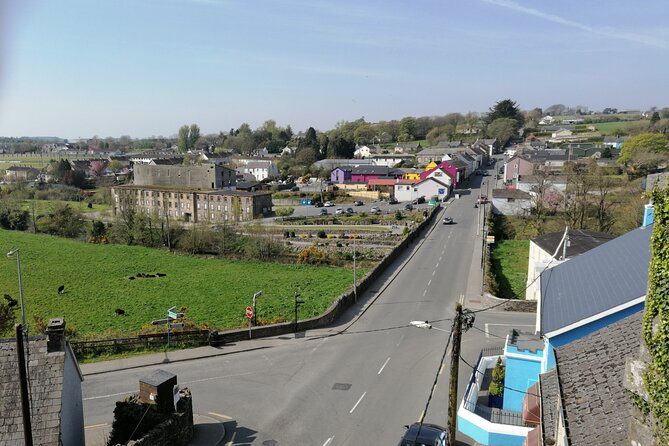
Beginning at the workhouse gives the walk weight from its first minutes. The complex opened in 1851 to house poor people from the surrounding area during some of the hardest years in Irish history.
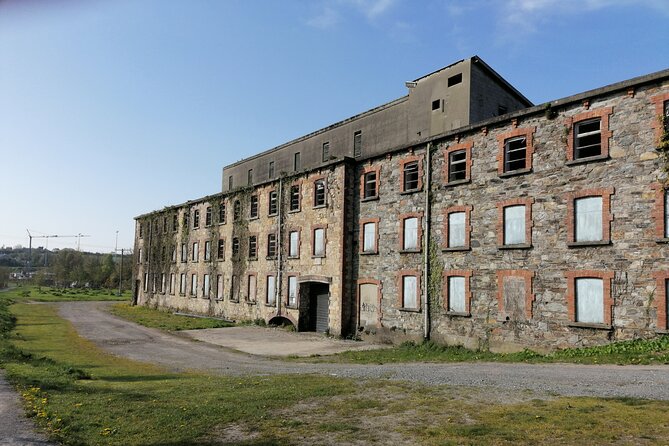
You will walk through the grounds and see the poorhouse buildings, isolation house, and mortuary. These are not polished museum rooms with a long display of objects. The value is in the setting itself, and in Stíofán’s explanation of how the workhouse functioned and what life there meant for people who had few choices.
The walk then follows a path toward the paupers’ graveyard. This opening section takes about 15 minutes, but it may feel longer if you stop to think about the human stories attached to the buildings. I appreciate that the tour does not treat the workhouse as just another old structure. It places the site within the local community and gives you a reason to look closely.
More Walking Tours in Ireland:
- Dublin Highlights and Hidden Gems Guided Walking Tour
★ 5.0 · 6,020 reviews - Dublin: Highlights and Hidden Gems Walking Tour
★ 4.9 · 2,140 reviews - 1916 Rebellion Walking Tour
★ 5.0 · 1,605 reviews
The paupers’ gravesite and a difficult story
The mass grave is viewed from a gateway because it lies on privately owned land and is not open for access. A flip card helps explain what is at the site.
That limited view is worth knowing in advance. You will not walk through the graveyard or approach the burial ground directly. Still, the stop matters because it connects the workhouse buildings to the people who died there and to the harsh conditions faced by the poor.
This is a brief five-minute visit, but it is one of the more serious moments on the tour. If you prefer your walks to focus only on scenery and pleasant anecdotes, this section may feel somber. For most people, that honesty is part of the value.
New Bridge and a 4000 BC connection
At New Bridge, the story reaches much farther back than the workhouse. Archaeological digs in the area have dated activity here to about 4000 BC, a date older than the pyramids of Egypt.
The guide uses a flip card to explain what archaeologists found. That makes the stop more useful than a vague claim about ancient settlement. You get a simple visual aid and a local story that places Kilmacthomas within a much older human past.
The visit lasts about 15 minutes. It is a good example of the tour’s broad scope. In one morning, you move from famine-era buildings to evidence of people living in this part of Ireland thousands of years ago.
A first pause for plants and wildlife
The first mindfulness stop comes on the route toward the village railway station and the Waterford Greenway. Here, you are asked to slow down, take a breath, and open your senses to the surroundings.
A flip card explains local flora and fauna, including the kinds of plants and animals you may notice as you walk. This is not a formal nature lecture. It is a prompt to pay attention to details you might otherwise miss while listening to the guide.
I like this change of pace. Guided walks can become a string of facts, and these pauses help break that pattern. You get time to look, listen, and catch your breath. The stop takes about 15 minutes, so it is not merely a quick pause for the guide to gather the group.
A few more Ireland half-days to weigh up
- Dublin to Glendalough, Wicklow and Kilkenny Full Day Guided Tour
★ 5.0 · 4,895 reviews - Dublin Book of Kells, Castle and Molly Malone Statue Guided Tour
★ 4.5 · 3,825 reviews - The Little Museum of Dublin Famous Guided Tour
★ 5.0 · 2,948 reviews - From Galway: Full-Day Cliffs of Moher & Burren Guided Tour
★ 4.8 · 2,815 reviews
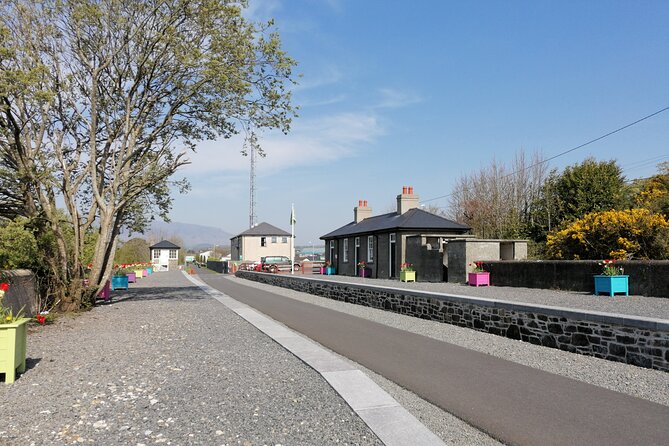
The old station and signal house
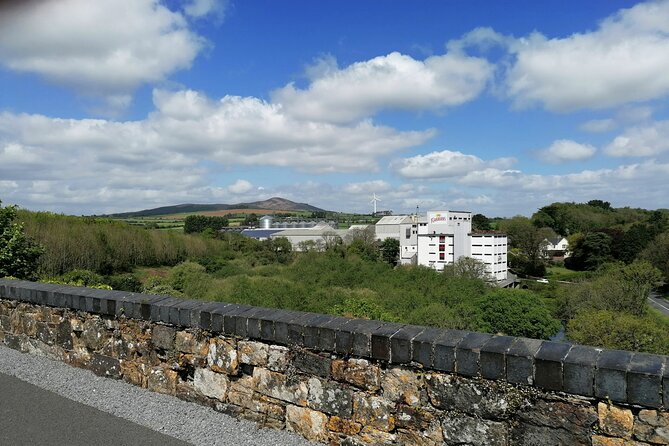
Kilmacthomas Railway Station and its Signal House are viewed from outside. They once played an important role in the local economy during the peak years of Ireland’s railway network.
The tour explains how transport shaped the village and connected local industry with wider markets. Even without entering the buildings, you can see why the railway mattered. Stations, signal houses, bridges, and mills are not separate sights here. They are pieces of one story about work, movement, and local trade.
The stop lasts around 10 minutes. Do not expect an indoor railway museum or restored carriages. The appeal is architectural and historical, with Stíofán supplying the context.
Kilmacthomas village and its characters
The route continues through the main street of Kilmacthomas. This is where the tour turns from buildings and sites toward people.
Stíofán shares stories about famous and infamous characters linked to the village. Flip cards show what some of these people looked like and explain how they affected local or wider history. The approach sounds particularly useful if you enjoy social history, because it gives you names, faces, and personalities rather than only dates.
The village stop lasts about 15 minutes. You should expect stories that can be entertaining as well as informative, including local tales of stardom and unusual figures. The guide’s style is a major part of the experience here. He adjusts the conversation to the group and leaves room for questions, so the walk does not feel like a memorized speech delivered at every corner.
Flahavan’s Mill from the curved viaduct
From the top of the curved railway viaduct, you can view the site of Flahavan’s Mill. The company has been producing oatmeal products since the 18th century.
This is a compact stop, around five minutes, but it links food production with transport and the local economy. The viaduct allowed the railway to cross the area, while the mill represents an industry that continued across generations.
The view from above is one of the tour’s strongest visual moments. Bring a camera if you enjoy industrial architecture, but also listen for the explanation of how the mill fits into Kilmacthomas rather than treating it as a stand-alone photo stop.
The curved viaduct and public park
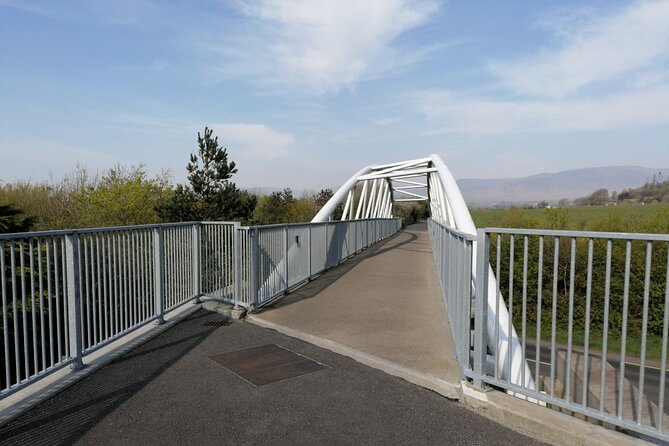
The viaduct itself deserves more time than a quick glance. You will see it from several angles, including from its base footings, and walk through the public park nearby.
This is a fine place to understand the scale of the engineering. The curved form gives the bridge a distinctive shape, and the different viewpoints help you see how it sits within the village. Stíofán also explains historic events connected with the area around the park.
The visit takes about 10 minutes. The ground-level views are useful because a bridge can look impressive from a distance but lose its sense of scale. Here, you get close enough to appreciate the stonework and structure.
The Woollen Mill and working Kilmacthomas
The Woollen Mill adds another chapter about local employment. During the 18th and 19th centuries, it was a major employer in the area.
This stop helps you picture Kilmacthomas as a working community rather than only a scenic village on a cycling trail. The mill, oatmeal production, railway, and village street all connect to the same question: how did people make a living here?
The visit lasts around 10 minutes. As with the station and workhouse, the focus is on the outside setting and the story attached to it. You will get the most from this section if you enjoy seeing how industry shaped small towns.
Along the River Mahon
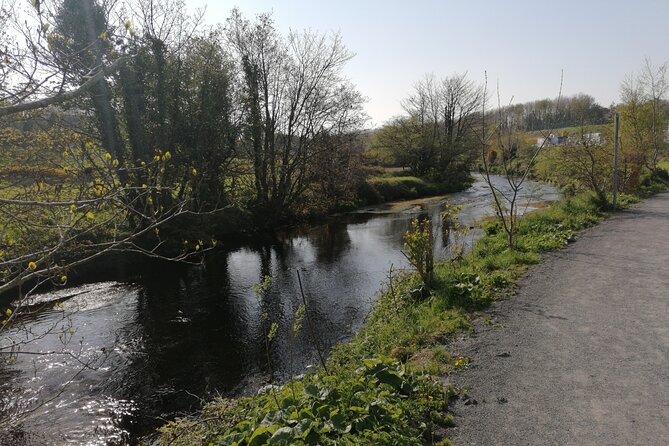
The second mindfulness section takes you beside the River Mahon. This is one of the quietest parts of the route, with water flowing, birds singing, and the possibility of hearing ducks or seeing fish leap.
The guide uses flip cards to explain wildlife and nature along the riverbank. Pollinators and other small forms of life also get attention. This is a useful reminder that the Waterford Greenway is not only a route for walking and cycling. It also passes through living habitats.
The stop is listed at about five minutes, shorter than the first pause. Even so, the river offers a natural reset after the industrial and village sections. You may find this part especially welcome on a bright morning, when the water and bird sounds take over from the road and buildings.
A country lane and the final Greenway stretch
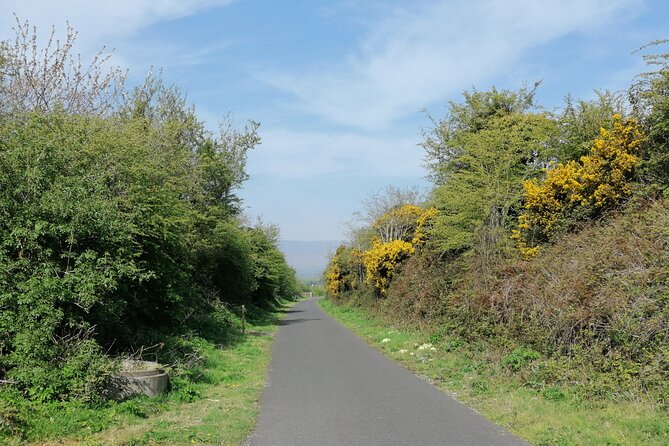
The third mindfulness stop is on a country lane leading back toward the Waterford Greenway. You will look into open pastures, notice plants and wildlife, and listen to birdsong.
This section gives you the most rural feel of the walk. It is not a grand scenic viewpoint, and that is exactly why it works. The charm is in the ordinary details of pasture, hedgerow, country air, and movement in the fields.
After the pause, the group follows the Waterford Greenway back toward the final stop at the Coachhouse. The walk takes about 15 minutes, and Stíofán invites questions about anything you have seen or heard. That open question period is useful because the route covers several subjects, from archaeology and famine history to geology, wildlife, architecture, and local personalities.
The Coachhouse and a curious coffee story
The final stop is the Coachhouse on the workhouse grounds. You will hear about people connected with the building, then finish with a story about coffee and how it began in the 16th century.
That is an unusual ending for a County Waterford walking tour. It sends you away with a small piece of world history alongside the local stories. The Coachhouse also brings the route back to its starting area, so you do not need to arrange a separate pickup.
This final stop lasts about five minutes. You can then buy food or drinks in Kilmacthomas village, since snacks are not included in the tour.
What the $21 price gives you
At about $21, this is a modestly priced guided experience. You are paying for two to three hours of local interpretation, not admission to a large attraction. Since every listed stop is free, the value rests mainly in Stíofán’s storytelling, the route design, and the connections between the sites.
That makes the tour a better buy than walking the same stretch alone if you want to understand what you are seeing. Without a guide, the workhouse, station, viaduct, mills, and river can feel like disconnected sights. With the stories, they become parts of one local account.
The small group limit of 15 also matters. It should make it easier to hear the guide and ask questions. The walk is especially good value for couples, small groups, and anyone who wants a gentle morning activity without committing to a full-day excursion.
Who should book this walk
I would choose this tour if you enjoy local stories told by someone closely connected to the place. It suits people who want history but do not want to spend the day inside museums. It also works well for anyone already visiting the Waterford Greenway who wants to understand Kilmacthomas rather than simply pass through it.
The route should suit most people who can manage a flat walk of about 5 kilometres. The information says most people can participate, and service animals are allowed. You should wear comfortable walking shoes and bring clothing suited to changing Irish weather, since the experience depends on outdoor conditions.
The tour also works for first-time walkers. One participant described it as a first walking-tour experience, and the gentle pace, regular stops, and question time make it less intimidating than a fast city walk.
I would think twice if you want guaranteed sunshine, indoor access to historic buildings, or a major attraction with extensive displays. The railway station, signal house, workhouse buildings, mills, and Coachhouse are primarily viewed from outside. The paupers’ gravesite is seen from a gateway only.
Free cancellation is available if you cancel at least 24 hours before the 10:00 am start time. Cancellations within 24 hours are not refunded, and changes inside that period are not accepted. Because good weather is required, a weather cancellation brings the choice of another date or a full refund.
Should you book the Kilmacthomas walking tour?
Book it if you want a relaxed, thoughtful introduction to Kilmacthomas and the Waterford Greenway. The best parts are the range of subjects, the clear local focus, the curved viaduct, and the three pauses that let the countryside have its own voice.
This is not a tour built around one spectacular attraction. It is a connected walk through workhouse history, archaeology, village life, railway engineering, local industry, riverside wildlife, and personal stories. At $21, that makes it a strong choice for a morning in County Waterford, especially if you value a good storyteller over a long list of formal admissions.
FAQ
Where does the walking tour start?
The tour starts at the StepsBackThruTime walking tours Greenway Carpark at the Workhouse, Carrignanonshagh, Kilmacthomas, County Waterford, Ireland.
What time does the tour begin?
The stated start time is 10:00 am.
How long does the walk last?
The experience lasts approximately two to three hours. Individual sections range from about five to 15 minutes.
Where does the tour finish?
The walk returns to the original meeting point at the Workhouse Greenway car park.
How far do you walk?
The tour is described as a leisurely walk of about 5 kilometres on and around the Kilmacthomas section of the Waterford Greenway.
Is food included?
No. Snacks are not included, but you can buy food and drinks from dining venues around Kilmacthomas village after the walk.
How many people can join?
The tour has a maximum group size of 15 people.
What happens if the weather is poor?
The experience requires good weather. If it is canceled because of poor conditions, you will be offered another date or a full refund. You can also receive a full refund by canceling at least 24 hours before the start time.
Recently added around Ireland
- Killarney: Gap of Dunloe Day Tour★ 4.7 · 3 reviews
- Sean’s Bar, Athlone Castle and Clonmacnoise Monastery★ 4.5 · 3 reviews
- Dublin: Pub Tour. Pour The Perfect Guinness, Whiskey & Music★ 5.0 · 3 reviews
- Ferry ticket – Day return ticket to Inishbofin Island from Cleggan. Self Guided.★ 5.0 · 3 reviews
- Connemara/Galway: Inis Meáin Return Ferry Transfer★ 4.7 · 3 reviews
- Cork Private Walking Tour★ 5.0 · 3 reviews
- Waterford Crystal and Kilkenny Full-Day Rail Tour from Dublin★ 5.0 · 3 reviews
- (Christmas Morning) Glendalough Half Day Tour from Dublin★ 3.7 · 3 reviews
Walking Tours, compared.

Dublin Highlights and Hidden Gems Guided Walking Tour
Read our review →
90 Minute Dublin Walking tour and Sightseeing tips
Read our review →

Historical 2-Hour Guided Walking Tour of Dublin
Read our review →
Dublin Traditional Irish 3 Course Meal Walking Tour with Local
Read our review →
Browse the lists this tour appears in